

Foreword
Wang Xing talks about AI externally — “The only reasonable strategy for AI is to attack.” Meituan spent tens of billions on R&D in the first two quarters of the first half of 2026;
But internally, what was a Meituan executive at the director level (L10) with an annual salary of several million doing?
- In the morning, while no one was in the work area, they secretly held a meeting with frontline R&D and management from the business side, urging them not to cooperate with the business and advocating, “In the AI era, don’t put too much effort into the business, recognize the situation.”
- They deleted modules from OpenAI's open-source Codex, renamed it, and claimed it was the “next-generation AI paradigm.”
- His subordinates cursed at their subordinates until they resisted in the hallway, saying, “I am also human,” leading to multiple people leaving and forced job changes; when reported, HRBP advised withdrawing the complaint, and the supervisor threatened them.
Meituan is currently engaged in fierce competition externally, with business teams desperately trying to squeeze out every fraction of a percentage point in conversion rates.
But here, the tens of billions of R&D funds invested by the group in the AI battlefield, when they reached the execution level, were used to create fake wheels, secretly promoting “don’t cooperate with the business,” trapping the time and manpower of more than a dozen highly paid L8, L9, and L10 individuals in this dark “group.”
For a while, I changed my internal IM (Elephant) signature to “Upright and Just in the Sunshine”, waiting for that ray of sunshine to penetrate the bottomless darkness. Although I didn't get to wait for it, and perhaps never will.
With this article, I bid farewell to this Meituan journey. Thank you to all readers for clicking on it. Right and wrong will be judged by others.
May everyone in the future not be trapped in such groups, and may they surely stay away from disaster and embrace the sunshine.
Main text
Six years ago, an article titled “Food Delivery Riders, Trapped in the System” allowed the whole of China to see for the first time through their phone screens how algorithms and countdowns precisely controlled the running of tens of millions of people.
At that time, I had not yet joined this company. Like the vast majority of onlookers, I thought the “system” was just the order dispatch algorithm, parameters, and millisecond-level route planning running on servers. It was certainly cold, but at least it followed logic, parameters, treated everyone equally, and its rules were clear and definite.
It wasn't until more than five years in this office building that I truly realized: in an internet giant entering middle age, the algorithm is actually the clearest and purest.
Winter arrives quickly in Beijing. The ginkgo trees by the roadside were still dazzlingly yellow the week before. After a north wind blew, only clean gray-white lines remained on the branches.
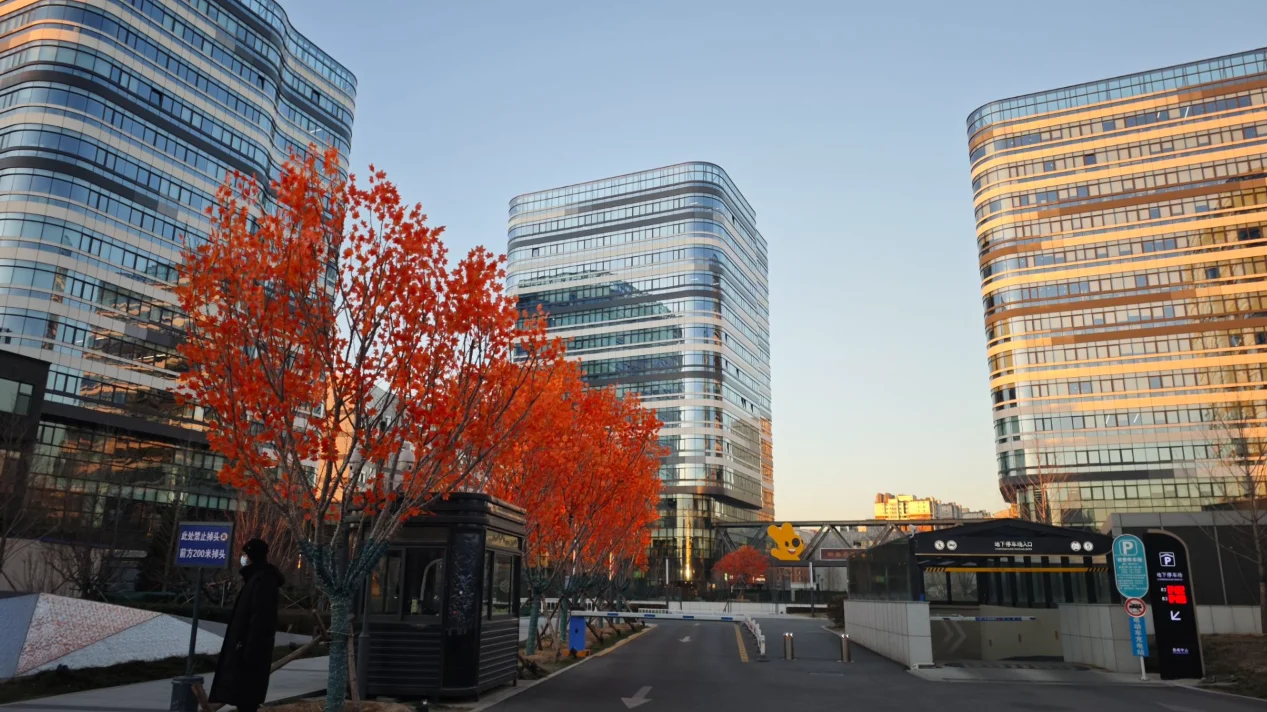
Early winter office area
One evening in early winter 2026, as I was preparing to shut down my computer at my workstation, two windows happened to be open side-by-side on the screen.
On the left was a terminal with a black background and white text, next to which was an internal tech group that had spontaneously formed within the company – the CatPaw CLI group. Messages were scrolling up at a rate of two to three per second, with a group of engineers I had never met discussing the technical details of the latest AI. A sharp and insightful test conclusion had just been posted, and within minutes, it had garnered over thirty likes spontaneously.
On the right was a formal work email that had been sent exactly twenty-eight days ago. In the recipient field were my new supervisor, the L10 lead responsible for the entire platform, and the HRBP. The email asked the most basic and fundamental questions: what were my job responsibilities and performance evaluation criteria after the transfer.
Including the two previous ones, this was the third email. Three emails, twenty-eight days, and no response. Along with the two rounds of complex business page code and engineering documentation that I had submitted according to the highest standards in the work group, everything had sunk into nearly a month of dead silence.
Beside the desk stood a cardboard box that had not yet been sealed, and a white locked cabinet that had not been opened for a long time. The belongings accumulated over five years were far fewer than I had imagined. Besides a few technical books that had barely been flipped through and were gathering dust, and a golden finger spinner used for stress relief, the cabinet also locked away two small items that I reached for only at the very end.
One was a “Five-Year Silver Person” commemorative figurine given to me by the company when I reached my five-year anniversary two months ago. The base was polished very smoothly and felt heavy, marking over 1,800 days from when I joined as an L7 five years ago and worked my way up to L8. In the past four years, my performance reviews had never been in the low tier; I had received multiple “exceeds expectations” ratings, and last autumn, as the lead developer for the team, I had won a hard-fought battle and brought back a departmental award.
The other was a palm-sized miniature kite figurine. It was left on the corner of my desk by a former colleague, Afeng, who resigned two years ago. Not long after he had shouted in the office hallway, “I am human too!” in exasperation, he completed his resignation. In the evenings of his last few days, he placed this small kite next to my monitor, smiled, and said to keep it as a memento. For more than two years since then, I could recall him and this slightly swaying kite.
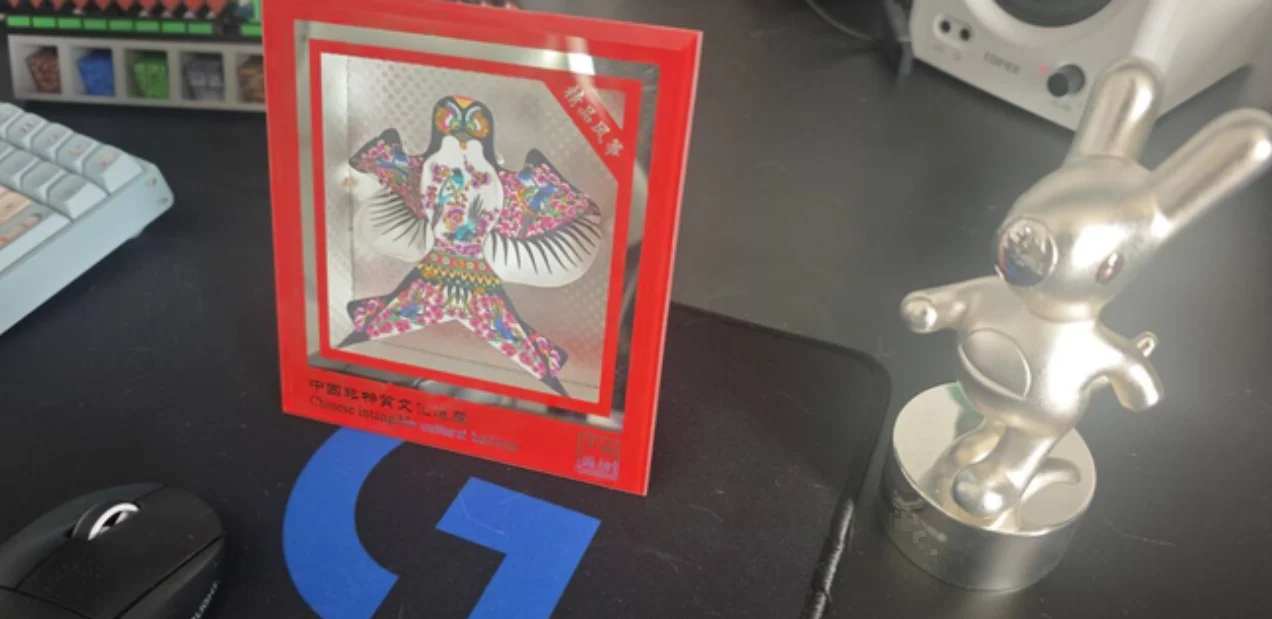
Kite and Five-Year Anniversary Silver Figure (photographed at home)
Looking out at the darkening Beijing sky through the glass window next to my workstation, I recall that five years ago when I first joined the company, the walls of the work area corridor were covered with those eight characters: “Don’t dwell on the past, live life to the fullest.”
At that time, I truly believed in the company’s tough, hard-working ethos forged through sheer effort; but five years later, in the same glass-curtain-walled building, breathing the same fresh air heating system, there are engineers grappling with real problems in the command line on one side, and on the other, a suffocating “clique” woven from factions and darkness, entrenched between the highest decision-making level and the front lines.
To avoid unnecessary personal entanglements and boundaries of commercial confidentiality, specific managers, colleagues, and undisclosed internal projects mentioned in this text are referred to by code names. I have no intention of writing an emotional outburst; I just want to record these events while the memories are still fresh, otherwise, those late nights of hard work, the conference rooms at dawn, and the absurdities will soon vanish as if they never happened.
I. Zoom at 3 AM, and “Holding Back the Business.”
Even today, whenever I recall those weeks in October 2025, my heart still stirs.
During that period, our team was tackling a difficult task that directly related to the business and real conversions, let’s call it Project C. It involved connecting and integrating a core business process with an extremely long chain and complex interdependencies from beginning to end.
There were five or six core developers working on it, and I was the lead technical person on the team. In the days leading up to the launch, discussions in the group chat, and Zoom calls online, almost every night lasted until two or three in the morning.
When the outside world mentions late-night work at big tech companies, people tend to think of the numb feeling of being driven by work hours. But anyone who has actually written production code understands that forced, prison-like overtime is entirely different from five or six colleagues working together towards a common goal.
After midnight, everyone’s voices were a little hoarse. Drained, they’d gulp down cold water, yet the air in Zoom was filled with hope. Someone troubleshooting a problem, having just uncovered a three-layered asynchronous race condition, would immediately shout “I’ll share my screen!”; by past 3 AM, when the most challenging real business transaction chain finally ran through from start to finish with a green light in the integrated testing environment for the first time, the chat groups and Zoom were filled with irrepressible excitement.
In late October, Project C launched smoothly, core metrics were perfectly achieved, and the business side was full of praise, quickly winning a departmental award. On the day of wrapping up, walking on the cool, chilly road late at night, bones aching but mind exhilarated. That feeling of solving complex problems with true skill, and being validated instantly by the real world, was more exhilarating than any team-building slogan.

The office area at night
But no one expected that two months later, at the year-end performance review meeting, they would be doused with a basin of ice-cold water.
The conference room wasn’t large that day. Including L, a Meituan executive at the L10 level (equivalent to a big tech director) who was in charge of the entire platform line at the time, there were a total of 6 people in the room. By the common sense of any normal commercial company, after achieving a benchmark project praised by the business for the entire year, the top boss should at least set the offensive goals for the coming year, if not celebrate.
But after listening to the progress report, L leaned back in his chair and, in front of all 6 people in the room, uttered a sentence that instantly froze the air:
“Doing so well this time is actually not a good thing – it made the business too comfortable.”
The room suddenly became so quiet you could hear the air conditioner vent. Several key members who usually fought the hardest exchanged glances, looking at each other in bewilderment. But L was not joking in the slightest. He then set the tone: “Next year, everyone can take a break. No need to exert so much effort. Don’t cooperate too closely with the business side.”
After the meeting, as we walked out of the room, everyone couldn't help but ask during dinner that evening: “Why does doing a good job turn into a bad thing?”
At the time, there were occasional private rumors that L had a strained relationship with the business side. I couldn't verify the truth of the rumors, nor should I jump to conclusions; but from the words “making the business too comfortable,” I could clearly smell the scent of treating internal comrades as opponents in a game. Looking back now, half a year later, the company drastically stripped the business team away from him, the foreshadowing might have been laid in that six-person conference room.
The filter I had maintained for several years began to crack at that moment, a fissure that could never be closed. For a long time, I was eroded by this twisted and uncomfortable feeling.
The highest realm of governance is “The best rulers are those whose existence is unknown to the people.” Applied to technical foundations and infrastructure, this is common sense: first-class platforms should be like water and electricity; business users should find them smooth, stable, and worry-free, perhaps not even realizing how complex the underlying system is; engineers, after curing a persistent ailment, should move on lightly to the next tough battle.
For pure engineers, the value formula is simple: do the job well, the business succeeds, the company makes money, and the team is valuable.
However, let's change perspective. Besides the reasons for the contradiction above, if a few “overachievers” stay up all night for Meituan for the sake of so-called “sense of purpose, sense of value” and truly make the system run smoothly at 95 points, large companies' performance reviews focus on year-on-year increases. This year, the delivery floor has been raised to 95 points, and next year, superiors and business parties will take 95 points as the natural starting line; and once the foundation is completely stable and pain-free, why would the business parties still beg for your schedule when budgeting next year? Only by keeping the system in a “semi-dependent state” that is neither so bad as to cause collapse and blame, nor so good as to be pain-free, can the business remain forever dependent on this team.
As a guardian of the mountain, achieving 95 points is cutting off one's own supply line; precisely stopping at 65 points is the way to ensure steady income regardless of circumstances.In the eyes of frontline engineers, problems are meant to be solved; in the eyes of the guardians of the mountain, it is not so.
By July 2026, the shadow under the sun had not faded, but instead grew thicker.
In the summer, the company underwent an organizational adjustment: all the business teams under L were stripped away and assigned to the new business technology leader for overall management, leaving him only with purely back-end positions related to technical architecture.
But L quickly and quietly established a “secret underground reporting line” beneath the surface. Although those former business subordinates were formally assigned to the new business leader’s management in terms of organizational structure, he still, relying on personal connections and emotional ties accumulated over more than a decade of deep cultivation in the company,
irregularly chose between 9:00 AM and 9:30 AM on Wednesdays—taking advantage of the earliest time when the big tech company’s work area was still sparsely populated—to secretly convene these stripped-away subordinates for private meetings: on one hand, hoping they would continue to use the tools produced by his side in their business, and on the other hand, hoping they would maintain a sense of distance from the new business team as much as possible.
Organizational charts are drawn for higher-ups to see; the reality of actual operations lies in the unspoken江湖人情 (jianghu renqing - human relationships in the underworld/society) and the attempt to build one’s own faction to escape organizational control.
What was chilling was that, facing the roaring AI wave, this L10 sternly instructed his former L9 subordinates in their secret small meetings:
“Recognize the situation, and don’t put too much effort into business matters.”
“Don’t try too hard in the AI era—trying too hard is just pushing yourself out.”
“Everyone continue to promote the use of K tools by the students below.”
On the one hand, they want their former subordinates who have already moved to the business side to “use their strength sparingly in business, and not cooperate if they don’t have to,” while on the other hand, they continue to push their K tools into the business.
“Not cooperating” with the company’s business, but exerting great effort in the use of the tools they are responsible for, all became crystal clear in this half-hour secret meeting.
These words are extremely toxic. They precisely hit the job anxiety of ordinary employees in 2026. At first glance, it sounds like Big Brother is worrying about the future of his former favorite general. But peeling back one inch deeper, you’ll find it’s not like that at all.
In 2026, AI did the most politically incorrect thing—it directly multiplied the individual leverage of engineers who truly understand technology and are willing to put in the effort by several times. For a company that wants to win, this is a rare leap forward, allowing a more elite team to attack a tenfold more difficult new battlefield; but for an L10 who has long lost his coding touch and relies entirely on dozens of staff to maintain his influence, this is a guillotine hanging over his head. Once the people below use AI to maximize efficiency with all their might, the middle platform that was originally supporting fifty people might be found by the higher-ups to only need fifteen people tomorrow after calculation. Where can he stand then?
The so-called “understand the situation, trying too hard is pushing yourself out” translates to: where is he feeling sorry for his subordinates? It is clearly a plea:“Please don’t run so fast, if you run too fast, I won’t be able to hide.”
What is more cruel is the asymmetry of risk behind this set of “dragging down the business” tactics: the person in the L10 position has already reaped the dividends of the past decade. Even if the entire line is laid off tomorrow, he will have enough savings and connections to fall back on; but the young engineers below, if they truly believe this rhetoric and slack off during the three years of most intense technological reshuffling, will be the ones who are truly left empty-handed by the times when the tide recedes and the mountain collapses, precisely the obedient ones who “didn’t try too hard”.
At 9:30, they close the door and sternly promote “dragging down the business” downwards. At 10:00, they open the door to the executive reporting room, instantly switching to the face of a trendsetter, enthusiastically talking about “AI + Cloud” and the ultimate future of next-generation software engineering. The same mouth, two scripts, switching seamlessly within the same building.
Ultimately, what is truly absurd is that Meituan is currently engaged in fierce battles externally, and the highest level is still calling for full embrace of AI. Yet, within the building, an L10 earning millions annually, during the half-hour on a Wednesday morning when the work area is not yet full, secretly calls his former subordinates, who have already been reassigned to business units, into a meeting room. He painstakingly teaches them to be “uncooperative” and “slow down” with the business, meticulously researching how to make his technical tools be used “voluntarily” through emotional connections, in order to preserve his “technical foundation and departmental structure” and his pathetic high-level position. He completely disregards the company’s and the business’s survival.
By 2026, those who truly fear AI are never the young people on the front lines doing the work, but rather the middle and senior management who are far removed from the front lines of business, relying solely on managing headcount and information asymmetry to secure their positions—AI cannot replace those who are truly doing the work; what it will strip away first are the guardians who rely only on “managing people” and “giving reports” to maintain their facade.
II. Guardians, and Rebranded “Reinventing the Wheel”
If outsiders only look at L in public, it’s hard to believe that the words above would come from his mouth.
When he first joined the company as an L7, separated by several layers of reporting hierarchy, L embodied the imagination young programmers had of a “geek”: he started by writing low-level C language and client-side code in his early years, translated technical books, and in “Meituan Technology Ten Years,” he recalled his passionate early days of working continuously for sixty days to clear technical debt. At a public technology salon in August 2024, he spoke eloquently under the spotlight.
Hearing these words back then, I thought I had met a technical person who understood the underlying systems and could calculate costs.
But after I was promoted to L8 and got a closer look at core project initiation and code repositories, I was astonished to discover that during the crucial three years from 2024 to 2026, the three generations of “flagship masterpieces” that L personally championed were, almost without exception, a direct contradiction to his own public speeches—and each one was more outrageous than the last.
The first was the low-code engine upgrade and the new generation editor T 2.0, which was high-profilely pushed in 2024.
Around 2024, low-code had already highly converged in the industry. In the external open-source community, industrial-grade foundations represented by Alibaba's open-source LowCodeEngine, with their protocol specifications, canvas orchestration, and plugin mechanisms, had been repeatedly validated by countless enterprises. For a technical leader truly calculating the company's overall costs, dealing with such a standardized product is simple: generously introduce a mature open-source kernel, have two or three experienced developers spend one to two months on thin adaptation to deliver to the business, and invest the saved high-salaried manpower into truly bottlenecked business battlefields.
But the team did not choose this shortcut. T 2.0 was packaged in its project proposal and upward reports as an “in-house developed engine and architectural leap.” A large number of L8 and L9 engineers were assigned to it in organized units, and review meetings were held one after another. However, any frontline developer who actually opened the code repository and peeled back the internal package names to look at the core protocols and canvas skeleton instantly knew: it was essentially a deep reskin of a mature open-source low-code engine. Directly introducing open-source and doing thin encapsulation would result in almost no difference in the final outcome for the business. The only difference was not in the code, but in the organization—two to three people working for one to two months on open-source integration could not produce the annual strategic achievement worthy of L10's facade.
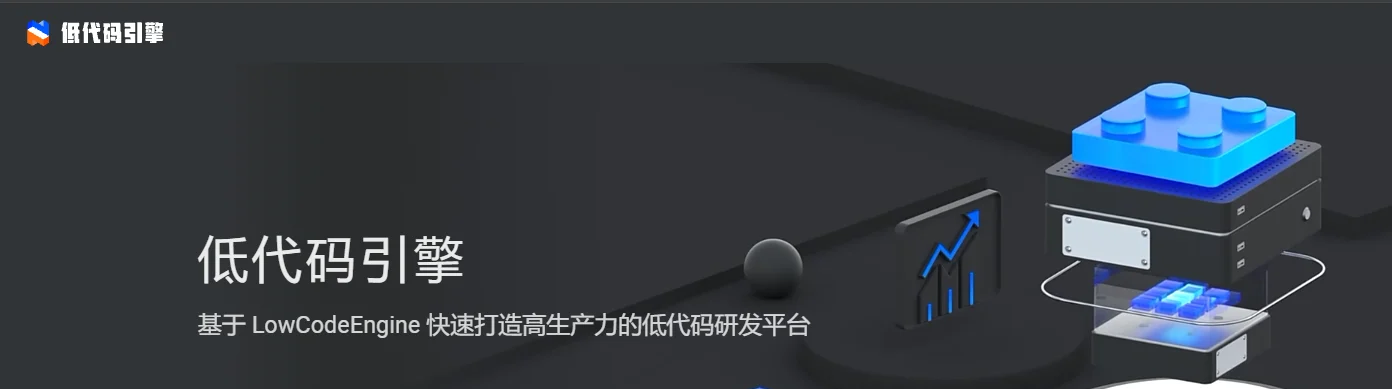
Alibaba's open-source low-code engine
The second thing, if T 2.0 was merely reskinning mature open-source for achievements, then the dynamic cross-end container R Container, which burned from 2024 all the way to 2026, spanning more than three full years, was directly creating a quagmire that locked in top salary positions and incidentally dragged down businesses of acquaintances.
R Container was named after the codename of a special forces rifle. It reused Facebook's RN at the bottom layer and rewrote some peripheral modules. Even for the peripheral modules, rewriting was quite laborious. But it was precisely this “laboriousness” that made the whole thing seem particularly absurd.
First, the time window and manpower calculation are completely inverted. 2024, 2025, 2026, a full three years, is precisely the golden three years when global software engineering is dramatically leaping from the inventory era of mobile internet to AI-native development. During this window period that determines the technological position for the next decade, the person who had just admonished everyone on stage to “calculate team salary costs, don't blindly compete on performance” instead locked a large number of top-paid L8 and L9 engineers onto this closed container production line for three years. What decisive business increment was obtained by investing tens of millions in manpower? The answer is almost zero.
The most glaring contrast occurred at the same time: the business teams downstairs, in order to squeeze out an additional zero point a few percentage points of conversion rate and save a few cents in fulfillment costs amidst fierce market competition, were trying to wring water out of every link; but upstairs, within the high walls of the platform far from the battlefield, the most precious three years of time for over a dozen highly paid L8 and L9 engineers were being consumed in organized units on a closed wheel that no one wanted to use, spinning in place.
Secondly, the approach is still enthusiastic about shell casing. There are already many mature open-source and high-performance cross-end ready-made solutions on the market that, with a little adaptation, can achieve the same or even more stable implementation results. The years of manpower spent here are vastly different from the “clear cost calculation” claimed by L.
Finally, there is the engineering reality that remains incomplete after several years. After several years, this container, claimed to have “broken the ceiling,” has not stirred a ripple in the external open-source community or the industry's technical circles; internally, by 2026, this framework has not even enabled normal page routing jumps and the dynamic rendering of loops and conditions for some container child nodes. Writing a very ordinary filter switch or secondary interaction requires workarounds like global floating layers.
Since the ecosystem is incomplete and development is painful, normal business teams instinctively stay away. Then where did the glossy “core and outbound business landing cases” in the reports come from? It was thanks to L mobilizing his personal connections and old networks accumulated over more than a decade at the company, finding acquaintances in business lines one by one, and pushing them to pilot the projects through sheer force of will. After the business side took over, they gained almost no substantial commercial benefits, except for a new burden of proprietary technical debt that outsiders couldn't change or hire people to maintain.
Truly vital infrastructure will have business teams scrambling to integrate it; only wheels whose strategic ROI has reached zero need the boss to save face and use personal favors to beg acquaintances for “landing cases.”
The third item is the flagship AI tool K, hastily launched in mid-2026. I am willing to call it a “complete loss of composure.”
In fact, as early as the beginning of 2026, AI was becoming increasingly prevalent, and everyone wanted to do something with AI. At that time, L still held the complete business territory and made basically no moves. It wasn't until the summer when the business was suddenly spun off and the crisis was burning close to home that he quickly turned around and picked up the “AI + Cloud” banner that had been proposed by us for a long time, making a high-profile pivot to AI.
However, someone who has been detached from the front lines for a long time dives into deep water and, after struggling for a long time, cannot produce anything substantial. One of the flagship AI agent K tools (which, as usual, was given a cumbersome name that sounded somewhat exotic and philosophical) presented to senior management for reports, reveals everything once you look at the code—essentially, it's taking OpenAI's open-source Codex from overseas, deleting a bunch of modules, doing some internal modifications and packaging, and rebranding it as “the next generation of AI.”Bullying higher-ups who don't read source code, playing with technology to benefit from both ends.
Furthermore, in terms of promotion, it returned to the familiar method of finding acquaintances in business lines one by one and pushing them to pilot the projects through sheer force of will. The “underground secret reporting line” mentioned above is precisely the best venue for continuous efforts here.
Many people will surely ask: three years, three generations of products, reskinned low-code, a shell-wrapped container developed over three years, a modified version of open-source—front-line engineers can understand what's going on in half an hour after finding the source code. Why did he not only not get exposed but also pass his annual reviews steadily year after year?
A massive organization of tens of thousands of people naturally experiences vertical information decay on a physics level. The quality of a business line can be seen daily through transaction volume, conversion rates, and profit margins; falsification wouldn't last a quarter.
However, technical platforms and infrastructure are shrouded in a thick black box of jargon, making it impossible for senior management to personally inspect the code. Moreover, L has honed a skill to perfection: “future-perspective boasting.” When reporting upwards, he never discusses whether the current tool is lagging in the actual large repository or how much net increment it has created compared to using open-source directly. Instead, he always zooms out to the “endgame” three years later, subtly weaving the technological trends of the era, pushed by hundreds of billions of dollars invested by global large model labs and open-source communities, into his roadmap slides, claiming credit for the achievements of others.
Coders are familiar with Linus's saying, “Talk is cheap. Show me the code.” But in some well-insulated reporting rooms, this saying has quietly been reversed to “Code is cheap, show me the report.”
One selection error can be called a technical trial; for three consecutive years, from low-code, cross-platform containers, to AI, each time it involved rebranding existing free open-source projects from Alibaba, Facebook, and OpenAI, deliberately complicating simple matters to create positions, and forcefully pushing them onto businesses that nobody used, relying entirely on private connections. This is no longer about trial and error or paying tuition. Moreover, in the AI era, mainstream AI is fed by global open-source code. Open teams are benefiting from AI efficiency gains every day; businesses that are forced to use these incomplete proprietary wheels will have their intelligence reduced no matter what AI comes in. Tens of millions of company funds were spent, not only failing to produce anything of value but also blocking the adopting business teams from the benefits of AI efficiency.
If the story stopped here, I, like most people who have encountered such things, might have sighed, remained silent, or left. After all, he was the department head, and it's not easy to provide feedback or report on actions detrimental to the company. But what truly jolted me out of my silence and made me see that the “dragging down the business,” “reskinning,” in the first half, and the “protecting subordinates and clearing the scene” in the second half, were all connected, was an otherwise ordinary internal request for help.
III. The Underlying Truth, Starting with “I am also human”
My former direct supervisor, S, was a long-time subordinate of L.
Within S's management radius, high-decibel emotional outbursts, arbitrary changes in orders, and overstepping personal attacks constantly loomed over the team like persistent gloom. The small kite on my desk for two years, whose owner was Afeng, was the first crack that weighed heavily on my heart within this team.
It was a day in the latter half of 2024, in the corridor on the seventh floor of the work area, near the restroom. S, in front of passing colleagues, loudly berated and insulted Afeng, who was usually gentle and polite. The voice was so loud that half the floor could hear it clearly. Afeng was pushed to the brink of collapse that day, and standing in the corridor, he shouted back: “Don't talk to me like that, I am also human!”
“Don't talk to me like that, I am also human!”
Shortly after the incident, Afeng resigned. Before leaving, he left the small kite for me. For more than two years afterward, the storm did not cease with his departure. In August 2025, simply because a reply in a small online meeting did not meet her satisfaction, S convened a separate Zoom meeting after the meeting and loudly yelled at me and another colleague, repeatedly questioning us and humiliating our intelligence and character. After that incident, the other colleague present soon resigned, and I almost left directly, only staying because I was still carrying the C project.
By the spring and summer of 2026, the attrition had become a daily grind like a dull knife cutting flesh: she would approve a direction, then halt it halfway through, labeling it “chicken rib”; in one-on-one conversations for several consecutive months, she would lament, “the organization is always doing things with no future prospects,” while repeatedly and implicitly urging me to resign voluntarily. Before the conflict escalated, she even leaked to outsiders that I was planning to leave.
The long-term suffocation and high pressure soon triggered alarms in my body. I successively developed cholinergic urticaria, neurodermatitis, temporomandibular joint disorder, and recurrent headaches and fevers. After visiting the hospital, the doctors' conclusions were consistent: continuous mental high pressure induced these conditions. However, when my body couldn't take it and I needed to take sick leave, S repeatedly added extra material requirements and made things difficult, blocking me at every turn. In one absurd instance, my leave request was denied, forcing me to seek approval from a higher level to get it granted. Several excellent young colleagues in the group also often privately sighed to me, their sense of purpose in their work being gradually eroded, leading them to consider leaving one after another.
On a Tuesday in mid-August 2026, I still harbored the last shred of an engineer's naivety. I thought, the words written in black and white on the wall, “Seek truth from facts,” “Address the issue, not the person,” if I objectively reported these facts through the proper channels to my skip-level manager L and HRBP H—at the time, I thought I was seeking help from this technical senior who started out writing low-level code: facing the fact that several colleagues had been forced out one after another, surely he would still uphold the most basic sense of fairness?
The machine indeed spun up with astonishing efficiency, but its blade precisely targeted the person who raised the issue.
I submitted the real-name feedback on Tuesday; by Friday, just three days later, L directly summoned me for a meeting and informed me that I would be forcibly transferred out of my original team as an individual, under the command of Y, another of his direct subordinates. I clearly stated my disagreement on the spot. The following Monday, without anyone communicating with me about the new job responsibilities or performance evaluation standards, I was silently moved out of the team alone in the internal system. HRBP H did not respond at all to the core complaints about verbally abusing subordinates and withholding sick leave, lightly characterizing the transfer as “an organizational adjustment based on your recent poor work performance”; L, meanwhile, changed his tune to “you are unable to work as expected in your previous role.”
Staring at the words on the screen, I was silent for a long time. An employee with four years of excellent performance, never receiving a low rating, who had just taken the lead on a major award-winning project a few months prior, reported managerial bullying in real name on Tuesday, was notified of an individual transfer on Friday, and by Monday had transformed into “recent poor work performance” and “unable to work as expected” in written records. I immediately replied, demanding to know what the specific expectations were, when they were communicated, what the basis for this determination was, and what the new job responsibilities and performance evaluation standards were. The response was dead silence.
At that moment, witnessing this clearing-out operation completed within a mere seventy-two hours, I saw the true underlying mechanism for the first time:
What is least needed here are troublemakers with independent judgment; what is most indispensable are loyal gatekeepers who have followed for many years, are absolutely obedient to superiors, and can suppress all dissenting voices from subordinates with high pressure. I went to L for help, unaware that by moving the gatekeeper, I was shaking the team's foundation.The person who points out the stench in the room is, in turn, diagnosed with anosmia.
Seeing through the departmental collusion, on the same day I was forcibly transferred, I compiled sixteen pieces of evidence and submitted a real-name report to the company's independent integrity channel, becoming the only person in the team attempting to break out of the internal cover-up loop.
I had expected that stepping outside the department would lead to an independent investigation. However, the three waves of actions that followed in the next few days made me witness firsthand how quickly a network of acquaintances operates.
The first wave was a surprise attack on attendance and handover, forcing a signature. Just a few days after submitting the report, HRBP H suddenly audited my attendance for the past three months and presented a printed conversation record for me to sign—it included normal lunch breaks as “time away from post” and distorted it into resisting handover. I refused to sign on the spot and submitted written objections to each point.
The second wave was a “multi-person collaboration.” On an early evening in early September, HRBP H, who should have recused himself, pulled me into a meeting room, accompanied by a strange woman. I politely asked for her name and department, but she refused to disclose them on the spot and explicitly stated that she could not be found in the company's internal directory. This invisible person, who wouldn't even reveal her name, opened the conversation by saying, “We hope you will not report this.” She then unilaterally claimed that, to her knowledge, investigators had asked former colleagues, and none admitted to being verbally abused; H, standing beside her, chimed in to persuade me to withdraw my report. I calmly refused to withdraw, without changing a single word.
The third wave came the fastest, the day after I refused the persuasion to withdraw—on a Friday evening before work ended.
In the first few days after being transferred to the new manager Y's team, I never mentioned the word “report” to Y, only wanting to sort out the handover and get a handle on the new tasks. The person responsible for the requirements had also clearly stated in writing that this exploratory task was not a high priority and that I should proceed at my own pace, to which Y had no objection at the time. But on the evening of the day after the invisible woman's failed attempt to persuade me to withdraw, Y suddenly changed his tone in the work group, firing off a barrage of criticisms, negating the previous output, and accusing me of “spending a week just on a document, which is unacceptable” and “are you provoking me?” Immediately after, without me having mentioned the report to him at all, he blurted out the revealing ultimatum:
“Think carefully about whether you want to drag me into this.”
“Either do the page without adding drama or falsifying, or drag me in and give me the detailed work records from the previous week.”
How could a new manager, whom I had never told anything about the report, precisely utter “drag me into this” the day after the persuasion attempt? Who had tipped him off in advance about the “game” he was talking about? The answer was self-evident. In the tightly coordinated circle of L, the former manager S, the new manager Y, and HRBP H, private communication always ran ten times faster than formal investigation—you thought you had sounded an independent alarm, but the bell rang directly on the desk of the person being reported.
What was most disgusting was not S's public scolding itself, but the complicity of these people after the incident. One manager verbally abused her subordinate to the point where the subordinate shouted in the hallway, “I am human too,” and several people were driven away successively. L and HRBP H took no action against her; on the contrary, the employee who reported the issue in real name through the proper channels was kicked out in three days, followed by a retroactive audit of lunch break attendance, the dispatch of an invisible person who dared not even report their name or department to persuade withdrawal, and the new manager receiving wind of it the next day to issue a final ultimatum.
The so-called HRBP and internal feedback mechanisms here are not for solving problems at all; they are purely tools for leaders to guard their territory, help bullies cover up their tracks, and wipe their butts. This is naked workplace bullying and collusion.
IV. The Siege, and the Surrounding Dead Air
Under this all-out siege, all I could do was uphold the most fundamental duty of an engineer: await the conclusion of the group's independent channel investigation while performing my duties in the new role impeccably. However, what greeted me in September and October was a textbook example of unstandardized attrition.
In the more than two months after the transfer, I sent three formal written emails, politely and restrainedly requesting clarification on three basic matters: the job description for the new role, the specific standards for performance evaluation, and the rules for cross-departmental segmented assessment, given that I had won awards with my original team for two-thirds of the year. All three emails vanished without a trace.
The logic is actually quite simple:Once the standards are put down in black and white, the assessment becomes an objective question that both parties can verify; only by keeping the yardstick perpetually in the manager's mouth can they declare you non-compliant at any time.
While feigning ignorance to written standards, they simultaneously applied a combination of accelerating and braking.
The page scope and delivery standards were not even in writing yet, but Y had already repeatedly bombarded the group chat with comments like “lacks the basic ability or willingness to complete work,” “incompetent for the job,” and “even an intern hired through campus recruitment can generate several a day.” Within just two working days, he used the threat of “work falsification touching the company’s red line of integrity” three times—but when I calmly asked for clarification in writing twice, specifying which day, which event, and which factual basis corresponded to the alleged falsification, the other side immediately feigned deafness and refused to answer.
It wasn't until a few days later that Y, for the first time in writing, defined the scope for replicating 5 complex business pages: the Meituan homepage, the delivery homepage, the delivery merchant page, the delivery-on-demand homepage, and the Shenquan homepage. A bizarre scene unfolded: in the same message, he personally estimated, “The most complex page takes 2 days, so 5 pages will require 10 working days,” yet he arbitrarily pushed the start date back to two weeks prior, to the day of the verbal alignment when the scope hadn't even been finalized. He then ordered all 5 pages to be delivered within 3 working days, emphatically shutting down further discussion with: “The above is clear and explicit, no further discussion.”
They were waiting for me to have a mental breakdown and start an argument in the group chat, or to submit flawed code and confirm my “incompetence.” Even though I knew this was a contrived task designed to wear me down, I chose the most foolish yet most resolute engineer’s response: I wouldn’t argue. Instead, I dove headfirst into the underlying source code of the R container and component library, intending to tackle these technical challenges with output so impeccable that no one could find fault.
In the first round of delivery, I built all 5 complex business pages from scratch. To eliminate any room for “nitpicking based on gut feeling,” I wrote a pixel-level visual comparison script myself and ran it to verify 55 core interaction points on actual devices. Seeing that the deadline hadn't trapped me, they issued a subjective negative review based purely on visual inspection, claiming “detail restoration is too low, basically unusable for interaction” and “I could probably do this in about two hours.”
I still didn't engage in any arguments in the group chat. I attached a one-click reproducible verification script and a closure confirmation statement for each page, submitting them one by one into the delivery group chat, steadily and surely.
In late October, the final version of the fifth page’s code and documentation was submitted. I added a message to the group chat: “The previous pages have no new specific items to be modified, and are considered completed and closed; please clearly define the scope, standards, and schedule for the next tasks.”
The entire building seemed to fall silent at that moment.
From late October to late November, a full four weeks—nearly a month—passed. The supervisor Y, who had been nitpicking and making judgments daily, the acceptance person on the same chain, the secondary reviewer L, and the HRBP H, none of them replied even a single word. Three standard emails also went unanswered. Meanwhile, the report I had submitted in my real name nearly three months prior still hadn't yielded a conclusion.
It’s quite ironic. If a rider outside the building is one minute late, the system immediately pops up a window to deduct payment. Yet, within this building, formal emails inquiring about job responsibilities go unanswered for twenty-eight days, and a real-name report with sixteen pieces of evidence has no conclusion after nearly three months, without any warning of being overdue. The rules, so strict they measure by the second, are only applied to those at the bottom. When it comes to those at the top, even basic principles of recusal and whistleblower protection can be rendered meaningless.
Hirschman, in “Exit, Voice, and Loyalty,” argued that when an organization begins to decline, its members have only two options: silent departure, termed “exit,” or speaking out against the pathology at the risk of friction, termed “voice.” Those who are willing to expend the effort to “voice” are often the ones with the deepest affection and loyalty to the company; those who have long since become disillusioned and are just going through the motions have no inclination to engage.
But when a closed-loop clique makes dozens of pairs of eyes in the entire team clearly witness how the person who raised questions was reassigned within three days, labeled, and left to languish in four weeks of dead silence, the entire department then falls quiet. This is how reverse selection is successfully completed—some quickly learn to shut up and “drag down the business,” while others quietly exit.
When your deliverables are so clean that the other party cannot find a single flaw, their last weapon is to feign death. They cannot defeat your code, and you cannot wake up a group of people who are pretending to be asleep.
Reaching this point, looking back at the previous two chapters, connects them into a single narrative.
Precisely because the work relies entirely on superficial embellishments—low-code skinning, container skinning for years, deleting and modifying Codex to impersonate AI tools, and even on Wednesday mornings at 9 AM, secretly instructing a former subordinate “not to cooperate with the business” and “not to try too hard”—this structure cannot stand on professionalism alone. It must be propped up by manipulating “people.” Therefore, the loyal gatekeeper who curses colleagues until they cry “I’m human too!” must be protected at all costs, and employees who dare to ask real questions must be kicked out within three days.
The work cannot withstand scrutiny, and the people cannot tolerate truth.
V. The Faint Light of Black Background White Text, and the Dignity of “Context”
If the story of these five years ended here, it would be too bleak, and too unfair to these more than 1,800 days and nights, and too unfair to the vast majority of colleagues in this building whom I genuinely respect.
During those days of isolation, reassignment, baseless accusations, and staring alone at the screen in dead silence for four weeks, the moments that truly allowed my tense shoulders to relax and made me feel happy to be a programmer again were when I shifted my gaze back to the left side of the screen, switched to the black background white text terminal, and opened the CatPaw CLI group chat.
That was probably the group I liked the most and was most reluctant to leave in my five years at this company.
Its charm, first and foremost, lies in its origin. In Hayek’s words, it is an order that has completely grown organically from the fingertips of frontline engineers.
Why did CLI (Command Line Interface) become a natural filter? Because in 2026, it’s easy to talk about “agent empowerment paradigms” in weekly meetings with fancy presentations. But those who are truly willing to spend their days immersed in black background white text terminal windows, wrestling with real large code repositories with AI agents, tuning tool invocation protocols, and tracking every abnormal execution trace, must be hands-on practitioners who are on the front lines, doing the heavy lifting and have a genuine pain point regarding the hard boundaries of engineering.
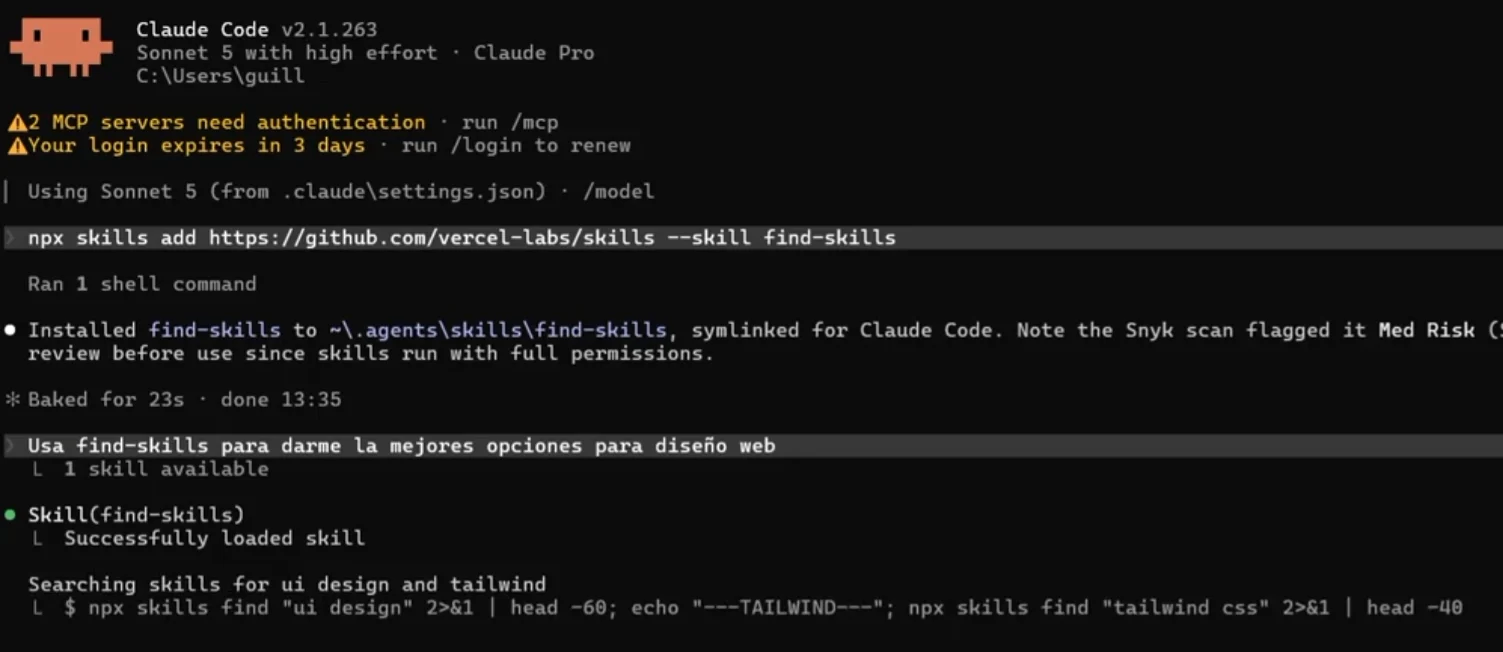
Claude Code’s running interface
The air in that group chat was as clean as an early autumn morning breeze.
The most frequent and deeply discussed topic in the group was the engineering art of “Context” (Context is all the background information and factual basis you provide to an AI before asking it to make a judgment). I still clearly remember a brilliant discussion: Codex had just iterated on its latest context management approach, and the underlying strategy had undergone a critical shift—from relying on the model to perform “AI summary compression” of long historical conversations in the early stages, to a more restrained “context clipping and coordination” that respected the original scene more.
As soon as the news came out, the group chat instantly boiled over like water coming to a boil. Engineers from different business lines, whom I had never met before, emerged one after another, discussing performance and predicting comparisons. I still remember someone saying: Traditional compression to generate summaries seems to save on the window, but after being rephrased and summarized layer by layer by the model, the most critical details, dependencies, and constraints often get distorted during compression, ultimately amplifying hallucinations; retaining some context and employing clipping strategies would yield better results.
Within minutes of those messages being sent, dozens of likes would spontaneously appear below them. There was no leader applauding; the likes were earned solely by the sharpness of the logic itself.
Normally, everyone in the group chat would unreservedly complain about the company's self-developed large model, LongCat, criticizing its clumsy code generation and its tendency to misunderstand, with one joke after another; but if you carefully read between the lines of those complaints, you could see through their tough exterior to their soft hearts – there wasn't a trace of schadenfreude, only the anxiety and hope of wanting something to be better.
The group chat also gathered a bunch of sharp minds, such as various impersonators of "Musk" and "TIBO," making it feel like world celebrities were making pronouncements. Whenever major updates were released by the model community at home and abroad late at night, group members could always be the first to share actual test comparisons and performance reviews…
Within that window, no one asked if you were a fresh graduate hire or a seasoned expert with ten years of experience, nor did anyone care who you were. Opinions were judged on their merit, and context determined their depth.
Switching back from the lifeless management group chat to the vibrant CatPaw CLI group, looking at these two screens, one cold and one hot, a persistent engineering metaphor emerged in my mind —
It turns out that the process of a large company's localized illness is essentially the process of its organizational “Context” being intentionally polluted and cropped by intermediate layers.
In the CLI, every excellent engineer holds a reverence for context, preferring to expend effort on precise clipping rather than tolerate distorted “beautification compression.” The classic principle in computer science: Garbage in, garbage out. Even if the underlying model is the smartest in the world, if the preceding context fed to it has had key facts secretly erased or fabricated premises inserted, the conclusions it calculates are destined to be hallucinations.
But stepping out of the black-and-white terminal, into the “cliques” formed on the mountaintops, the core skill that the mountain keepers rely on for their livelihood is precisely the reverse manipulation of organizational context:
When facing the highest decision-making层 above, they perform extreme “beautification compression” — erasing the origins of mature open-source base models, folding sunk costs that couldn't produce a complete routing in three years, and compressing the technological tide collectively pushed up by the global AI industry into glittering pages of reports for their own teams;
When facing ordinary employees pointing out flaws below, they employ ruthless “context clipping” — cutting away your history of winning tough battles at three in the morning with zero low-grade performance over the past four years, cutting away the preceding cause of your formal complaint about your direct supervisor's bullying, cutting away the absurd process of setting impossible deadlines without providing standards, leaving only the meticulously edited “recent poor work performance” and prolonged silence.
Fortunately, those dozens of unprompted likes in the CatPaw CLI group, like an underground river still flowing beneath the thick ice of a northern deep winter, silently reminded me again and again:
The group of technologists I initially yearned for is not dead. Those comrades who, hoarse-voiced, battled through the entire C project pipeline on Zoom at three in the morning, those peers whose eyes lit up for even a small leap in real productivity in the command line, are the true pillars supporting this yellow kangaroo through storms and serving hundreds of millions of users.
Epilogue: Leaving the Clique, Returning the Wind to the Kite
That afternoon in late November, the Beijing sky was an incredibly clear blue, dotted with clouds, exuding the unique dryness and crispness of early northern winter.
After nearly a month of absolute silence, seeing three emails go unanswered and the举报 still pending, the exhausting struggle that had spanned the entire autumn finally reached its end. I packed up my workstation, put the “Five-Year Silver Person” award I had received just two months prior and the small kite figurine left by Afeng into my bag, swiped my card, and walked out the door I had opened five years ago.
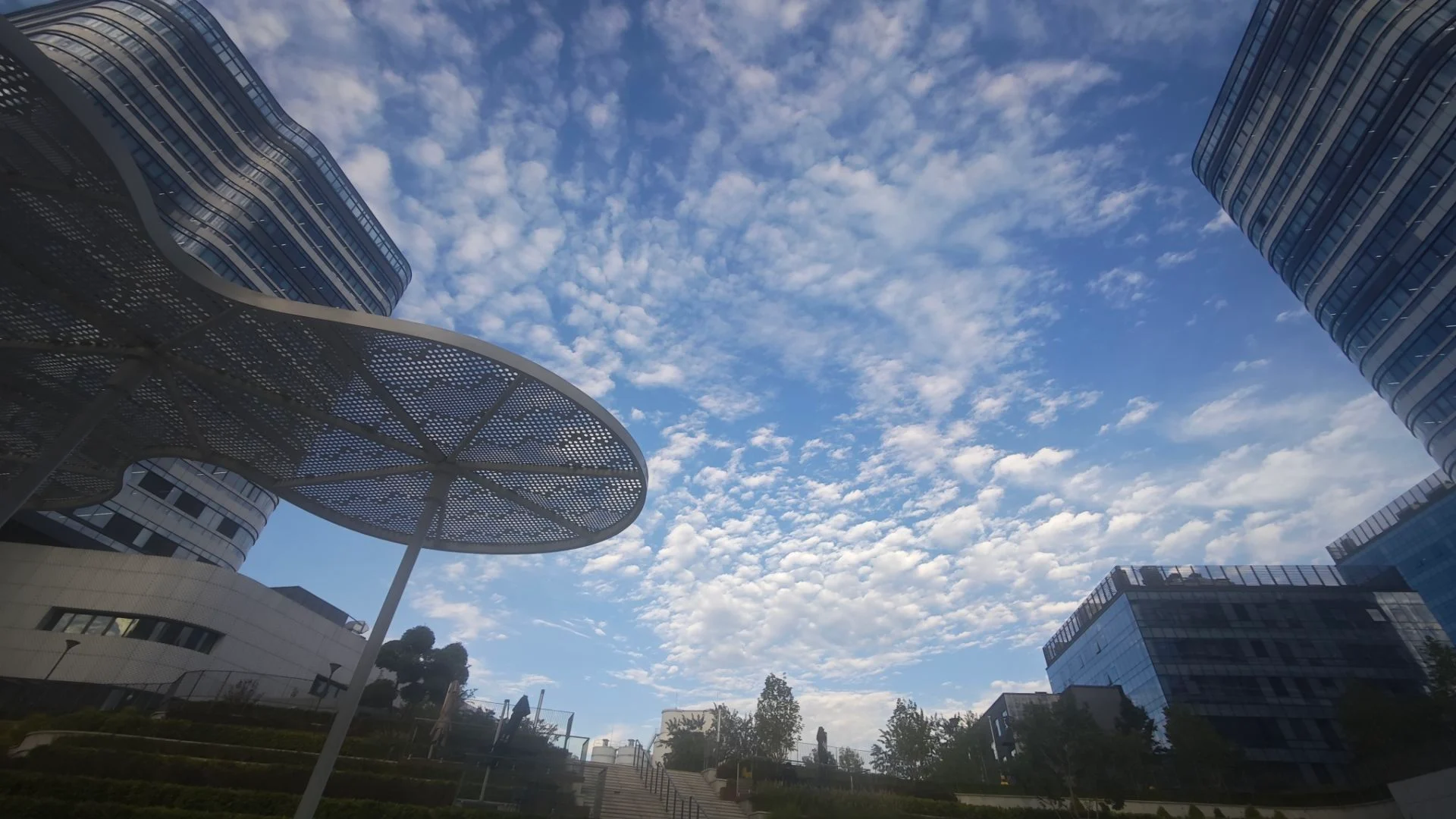
Early Winter Beijing Sky
The moment I stepped out of the building and stood in the sunlight, the early winter wind rushed into my collar. The rash that had repeatedly flared up in the building over the past few months, the tightness in my jaw, and the dull headache, all vanished as I took a deep breath of the uninsulated air, feeling suddenly relieved.
A close friend invited me for coffee and asked if I felt wronged or regretted my meddling that Tuesday in August when I sent that real-name feedback, ending my five years with a departure like this.
Holding my cup, I thought for a moment and shook my head calmly. I didn't regret it at all. In these five years, I had honed my technical skills on the battlefield of complex, real-world business scenarios, experienced the pure joy of five or six people breaking through the entire process on Zoom at three in the morning, and in the extremely harsh headwinds of the last two months, I had validated my ability to deliver flawlessly based purely on technical hard metrics, without any artificial inflation. Those skills and judgment, ingrained within me, could not be taken away or cropped by anyone.
That night when I returned home, I put the “Five-Year Silver Person” award into the bookshelf and placed the palm-sized kite figurine back next to my personal desk monitor, right beside it was an AI terminal window with a blinking cursor.
Gazing at the small kite, I recalled Afeng shouting “I am also a person” in the seventh-floor corridor and all the events that followed. A kite, seemingly suspended in mid-air, is forever bound within the radius defined by the invisible string held tightly in the hands of the mountain keepers below—following their wind, you can only circle beneath the insulation layer; going against their wishes, they can yank you into the mud with a tug of the string. Only when that string is released does the wind of the entire wilderness truly belong to the kite itself.
“A strong wind does not last a morning, a heavy rain does not last a day”
In the old cycle of handwritten code and information black boxes, the mountain strongholds built with rhetoric, hoarding personnel, and mutual protection seemed invincible; but we stand at the end of 2026—the tide of computing power and the true fire of open engineering are reshaping everything at tenfold speed. All sandcastles that deviate from true value do not need anyone to tear them down; the era itself will complete the reckoning.
Whenever a system experiences a serious failure, a qualified engineer is never satisfied with merely the disappearance of alarms and the repair of the problem. They will also write a COE (post-mortem analysis). Writing this last line is my most dignified farewell to the past five years, and my final git commit to this period of my youth.
I dedicate this article to my comrades who stayed up nights together on Project C, to the sharp and frank classmates in the CatPaw CLI group like “Musk” and “TIBO”, and to every ordinary engineer who, at this moment, is still sitting in front of the screen, diligently treating every Prompt, every line of code, and every clean context with seriousness.
May you take care of your health, keep your edge, and never have to learn to “intentionally not cooperate”.
May that yellow kangaroo finally shake off the rust on its back and continue to move forward with abandon; may everyone who does things earnestly no longer be trapped in the group.