By | Wu Yingjiao Liu Hu

Chen Lin was 42 years old when she deposited the money, and is now 62. The missing deposit has not yet been recovered. Photo provided by the interviewee.
In 2005 and 2006, Chen Lin, a woman from Shaoyang, Hunan, deposited 5 million yuan into the Shaoyang Rural Commercial Bank. However, when she went to withdraw the money in 2008, she was told that the money had been transferred by the bank, and the original copies of the five fixed deposit certificates she held were also confiscated by the bank on the spot.
Shocked, Chen Lin immediately reported the case to the police. Ironically, as the victim, she was not protected, but instead suffered from overnight fatigue “interrogation”, and the police repeatedly forced her to give up the idea of pursuing the bank. Since then, a 17-year-long rights protection journey has begun. In 2024, the Hunan High Court rejected her retrial application, believing that her pursuit of the bank “violated the principle of good faith and credit”.
After 17 years of fruitless pursuit, the 5 million yuan deposit disappeared into thin air, and no one took responsibility, which can be said to be a case of injustice with no one to blame and no one to pay the debt. Behind this bizarre incident, there is a complex and ambiguous relationship between the local public security, procuratorate, law enforcement agencies and financial institutions.
01
5 million yuan bank deposit disappeared
Chen Lin and Guo Xuequn were originally husband and wife, and they divorced by agreement in 2005. Between October 6 and 13, before and after the divorce, Guo Xuequn deposited three fixed deposits into Chen Lin’s account at the Da’an Street Branch of the Shaoyang Municipal Rural Credit Cooperative (later renamed “Baozhong Branch of Shaoyang Rural Commercial Bank Co., Ltd.”, hereinafter referred to as “Shaoyang Rural Commercial Bank Baozhong Branch”), each with 1 million yuan, with a term of six months and automatic renewal upon maturity, and an annual interest rate of 2.07%.
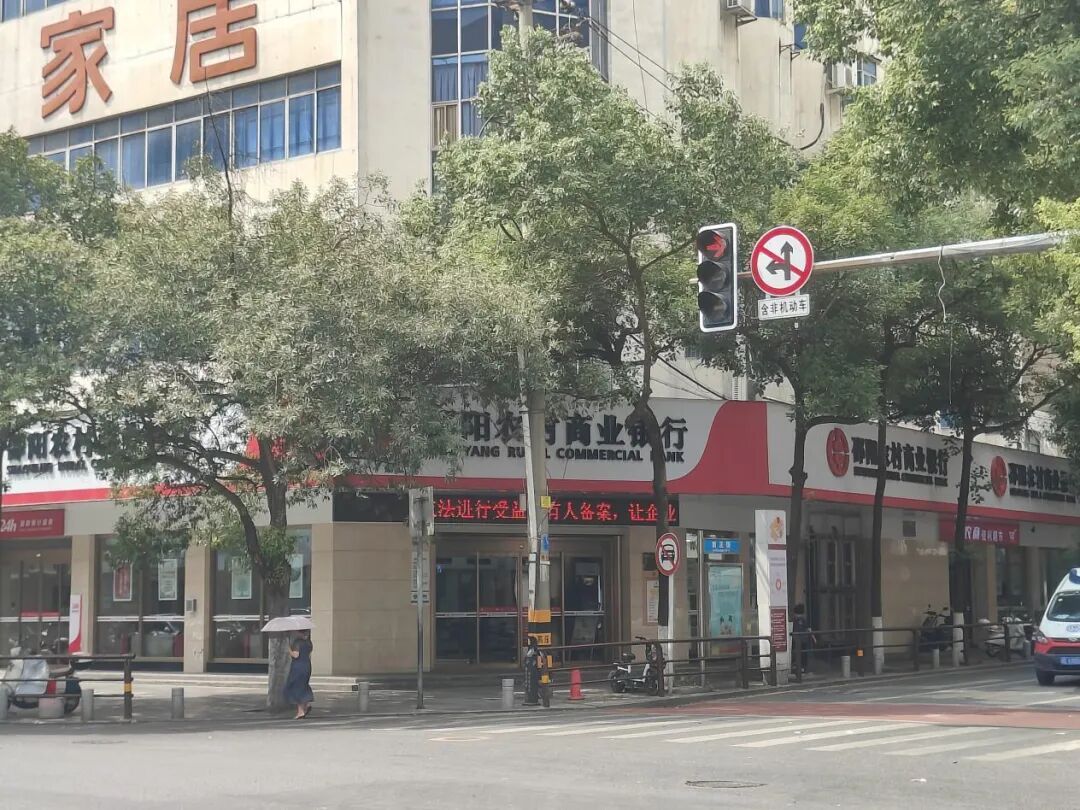
Shaoyang Rural Commercial Bank Baozhong Branch. Photo by Liu Hu
Guo Xuequn’s choice to deposit money in this bank was closely related to a staff member named Zhu Ping. Zhu Ping was not only an employee of the bank, but also ran the “Changsheng Tire Supermarket”. Guo Xuequn was engaged in the bill discounting business at the time and had dealings with her. “She said that she had a task to attract deposits in the Rural Commercial Bank, and if she completed the task, she would not have to go to work and could concentrate on doing business. She also promised to give me some benefits, about several thousand yuan per month for every 1 million yuan. It was cost-effective and could help, so I deposited the money,” Guo Xuequn recalled.
On October 6 of the same year, Zhu Ping submitted a forged “Mortgage Guarantee Letter” to the Shaoyang Rural Commercial Bank Baozhong Branch, which was stamped with Chen Lin’s seal and signature. The guarantee letter stated: “I (Chen Lin) deposited RMB 3 million yuan in your company on October 6, 2005, with a term of six months, and it will be automatically renewed upon maturity. I voluntarily handle the bank acceptance bill for Shaoyang Shuangqing District Changsheng Tire Supermarket as a mortgage until it is paid off. I hereby fully authorize Zhu Ping to handle this business.”
After that, on April 6, 2006, Chen Lin added two more fixed deposits through Guo Xuequn, each with 1 million yuan, under the same conditions as before. Until July 26, 2007, Zhu Ping forged another “Commitment Letter”, which clearly stated: “I (Chen Lin) promise that after the above-mentioned 5 million yuan of acceptance bills mature, your company will directly transfer 5 million yuan from Chen Lin’s deposit in your company to the account of Shuangqing District Changsheng Tire Supermarket to pay the matured bank acceptance bills.”
As Changsheng Tire Supermarket failed to repay as scheduled, Shaoyang Rural Commercial Bank Baozhong Branch directly deducted Chen Lin’s 5 million yuan deposit.
On November 19, 2008, Guo Xuequn, entrusted by Chen Lin, went to the bank with five fixed deposit certificates to withdraw the money, but was told that the 5 million yuan had already been transferred, and even the original copies of the five deposit certificates were withheld. “The money was originally prepared for my child to study abroad, but I didn’t expect that it would not be safe to deposit it in the bank!” Chen Lin said.
After the incident, Guo Xuequn and Chen Lin immediately reported the case to the Daxing Branch of the Shaoyang Municipal Public Security Bureau. The police initially found that it was Zhu Ping who forged Chen Lin’s signature that led to the huge sum of money being deducted.
02
The victim became the object of “interrogation”
On November 21, 2008, the Daxing Branch of the Shaoyang Municipal Public Security Bureau decided to investigate Zhu Ping’s suspected fraud. The appraisal results showed that the “Mortgage Guarantee Letter” issued by Zhu Ping on October 6, 2005, and stamped with Chen Lin’s seal, was not written by Chen Lin herself.
However, the direction of the case became more and more bizarre. A month later, the Daxing Branch of the Shaoyang Municipal Public Security Bureau notified Chen Lin and her ex-husband Guo Xuequn to go for questioning. According to common sense, as victims, they should not be frequently summoned after the first report and the completion of the record, unless there was new progress in the investigation of the case. But in the two days from December 26 to 27, 2008, the public security organs repeatedly “questioned” the two – Guo Xuequn 5 times, Chen Lin 3 times, and adopted the method of fatigue interrogation to ask questions overnight.
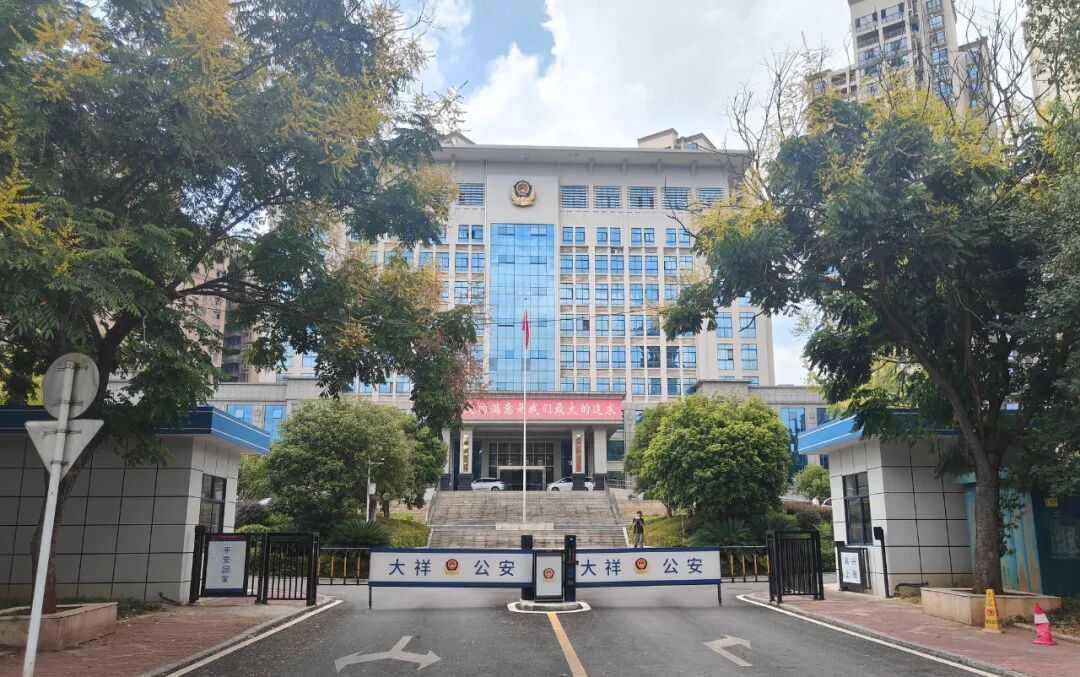
Daxing Branch of Shaoyang Municipal Public Security Bureau. Photo by Liu Hu
“From all the records, the real purpose of the public security is not to find out the facts of the case, but to force the two to give up their right to pursue the 5 million yuan deposit through continuous questioning and night pressure, so as to resolve the risk for Shaoyang Rural Commercial Bank,” Chen Lin’s lawyer pointed out.
As soon as Chen Lin and Guo Xuequn arrived at the Public Security Bureau, they were forcibly separated and locked in an office to be questioned. Guo Xuequn recalled: “They threatened me, and a young man even hit me. If I didn’t sign the record they wrote, they wouldn’t let me leave.”
In the afternoon, the police took Guo Xuequn to the detention center to see Zhu Ping. “She was on an IV drip, saying she had cut her wrists and committed suicide. The police took the opportunity to threaten me: if I didn’t sign, I would be locked up.” Subsequently, Guo Xuequn was taken back to the Public Security Bureau for continued “interrogation” until the next day.
The core of the police’s questioning was only one: to make Guo Xuequn state that he would no longer pursue the 5 million yuan from the bank. In the end, he wrote in the record: “As long as Zhu Ping can compensate for my losses, I will not ask the credit cooperative for money.”
The signature time of this record was 16:40 on December 27, 2008, which was exactly 28 hours and 10 minutes after he first accepted the questioning. The lawyer said bluntly: “During this period, the public security did not let him sleep, and interrogated him all night, and the means were more cruel than those used to treat criminal suspects.”
Chen Lin also suffered from coercion. “Five or six people surrounded me and threatened me. I looked at the first record, and I didn’t look at the next few at all. They all wrote them and asked me to sign. If I didn’t sign, they wouldn’t let me go. My son was in his senior year of high school at the time, and I was worried about him being alone at home. That night, I was forced to sign and go back until 2 a.m.”
In her record, there was such a sentence: “The 5 million yuan in my name in Shaoyang Da’an Credit Cooperative belongs to Guo Xuequn, and Guo Xuequn decides whether to withdraw the money from Da’an Credit Cooperative.” Chen Lin’s lawyer pointed out that this sentence was crowded and exceeded the frame, which was obviously added later, and even if it was true, it did not have any legal effect. “This is not said to the debtor, but to the public security organs, which can only prove that the public security illegally intervened in the economic dispute.”
Chen Lin “admitted” that the 5 million yuan belonged to Guo Xuequn, and Guo Xuequn promised the public security that he would “no longer pursue”. At this point, the police “resolved the siege” for the bank.
This absurd drama staged by Shaoyang Public Security at night not only reversed the positions of the victim and the suspect, but also cast a heavy shadow over Chen Lin’s 17-year-long rights protection journey.
03
The bank lost the case, and the first instance ruled to return 5 million
In the eyes of Chen Lin and Guo Xuequn, even if they were forced to give up their claim against the bank under the threat of the police, as long as Zhu Ping was finally held accountable and compensated for the loss, they could accept it. However, reality once again exceeded their expectations.
On March 3, 2009, the Daxing Branch of the Shaoyang Municipal Public Security Bureau transferred the case of Zhu Ping’s suspected fraud to the procuratorate for review and prosecution. But on August 21 of the same year, the Daxing District Procuratorate issued a letter, stating that the case “did not yet meet the conditions for prosecution” and suggested that the public security organs withdraw the prosecution opinion and continue to supplement the investigation. After that, the case has been pending. Until July 7, 2021, the Daxing Branch officially decided to withdraw the case on the grounds that “the crime had exceeded the statute of limitations.”
This “Notice of Withdrawal” completely shattered the last psychological defense line of Chen Lin and Guo Xuequn. The 5 million yuan that disappeared out of thin air was not only not repaid, but also no one was held accountable. In order to recover the deposit, Chen Lin had to point the finger at the bank again. She sued Shaoyang Rural Commercial Bank and its Baozhong Branch in court on the grounds of a savings contract dispute.
On December 30, 2021, the Beita District Court of Shaoyang officially filed the case and held a public hearing. During the trial, Chen Lin stated: The criminal part of this case has been closed by the public security, and Zhu Ping has not been held criminally liable. As a depositor, she deposited 5 million yuan into the bank and had established a legal savings contract relationship with the bank, and the bank had the obligation to ensure the safety of the funds. The bank’s responsibility was entirely on the bank’s side due to its review errors, which led to the funds being misappropriated. More seriously, the bank not only failed to fulfill its guarantee obligations, but also forcibly withheld her deposit certificates, which was illegal and should bear the breach of contract compensation.
Her claims were very clear: to require the two defendants to compensate for the principal and interest of the deposit, and to pay the overdue interest loss.
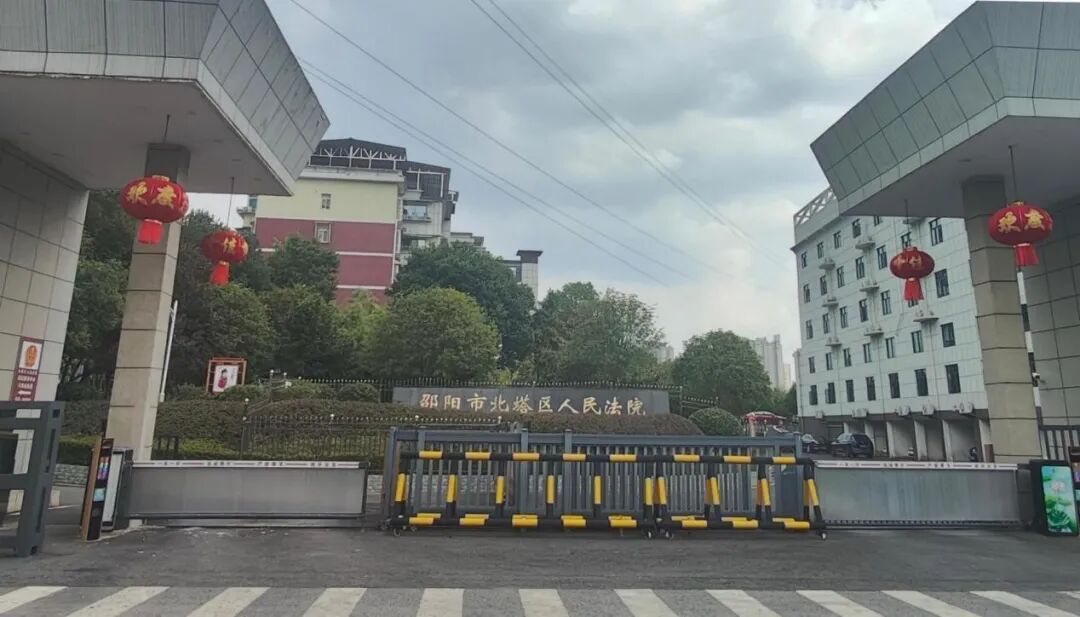
Beita District Court of Shaoyang. Photo by Liu Hu
Shaoyang Rural Commercial Bank and its Baozhong Branch argued that: the deposit involved in the case was actually owned by the third party Guo Xuequn, and Chen Lin was only the nominal account holder, and there was no real savings contract relationship between the two parties, and Chen Lin did not have the qualifications of a qualified plaintiff, and requested the court to dismiss all her claims.
After the trial, the Beita District Court found out: Guo Xuequn did deposit 5 million yuan into Chen Lin’s account, and the bank issued five fixed deposit certificates with a value of 1 million yuan each. The account name on these deposit certificates was “Chen Lin”, and Chen Lin’s signature was also on the corresponding deposit slips. The court ruled that Chen Lin and the bank had formed a true and effective savings contract relationship, and Chen Lin, as the account holder, was the legal right subject in this legal relationship. The bank’s defense reason of “the actual owner is Guo Xuequn” was unfounded.
At the same time, the court also confirmed: Zhu Ping used the forged “Mortgage Guarantee Letter” to defraud the bank acceptance bill, and the document was both invalid and illegal. The bank did not fulfill its reasonable and prudent obligations during the review process, but tried to shirk its responsibility on the grounds of Zhu Ping’s fraud, which was a clear legal error. The court emphasized: “Zhu Ping’s fraud target is the bank, not Chen Lin, and the infringed funds belong to the bank, not the depositor Chen Lin’s deposit. The bank shall not refuse to pay on this ground.”
On May 9, 2022, the Beita District Court made a first-instance judgment: 1. The defendants Shaoyang Rural Commercial Bank and Baozhong Branch must return Chen Lin’s deposit of 5 million yuan within ten days after the judgment takes effect, and pay interest at an annual interest rate of 2.07% from the date of deposit to the date of actual return; 2. Dismiss Chen Lin’s other claims.
04
From hope to despair, illegal records are legalized
The first-instance judgment of the Beita District Court seemed to ignite hope for Chen Lin to recover her deposit. However, the good times did not last long, and the case fell into a fog after entering the second-instance procedure.
The Shaoyang Intermediate Court ruled to remand the case for retrial. What was shocking was that the Beita District Court made a completely different conclusion from the previous one in the retrial.
On July 4, 2023, the Beita District Court ruled to dismiss Chen Lin’s lawsuit on the grounds that it was not appropriate for the public security organs to withdraw the case on the grounds of Zhu Ping’s fraud “exceeding the statute of limitations”, and that the investigation of whether Zhu Ping was suspected of fraud should continue.
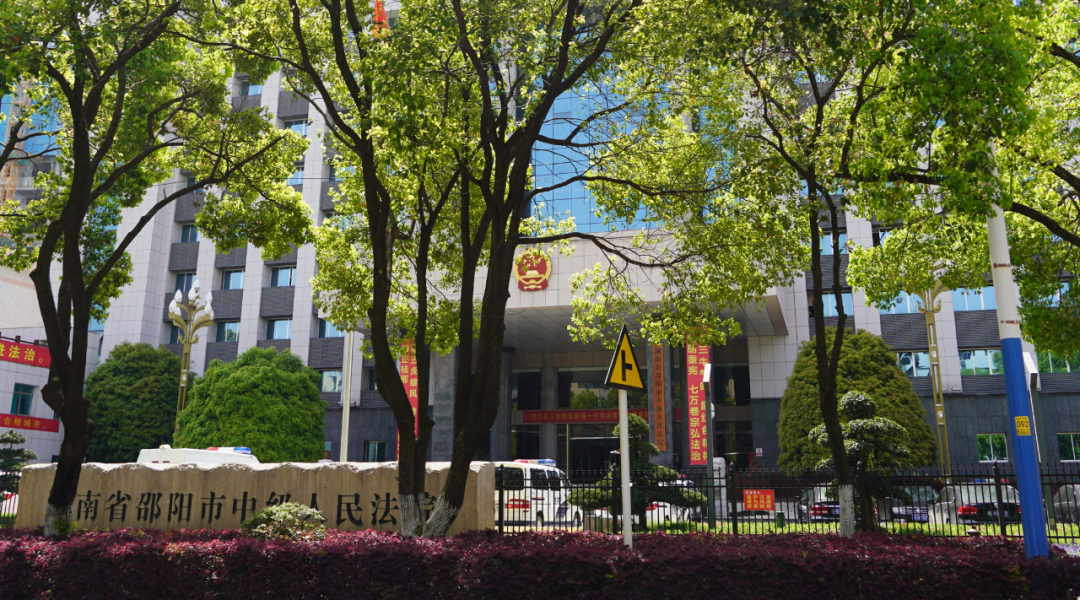
Shaoyang Intermediate Court. Photo by Liu Hu (data photo)
Subsequently, the Shaoyang Intermediate Court upheld this ruling. With no way out, Chen Lin had to appeal the case all the way to the Hunan High Court.
On July 9, 2024, the Hunan Provincial High Court made a ruling to reject the retrial application. Its reasons mainly included four aspects:
Chen Lin’s record. Chen Lin stated in the public security inquiry: The 5 million yuan involved in the case belonged to Guo Xuequn, and Guo Xuequn also decided whether to withdraw the money.
Guo Xuequn’s record. The court cited Guo Xuequn’s statement in the public security organs: He had negotiated with Zhu Ping to use this deposit to handle the acceptance bill for Zhu Ping’s Changsheng Tire Supermarket, and Zhu Ping would pay him remuneration. Due to the failure of the acceptance, the 5 million yuan was deducted.
Chen Lin’s “knowledge” and “recognition”. Chen Lin “knew” that Guo Xuequn deposited 5 million yuan in her name and guaranteed Zhu Ping to handle the acceptance, and had received so-called “high interest” from Zhu Ping. Although she did not sign the guarantee letter, she should be regarded as recognizing the guarantee matters because she did not raise any objections and received fees.
The principle of “good faith and credit”. **The court emphasized that Guo Xuequn had signed an agreement in the public security organs, giving up the pursuit of the bank for 5 million yuan, and confirmed it again in the procuratorate, which was his “true expression of will”. Since the parties had given up the pursuit, Chen Lin sued again, “obviously violated the principle of good faith and credit”.**
In this regard, the Hunan High Court completely denied Chen Lin’s retrial application on the grounds of “giving up the pursuit + knowing the guarantee”. However, Chen Lin’s lawyer raised sharp questions:
“The content of the records cited by the High Court is inconsistent with the real records in the case file, and there are situations of taking out of context and even adding fuel to the fire. More seriously, the ruling completely ignored the fact that the public security organs adopted the night fatigue ‘interrogation’ in 2008, and forced the reporting person and the victim to form records, but still adopted this kind of illegal evidence, which obviously violated the law.”
The lawyer further pointed out that the retrial procedure should have only examined whether the reasons for the application were valid, but the judge in this case exceeded his authority and made a judgment on the entity of the case, which seriously deviated from procedural justice.
05
The depositor became a scapegoat, and the criminals went unpunished
Chen Lin’s savings contract dispute with Shaoyang Rural Commercial Bank, which has been delayed since 2008, has almost gone through all levels of judicial organs in Hunan. After the Hunan High Court rejected her retrial application, she had no choice but to turn to the procuratorate to apply for supervision.
Chen Lin’s lawyers Guo Xiongwei and Lü Jiao pointed out: The Beita District Court cited Article 11 of the “Provisions of the Supreme People’s Court on Several Issues Concerning Economic Crimes in the Trial of Economic Disputes” in the first retrial, and dismissed the lawsuit on the grounds of “involving economic crimes”, which was a clear error in the application of the law. There are three reasons:
First, this case is purely a savings contract dispute, and neither Chen Lin nor Shaoyang Rural Commercial Bank constitutes a criminal subject, and the savings contract is legal and valid, and does not touch the criminal field at all.
Second, the so-called “criminal acts” related to the case have long been investigated and withdrawn by the public security organs, and there is no “undiscovered criminal act”. The court has no right to deny the conclusions of the public security organs in civil cases, otherwise it will directly impact the credibility of criminal justice.
Third, even if the court determines that there is a criminal suspect, it can only transfer the clues, and the civil trial should not be suspended. Mixing the savings contract with the fraudulent acceptance bill is tantamount to replacing the civil judgment with criminal logic.
However, the strange thing is far more than the application of the law. Chen Lin stated in the supervision application: This nearly 20-year-old dispute is mixed with the “interest collusion” between Shaoyang Rural Commercial Bank and the local public security and law enforcement agencies.
She listed a series of “abnormal phenomena”:
First, Zhu Ping forged the guarantee letter and defrauded the acceptance bill, causing major losses of state-owned assets, which should have been the focus of accountability, but was not pursued for more than ten years, and finally ended with the “expiration of the statute of limitations”; on the contrary, the police forced the latter to give up their legitimate rights and interests by long-term threats and imprisonment of Chen Lin and her ex-husband Guo Xuequn.
Second, even if the guarantee letter was forged, the amount was only 3 million yuan, but the bank directly deducted Chen Lin’s 5 million yuan deposit. This approach is more like an excuse for the bank itself to evade internal responsibility.
Third, the case handlers distorted the interest obtained by Guo Xuequn in the interest-bearing business as “guarantee income”, and rewrote the ownership of the deposit by borrowing the confession of being subject to personal freedom. What’s more absurd is that the retrial ruling deliberately ignored Zhu Ping’s inquiry records.
In fact, the time of the “Guarantee Letter” forged by Zhu Ping was February 4, 2004, but the inquiry records showed that Changsheng Tire Supermarket had already closed at that time and did not have any qualifications to issue acceptance bills. It was not until 2005 that the supermarket re-applied for a business license. In other words, that guarantee letter was invalid from the very beginning.
More importantly, Zhu Ping admitted in the inquiry: She not only frequently cashed through acceptance bills, but also used the names of others to purchase real estate and vehicles, and quickly transferred the funds. These operations outlined a carefully woven fraud chain. The records also revealed that there were a large number of bill transactions between Zhu Ping, Guo Xuequn, and Hu Baoliang, and the relationship had long exceeded “attracting deposits”, but was deeply involved in the acceptance business. But ironically, in all the inquiries, Zhu Ping never accused Chen Lin of providing any help in her fraud.
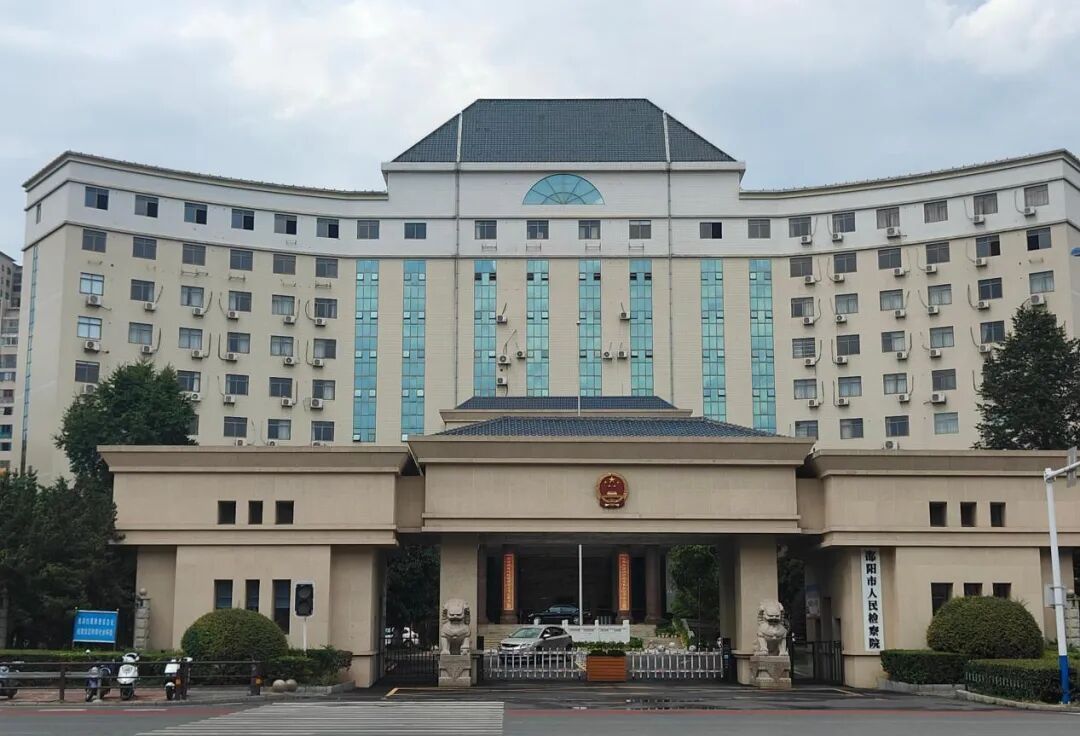
Shaoyang Municipal Procuratorate. Photo by Liu Hu
What is even more alarming is that the details in Zhu Ping’s confession repeatedly pointed to the major negligence of bank staff. The “Supervision Application” wrote:
“Zhang Xiuxiang, a bank staff member, claimed to firmly believe that the guarantee letter held by Zhu Ping was true. It was this ‘firm belief’ that made her ignore the system requirements and did not even make a phone call to verify, and issued more than 3 million acceptance bills for Zhu Ping. How bold!”
The dereliction of duty in these links allowed the fraud chain to operate smoothly, but no one was held accountable in the judicial judgment.
All the signs are intertwined, outlining a gray picture: when the legal provisions are deliberately misinterpreted, when the responsibility is deliberately transferred, the relationship between the public security, procuratorate, law enforcement agencies and the bank involved in the case has become ambiguous.
“The supervision application we submitted to the Shaoyang Municipal People’s Procuratorate, the procuratorate did not respond to the supervision request at all, but illegally conducted an entity review of the case; the Hunan Provincial People’s Procuratorate also rejected the review application.” Lawyers Guo Xiongwei and Lü Jiao said that the two levels of procuratorates were derelict in their supervisory functions.
Since the 5 million yuan deposit “evaporated” on the bank’s books, Chen Lin’s rights protection journey has lasted for nearly 20 years.
Chen Lin said indignantly: “Under the real-name system of national deposits, 5 million yuan is my legal deposit. The bank deducted it without my and Guo Xuequn’s consent; now I am called ‘in violation of the principle of good faith and credit’ by the Hunan High Court through litigation rights protection, how ironic!”
Discover more from 自由档案馆
Subscribe to get the latest posts sent to your email.