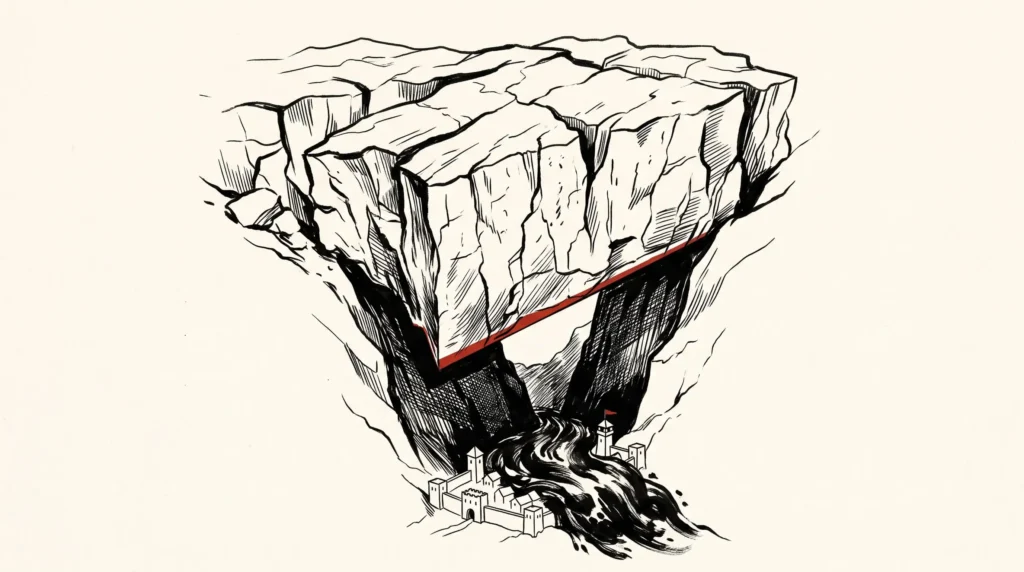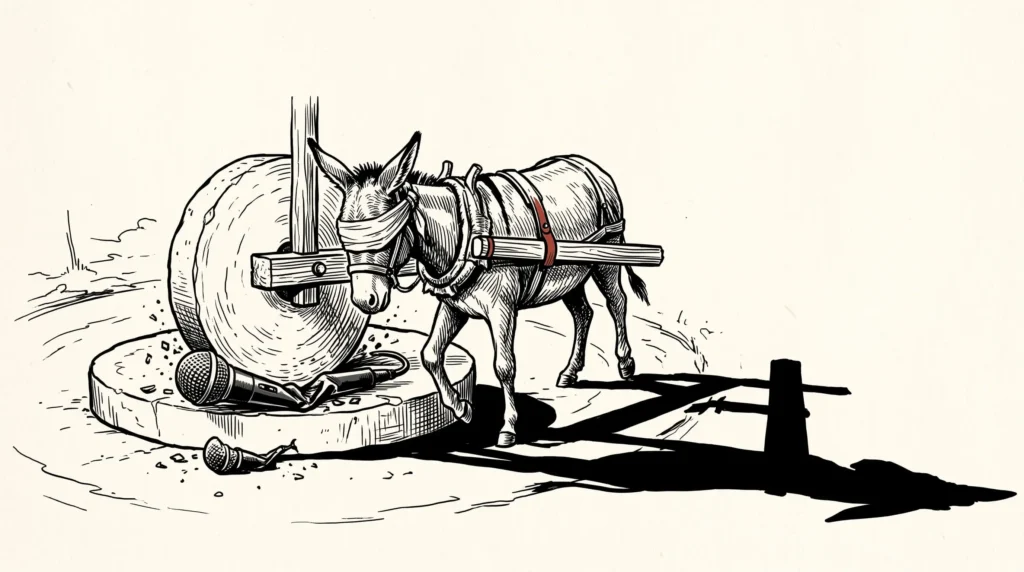
In just a few years, the world has changed.
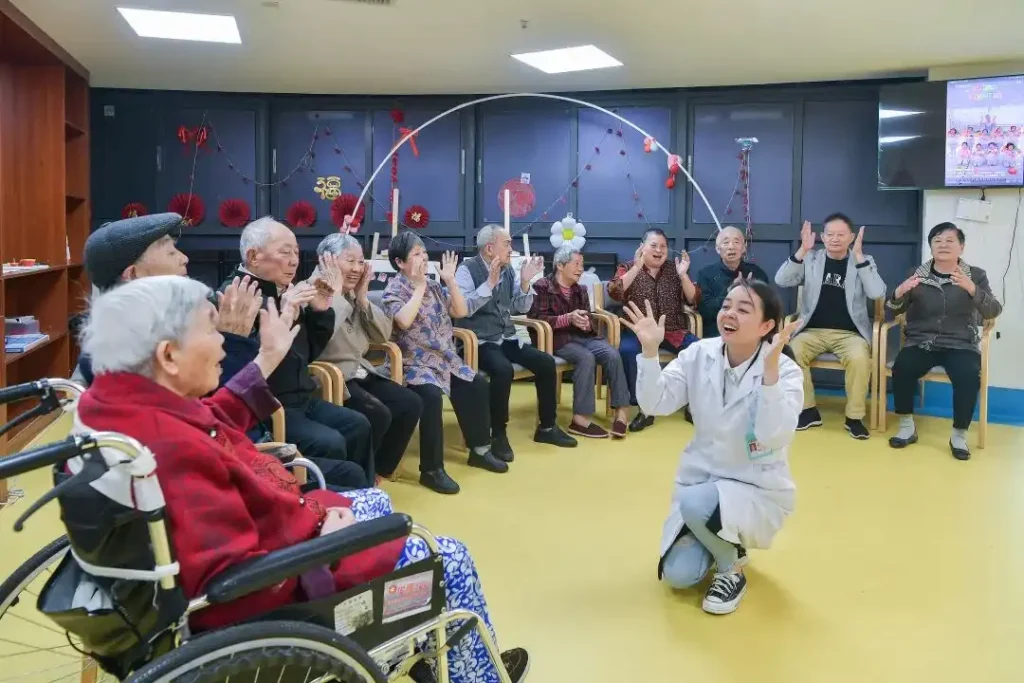
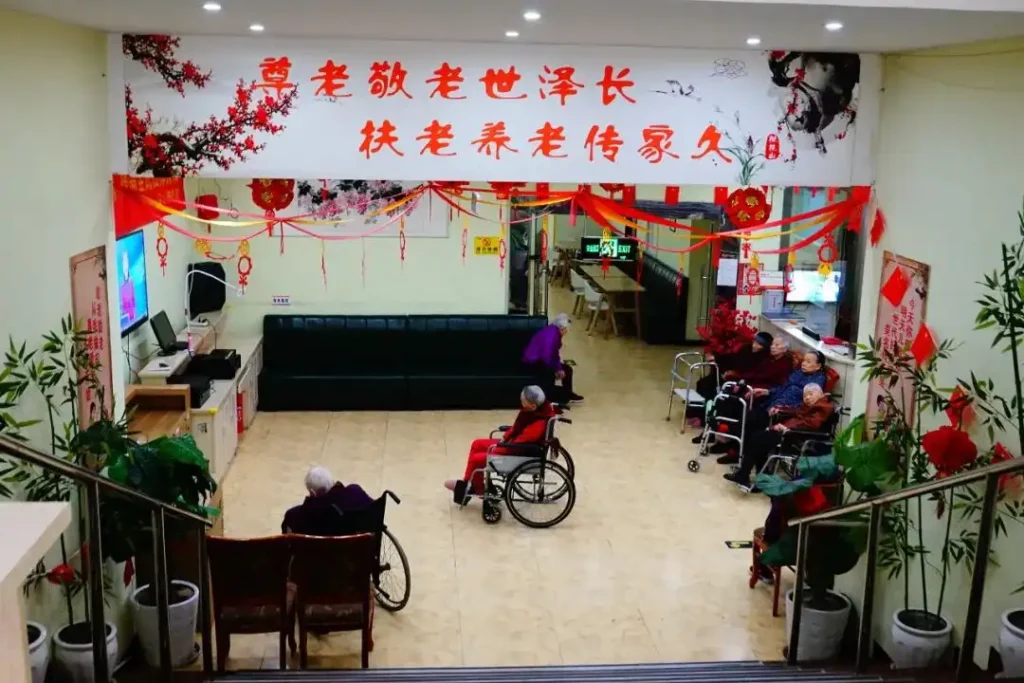
The difference between a kindergarten and a nursing home is merely replacing “little children” with “old children.” From this perspective, the transition of kindergarten teachers to elder care is indeed smoother than in most industries, at least it’s not starting from scratch.
Written by丨Qing Liu
Recently, media reported that with changes in the demographic situation, some kindergarten teacher training institutions are accelerating their transformation, with some focusing on the elder care sector.
For example, some kindergarten teacher training institutions claim to focus on the “one small, one old” educational characteristic, with “preschool education and health service management as two core complementary and supportive modules”; others are focusing on new business models such as “joint elderly and child care,” “domestic services + elder care,” and “domestic services + childcare,” breaking down professional silos; still others are offering “smart health and elder care services and management” majors to “precisely meet people’s livelihood needs.”
These are not bad ideas. Kindergartens are struggling to enroll enough students, and kindergarten teacher graduates face employment difficulties, while there is a huge shortage of elder care service talent. On one hand, there is a surplus, and on the other, a shortage. The transition seems logical.
In addition, there are sayings like “kindergarten to primary, primary to middle, middle to high school,” which are self-explanatory. It means that with the continuously decreasing number of newborns, teachers are “fleeing” upwards to avoid being caught by the tide of unemployment.
These transitions may be tears of the times for many kindergarten teachers.
01
According to the “National Education Development Statistics Communiqué 2025” released by the Ministry of Education, in 2025, there were a total of 231,900 kindergartens nationwide, with 32.2552 million children enrolled in preschool education. In 2024, there were 253,300 kindergartens nationwide, with 35.8399 million children enrolled in preschool education.
This means that in 2025, the number of kindergartens decreased by 21,400, and the number of children enrolled in preschool education decreased by 3.5847 million.
The downward trend occurred very rapidly, with the number of enrolled children declining for the first time in 2021.
This was only 5 years ago. In 2021, the number was still 48.0521 million. Today, this number has dropped by more than 10 million.
One can imagine how sharp this turn was. At that time, the main theme of the industry was “difficulty entering kindergarten” and “shortage of places.” All regions were desperately expanding kindergartens and recruiting more kindergarten teachers. Some kindergartens were never short of enrollment, and even required “lotteries” and “interviews with parents,” presenting themselves as quite “noble.”
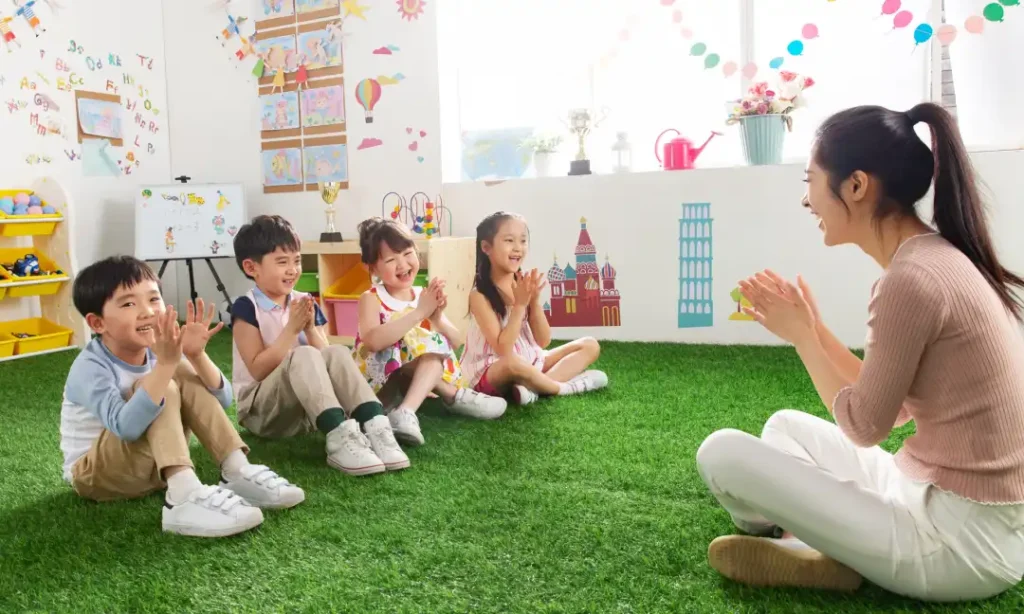
Image/Tu Chong Creative
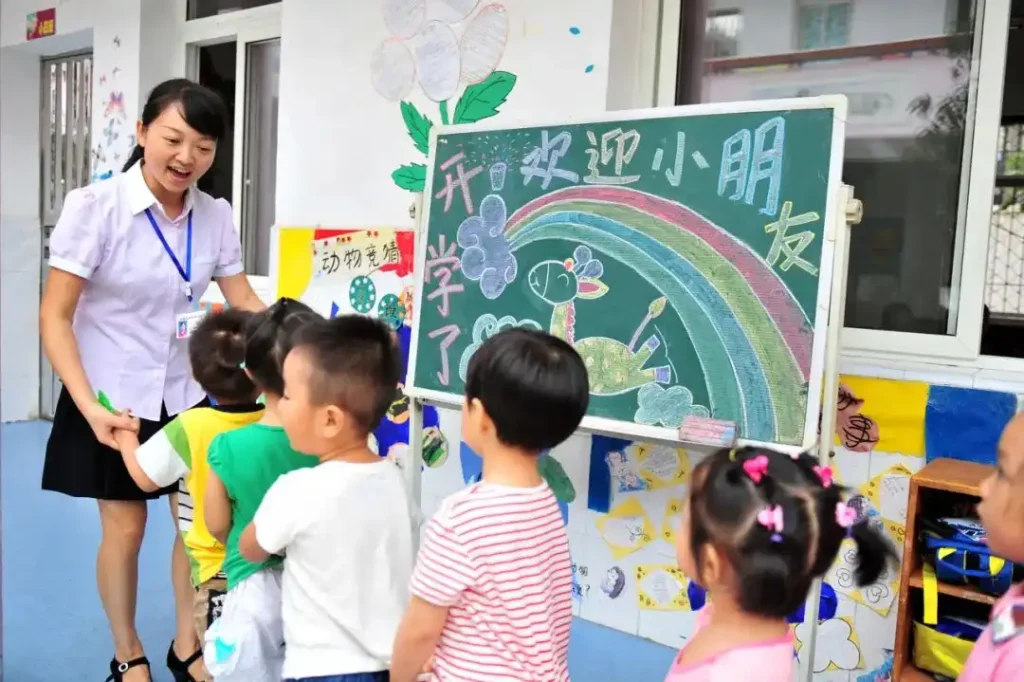
In just a few years, the world has changed. The once unattainable kindergartens are now advertising and handing out flyers, with teachers directly going door-to-door in residential areas to recruit students. Forget interviews; teachers are now as polite as salespersons at a real estate office.
Kindergartens that simply cannot attract enough children are being shut down in batches.
The speed of industrial adjustment seems unable to keep up with the changes in demographic trends. In this context, both kindergartens and teachers are looking around for an escape route.
What comes into view at this moment is the elderly.
02
According to data from the National Bureau of Statistics, as of the end of 2025, China’s population aged 60 and above reached 323 million, accounting for 23% of the total population; the population aged 65 and above was 224 million, accounting for 15.9%. This means that one out of every four or five Chinese people is an elderly person.
And this number is still climbing rapidly. People born during the peak birth years of the 1960s are now crossing the age threshold of 60 in large numbers – that was an era when annual births were often 25 to 26 million, more than three times the 7.92 million today.
According to forecasts from relevant departments, around 2035, China’s population aged 60 and above will exceed 400 million, accounting for more than 30%, entering a stage of severe aging.
On one hand, the number of young children has dropped by more than 10 million in five years; on the other hand, the elderly population is steadily heading towards 400 million. The flow of demand is clear between this decrease and increase. Kindergarten teacher training institutions targeting the elder care sector are simply following the population curve to find a livelihood.
Moreover, in many aspects, the “kindergarten to elder care” transition has many inherent advantages.
For example, a kindergarten teacher training school wrote:
Currently, the demand for elder care services is shifting from basic care to quality-oriented services such as spiritual comfort, recreational activities, and psychological care. The patience, affinity, artistic accomplishment, and activity organization skills accumulated in kindergarten teacher education are highly compatible with the needs of high-quality elder care services.
It seems to be true, taking care of the elderly and children are quite similar.
Both require great patience, and the ability to coax, chat, and soothe emotions. Some of the core skills of kindergarten teachers, such as singing, dancing, handicrafts, playing games, and organizing activities, can be seamlessly transferred to the activity rooms of nursing homes.
Furthermore, nursing homes require space and various facilities, which are almost naturally available in kindergartens. It’s just a matter of changing the specifications and adapting them to the physique of the elderly.
Thus, the difference between a kindergarten and a nursing home is merely replacing “little children” with “old children.” From this perspective, the transition of kindergarten teachers to elder care is indeed smoother than in most industries, at least it’s not starting from scratch.
Image/Tu Chong Creative
Moreover, the shortage in elder care is enormous. According to statistics, as of December 2025, there are about 40 million disabled or partially disabled elderly people in China, while there are only 500,000 certified elder care workers. According to the national standard supply-demand ratio of 1:4, the shortage of nursing talent is 9.5 million.
In other words, on one side, there is a demand for nearly a million-level talent, and on the other, there are a large number of kindergarten teachers with matching skills needing placement. It’s a match made in heaven.
It’s no wonder that kindergarten teacher training institutions are changing course, and the media is happy to portray “kindergarten to elder care” as a ready-made solution – as if the transition is complete as long as classrooms are converted into activity rooms and children’s songs are replaced with old songs.
03
There is a reality that must be faced: the talent gap may not be due to a lack of people, but rather an inability to retain them.
Previous media reports have indicated that long-term high-intensity work, insufficient occupational protection, and excessive psychological pressure often make elder care workers feel that their efforts do not match their rewards, leading to high turnover rates and a significant gap in the workforce.
The “Research Report on the Current Status of the Eldercare Nursing Profession 2024” released by the China Aging Development Foundation shows that the turnover rate of new elder care nurses is 40% to 50%.
For example, data shows that 83.25% of elderly caregivers are between 40 and 59 years old, while young caregivers under 30 account for less than 2%, and the intention to leave is close to 20%.
From this perspective, these kindergarten teachers may not be joyfully embracing new positions, but rather are being pushed by the tide into a choice of last resort.
Image/Tu Chong Creative
This is understandable. The intensity of work and professional sense of accomplishment in caring for the elderly may still be somewhat different from that of kindergarten teachers.
And these are not unique problems to China. Globally, young people are reluctant to engage in elderly care. In Germany, there is a need to add 190,000 full-time elderly caregivers; in Japan, it is estimated that the shortage of caregivers will reach 690,000 by 2040.
Therefore, the transition of these kindergarten teachers is likely to be inevitably tinged with bitterness. When they chose to major in kindergarten education, many harbored aspirations of becoming “child leaders” – with singing and laughter in the classroom, and a sense of accomplishment from watching life grow, no matter how tired they were.
However, moving to the elder care sector, they face the realities of disability, cognitive impairment, birth, aging, sickness, and death, as well as the tedious and heavy care work of feeding, turning, and bathing, and likely salaries and social expectations that may not be met.

Image/Tu Chong Creative
Of course, some places are now implementing the “kindergarten to primary, primary to middle, middle to high school” approach, where some regions directly upgrade teachers. For example, Changting, Fujian, selected 30 primary school teachers in 2025 to teach in middle schools; Fengcheng, Jiangxi, publicly transferred rural primary school teachers to rural middle schools, explicitly stating in the announcement that it was to “resolve the contradiction of surplus rural primary school teachers and shortage of rural middle school teachers.”
Firstly, this approach has a ceiling. For example, while “rotation” from primary to middle school, or even high school, might be possible, it is difficult for kindergarten teachers, whose training systems are completely different, to transition. Primary and middle school teachers are at least trained in specific subjects, which is very different from the “preschool education” of singing and dancing.
Secondly, this is ultimately a temporary measure. The surplus and shortage between different educational stages are the result of the same population peak shifting upwards. As time goes by, the remaining space will become narrower.
After the waves of population fluctuations pass layer by layer, every educational stage will face shrinking student enrollment, and the ladder for teachers to “flee” upwards will eventually reach its limit. Finally, one cannot connect middle school and university to let teachers directly enter higher education, right? This is currently unimaginable.
It can be seen that whether it is “kindergarten to elder care” or “kindergarten to primary school,” for many young people, it is a price they have to pay due to the changing circumstances of the times.
04
Currently, it seems that many people are beginning to look at the world differently, viewing the elderly as an opportunity.
For example, previous media reports indicated that Hainan, Yunnan, Sichuan, Guangxi, Guizhou, Jilin, and other places have introduced measures to vigorously develop the health and wellness tourism industry.
This is similar to the current transition of kindergarten teachers, both are adjusting course along the population curve. Tourist cities are targeting the silver-haired demographic for retirement tourism, real estate developers are converting properties into elder care apartments, and even milk powder companies have launched formulas for middle-aged and elderly people.
For a time, the “silver economy” seems to have become a life-saving straw for all industries, as if whoever can capture the elderly will capture the future.
However, just like the potential difficulties faced by kindergarten teachers, whether this can support the overall economy still remains a question mark. Even if many people theoretically calculate the retirement pensions of the elderly, they may not be able to spend as lavishly in their twilight years as young people.
For example, a research report from Qingshan Capital in 2025 shows that over 80% of elderly people did not travel outside in the past year; among the few who did travel, over 80% spent less than 5,000 yuan annually.
“Silver tourism” seems popular, but the reality might be quite stark.
Moreover, the main source of income for the elderly relies on their pensions. And with the changes in demographic trends, the elderly of the future – or the future silver economy – may not have as much wealth as imagined. Where will their (or our) pensions come from? Relying on a group sustained by transfer payments to save industries might not be easy.
Therefore, in the long run, this is a课题 that not only kindergarten teachers but everyone must face. We may all have to get used to “transformation” and “contraction.” Industries that were once thought to be solid may decline sharply in a few years; the majors we studied and the experience we accumulated may have to be completely redone midway.

Image/Tu Chong Creative
At the same time, society’s consumption patterns and operational logic will also be reshaped. For the past few decades, we have been accustomed to focusing on “growth.” In the future, we may have to focus on “stock.” Kindergartens will be converted into nursing homes, kindergarten teachers will become caregivers, and maternal and infant stores will be replaced by rehabilitation therapy centers, etc.
There are no longer as many future children to nurture; instead, more attention needs to be paid to settling down in the twilight years of life. Our focus must shift from the “rising sun” to the “setting sun.”
This may seem a bit sad, but it is an unavoidable reality in an aging society, and people still need to cheer up. Moreover, if all of this can be properly arranged, it is actually a good thing.
After all, everyone will face old age one day. If we can truly arrange “contraction” with dignity, allowing those swept by the tide to be more at ease, then all of our later years will be better. Let’s hope so.
Gathering Thoughts, Sharing Sharp Insights
“
China Media Award · Top Ten New Media
Weibo · Best In-depth Reporting Media
Toutiao · Top 100 Financial Headlines
Phoenix Net Comments · Annual Commemorative Media
NetEase Account · Annual Best Signed Author
Phoenix Yidian Account · Annual In-depth Reporting List
Sina Finance · In-depth Thought Financial New Media
Huxiu 2020 Top Ten Annual Authors · Strength List
Baijiahao · Most Popular Original Author for Text and Image Creation
Chuanqi 2017 Self-Media Gala · Annual Newcomer Critic
”
Discover more from 自由档案馆
Subscribe to get the latest posts sent to your email.