Recently, heavy rainfall swept through North China, causing disasters in many parts of the capital and resulting in significant casualties. According to Xinhua News Agency, as of 24:00 on July 28, the maximum rainfall in Beijing was in Miyun Langfangyu and Zhujiayu, reaching 543.4 mm; the maximum rainfall intensity occurred in Huairou Dongyu. “Continuous extreme heavy rainfall caused major disasters. A total of 30 people died due to the disaster in the city, including 28 in Miyun and 2 in Yanqing.”
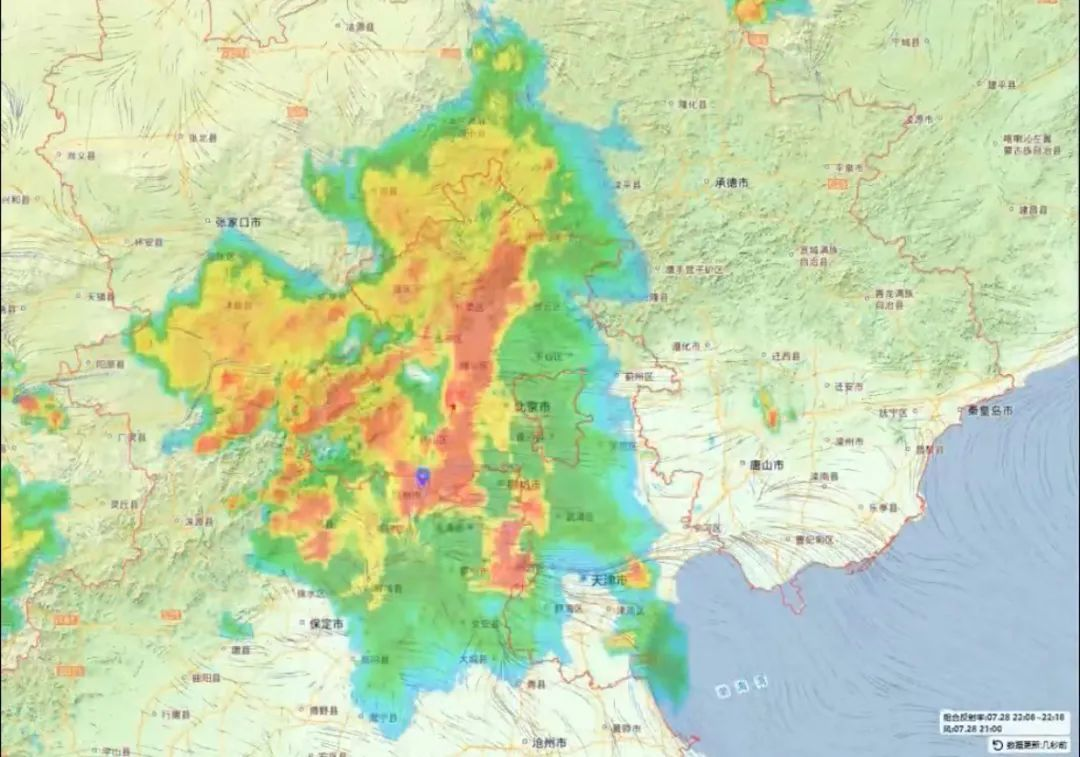
Beizhuang Town is located in the northeast of Miyun District, upstream of the Miyun Reservoir. Villagers Ms. Chen and Ms. Liu’s houses are both on the banks of the Qingshui River and were severely affected.
Ms. Chen from Xiabeizhuang Village recalled that it started raining in the village on July 25, but the rain was not heavy, and the flood receded by half within a day. On the evening of July 27, the rain escalated into torrential rain, which lasted all night, and the water of the Qingshui River began to flow back into the village. In Ms. Liu’s home in Zhujiawan Village, an entire wall was washed away, “The river water was only one step away from entering the house.” And several houses with lower terrain than hers were directly submerged, only the roofs were exposed.
Ms. Chen’s restaurant is located on the bank of the Qingshui River and was also flooded. She left the village before the flood intensified and went to Miyun District. That night, her family members were on duty at the Xiabeizhuang Village Committee, staying up all night, organizing the affected people along the Qingshui River to move to a higher area in the village. Due to the interruption of the signal in the village, Ms. Chen’s contact with her family was intermittent.
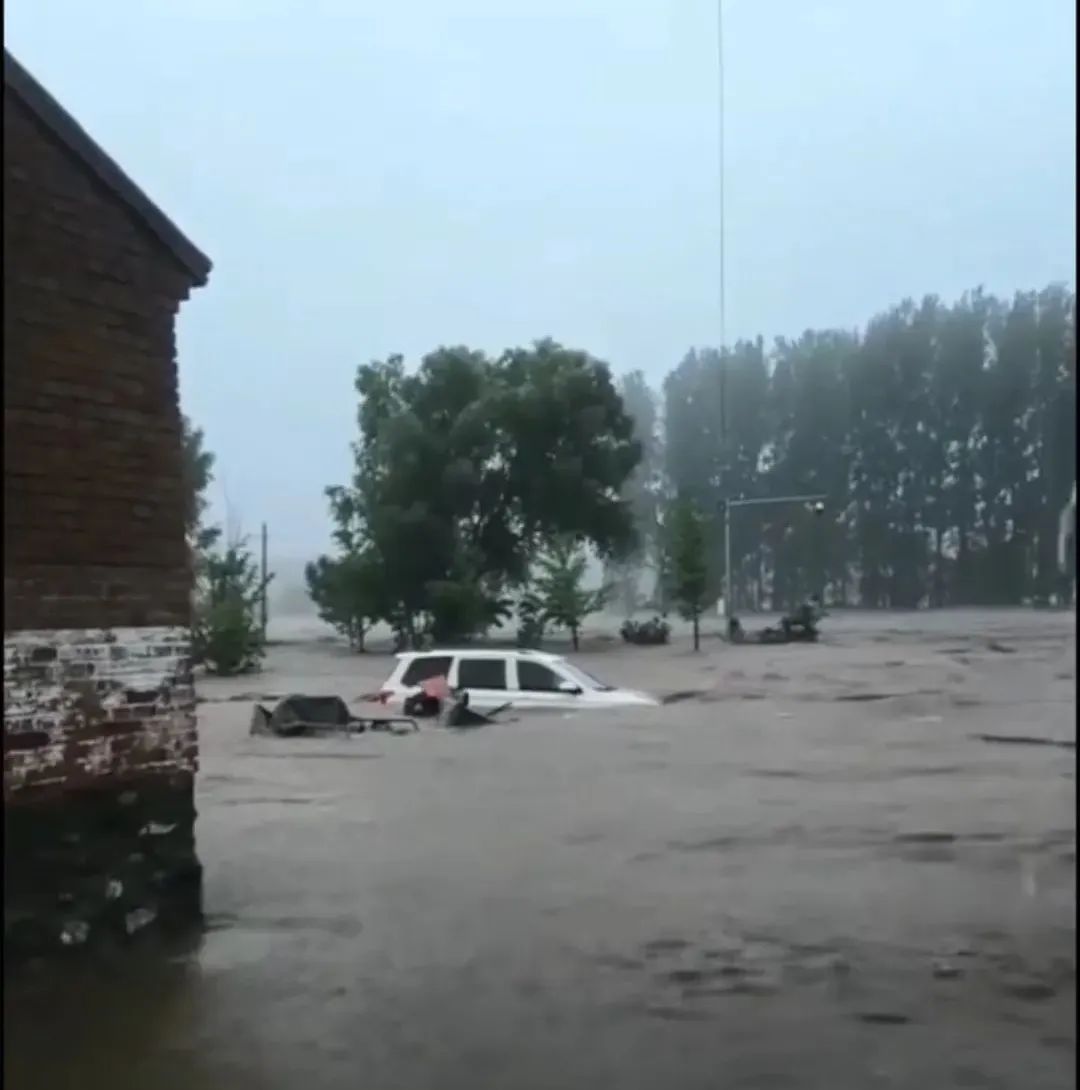
A video taken by Ms. Chen shows that around 4 a.m. on July 28, the flood surged, and most of the houses near the Qingshui River were washed away. The chef of her restaurant could only carefully evacuate from the surrounding small roads. The water depth was already more than one meter at that time. At 6 a.m., a villager was wading through the water, and the water level had reached the waist. Half of the white private cars in the village were submerged, and the multiple rows of trees on both sides of the Qingshui River were also washed down. Helicopters came to the rescue, and the rescuers held the villagers and transferred them one by one.
On the day of July 28, the heavy rain briefly stopped, and the accumulated water receded somewhat. But the rain intensified again at night, and the flood poured into the village again, and the communication signal was also interrupted. Ms. Liu’s family, who were outside the village, could not get in touch with her and were very anxious, “Thinking that it was too late to wait for the rescue, I drove to pick them up and evacuate them from the village,” she said.
After arriving at the entrance of the village, Ms. Liu’s family found that all the roads leading to the village had been cut off. She circled outside the village for three or four hours, but could not find a way in. Helplessly, she parked her car on the overpass and happened to meet a villager who had escaped from the village. The other party told her that there was a small mountain road that could be taken. She followed that road down from the overpass and walked into the village, and finally safely brought out her family of seven. After evacuating, they temporarily lost contact with other residents in the village.
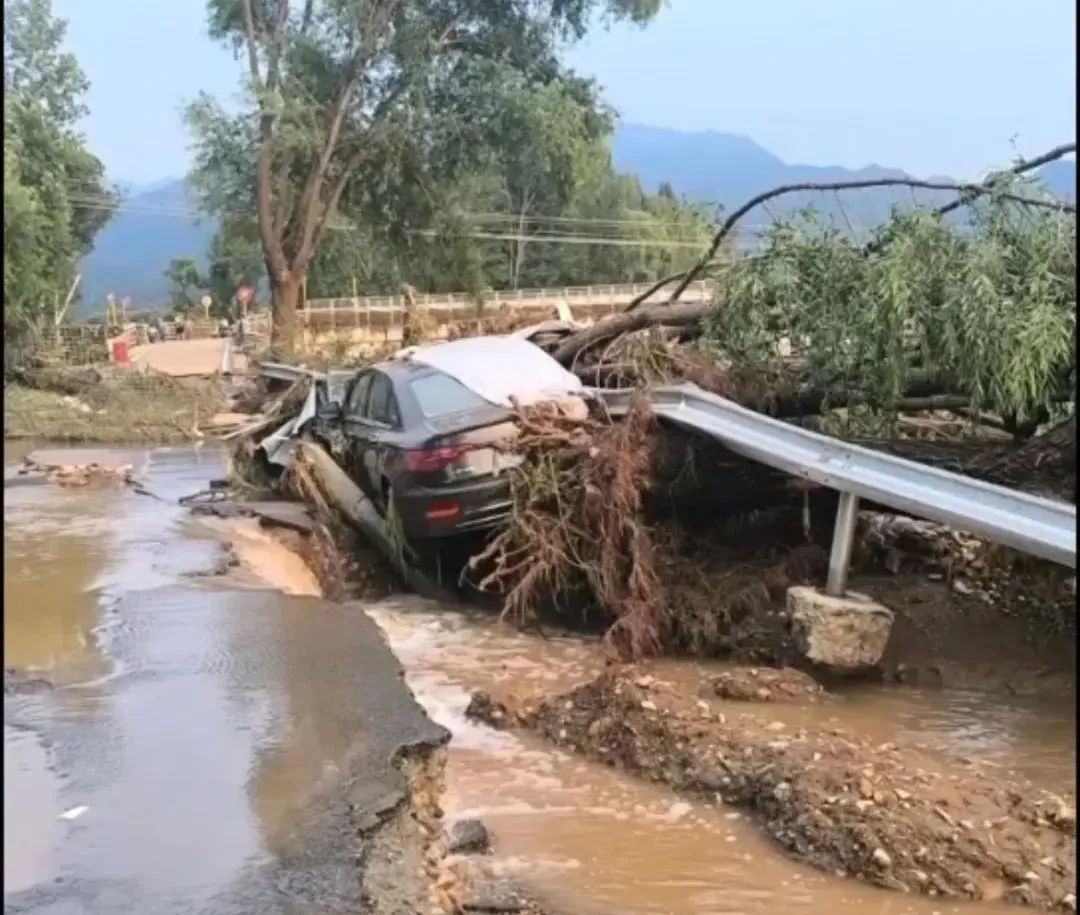
On the day of July 29, after the flood in Xiabeizhuang Village receded, Ms. Chen saw through the video that some villagers were sitting by the river, the road surface near the Qingshui River was severely deformed, garbage was piled up on one side of the river, and a private car was stuck in the mud. The tables and chairs, staff dormitories, and guest rooms in Ms. Chen’s restaurant were also submerged in the mud.
According to information from the Miyun District Government website of Beijing, the Qingshui River is upstream of the Miyun Reservoir and is a tributary of the Chaohe River. It originates from the Wuling Mountain in Xinglong County, Hebei Province, and has two tributaries. One tributary is on the south side of the Wuling Mountain, flowing from Xinglong County, Hebei Province, through Dachengzi Town, Miyun, into Beizhuang. The other tributary is on the north side of the Wuling Mountain, passing through the Da and Xiao Huangyan Rivers and converging in Beizhuang. After these rivers converge in the Beizhuang Town area, they merge into the main stem of the Qingshui River and continue south, flowing through Taishitun Town, and finally converging into the Miyun Reservoir.
“The two rivers have come together, and it just so happened that the Beizhuang area was severely affected, all the way to Taishitun.” Ms. Chen said that upstream of Beizhuang is Xinglong County, Hebei Province, “The water from Xinglong came earlier than Beizhuang.”

On July 28, a dangerous situation occurred in a nursing home in Taishitun Town, Miyun District. According to media reports, the fire rescue department received a report in the early morning of the same day, “The Taishitun Town Nursing Home in Miyun District was surrounded by floods, and some people were trapped.” As of around 12:00 on the same day, 48 people were rescued. On the night of the 28th, a netizen posted, “My aunt and her nephew, who is half-paralyzed, were drowned in the Miyun flood.” According to a report by Southern Metropolis Daily, the netizen revealed that he learned of this from his aunt’s direct relatives.
Regarding the casualties of the nursing home involved, on July 29, the author called Guo, the principal of the Taishitun Town Nursing Home, who refused to comment and said that the relevant situation should be based on the official announcement, “You have to ask the government, don’t ask me, wait for the release.” Guo said that the other rescued people had been safely transferred and “temporarily provided with (supplies).”
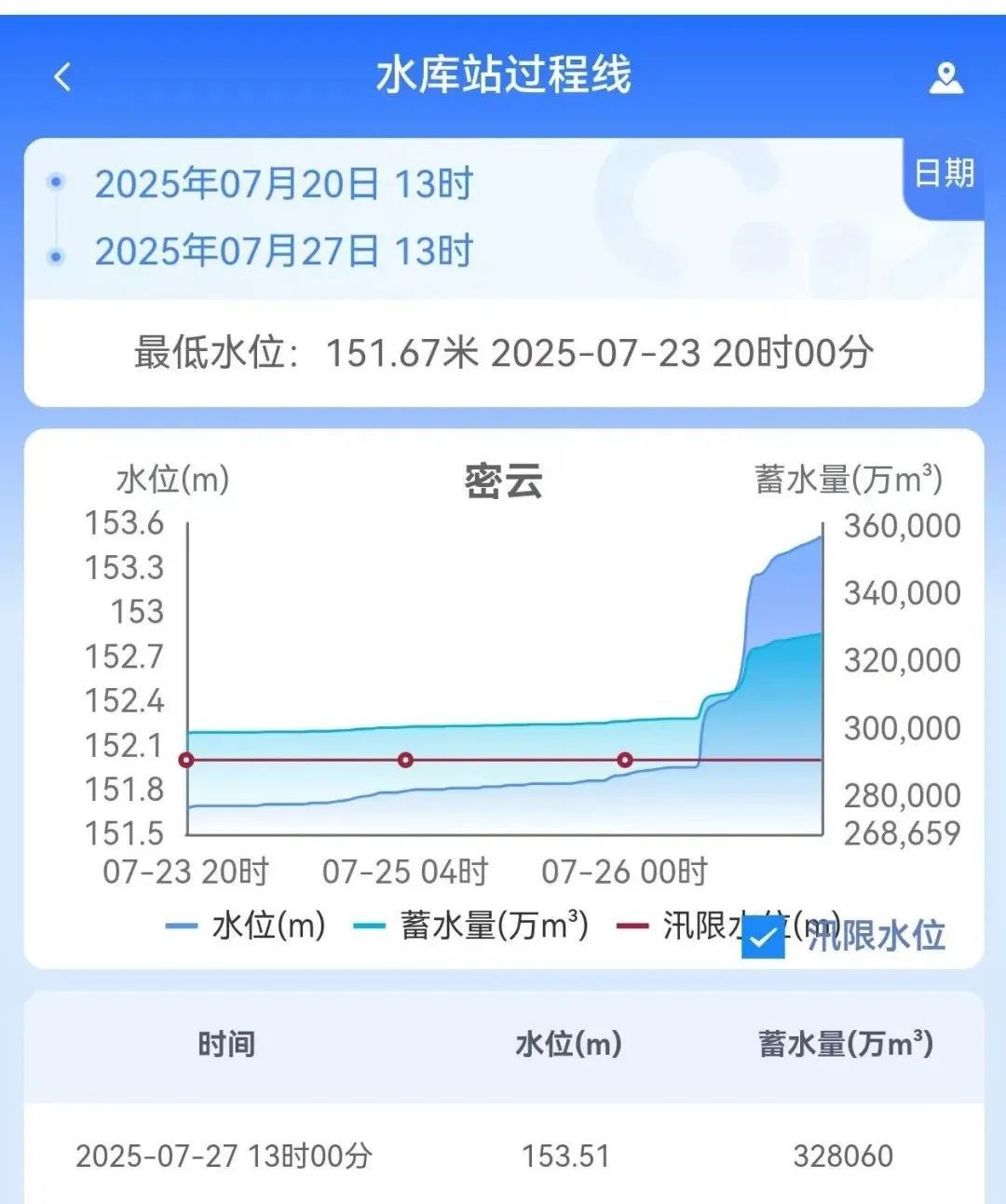
In addition, according to a report by Caixin, a villager in Putao Garden Village, Taishitun Town, said that some elderly people living at home in the village were washed away by the flood recently. It is worth noting that on the evening of July 26, Miyun District had already issued a red alert for heavy rain; the next day, the Miyun Reservoir continued to discharge water downstream.
At the end of the interview, Ms. Chen sighed: “There has never been such a serious flood in previous years. Every year, it is said that the state will subsidize money to reinforce the dams, and it is fixed every year.”
On May 16, 2025, the Miyun District Rong Media Center of Beijing released a report “Ecological Miyun”, stating that the Miyun Reservoir disaster prevention and mitigation and water storage capacity improvement project had recently started construction. As a major project for the protection and restoration of the ecological system in the northeast of the capital, it was included in the ultra-long-term special treasury bond support project. The report described the scene of the groundbreaking ceremony, “At the construction site of the Qingshuihe Beizhuang section, machines were roaring inside the construction cofferdam, and the foundation of a new bridge pier had been completed. At the Anda River Taishitun section, personnel and machinery were busy and orderly. In the pond dam of Xibailianyu Village, Fengjiayu Town, a pump truck was injecting concrete into the steel mesh of the foundation pit to carry out foundation operations.”
The report interviewed Yu Hualong, the project leader of the small reservoir flood disaster prevention and mitigation capacity improvement project, who introduced: “These 16 reservoirs generally face some problems, such as the construction years are relatively long and the dam surface is damaged. In this reinforcement, we have lowered the spillway of some reservoirs and also built energy dissipation pools and dam top roads to improve the protection capabilities of the reservoirs.”
At the same time, Mu Mingyao, deputy director of the Water Conservancy Engineering Construction and Management Affairs Center of the Miyun District Water Affairs Bureau, also said in an interview: “The projects involved in the medium-sized reservoirs, pond dams, and small reservoirs are all concentrated in the upstream area of the Miyun Reservoir. The projects are mainly to eliminate safety hazards and improve the protection level. After the projects are completed, they can not only improve the safety of the lives and property of the surrounding people, but also effectively reduce the flood control pressure on the downstream reservoir during the flood season.”
Author: Wang Wuyu
Source: Interviewees, Internet
Discover more from 自由档案馆
Subscribe to get the latest posts sent to your email.