

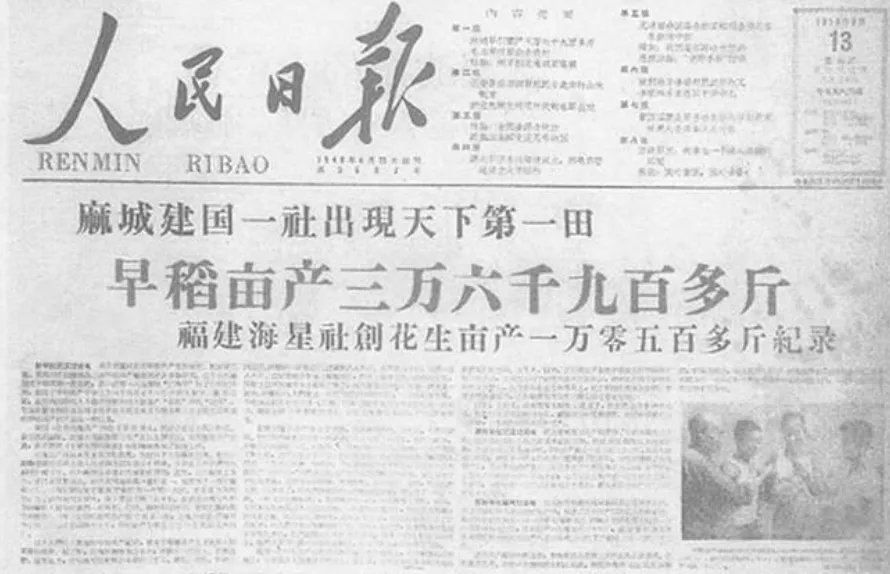
Today, People's Daily published an article titled "The Sky Won't Fall," stating that "the US's imposition of tariffs cannot crush the Chinese economy" and that "China has the confidence and ability to deal with external shocks." At the end of the article, it even resolutely stated: "The sky won't fall."
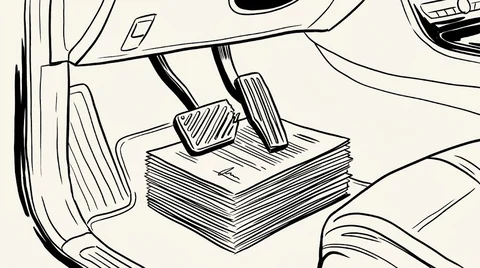
This article in People's Daily is empty and hollow, full of superficial peace, unwilling to face the suffering of the people.
This is a refusal to acknowledge the difficulties. Not acknowledging the difficulties is the biggest difficulty.
I. "The sky won't fall," but the dust of the times has fallen many times
The article "The Sky Won't Fall" seems full of confidence, but in reality, it is using optimism to cover up anxiety and using language to gloss over reality.
The article says "the proportion of exports in GDP has decreased, domestic demand has huge potential, and the momentum of transformation is strong"—these beautiful words have not changed for ten years. But have you looked down to see how the people on the ground are doing?
In 2018, it was said that "the China-US trade friction has little impact on us." What was the result? That year, there were large-scale layoffs in the manufacturing industry, and countless export enterprises closed down;
In 2020, it was said that "the epidemic is controllable." Three years later, you and I understand the cost;
In 2024, it was said that "real estate is not a pillar industry," and then it turned around to save the property market.
A grain of dust in the times, falling on an individual's head, is a mountain.
This is not "the sky won't fall," this is pretending "it never fell" after each time it fell.
II. "Confidence" is not policy, "stability" is not growth
All empty words are useless; the people must be given tangible benefits.
People's Daily talks about "confidence," "resilience," and "advantages," which are empty words. What about reality?
Look, the official Weibo account of "China National Nuclear Corporation Recruitment" published a message titled "We received 1,196,273 resumes" to promote the successful conclusion of its campus recruitment promotion week, which sparked heated discussions among netizens, and then the post was deleted. On the evening of April 6, the account posted again, saying, "We always insist on treating every resume seriously and living up to the recognition and trust of every student," and explained that the group's 2025 campus recruitment "provides 1730 types of positions, with an estimated recruitment of about 8,000 people."
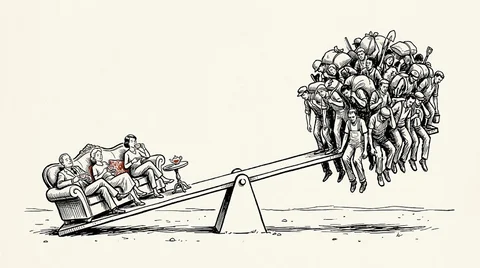
What a grand scene—thousands of troops squeezing onto a single-plank bridge, and the media also published articles to congratulate, as if it were a glory. But behind this glory, what kind of suffering is there?
1,196,273 resumes, with an estimated recruitment of 8,000 people, the competition ratio is close to 150:1.
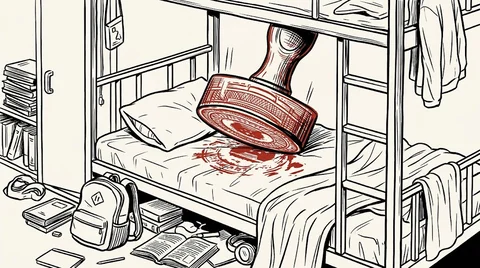
More than a million college students are desperately submitting applications during the job hunting season. After eighteen years of hard study, they find that it's not "the capable ones go up," but "the ones who compete die." This post by China National Nuclear Corporation was deleted after being discussed, but what cannot be deleted is the confusion and anger of countless people.
People's Daily says "the people have confidence," but what we see is the people frantically running in anxiety.
III. "Concentrating efforts to accomplish great things," but forgetting that small things are people's livelihood
You say, "We have institutional advantages and can concentrate our efforts to accomplish great things."
But the people only want to do small things: eating, working, children going to school, seeing a doctor, and old-age care—which one is not full of difficulties?
Private enterprise owners ask: "Who will provide the channels for domestic sales? Monopoly capital has long blocked the channels."
Unemployed youth ask: "Why did I study hard from elementary school to master's degree, but in the end, I can only become a nameless person in a 'mass resume submission'?"
Rural elders ask: "Pension funds don't increase, and prices are still rising. Who will give me an explanation?"
The real problems are the hollowing out of industries, the high unemployment rate of young people, and the collapse of middle-class consumer confidence, but People's Daily uses a few sets of data to appease the masses, wanting to cover up the "noise" with "singing."
People's Daily proudly says that we have institutional advantages and can concentrate our efforts to accomplish great things.
Indeed, we can. But after concentrating our efforts, can ordinary people still do small things?
External tariffs are added, internal pressure is added, and enterprises are living more and more like they are being fried in a pressure cooker.
Consumers dare not consume, deposits hit a record high, young people cannot find jobs, and 35 years old has become the "retirement threshold."
Those "grand advantages" ultimately cannot alleviate the closure of small businesses around me and the anxiety of the common people.
This is not "being prepared," this is preparing to sacrifice a part of the people to complete the overall narrative.
This is not "institutional confidence," this is "narrative self-intoxication."
IV. The real confidence comes from daring to admit problems
Today's propaganda should have a "rectification":
Rectify the empty high-frequency vocabulary;
Rectify the rhetoric of "the scenery is uniquely good here";
Rectify the arrogant tone that is ignorant of the people's suffering and only talks about the country's strength.
Real confidence comes from facing problems and giving the people hope, rather than making the people feel self-moved.
People's Daily says "the sky won't fall."
But we see—
The students seeking jobs are kneeling in the cracks of the autumn recruitment and shouting;
The young people starting businesses are bumping around between risk control and policies;
Middle-class families are saving on food and clothing to pay off mortgages and protect their children;
This is not "the sky falling," this is the ground sinking.
Chairman Mao said: "Who are our enemies? Who are our friends? This is the primary question of the revolution."
Let the people suffer a little more, who will bear the blame this time?
V. US tariffs? China has ten strategies to deal with it
Since the US is determined to impose tariffs, we might as well do the opposite and simply treat the US's "blockade" as an opportunity to see how China can truly get out of its dependence on foreign trade and rebuild economic vitality.
I have ten strategies to break the situation, taking into account strategic determination and operability, please see.
(1) People-oriented: Directly distribute money and restart the domestic cycle
Not "encourage consumption," but directly distribute cash.
From the central government's finances to local surplus funds, establish an "economic resilience fund" to issue a one-time payment of 1,000 yuan per month to each household in the low- and middle-income families as a "tariff resistance and domestic demand promotion red envelope."
This can not only immediately stimulate consumption, but also alleviate the debt pressure of residents and restore confidence—the first step of the domestic cycle is to let the people have money to spend and the confidence to live.
(2) Cut to the bone, launch the "organization optimization reform"
Streamline non-frontline positions for civil servants and public institutions, reduce levels, and reduce redundant personnel;
Optimize 10% of redundant positions in units above the county level each year for the purpose of incentivizing grassroots levels;
Save fiscal funds for public service expenditures (education, social security, housing subsidies).
The country must live a frugal life and spend money on the people.
(3) "8-hour work day" rule of law action: Iron-fisted governance of 996
Amend the Labor Law, clearly stipulating: the daily working hours of non-special industries shall not exceed 8 hours;
Establish a special law enforcement team to focus on investigating industries such as the Internet, finance, and manufacturing;
Reward for real-name reporting, and typical cases will be reported across the network.
Restore labor dignity and improve the quality of life and family consumption power.
(4) Universal social security: Full coverage and full support for low-income groups
Include delivery personnel, express delivery personnel, temporary workers, and other non-formal workers into the social security system;
Full coverage, pay for rural populations, and the government covers all;
Provide "social security credit" points, which can be exchanged for training, rental vouchers, and other benefits.
Do not let the new labor force become "invisible poor people."
(5) "Everyone builds a house" plan: Everyone has a place to live
The government leads the construction of low-density single-family communities, unified planning, and low-price sales;
The first home purchase is exempt from deed tax, and 20-year ultra-low interest rate loans are provided;
Young talents who settle down will receive a building permit + land indicators.
Solve the housing insecurity problem and stimulate employment and the building materials industry.
(6) "Employment Treasure" is updated: One position per person, the government covers all
Launch the "Employment Treasure" platform for unemployed youth:
Each person can obtain a targeted job package (including training + pre-job subsidies);
Give priority to arranging jobs in small and medium-sized enterprises, elderly care, and public welfare positions to cope with the aging crisis;
Give scholarships + full social security refunds for three months.
(7) Reduce the burden on enterprises: Replace taxes with vitality, let small and medium-sized enterprises breathe
Instead of desperately attracting investment, it is better to reduce taxes and fees and lower the threshold to let local small and micro businesses survive:
Cancel the mandatory upper limit of five insurances and one housing fund;
Relax the flexible employment mechanism;
Electricity, rent, and tax reductions for one year.
The economy cannot only rely on large factories to stand guard; "small workshops with less than 10 people" must bloom everywhere.
(8) Financial support: Shift credit from "real estate + state-owned enterprises" to "individuals + technology"
Where does the bank's money go now? Most of it goes into "urban renewal," "local financing platforms," or hype AI bubbles.
A "technology + individual credit inclination mechanism" should be established:
Start-up companies can borrow without collateral;
Teams with actual technology landing will receive special interest subsidies;
Make it possible for "poor people to open factories and coders to start companies."
Financial "inclusive finance" is truly "inclusive," and the domestic cycle has roots.
(9) Let the people see the future: Every policy must "track and implement"
Real-time tracking of all subsidy policies;
People's Daily and CCTV Finance open "tracking columns";
Announce every week "how much money has been issued, how many people have been helped, and who has received it."
Transparency leads to trust, and trust leads to strength.
(10) Strategic determination: Temporarily postpone "face projects" and prioritize "substance projects"
At this time, instead of competing to build high-rise buildings, hold conferences, and do image projects, it is:
Repair bridges and roads, renovate old sheds, and treat black and odorous water bodies;
Provide basic medical insurance, expand affordable housing, and transform farmers' markets;
Invest in "public facilities + people", rather than investing in "steel and cement + performance indicators".
High-quality development is not empty talk, but the "detail upgrade" of millions of people's daily lives.
Written in the end:
Chairman Mao said: "A single spark can start a prairie fire."
Today's high tariffs in the United States are a fire. But it is not a fire that burns away hope, but a fire that ignites change.
Reduce redundant officials, support the people, and address chaos, striving for "reliable, down-to-earth, and impactful".
As long as we shift resources towards the people, implement policies effectively, liberate enterprises from difficulties, and rescue young people from involution—China's economy will move from passive response to active breakthrough.
The US blockade can be closed for a while, but it cannot stop the power of 1.4 billion people working together to create.
Only by benefiting the people can the country win this battle.