

This disaster that occurred on the China-Nepal border may be the most tragic scene I have ever witnessed in my life.
I still remember the 2004 Southeast Asian tsunami. 22 years ago, most people could only see giant waves crossing the coast, sweeping away cars, houses, and people from TV or some news websites. Many scenes were filmed by tourists with DV and cameras. The number of videos was not large, and the angles were relatively single. They had to be collected and edited by TV stations before audiences around the world could see them. The impact and tragic nature of that event were far inferior to today's mobile phone footage, even though the death toll from that tsunami far exceeded that of today's disaster.
But today, everyone has a mobile phone, even in poor Nepal. Therefore, we can see videos from various angles and experience firsthand the horrors of natural disasters and the insignificance of humans in the face of nature.
In a few hours, I watched about a dozen videos from different angles. As I watched, I sometimes couldn't help but shout, 'Run to higher ground, don't run along the river!'
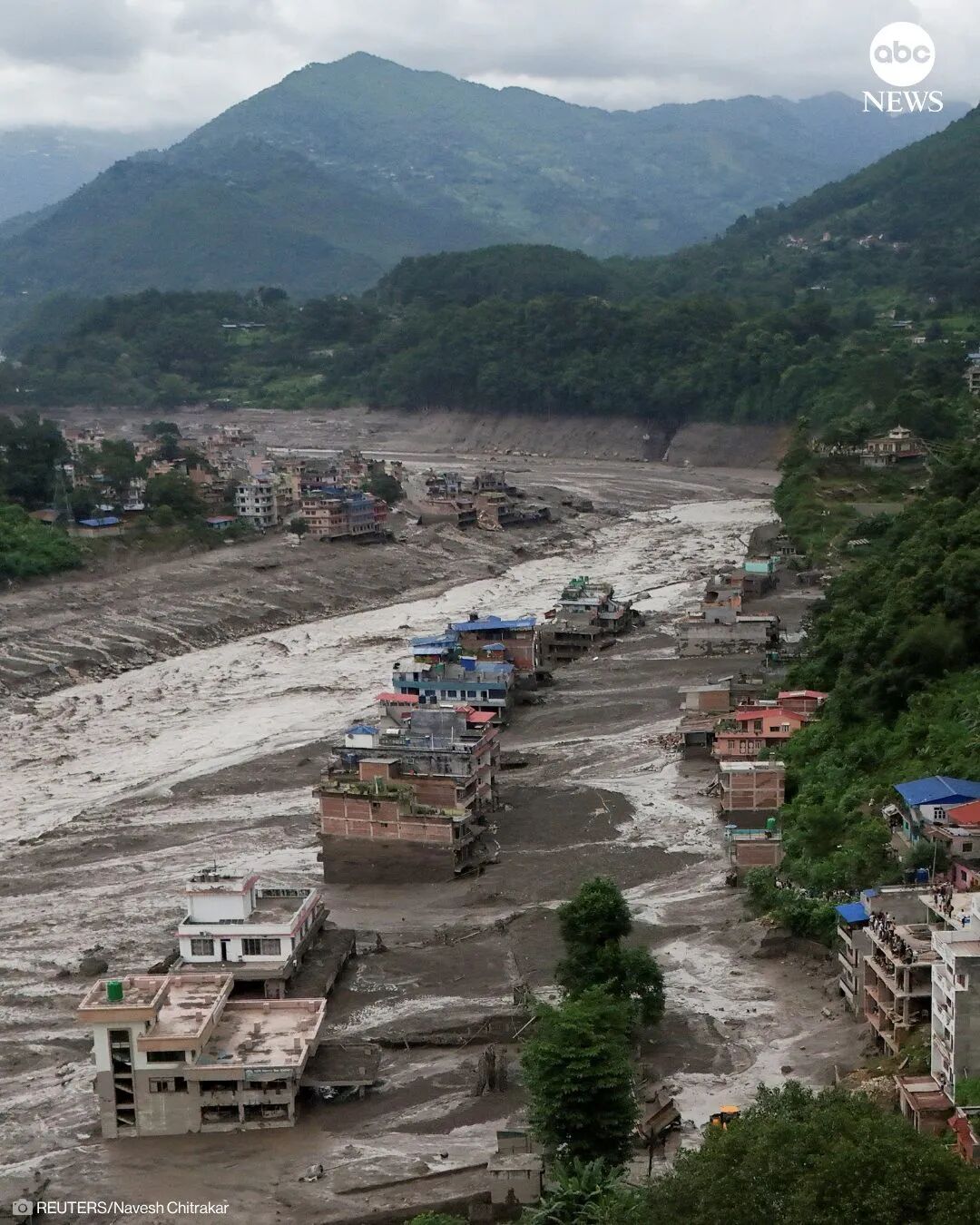
In the video, several people are fleeing. They are not running slowly, but they are running along the riverbank, and the road ahead is also flat. Perhaps from their perspective, they couldn't imagine the flood coming so swiftly and with such destructive power. Behind them, that gray-black mass had already turned the corner, carrying stones, broken wood, cars, and debris from houses in the muddy water, moving at a terrifying speed. Some people ran a few steps, looked back, and then disappeared into the turbid flow. I could see clearly through the screen that they couldn't outrun the flood at all, and I was so anxious, constantly thinking if there was a slope nearby, or stairs, or anything to climb to higher ground.
I also saw a Nepalese mother holding a child, and seemingly supporting another child, hastily leaving her home and preparing to evacuate to higher ground. The flood was catching up behind them, and their escape route ahead was blocked by the flood. In an instant, the family of three was swept into the water.
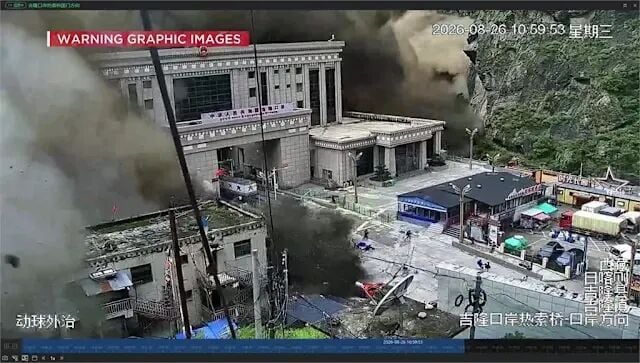
The most terrifying scene occurred at the Gyirong Port. In the video, in front of the port building, many people were fleeing in panic, and some of them appeared to be children. But the black flood quickly approached, the camera was filled with confusion, and then everything was swallowed.
In a report from China News Network, there is this sentence:
According to CCTV, drone observations show that buildings at the Gyirong Port have been buried. According to Xinhua News Agency, preliminary statistics show that as of 8:00 on August 27, 2 villagers in Resuo Village have been successfully rescued, and 3 deaths and 558 missing persons have been identified.
Anyone who has seen the on-site videos will know what 'missing' means in such a flood mixed with stones and mud.
When the disaster occurred, the entire area had clear weather and no short-term heavy rainfall. This devastating flood peak suddenly arrived, catching the riverside unprepared and causing major casualties.
According to comprehensive reports from Nepalese media and geological expert assessments, the cause of the disaster is not local rainfall, but a chain of geological disasters in the upstream high-altitude areas of Nepal. The upper reaches of Gyirong Valley are dotted with dozens of moraine lakes, commonly known as ice lakes. These lakes are formed by the blockage of valleys by rubble left behind by glacial melt. The water level in these lakes is already high in the summer. The disaster was most likely caused by an ice avalanche and landslide falling into the river, forming a temporary barrier lake. The lake water accumulated briefly and then suddenly breached, causing a massive amount of water mixed with mud, sand, and stones to flow down the narrow river valley at high speed, impacting the downstream port in a short period.
According to The New York Times, scientists who analyzed satellite images preliminarily believe that the fatal floods in Nepal on Wednesday were at least partly caused by a huge block of ice breaking off from a high-altitude glacier and falling into the valley, a phenomenon known as an 'ice avalanche'.
Daniel Shugar, a geologist at the University of Calgary in Canada, said: 'It looks like a piece of glacier in the region basically cleanly broke off and fell over a kilometer vertically to the valley floor... The valley floor looks like a bomb went off - it's all debris from the shattered glacier.'
He estimated that the ice block was about 2,000 feet (about 610 meters) wide and fell from an altitude of about 17,000 feet (about 5180 meters), with a drop of nearly 4,000 feet (about 1220 meters).
Simon Cook, a glaciologist at the University of Dundee in Scotland, who also participated in the satellite analysis, said that this was the fracture of a huge potential energy ice block stored at high altitude, which generated a dangerous, rapidly moving mixture.
Videos from villagers in Sala Village, China, recorded a doomsday scene on the opposite snow mountain around 10:37 local time: landslides, smoke, deafening noise, continuous rumbling. Glacial rocks and glacial lake water from the snow mountain directly fell over two thousand feet, causing the 5.2 magnitude seismic waves recorded at that time.
The immense kinetic energy was destructive, sweeping away everything. Within twenty minutes, the flood rushed to the Gyirong Port and split into two directions, impacting hundreds of kilometers into Nepalese territory.
This is absolutely a mudslide unprecedented in human history. There are many videos of this, but unfortunately, they cannot be included here.
In fact, this is not the first time the Gyirong Port has encountered such a disaster. In the flood seasons of 2025 and 2024, Gyirong Port experienced mudslides for two consecutive years. Last year, several Chinese personnel went missing and died. In 2025, the Friendship Bridge was washed away, and the temporary steel bridge only resumed traffic in January of this year, only to experience a larger-scale disaster eight months later. No one dares to say that this is the last time.
Since this place is so dangerous, why not choose another safe area for customs clearance? The Himalayas are a vast natural barrier running east-west, with continuous snow-capped mountains and steep terrain in most areas, making it impossible to build roads for passage.
Gyirong Valley is located in the central section of the Himalayas and is a rare north-south oriented deep gorge. It is like a rift torn open by nature, with snow-capped mountains on all sides and a huge vertical difference. From the plateau climate at the mouth of the valley to the warm and humid subtropical scenery at the bottom, this "four seasons in one mountain, ten miles different skies" vertical climate and landform make it the most natural and relatively mild passage for crossing the Himalayas.
In historical documents and archaeology, this passage connecting mainland China and the South Asian subcontinent, running north-south across the plateau, is commonly known as the "Fan-Ni Ancient Road".
In the 7th century AD, when the Tibetan Emperor Songtsen Gampo married Princess Bhrikuti from Nepal, the princess's entry into Tibet was recorded as passing through Gyirong Valley into the heart of Tibet. Since then, for thousands of years, it has been a golden route for trade and cultural exchange between China and Nepal.
In Tibet, there has always been a saying: "One Gyirong Valley, half of Tibetan history."
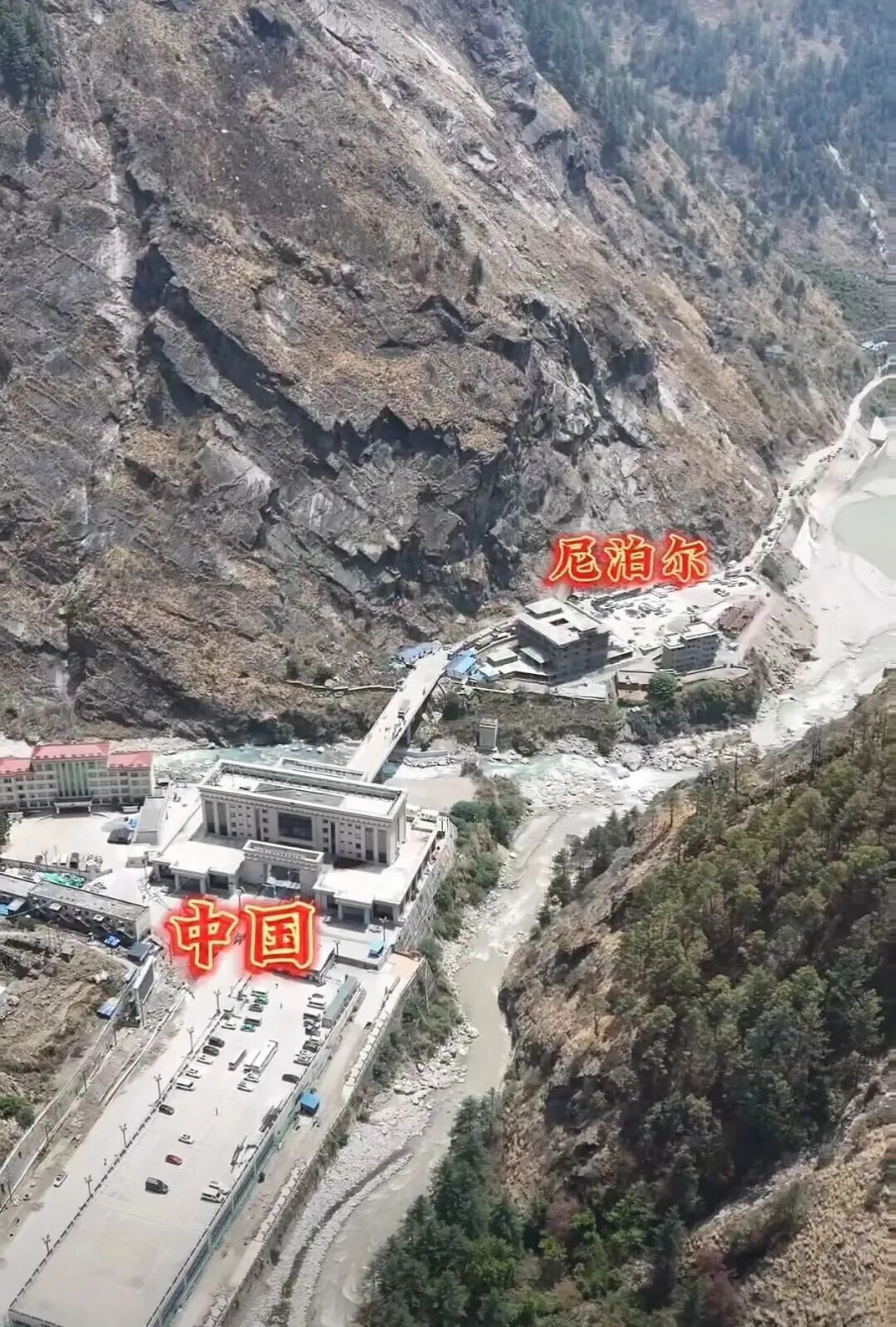
After the disaster, the Gyirong Port is unlikely to be relocated, as there are not many passages left for China and Nepal in the Himalayas.
Bridges and roads will be rebuilt after the disaster, and customs clearance will be restored. However, the large glaciers, ice lakes, and steep slopes upstream still exist. No one knows when the next large ice mass will break off, but in the context of a warming climate, it will definitely happen again.
If, in a few years, or even the next flood season, another flood peak rushes down Gyirong Valley, what will happen to the merchants, drivers, tourists, and staff gathered at the port?
Bridges can be rebuilt, roads can be repaired, but human lives cannot be recovered. How the Gyirong Port should be used in the future is probably the biggest challenge after the floodwaters recede.