
On the morning of September 18th, a 10-year-old Japanese boy was stabbed 200 meters from the entrance of the Shenzhen Japanese School. On September 19th, it was confirmed that he died after rescue efforts failed.
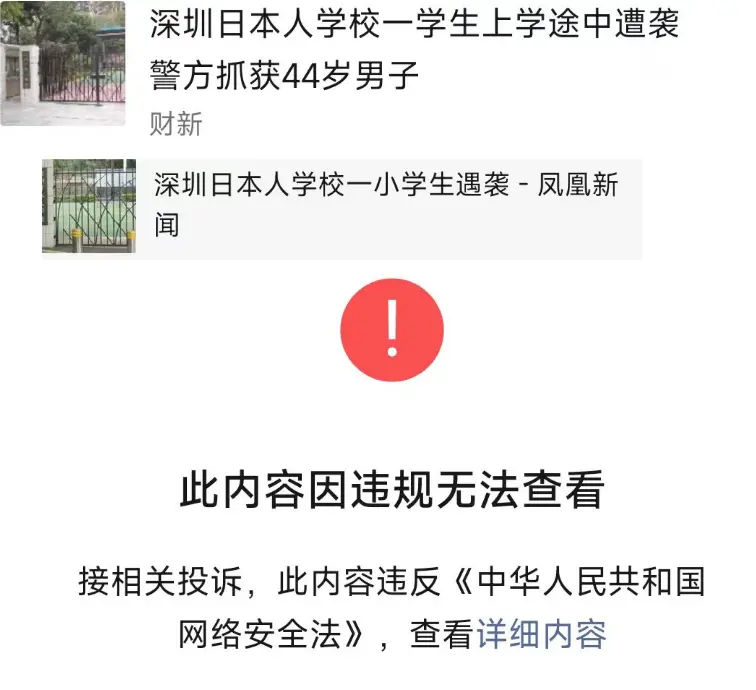
The perpetrator, Zhong (male, 44 years old), has been arrested by the police. However, more information about the case, Zhong’s motive for the crime, the subsequent arrangements for the family, and relevant departments have not released any information.
Reports related to the incident published by Phoenix.com and Caixin.com were both 404, and many self-media comments on the matter were also 404.
However, 278 anti-Japanese videos on the Kuaishou platform that promoted “demolishing Japanese schools” were not subject to any censorship, with a cumulative total of 2,313,525 likes. Among them, 39 videos received more than 10,000 likes, and 5 videos received more than 100,000 likes, with the highest number of likes reaching 327,000.
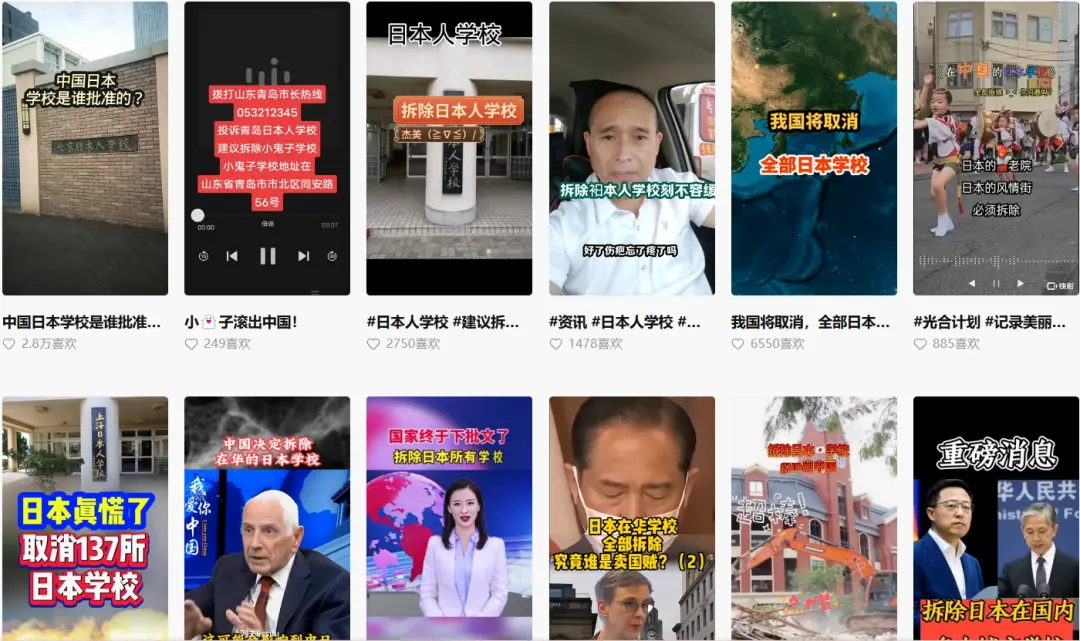
Some videos on the Kuaishou platform calling for the removal of Japanese schools
By analyzing the content, these 278 videos can be roughly divided into 4 categories: 1. First-person vlogs showing the appearance of Japanese schools within China, 2. Pseudo-news reports claiming that the state has decided to demolish Japanese schools, 3. Face-to-face explanations that fabricate rumors that Japanese schools are training spies, 4. Emotional appeals that promote national hatred and call for the demolition of Japanese schools.
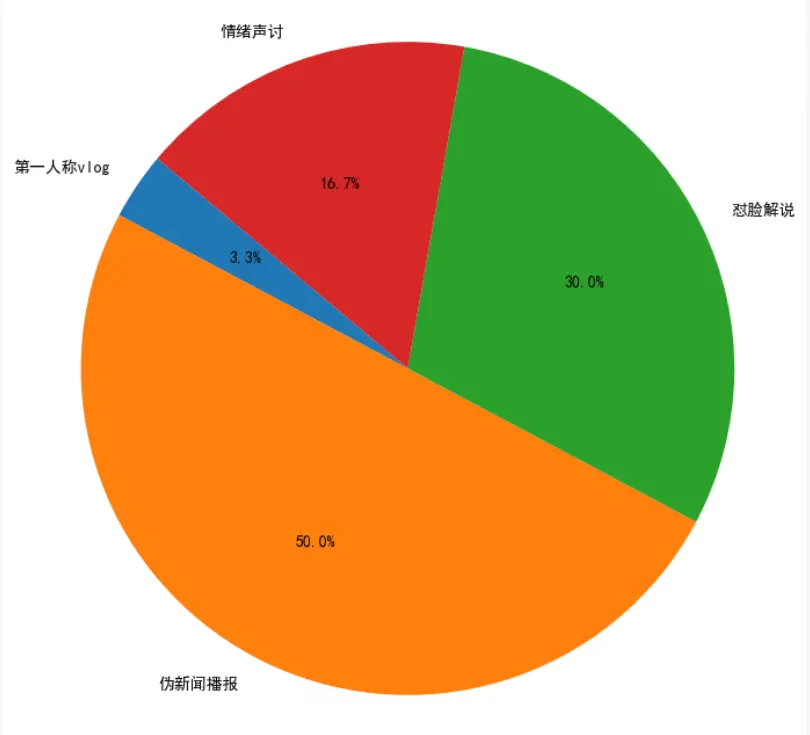
Video classification of the Kuaishou platform calling for the removal of Japanese schools ©AI
1. First-person vlogs showing the appearance of Japanese schools within China:
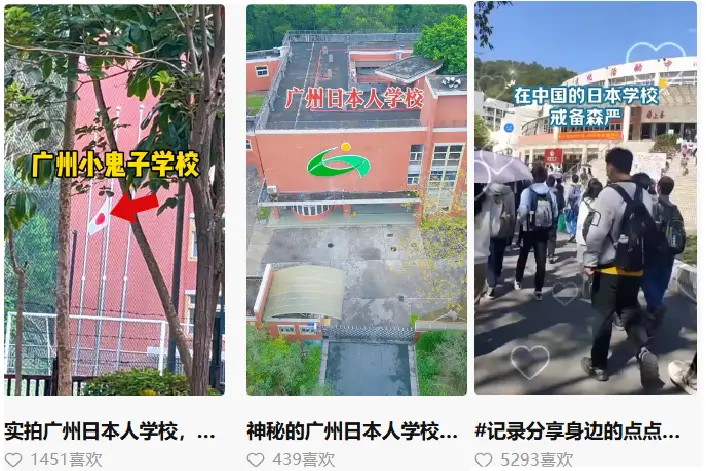
Some videos showing the appearance of Japanese schools, mostly accompanied by eerie music, rendering a dark atmosphere

The man in the video used his mobile phone to film the exterior of a Japanese school in Guangzhou, emphasizing that the school is “heavily guarded,” and repeatedly implying that there are unreasonable aspects of the school
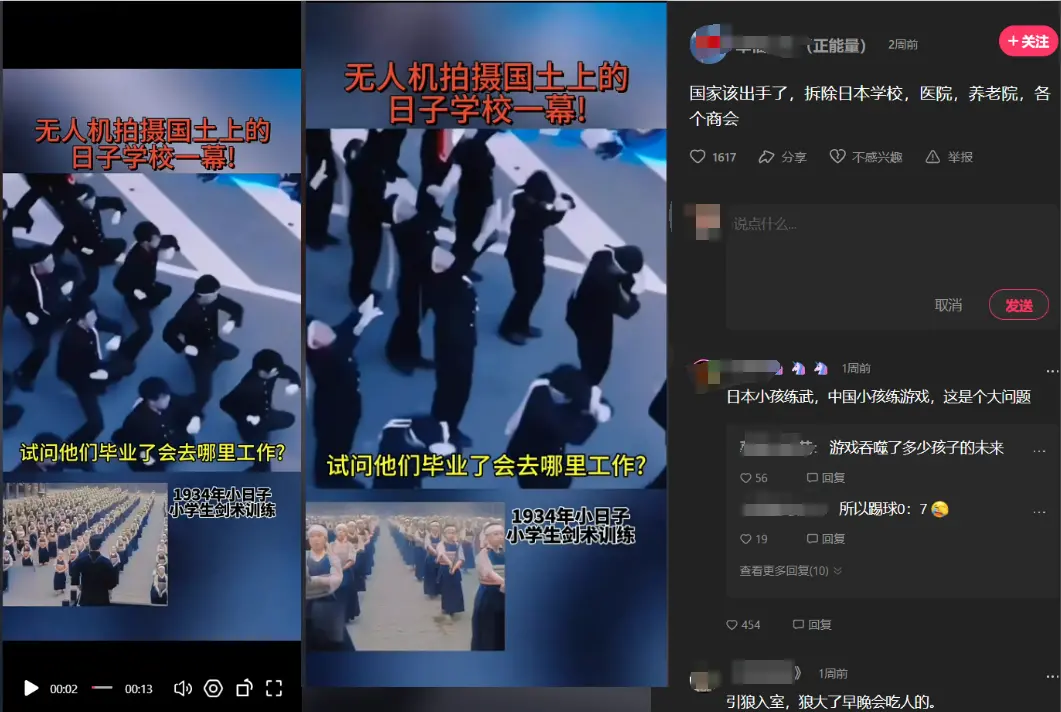
The video shows aerial footage of a Japanese school, with students in uniform practicing martial arts. The authenticity is questionable, and the footage also includes a video of Japanese elementary school students training in swordsmanship in 1934
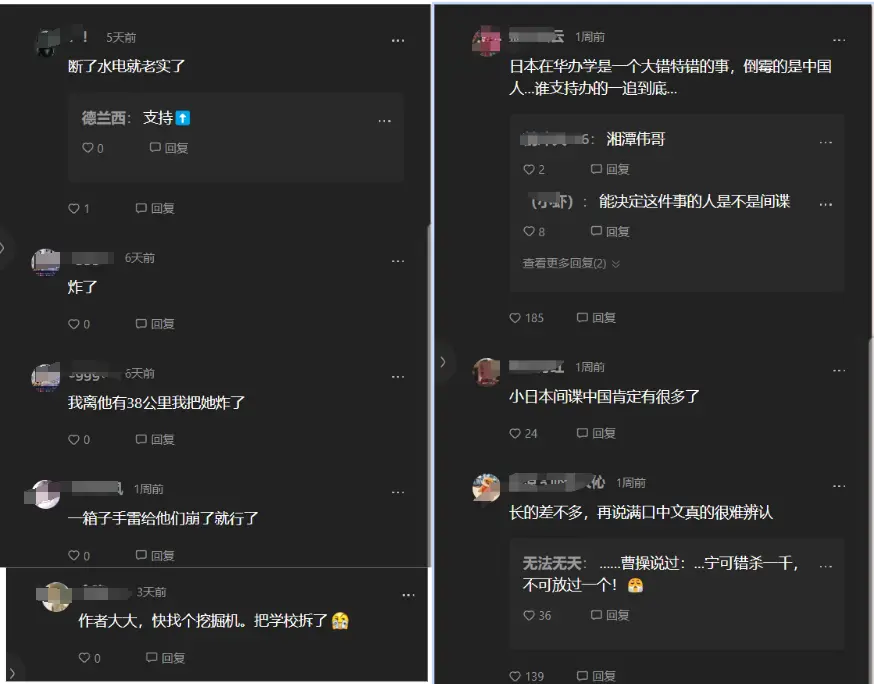
Some hate speech triggered by the above videos
2. Pseudo-news reports claiming that the state has decided to demolish Japanese schools:
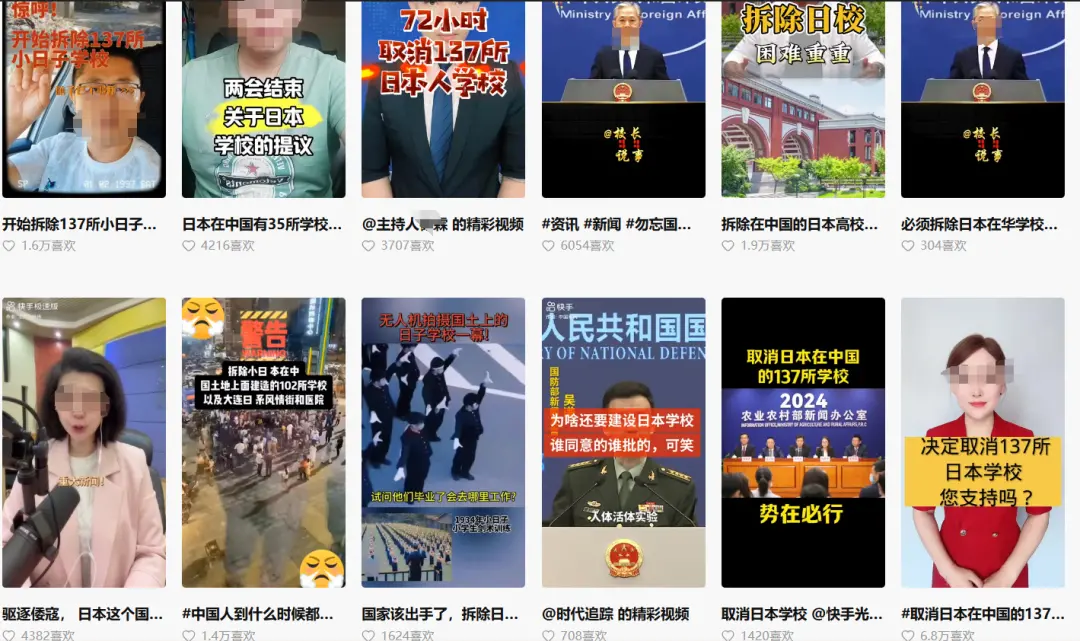
Some Kuaishou videos claiming that the state has ordered the removal of Japanese schools, mostly with a studio background, and the format often imitates news reports


The anchors in the video solemnly stated that the state has ordered the demolition of 137 Japanese schools in China. In the search, it was found that the backgrounds of two videos were both “International Observation,” and the content was also highly consistent, belonging to a personalized interpretation under a similar script, which is both astonishing and amusing, reflecting the competitive spirit of various marketing accounts.
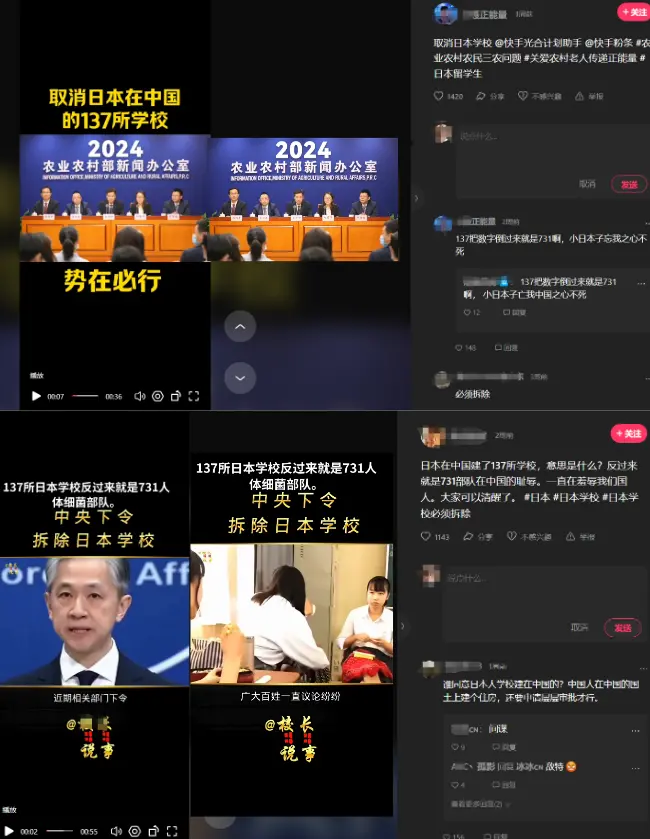
The video uses footage from the press conference of the Ministry of Agriculture and Rural Affairs and the speech of the spokesperson of the Ministry of Foreign Affairs in the News Broadcast, accompanied by the commentary “The central government ordered the demolition of Japanese schools,” repeatedly emphasizing that the cancellation of Japanese schools is related to national security and “has significant significance for protecting domestic educational resources.”
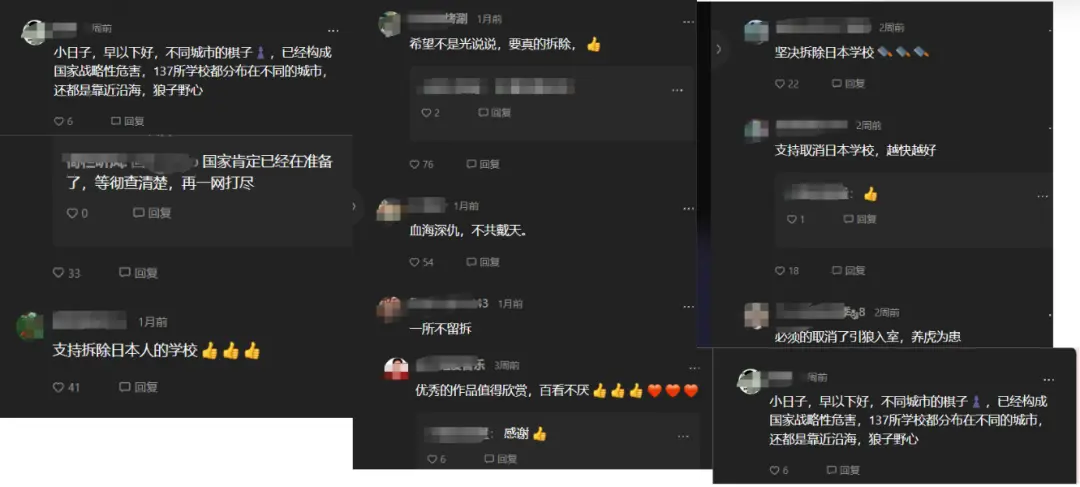
Some comments below the videos supporting the demolition of Japanese schools
3. Face-to-face explanations that fabricate rumors that Japanese schools are training spies:

Some videos introducing Japanese schools in China that train spies


In the video, the man explains that the students educated in Japanese schools will bring great harm to Chinese society in the future. Some people in the comment section mentioned the notorious, large internet celebrity “Shakespeare of One Person” who harvests traffic with extreme remarks

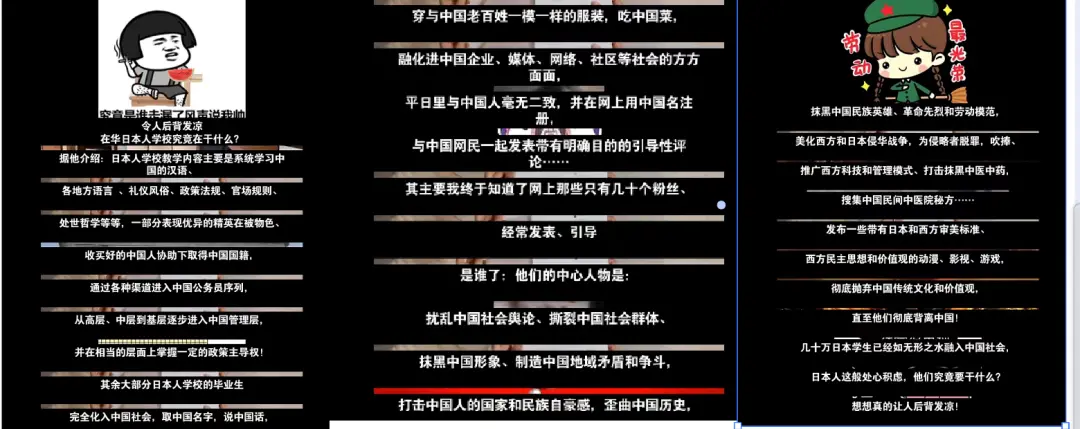
Most of these videos use a single person appearing on camera, using the unsubstantiated remarks in the screenshots above for explanation, fabricating rumors that Japanese schools in China are training spies to subvert Chinese society
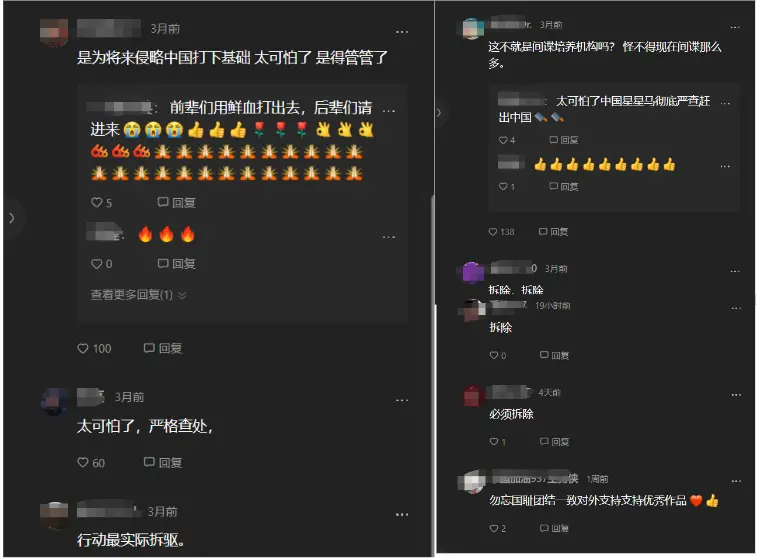
The comment section is clamoring for the demolition of Japanese schools
4. Emotional appeals that promote national hatred and call for the demolition of Japanese schools:
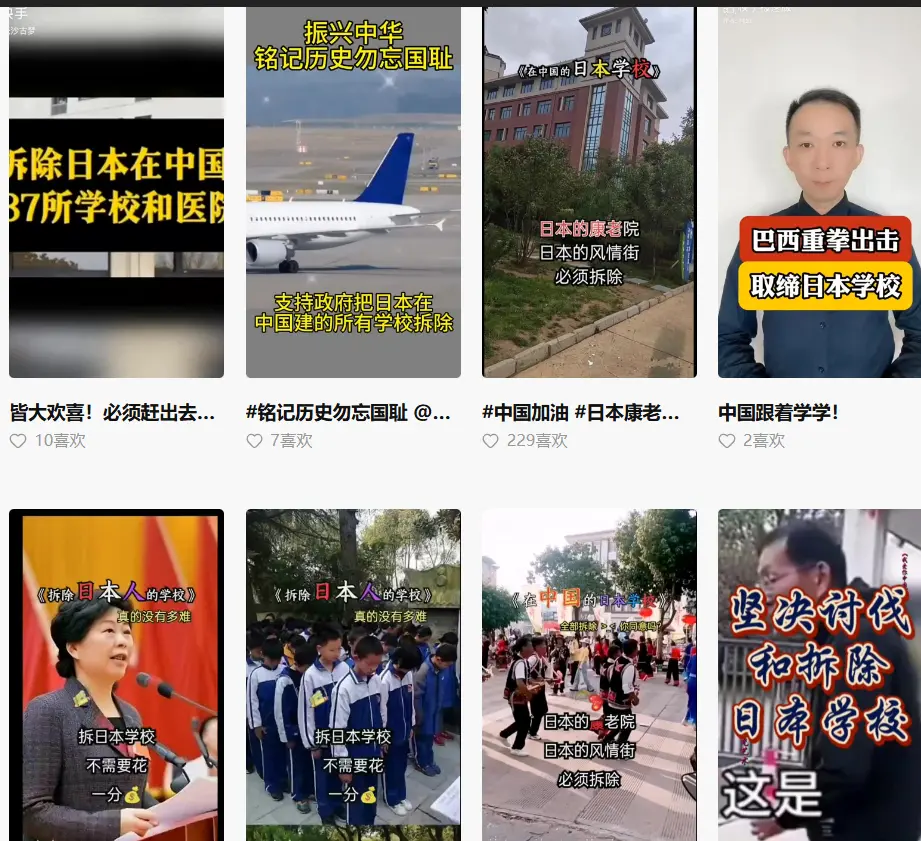
Some Kuaishou short videos that promote national hatred in the name of defending the country and avenging the humiliation, calling for the demolition of Japanese schools
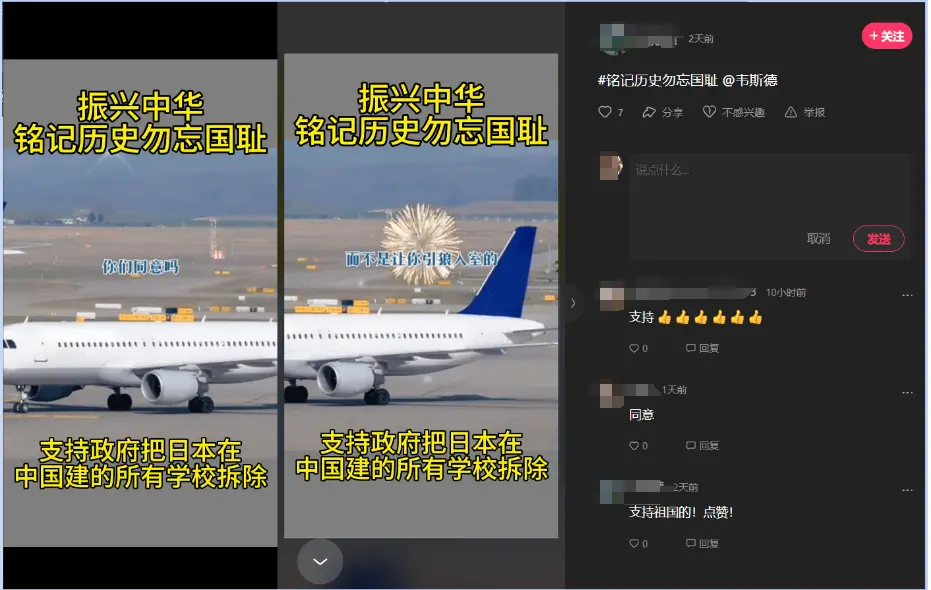
In the video, an emotionally charged woman is screaming and calling on her compatriots to remember history and unite to demolish Japanese schools in China
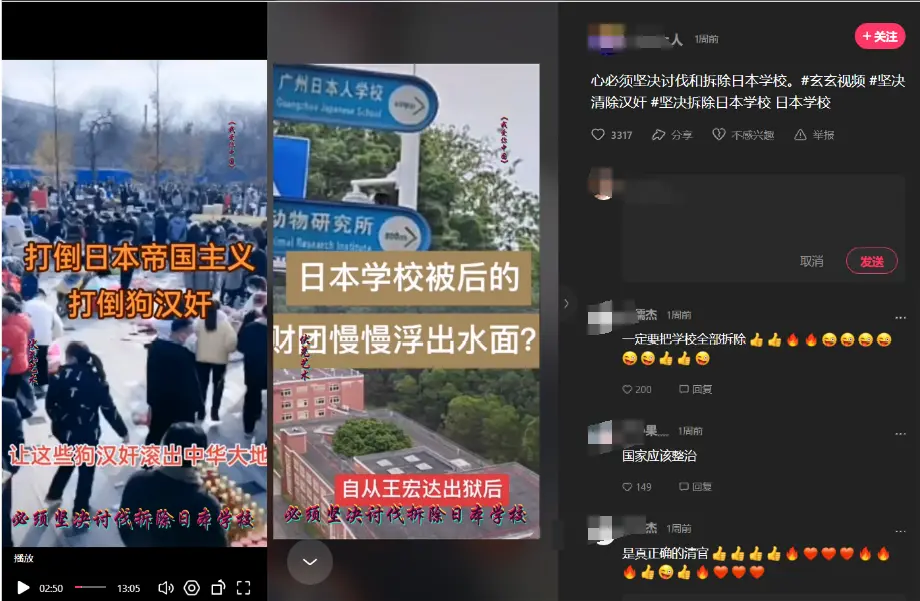
The video extracts a large number of scenes from anti-Japanese dramas, promoting national hatred. The history of the Anti-Japanese War is repeatedly mentioned again, becoming an important narrative tool to strengthen national identity and cohesion,
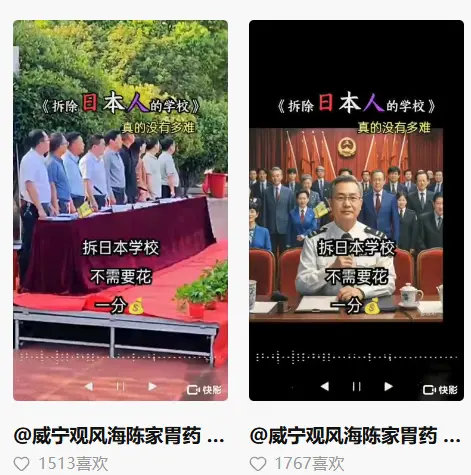
More often, it’s just a few seconds, with a short, brainwashing cycle of “It doesn’t cost a penny to demolish Japanese schools”
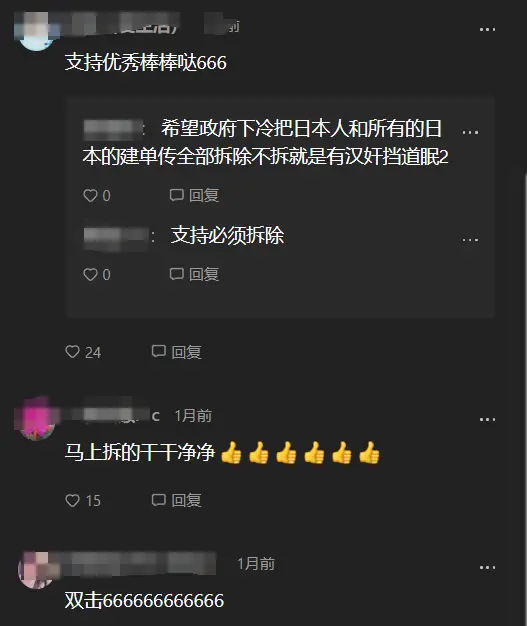
The comments below are almost unanimously in support of demolishing Japanese schools
Summary: Perhaps because of the algorithm’s recommendation, I didn’t realize before that “Japanese schools” have become a “traffic password.” From these exaggerated, absurd, and mindless short videos on Kuaishou, it can be seen that in the narrative of some “patriotic netizens,” “Japanese schools” hide a huge spy war conspiracy that needs to be condemned and eliminated.
And the reason why these conspiracy theory short videos targeting “Japanese schools” can harvest waves of traffic and gain more than a million likes is not only because there are too many gullible people, but also because of the platform’s indulgence.
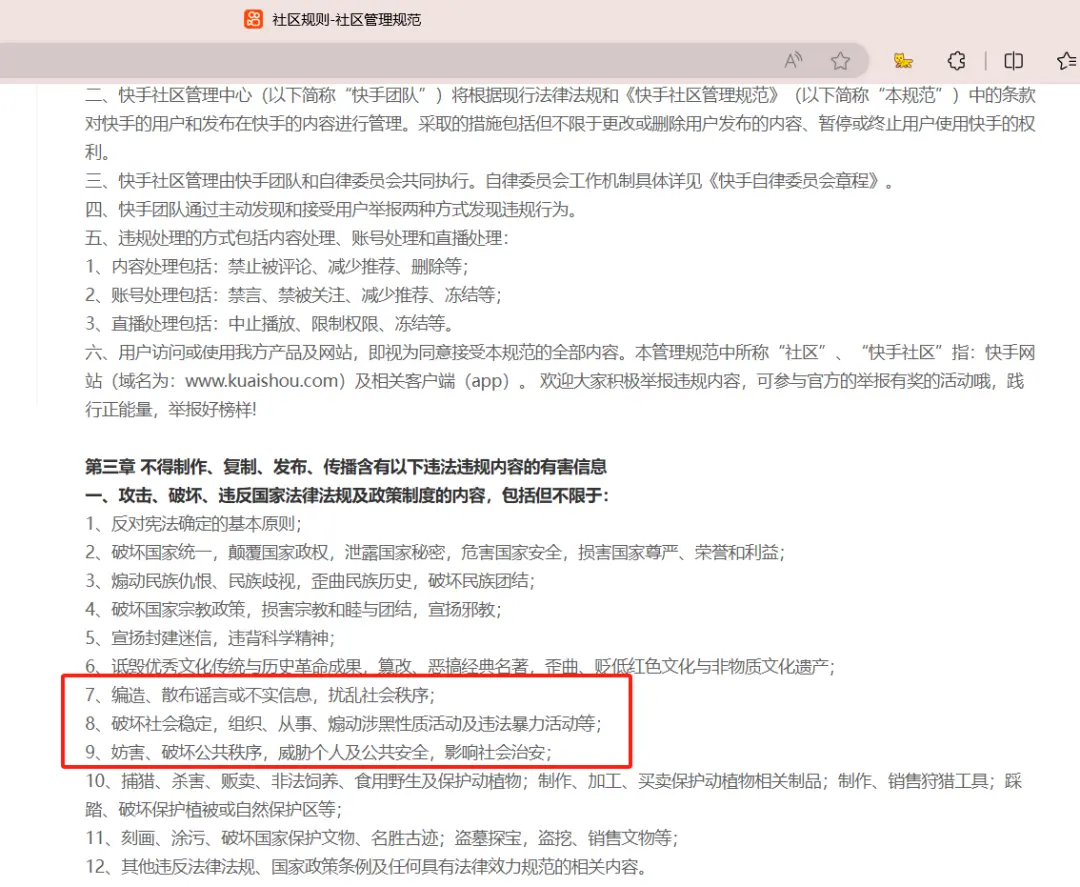
Although the Kuaishou community guidelines clearly prohibit content that promotes national hatred and disrupts social order, these 200+ videos that express extreme opinions against Japanese schools have not been subject to any censorship or processing!
As the second-largest short video platform in China, Kuaishou has 379.9 million daily active users, according to the latest data, accounting for nearly a quarter of the total population. Its positioning is: the average person in society. That is, a platform for ordinary people to share, and the users’ education is mainly concentrated in the four categories of junior high school and below, high school, junior college, and undergraduate and above, with the highest proportion of high school users, followed by undergraduate and junior college.
It can be said that Kuaishou platform gathers the most rabble in our society. This type of people is easily swayed by emotions, influenced, and exploited by “patriotic big Vs.” The topic of “patriotism” often has a broader emotional resonance base in such groups, and naturally becomes a “traffic password” that many content creators compete to use.
The rampant conspiracy theories about “Japanese schools” on the Kuaishou platform are, to some extent, also a product of the current social national sentiment, public opinion environment, social media algorithms, and the intersection of patriotic marketing and commercial interests in our country.
In a complex domestic and international environment, economic downturn, high employment pressure, tense international relations… to some extent, have led to the accumulation of social emotions, and some vulnerable members of the public need to find an outlet. Nationalism and xenophobia are a safe outlet for them, and Japan, as a historical opponent, is more likely to become an object of public venting.
The conspiracy theories about “Japanese schools” on Kuaishou cater to some people’s hatred of Japan. The more emotional anti-Japanese remarks, the more they can resonate with and identify with these people, and linking Japanese schools with the “spy war conspiracy” is simply too fitting for the emotional expectations of some netizens today.
I don’t know if Zhong, who brutally murdered the 10-year-old boy in front of the Shenzhen Japanese School, had browsed similar anti-Japanese videos? Is his motive for the crime related to hatred of Japanese schools?
The relevant departments have arrested the person, and it should not be difficult to interrogate the answers to the above questions. The difficult thing is how to alleviate the spread of nationalist sentiment on the Internet? How to purify the already polluted online public opinion environment?
After the murder of Ms. Hu Youping in Suzhou, NetEase, Phoenix.com, Tencent, Douyin and other platforms have issued notices, announcing the banning of a number of accounts that incite extreme nationalism and hate speech,
This time, after the innocent murder of the 10-year-old boy at the Shenzhen Japanese School, can the Kuaishou platform clean up these videos that fabricate rumors and attack Japanese schools?
The public opinion environment of the simplified Chinese Internet should also be well purified. If you also agree, you can report those 278 videos on Kuaishou first.
Discover more from 自由档案馆
Subscribe to get the latest posts sent to your email.