Author: Zhou Qiren
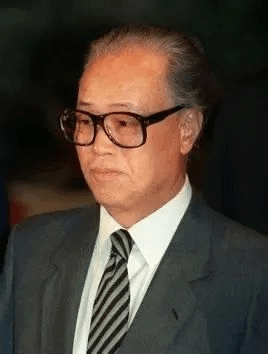
Zhao Ziyang (1919.10~2005.1.17)
A year ago (referring to 2005—Editor’s Note), on the day the news of Mr. Zhao Ziyang’s death came out, fearing that Mr. Du (Du Runsheng) would be overly stimulated, I went to his home to visit him. At that time, Mr. Du and his wife had already made a phone call to pay their respects at No. 6 Fuqiang Hutong. Before leaving, the old man seemed to be talking to himself, or perhaps instructing me, to write something to commemorate Ziyang. I remained silent, not daring to say a word. Mr. Zhao Ziyang served as a leader of the Party and the state for a long time and was a great figure who made historical contributions to China’s reform and opening up. How could it be my turn, a mere scholar, to write a memorial text?
Looking back, it was truly a coincidence. I entered the Department of Economics of Renmin University of China in 1978 from a rural area in Heilongjiang. Because I had been working in the countryside for 10 years, I had observed and experienced rural life, and I also had many lingering questions in my mind. Therefore, any theory that deviated from reality and was dogmatic could not attract my interest. At that time, there should have been many students like me in the university who were from the same generation. Those who shared similar interests often gathered together to read books they liked and discuss issues they liked to discuss. In a cross-disciplinary reading group, we spent many unforgettable times.
Unexpectedly, a member of the group, Bai Ruobing from the Economic Department’s data room, had long known Du Runsheng, who was then a leader of the State Agricultural Commission, and relayed some of the topics we argued about in the reading group to Mr. Du. Even more unexpectedly, Du Runsheng actually invited us “youngsters” to his home to talk and personally listened to our spirited but inevitably naive views. After a few times, Mr. Du supported these college students who had worked in the countryside to systematically study the countryside. In the summer of 1981, the Rural Development Issues Research Group, including Peking University, Beijing Normal University, and Renmin University students, went to the Chuxian area of Anhui to conduct research. The introduction letter and travel expenses were provided by the State Agricultural Commission.
The investigation report of Chuxian was later summarized and published in an internal briefing. Zhao Ziyang read the briefing and commented that the investigation report clearly explained the rural issues after the household responsibility system was implemented. Later, it was also heard that he specifically mentioned at a meeting of the Secretariat of the Central Committee that economic decisions must be based on systematic investigation and research, and he took the Rural Development Group as an example, requiring various central state organs to select 500 people from young people who had experience working in the countryside and had entered universities to participate in the work. Because of Zhao Ziyang’s speech, we had already been “assigned” before graduation—the rural group was assigned to the Institute of Agricultural Economics of the Chinese Academy of Social Sciences, and we were guided by Du Runsheng in our work.
I am really grateful for that era. The innovation and changes at the grassroots and local levels were continuous, and the upper levels were dominated by the pragmatic line. The leaders were open-minded, eager to learn, and sought to make policies based on reliable experience. We young people were in the right place at the right time, going back and forth between villages, fields, and Zhongnanhai, investigating, visiting, organizing, and reporting. Unintentionally, we entered a world of knowledge that was not in books.
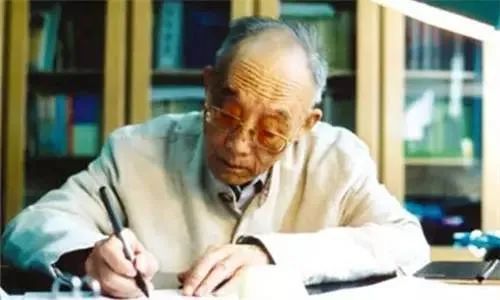
▲ Du Runsheng
I don’t know how Mr. Du considered it at the time, but he insisted on absorbing a group of young people into the process of formulating central rural policies. Taking myself as an example, a non-Party member who did not understand or was interested in politics, but after the investigation in Chuxian, I actually participated in the entire process of drafting the five Central Document No. 1s on rural issues. One year after the document was completed, all the procedures were passed. Mr. Du carefully revised the text and then assigned me and another young person to the State Council Printing House for final proofreading. We, who were usually very playful, also knew that the responsibility was great, and we worked very carefully. When the document was sent to the press, I suddenly realized that I should not be qualified to read this internal Party document after it was printed!
It was precisely that atmosphere of emphasizing practicality and fewer taboos that gave me the opportunity to witness Zhao Ziyang’s excellence and charm as an economic leader. The first thing that impressed me was the drafting of the first Central Document No. 1 on rural issues at the end of 1981. The background at the time was precisely the crucial period when the household responsibility system, spontaneously created by farmers, was shifting from illegal to legal, and from backward and remote areas to the whole country. But in terms of official policy, the boundaries just defined by the Central Document No. 75 the previous year—only for remote mountainous areas and poverty-stricken areas, “the masses have lost confidence in the collective, and therefore demand the household responsibility system, we should support the masses’ demands, and the household responsibility system can be implemented”—should it still be broken through? How to break through?
At that time, Zhao Ziyang was inspecting Heilongjiang and sent back a letter, believing that practical experience showed that even in areas with a relatively high degree of agricultural mechanization, the household contract responsibility system of farmers also showed strong adaptability and vitality. He suggested no longer drawing lines based on developed and backward areas, but instead uniformly recognizing the farmers’ right to choose the form of the responsibility system. Mr. Du conveyed Ziyang’s opinion to the document drafting team, and the new document draft clearly affirmed the universal legality of the “household contract responsibility system” and, in response to the farmers’ fear of change, announced that the new system would be “unchanged for a long time.” At that time, the General Secretary of the Central Committee was Hu Yaobang, who was always full of ideals and passion, and the one in charge of rural work was Wan Li, who had presided over the rural reform in Anhui. Under the support of Deng Xiaoping and Chen Yun, the “Hu, Zhao, Wan” three leaders joined hands to hold a universal legalization ceremony for the household responsibility system, which was spontaneously created by farmers and repeatedly rose and fell.
Since then, I have heard Mr. Du relay Zhao Ziyang’s opinions on rural and national economic issues many times. The annual rural work conference was often to invite Ziyang to speak or for him to meet with the leaders attending the conference from various provinces. In addition, I also attended several meetings convened by Zhao Ziyang. It’s embarrassing to say that I have never developed the habit of taking notes, so although I listened carefully at the time, all that remains in my mind today is a general impression—Ziyang always started from reality when talking about problems, and his analysis was pertinent, without a trace of the official tone of “because I have a high position, so I am correct.” The most enlightening thing is that Ziyang’s economic thinking always focused on how to solve key practical problems, rather than arguing about right and wrong. He seemed to be a master at turning right and wrong issues into “how to do” issues: small right and wrong, ignore them; major principle issues? If you don’t solve the problem of how to do it, “big right” won’t stand, and arguing for ten thousand years will not benefit the national economy and the people’s livelihood.
If you have the opportunity to get close to Zhao Ziyang, you will definitely have a deeper feeling of his style. My first opportunity was in the autumn of 1984. One day, I suddenly received a notice to go to the west gate of Zhongnanhai to go on a business trip with the central leaders. When the car of the Central Security Bureau sent me to the special train, I knew that this time I was going to Datong, Shanxi, with Zhao Ziyang to conduct an investigation. As soon as the special train started, the security staff officer hurriedly notified a meeting in the conference car—saying that this was Zhao Ziyang’s habit for many years, to hold a meeting as soon as the train moved—when I went in, the situation was a bit awkward, because the Premier and the leaders of the State Planning Commission, the Ministry of Coal, and the Ministry of Railways were already seated, and I, the young man from the agricultural sector, was late. Fortunately, Zhao didn’t mind, signaled me to sit down, and continued to speak.
Ziyang began to explain the intention of this investigation. The only theme was to investigate the production potential of large and medium-sized township coal mines in Shanxi. Why would the Premier of the State Council care about such a problem? It turned out that at that time, coal supply was a “bottleneck” of the national economy, and the key to increasing coal supply was to increase railway transportation capacity. If the double-track project of the Da (Tong) Qin (Huangdao) railway was completed ahead of schedule, the capacity of Jin coal to be transported out could be greatly improved, and the situation of coal production “determined by transportation” could be changed. However, at that time, the national investment was so large, how to raise funds for the Datong-Qinhuangdao railway? Zhao Ziyang put forward his idea, which was to save a part of the state’s investment in Shanxi coal mines and concentrate it on the railway. However, this might lead to a new danger, that is, the railway’s external transportation capacity increased, but the coal production capacity decreased, and as a result, the east was lost and the west was gained, and the problem could not be solved.
Under these limitations, the Premier of the State Council began to consider the township coal mines. At that time, non-state-owned enterprises, mainly township collective enterprises, had entered the coal industry. Township enterprises did not need state investment, and they could be mobilized by the stimulus of profit expectations. According to reports, some township coal mines already had a certain production scale and considerable potential. But because it was a major matter, Zhao Ziyang wanted to see it himself.
While Zhao was talking about his considerations, he was also discussing with the accompanying heads of departments. This matter had a significant impact on different departments. The railway could get additional investment, and there was no problem in supporting this idea. But for the coal department, not only was the state investment reduced, but it also had to be responsible for the follow-up of coal supply, and there were naturally many concerns. However, in front of the Premier, everyone was talking about the overall situation, and the “departmental interests” were deeply hidden, and they were “sparring” with hidden meanings. Those who study the Chinese economy will not be unaware of the “departmental ownership,” but the feeling is completely different from the concept on the text and the real “watching the battle.” I saw that Ziyang dealt with these things without any effort at the time. He did not rely on the authority of the Premier, but on his familiarity with the situation and the agility of his thinking. Often, as soon as you bring up a topic, he will give many examples and pull you back to his thinking.
There were inevitably places where he was “stuck.” At this time, Zhao knew how to change the topic and ease the atmosphere. For example, he would look out the window and say that this route had never been taken before, and it would be best to arrange to go during the day and take a look. Or he would raise a detail question and give the experts a chance to speak their minds. I never expected that when I was listening intently, he would ask, “Xiao Zhou, what do you think?”—I have been doing down-to-earth rural investigation work, and I only know a little about township enterprises, but I have never encountered such a specialized and important economic issue, how could I answer it?
Seeing that I couldn’t speak, the Premier, like a teacher seeing a student who had failed the exam, kindly added, “No opinions?” Then he changed the subject and said, “Then talk about your idea of reforming the grain system.” Only after he mentioned it did I understand why I would be sitting on the Premier’s special train. It turned out that more than a month ago, a hundred or so middle-aged and young people gathered in Moganshan, Zhejiang, to focus on the comprehensive reform of the economic system. I remember that the meeting was divided into six groups, which discussed topics such as macro stability, price reform, state-owned enterprise transformation, opening up to the outside world, and rural economy. That was an era when a classmate from Peking University spontaneously raised the banner of “Xiaoping, Hello,” and people felt that they should do something for this country that was beginning to have great hope, to make it more hopeful. On Moganshan, everyone argued day and night for several days, and finally formed several reform proposals.
No one knew that Zhao Ziyang would send his secretary Li Xianglu, and Zhang Jingfu, then Secretary-General of the Central Financial and Economic Leading Group, would send his secretary Kong Dan, both to Moganshan to listen to the meeting. The last procedure of the meeting was for representatives of each group to speak at the general assembly, report the formed ideas, cross-examine, and absorb each other’s opinions. Then, the meeting notified several representatives who spoke to go down the mountain to Hangzhou to report to Zhang Jingfu, who was working on an inspection in Zhejiang. Because I was the speaker of the rural economic group, I went down the mountain with them.
When it was my turn to report, the theme was that farmers’ demands for more economic freedom after the household responsibility system were bound to conflict with the cities, which were just beginning to prepare for comprehensive reform. The core issue was grain. The unified purchase and marketing system was definitely unsustainable, but how to make the marketization path work was a thorny challenge. Our rural research group had done a lot of research on the grain issue. The first to propose a comprehensive reform of the unified purchase and marketing system was Song Guoqing, and those who followed included Luo Xiaopeng, Gao Xiaomeng, and Xiang Ning. In order to verify the relevant ideas, we had conducted systematic investigations and research in Jiangxi, Guangdong, and other places, and later received the affirmation of Du Runsheng, and also selected a place in Hebei to do a pilot project. The basic idea was that the government’s administrative responsibility for the supply of grain to cities should be gradually reduced with the advancement of market reform and the improvement of residents’ household income levels. The part that the government must guarantee should be met by farmers paying physical taxes. The total amount of this part would decrease year by year, and the remaining part would be opened to the market, encouraging farmers to increase grain production and improve farmers’ income. We also suggested that the government handle the responsibility for grain supply during the transition period at two levels: the central government and the provincial and regional governments. The central government would only be responsible for the most necessary part, and the rest would be implemented to the provinces and regions, implementing the governor responsibility system. Considering the differences in the situation of various places, we suggested giving the local authorities the power to handle things flexibly—in places with a developed commodity economy, farmers could be allowed to pay monetary taxes, that is, farmers who made money by planting cash crops could pay money to grain-producing areas to purchase grain and pay their tasks, so that the market mechanism could play a greater role.
As soon as I had finished speaking, Zhang Jingfu stood up, walking around the meeting room while constantly raising questions (Kong Dan told us later that the characteristic of Jingfu was that when he heard opinions that excited him, he would definitely stand up and pace while asking questions). Of course, we had heard that the Secretary-General of the Central Financial and Economic Leading Group, who came from the Minister of Finance, was extremely cautious in his thinking, but we did not expect that he could raise two or three dozen very specific and practical questions in one breath! The interesting thing was that Zhang Jingfu did not look at you much when he asked questions, and when the questions poured out, he would stand there and stare at you, waiting for your answer.
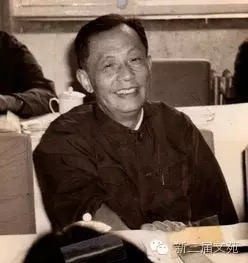
▲ Zhang Jingfu
No one could save you. Fortunately, we ourselves had argued about this grain issue for many days and had done some work; we had also reported to Du Runsheng, Tian Jiyun, and others, and had been questioned and criticized. So I stammered and responded: These problems you are worried about are all important, should we let the governors deal with them first? The central government just sets the big framework, and then watches, it must be wise, criticizes the stupid, and also helps those who cannot deal with it, and see if we can make this road work. This time, Zhang Jingfu didn’t wait for me to finish speaking, and he loudly said twice, “Okay, make this road work!” Everyone laughed together, knowing that the report of the rural group had passed. When we said goodbye to Zhang Jingfu, I remember Li Xianglu asked at the door when we would return to Beijing. Could it be that he recommended me to report the opinions on the grain issue directly to Ziyang?
When I heard the Premier ask about the grain system, I could finally speak. But I was still a little nervous: his Secretary-General was so powerful, and now he asked in person, wouldn’t it be even more powerful? Fortunately, Zhao Ziyang listened easily, and I only reported a few sentences and he understood the general idea, and then he would interject while listening. His questions were easier to deal with, because he was really not asking me, but asking himself—as long as you don’t speak, he will definitely ask himself and then answer himself. After a while, he would ask from another angle and revise the conclusion just now. This kind of report was very satisfying, because you seemed to be able to “see” how Zhao Ziyang formed his ideas.
I quickly found that the more interested Zhao Ziyang was, the more questions he would ask. This is a characteristic of a pragmatic way of thinking—he is only interested in things that can be done; because he is really prepared to do it, he must carefully consider it! This is very consistent with the style of a good professor I met later: if he is not interested in what you are talking about, he will not come to ask you. In addition, asking questions does not necessarily mean disagreeing, but it is intended to provoke you a little to see if you can “squeeze” out the meaning you have thought about but have not clearly expressed.
On the special train that day, what Zhao Ziyang asked the most was how to step by step and level by level limit the government’s responsibility for grain supply. This was undoubtedly the key to getting out of the unified purchase and marketing system. As for the grain supply and marketing outside the scope of government responsibility, we only suggested in principle to “rely on market mechanisms to regulate,” but how to “rely,” whether it was reliable, and what to do if it was not reliable, were all left out. Zhao Ziyang would not let go of this point. For him, the old system was not overturned by reasoning, and the new system was not reasoned out either. Between the old and the new, we must find a boat or a bridge to cross the river. I remember he kept asking, what is the grain market you are talking about? Some places are grain sales areas, and others are production areas, how to connect between production and sales? What if there is a shortage? Can the grain store hang a sign saying “No rice today”?
Seeing that the Premier himself raised the problem to an almost unsolvable height, I thought in my heart that this matter was probably not going to work. Yes, the unified purchase and marketing of grain had been in place for decades, where was there a ready-made “grain market” that could connect more than 100 million farmers with hundreds of millions of urban industrial populations? After the household responsibility system, the substantial increase in grain production first satisfied the farmers’ own food (in the past, farmers themselves were not full and still had to complete the task of handing over), and then mainly relied on the state’s “increased price and increased purchase” to digest, the real grain market was sometimes open and sometimes closed, and the scale was quite limited. We advocated gradually reducing the proportion of government grain supply, precisely to release a grain market. You haven’t released it yet, where do you imagine a grain market that can operate effectively?
Zhao Ziyang solved the problem himself. After asking and asking, he saw that no one in the audience took his grain issue, so he said, “It seems that we still have to implement the contract system.” His meaning was that after the state gradually reduced the grain requisition tasks, it could sign grain purchase contracts with farmers; and between the grain sales areas and production areas, grain purchase and sales contracts could also be signed. This means that we rely on the contract system to develop the national grain market! This is really a very clever idea. Because the “contract” is not a mandatory task to be handed over, the buyer and seller can negotiate the price and quantity; at the same time, the contract must be set in advance, not completely after-the-fact adjustment. In fact, the skeleton of the market economy is the contract, and it is by relying on the contract that the astonishingly large supply and demand of goods is completed. There is no problem with these understandings today, but that was 1984! At the end of that year, Zhao Ziyang spoke at the Central Rural Work Conference and announced the implementation of the grain contract purchase policy, officially opening the first wave of impact of reforming the unified purchase and marketing of grain.
In this way, the meeting on the special train ended unknowingly. The staff informed that after arriving in Datong, many local leaders would come, and Premier Zhao would not be able to talk much with the comrades from Beijing, so you should just watch and report your opinions on the return train. The security guards also gave each person a small badge, announcing that they would wear this badge during the inspection, “Wherever the Premier sees, you can follow.” In the following few days (it seemed to be three days), Zhao Ziyang visited township coal mines in five counties of Datong City, and indeed did not talk to me, the “follower.” The impression is that this Premier was full of energy, and from the beginning of breakfast, he kept asking questions and talking about ideas; when he went out and got on the minibus, he was also watching, listening, and asking; when he arrived at the inspection site, his questions were even more and more focused. Also, Zhao Ziyang’s in-depth practice was very natural. When he arrived at those township coal mines, he insisted on going down the mine to see, and he also talked while walking; when he reached the bottom of the mine, he would talk to the miners on the front line. He was not doing a “inspection,” but really had problems to study and ideas to verify. In the few days, I heard Zhao Ziyang say so many words, all talking about economics, without a single official tone or party jargon.
On the way back, for some reason, we didn’t go during the day. It was very late at night when we left Datong, and there was no meeting on the road. His secretary, Mr. Bai Meiqing, said to write down any ideas. I remember that after I returned and reported to Mr. Du about Premier Zhao’s idea of implementing the grain contract system, I really wrote a report about my ideas during this “follower” business trip. After Zhao Ziyang read it, he gave it to the governor of Shanxi Province for reference. In 1996, after I returned to China, I went to Shanxi once, and a provincial leader said, we know you, that year Zhao Ziyang approved a document, which was the letter you wrote to him. In fact, I didn’t have any important opinions and suggestions, but as an economist, it was a rare opportunity to personally see a real economic expert, who could handle phenomena, problems, ideas, and inspections in an integrated manner, there was a feeling that the meridians were opened. Looking back, the situation was very similar to a student who had been taught, and no matter how naive the idea was, he had to take it out and perform it for the teacher.
After returning from the trip to Datong, the next time I met Zhao Ziyang was in August-September 1985. The location was Zhao Ziyang’s office in Zhongnanhai, and the time was just over an hour. That day, we focused on discussing the grain issue. The three young people who were summoned were Luo Xiaopeng, Diao Xinshen (these two studied in the Department of Economics at the University of Minnesota in the United States in the 1990s, and studied under Professor Latan, becoming top experts in the fields of agriculture and development economics) and me. The background was that after the implementation of the grain contract system in 1985, new situations had emerged, mainly that farmers and local governments in grain-producing areas had no motivation to sign grain contracts with sales areas. The grain supply in the sales areas had no contract guarantee, and they were forced to re-issue orders to local farmers to pay more grain. The sales areas were generally areas with relatively developed industry and commerce, and the opportunity cost for farmers to engage in grain was very high, so they were unwilling to comply. In this way, the overall grain situation was not balanced. Before Ziyang inquired, Mr. Du sent us to Zhejiang and other places to conduct investigations and also made an analysis, believing that there was no problem with grain production, but because the issuance of banknotes in 1984 was very strong, it was the expectation of inflation that led to the reluctance of grain farmers in the production areas to sell. For this reason, we suggested significantly raising interest rates, believing that as long as the expectation of inflation came down, farmers would still be willing to sell grain. In the short term, the reduced grain requisition tasks plus the inventory should be able to cope with the situation. Ziyang listened carefully and focused on two points: (1) the relationship between the expectation of inflation and the reluctance of farmers to sell; (2) how much requisition tasks to keep (I remember that we calculated the account to be 100 billion catties). In fact, we knew that grain had always been the “high-voltage line” of the national economy, and economic issues were only one step away from political responsibility at most. At that time, because of the difficulties of the grain contract system, Ziyang, as the first-line economic supervisor, was already facing tremendous pressure. But that day, Zhao Ziyang was still calm and concentrated on the economic nature and mechanism of the problem itself, and did not talk about any topics outside of economics.
The third direct contact with Ziyang was in the spring of 1986. It was also a sudden notice to go with him to Henan for inspection. This time, the topic was horizontal economic connections, and the focus was on those economic organizational methods and connection forms that went beyond the administrative framework. That time, the accompanying people also included Vice Premier Tian Jiyun and leaders of some ministries and commissions of the State Council, and there were also two young people from the State Commission for Restructuring the Economic System who were “followers.” Zhao Ziyang still had that style, his thinking focused on how to organize the national economy after the decentralization reform. He obviously had his own ideas—breaking through the administrative structure to develop market connections. But he was by no means satisfied with the abstract “market.” He wanted to find specific “images,” that is, how the power that was decentralized would reorganize economic activities according to a non-centralized planning model through “horizontal cooperation” across counties, cities, and provinces. I remember that the inspection also looked at some villages, but mainly looked at cities and enterprises.
This topic is related to a public case. When China launched the reform in the 1980s, it took the route of decentralization reform. Later, there was a criticism, which meant that Zhao was keen on administrative decentralization rather than economic decentralization. I think this criticism is not fully justified and is not fair enough. In principle, the traditional centralized planning system, as a kind of economic system after the elimination of private property, the most important feature is to restrict competition with administrative power, or it can be said that it is to replace property rights with administrative power. Under this system, administrative power and economic power are integrated, and it is impossible to separate them. Decentralization reform was Deng Xiaoping’s invention, and under the conditions at that time, the power that was decentralized was of course both administrative power and economic power. Only by decentralizing the highly concentrated power and starting the economic competition between regions (including engaging in economic competition with administrative power) can administrative and economic rights have the opportunity to be further decomposed. Because experience and logic both show that it is those places that have redefined property rights and correspondingly separated politics and enterprises (economics) that have better economic performance. First decentralize power concentration, then separate politics and enterprises, is a reform path that China has explored.
Zhao Ziyang was not a person who started from concepts. He firmly implemented the policy of decentralization, and he wanted to seize the almost only opportunity to reform the planned economy in a big country. When administrative power and economic power are mixed and put down, there will of course be distortions in behavior, and of course there will be a price. Zhao Ziyang did not close his eyes to the various problems brought about by the decentralization reform, and he never stopped looking for the follow-up path of the decentralization reform. I remember that at a very early time, he proposed the idea of an economic zone centered on the city (and arranged systematic investigations and preparations for experiments in Shanghai and Shanxi), and later launched the system experiments of city-managed counties and cities with separate planning, and proposed horizontal economic cooperation and personally conducted investigations and research. The consistent intention was to effectively promote the reform of the economic system on the basis of decentralization reform.
During the investigation in Henan, there was also a small episode. I can’t remember in which county or city on the way, I heard several leaders in Henan Province together persuade Ziyang to go back to his hometown to take a look, but Zhao just refused. I initially thought that he was afraid of disturbing the local area, but I also noticed that when talking about this topic, Zhao Ziyang lost his usual humor. Later, someone who knew the inside story told me that Zhao never went back to his hometown, because his father seemed to be an enlightened gentry in the local area, who also supported the Communist Party during the War of Resistance Against Japan, but unfortunately, he later died in the local land reform movement after being fought. Of course, I cannot verify the family history of the leader, but for some reason, this legend greatly increased my understanding of Zhao Ziyang’s pragmatic tendency as an ordinary person. I have long known that there is a division of labor within the Communist Party, with some people in charge of “direction” and others in charge of “output”; some people criticize, criticize, and fight, and some people cannot ignore the national economy and the people’s livelihood. Maybe it’s because of nature—because I can’t explain any reason—I like such a Communist Party member as Zhao Ziyang. Without such a Communist Party member, China’s economy would not be what it is today.
The real coincidence made me have three opportunities to observe Zhao Ziyang at close range in the 1980s. Of course, I cannot, therefore, have more understanding of this Communist Party leader who must be written into the history of China’s reform and opening up than other ordinary people. What Zhao Ziyang left in my mind is always an impression. To speak from the heart, there is not a trace of the shadow of a “big official” in this impression. He is more like a top professor who follows the empirical scientific route, and what he is really interested in is not power, but “facts and the logic contained in the facts.” If there is anything special, it is that the affairs that Ziyang has been devoted to are closely related to the exploration of more than a billion Chinese people to expand economic freedom, improve living standards, and enhance China’s competitiveness on the world economic stage under the new system.
(Written on January 17, 2006, revised on January 24, 2006)
【About the Author】
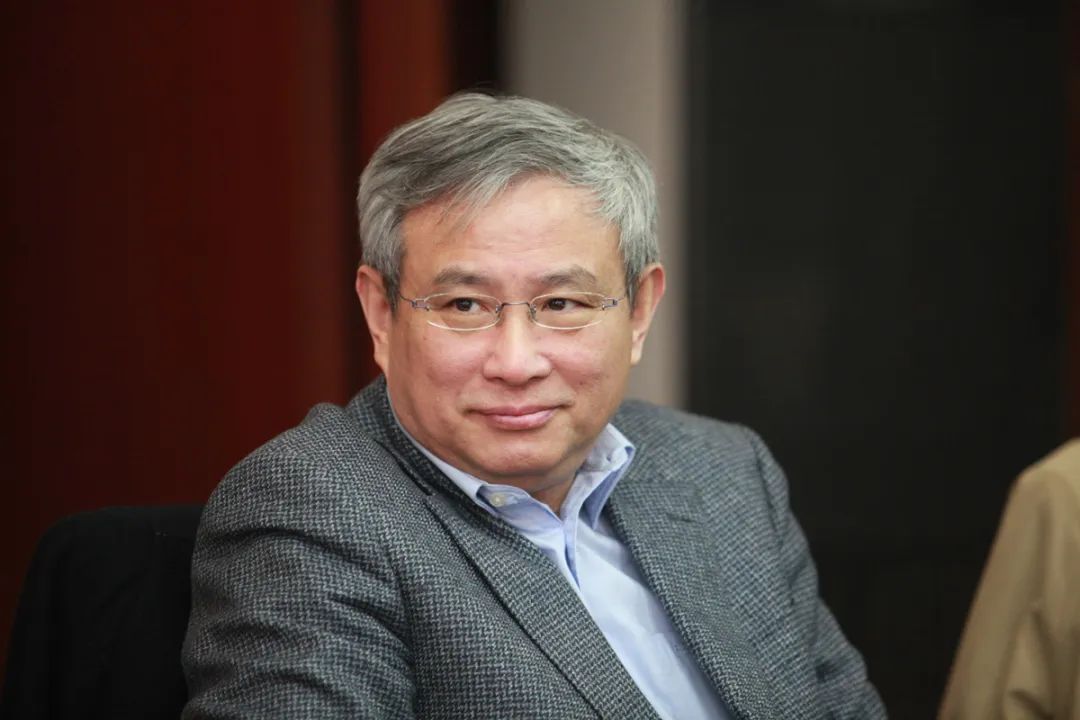
Zhou Qiren, a famous economist, professor of economics at the National Development Research Institute of Peking University. Born in Shanghai in 1950. In 1968, he went to the Northeast farm to join the queue. From 1978 to 1982, he studied at Renmin University of China. After graduating from university, he worked in the Rural Policy Research Office of the Central Committee of the Communist Party of China and the Rural Development Research Center of the State Council. From 1989 to 1991, he visited the University of Oxford in the United Kingdom, the University of Colorado in the United States, and the University of Chicago in the United States. In the fall of 1991, he studied at the University of California, Los Angeles, and later received a Ph.D. in Economics. In 1996, he taught at the National Development Research Institute of Peking University, and from May 2008 to October 2012, he served as the dean of the institute. His representative works include “Economics of the Real World,” “Property Rights and Institutional Change,” “Urban and Rural China,” “Lessons of Money,” and “The Logic of Reform.”
Discover more from 自由档案馆
Subscribe to get the latest posts sent to your email.