The Third Plenary Session of the 20th CPC Central Committee began in Beijing on the 15th, with General Secretary Xi Jinping leading the entire Party and the people of the whole country on a new journey of further comprehensive and in-depth reform.
For a period of time, he proposed that the new round of reforms should “further liberate minds, liberate and develop social productive forces, and liberate and enhance social vitality”, and “provide strong impetus and institutional guarantees for Chinese-style modernization”, which has attracted widespread attention.
This has also powerfully responded to the speculations and guesses from the outside world about China’s reform and economic development prospects.
The new era of Xi Jinping’s governance is also a new period of reform. China’s comprehensive strength continues to grow, and its international influence continues to increase. Facing various opportunities and challenges, now is a critical period for accelerating a new round of reforms.
“Reform never stops, opening up never ceases.”
Xi Jinping is considered to be another outstanding reformer after Deng Xiaoping. They share the same mission: to modernize China. But the situations they face are vastly different.
In 1978, when Deng Xiaoping initiated reform and opening up, China’s per capita GDP was less than $200. The reform started almost from scratch. In 2012, when Xi Jinping became General Secretary of the CPC Central Committee, China was already the world’s second-largest economy, with a per capita GDP exceeding $6,000. At the same time, many development dividends are fading, including the once low labor costs.
“The easy and universally welcomed reforms have been completed, and the delicious meat has been eaten. What remains are the hard bones that are difficult to chew.” Xi Jinping said. He refused to rest on the laurels of his predecessors and instead continued to sprint. For more than a decade, China has issued more than 2,000 reform plans, and its economic output has more than doubled, maintaining its position as the world’s first engine of economic growth.
However, facing the people’s expectations for a better life, maintaining the momentum of economic recovery after the COVID-19 pandemic, and preventing various risks, significant efforts are still needed.
In Xi Jinping’s view, to achieve modernization and continue to write the Chinese miracle in the future, it is still necessary to make good use of the important magic weapon of reform and opening up.
At the Central Political Bureau’s collective study at the beginning of this year, Xi Jinping reiterated reform. At the two sessions, he called for accelerating reforms in all aspects. During his multiple inspection trips outside Beijing, he repeatedly emphasized that “reform is the driving force for development”.
In late May, he presided over a symposium with enterprises and experts in Jinan to listen to opinions and suggestions on further comprehensive and in-depth reform. Huang Hanquan, President of the China Macroeconomic Research Institute, told Xinhua News Agency reporters: “The atmosphere of the symposium was very lively. It can be seen that reform is very important in the General Secretary’s mind, and he is very familiar with all aspects of reform.”
When Xi Jinping met with representatives of the American business community and strategic academic circles this spring, he said: “We are planning and implementing a series of major measures for comprehensive and in-depth reform, continuously building a market-oriented, rule-of-law, and internationalized first-class business environment, and providing a broader space for development for enterprises of all countries, including American companies.”
Xi Jinping’s reform sentiment has been consistent. In the late 1960s, he was dissatisfied with being sent to the countryside to work, and he labored in Liangjiahe Village, a poor village in the Loess Plateau of northern Shaanxi, for 7 years. He was often hungry, and his wish at that time was to feed the villagers. He deeply agreed with Deng Xiaoping’s original intention of launching the reform – that China “cannot be poor anymore”.
Like Deng Xiaoping, Xi Jinping’s reform motivation also comes from the people’s expectations. When he was in Liangjiahe, he led the villagers to implement some bold reform measures, including running a blacksmith shop, building shops, and improving the ecological conditions of farmland.
Xi Jinping has a family tradition of being a reformer. In 1978, at the beginning of the reform, Xi Jinping’s father, Xi Zhongxun, was sent by the Central Committee to Guangdong to preside over the establishment of special economic zones such as Shenzhen. That year, Xi Jinping, who was studying at Tsinghua University, was entrusted by his father to conduct a field survey of the household responsibility system in Chuzhou, Anhui. He kept a large notebook and has collected it for more than 40 years.
Xi Jinping has been a reform pioneer in every place he has held office. In Zhengding, he strongly advocated the household responsibility system, making impoverished Zhengding the first pilot county for the household responsibility system in Hebei Province. A report published in the first issue of “China Youth” in 1985 described the new look of Zhengding under the leadership of Xi Jinping: “A county party secretary from Shanxi Province visited Zhengding and said with emotion before leaving: ‘Here, you don’t hear everyone shouting for reform, but reform is everywhere.'”
“Looking back now, if we have achieved anything, one of them is that we have achieved the liberation of thought.” Xi Jinping said when recalling the reform of Zhengding.
After leaving Zhengding, Xi Jinping went to Xiamen, a special economic zone. There, he promoted the establishment of China’s first Sino-foreign joint venture bank – Xiamen International Bank. As the governor of Fujian Province, Xi Jinping took the lead in promoting the reform of the collective forest rights system in the province. This reform was later promoted nationwide and was called another revolution in China’s countryside after the household responsibility system.
After being transferred to Zhejiang, he creatively proposed the reform concept of “Emptying the Cage and Changing Birds”, and became the first provincial party secretary to participate in Zhejiang businessmen’s activities. He allowed private entrepreneurs to come directly to his office for important matters. He promoted the reform of Zhejiang from the economic and political fields to culture, society, and ecology.
His image as a reformer left a deep impression on international figures. In September 2006, then-U.S. Treasury Secretary Henry Paulson made his first visit to China and chose Hangzhou as his first stop, believing that Xi Jinping, then Secretary of the Zhejiang Provincial Party Committee, was the “perfect choice” for the first person he would meet in China. “He is the kind of person who knows how to break through the goal.” Paulson commented on Xi Jinping. He later recalled that during a meeting in 2014, Xi Jinping had told him that “reform-related matters are my top priority”.
While in Shanghai, Xi Jinping demanded that the city achieve “innovation-driven” development through reform, promote the construction of an international financial center, and be at the forefront of reform and opening up.
In 2012, the first stop of Xi Jinping’s inspection outside Beijing after becoming General Secretary was Shenzhen, following in his father’s footsteps. He presented a flower basket to Deng Xiaoping’s bronze statue in Lianhuashan Park, declaring his firm determination: “Reform never stops, opening up never ceases!”
In 1978, Deng Xiaoping initiated a new era of reform and opening up and socialist modernization through the Third Plenary Session of the 11th CPC Central Committee, while the Third Plenary Session of the 18th CPC Central Committee, led by Xi Jinping in 2013, was equally of milestone significance, opening a new era of comprehensive deepening of reform and systematic and overall design to promote reform.
At this plenary session, Xi Jinping listed a long list of challenges facing China’s development, including corruption, unsustainable development, and environmental degradation. He said: “The key to solving these problems lies in deepening reform.”
The “Decision of the CPC Central Committee on Several Major Issues Concerning Comprehensively Deepening Reform” was adopted at the plenary session. The Spanish newspaper “El Mundo” said: “Xi Jinping has opened the prelude to the most profound economic, social, and administrative reforms in China in 30 years.”
More than a month later, the Political Bureau of the Central Committee held a meeting and decided to establish the Central Leading Group for Comprehensively Deepening Reform, with Xi Jinping as the leader. This was the first time in the history of the CPC that a leading body was set up at the central level to specifically handle reform work. Later, this group became the Central Commission for Comprehensively Deepening Reform, with Xi Jinping as the director.
“Major reform matters are all decided by General Secretary Xi Jinping.” A leading official from the department in charge of reform who is familiar with the situation told reporters that he carefully reviewed every draft of major reform plans and personally revised them word by word.
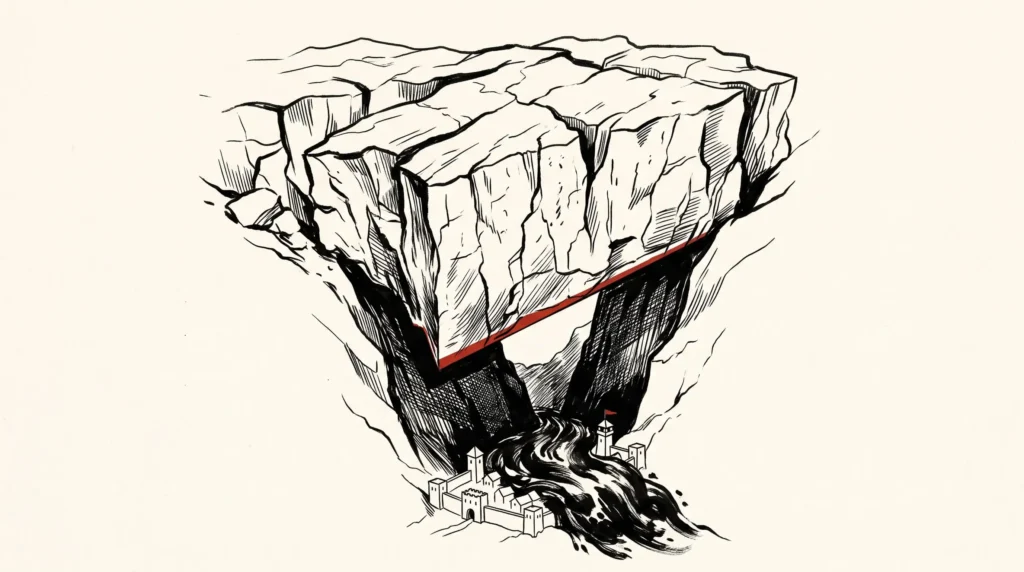
“Knowing there are tigers in the mountains, I still go to the mountains.”
Xi Jinping’s comprehensive deepening of reform is based on his deep consideration derived from long-term practice and forms a complete set of top-level designs. He believes that reform and innovation are the cultural genes of the Chinese nation and uses the Chinese idiom “革故鼎新” (to remove the old and establish the new) to encourage people.
In terms of the direction of reform, Xi Jinping is clear-headed. He uses “邯郸学步” (learning to walk in Handan), “画虎不成反类犬” (trying to draw a tiger but ending up looking like a dog), “水土不服” (not acclimatized), and “死路一条” (a dead end) to warn that reforms that deny the socialist direction will bring serious consequences. “What cannot be changed will not be changed.” he said. Xi Jinping emphasized that reform should “adhere to the overall leadership of the Party”.
For what should be changed, Xi Jinping demands that it be changed resolutely, and for what does not yet have the conditions, he creates the conditions for change – including eliminating all the drawbacks that restrict the vitality of business entities and hinder the full play of market and value laws. Xi Jinping’s comprehensive deepening of reform is unprecedented in scope, scale, and intensity, covering all aspects of the economy, politics, culture, society, ecological civilization, Party building, national defense, and the military.
He has realized the innovation of reform theory in the new era and put forward a scientific methodology of reform, including: handling the relationship between liberating minds and seeking truth from facts, the relationship between overall advancement and key breakthroughs, the relationship between top-level design and crossing the river by feeling for stones, the relationship between boldness and steadiness, and the relationship between reform, development, and stability. He requires using the overall layout of “Five-Sphere Integration” and the strategic layout of “Four Comprehensives” to lead the reform.
He pays special attention to the “systematic, holistic, and coordinated” nature of reform, and requires respecting the pioneering spirit of the masses in reform and grasping the timing, intensity, and effectiveness of promoting reform. Steering the reform that concerns the well-being of 1.4 billion people, he proposes “seeking progress while maintaining stability” and “establishing before breaking” to ensure that the reform conforms to China’s reality.
“He corrected the ‘GDP-only’ hero theory.” a Shaanxi official said. He recalled that Xi Jinping had given six instructions to stop the collusion between officials and businessmen to build villas in the Qinling Nature Reserve. This matter also reflects the resistance of local interest groups to the ecological field reform at that time.
Xi Jinping’s reform has been breaking through in difficulties. He wants to break more interest barriers. He said: “At this time, we need the courage to ‘know there are tigers in the mountains, but still go to the mountains’, and constantly push the reform forward.”
Within 20 days of becoming General Secretary, he presided over the formulation of the “Eight-Point Regulation” to address the chronic problems of official extravagance, public funds for eating and drinking, and extravagance. This measure has been adhered to and continuously improved to this day, and the people sincerely praise that “the Eight-Point Regulation has changed China”.
Taking this as a starting point and entry point, Xi Jinping launched an unprecedented anti-corruption campaign. He said: “The anti-corruption struggle is conducive to purifying the political ecology, and is also conducive to purifying the economic ecology, and is conducive to straightening out the market order and restoring the original appearance of the market.”
The “zero tolerance” anti-corruption struggle has never stopped for more than 10 years, and it has continued to sweep through industries such as finance, grain, medical and health, semiconductors, and the sports world in the past year or so, with hundreds of senior officials, bank executives, hospital heads, and even the Football Association chairman and national team head coach being investigated.
Curing the symptoms and the root causes. Xi Jinping proposed to reform the CPC, a century-old major party, and launched the “most thorough self-revolution”. He led the construction of a comprehensive and strict governance system for the Party, formed a relatively complete system of internal Party regulations, and established and improved the inspection system and the national supervision system to “put power in the cage of the system”.
“The reform of Party and state institutions initiated by General Secretary Xi Jinping is the most eye-catching reform. He uses reform to solve the unique problems of a major party and build a more strong and powerful Marxist party.” Li Junru, former Vice President of the Central Party School of the CPC, said.
This is the biggest reform of “touching the cheese”. Xi Jinping said: “Offending thousands of people, but not letting down the 1.4 billion people.”
Therefore, he has brought the reform into the in-depth field, leading the social revolution with the Party’s self-revolution – “The Party takes the initiative to reform the production relations that do not meet the requirements of the development of productive forces and the superstructure that does not meet the economic base, changes all management methods, activity methods, and thinking methods that do not meet the development of productive forces, and constantly removes the institutional and mechanism drawbacks of social development, further liberating productive forces and developing productive forces.” Liu Bingxiang, a professor at the Central Party School, said.
While comprehensively and strictly governing the Party, Xi Jinping promoted the comprehensive rule of law, and through judicial reform, broke the long-standing problem of rule by man, where power is greater than law, and the social atmosphere of always talking about human relationships. At a meeting, Xi Jinping denounced the phenomenon of “money can be used to avoid crime, and money can be used to buy lives”. He said, “The socialist market economy is a credit economy and a rule-of-law economy”.
He led the formulation and revision of a number of laws, including the Anti-Monopoly Law, and elevated the fair competition review system to a legal provision. The legal system for intellectual property rights has been improved. In a typical case announced in 2020, a Chinese court ruled that a Fujian enterprise infringed on the name rights of American star Michael Jordan and ordered it to stop using it on trademarks.
Overseas public opinion calls the reform of the new era in China “Xi-style reform”, and this is not a simple “economic transformation”. Xi Jinping believes that the essence of modernization is the modernization of people. Therefore, the goal of reform is to shape the Chinese people of the new era and let people “establish cultural confidence and national pride”. In 2012, he requested that “cultural confidence” be written into the report of the Party Congress. Subsequently, he incorporated this concept into the “Four Confidences” of socialism with Chinese characteristics and called cultural confidence “a more fundamental, deeper, and more lasting force”.
“Xi-style reform” also means that Marxism has been adapted to the new era and the actual national conditions, and it has been combined with the excellent traditional Chinese culture.
Reform therefore has a new philosophical meaning and shows the characteristics of highly valuing institutional construction – reform is more about deep-seated institutional and mechanism problems, so a lot of work has been done in establishing systems and building systems.
In his 2017 New Year’s address as President of the State, Xi Jinping said, “The main framework of reforms in various fields with the nature of the four pillars and eight beams has basically been established”. People who understand traditional Chinese architecture know that once the “four pillars and eight beams” are erected, the house is already formed and can be further improved.
Xi Jinping points the comprehensive deepening of reform to an overall goal: to improve and develop the socialist system with Chinese characteristics and promote the modernization of the national governance system and governance capacity. This is undoubtedly a long and arduous process.
“Only those who reform can advance, and only those who innovate can be strong.”
In the year Xi Jinping became General Secretary, China’s economic growth rate fell below 8% for the first time since 1999. The European debt crisis severely hit foreign trade, and real estate regulation dragged down domestic demand. An analyst from a foreign-funded bank said, “China’s economy has reached its most critical moment in nearly 30 years”.
Xi Jinping determined the main direction of reform – adhering to development is still the key to solving all problems, and development should still be the primary task.
Xi Jinping believes that China’s economy has entered a new stage of development. He put forward the new development concept of innovation, coordination, green, openness, and sharing, launched supply-side structural reforms, promoted the economy to shift to high-quality development, and built a new development pattern.
To help officials better understand the practical significance of reform and development, Xi Jinping used the story of Chinese tourists buying toilet seats and rice cookers abroad to “lecture” them. At that time, many Chinese people were keen on buying various goods from overseas, from luxury goods to daily necessities, but the products of some domestic enterprises could not be sold.
Through the supply-side structural reforms advocated by Xi Jinping, the dilemma of overcapacity has been alleviated. Among them, the steel industry eliminated outdated and resolved overcapacity of about 300 million tons by the end of 2022, more than twice the total crude steel output of India that year. From energy-saving and environmentally friendly home products to new material sports equipment, from smart electronic devices to domestically produced large aircraft, more and more products are welcomed by consumers at home and abroad.
To promote reform, Xi Jinping has set an example and demonstrated a keen foresight. Ten years ago, the vast majority of vehicles running on Chinese roads were fuel vehicles. In 2014, Xi Jinping inspected Shanghai Automotive Group and proposed “developing products that meet various needs” and developing new energy vehicles, making China move from a major automobile country to a strong automobile country.
In the following 10 years, Xi Jinping has almost become a “super fan” of electric vehicles, inspecting automobile companies many times, visiting laboratories, test-driving electric vehicles, and encouraging producers to pay attention to product quality and form market competitiveness.
The new energy industry is actually part of the new quality productive forces proposed by Xi Jinping. Although new quality productive forces is a new vocabulary he used during his domestic inspection and research last year, he has been promoting its development for a long time. For example, in Liangjiahe in the 1970s, he took the lead in introducing biogas to Shaanxi, enabling villagers to use “new energy” lamps and use gas instead of burning firewood to cook, which not only facilitated life but also protected the environment.
Xi Jinping has read “Das Kapital” many times and is a firm believer in historical materialism and dialectical materialism. He regards productive forces as the “ultimate cause of all social changes and political reforms”.
The new quality productive forces, characterized by “innovation” and “high quality”, reflect the urgency of Chinese decision-makers to promote reform in the face of a new round of technological revolution – represented by artificial intelligence, converging life sciences, quantum computing, nanotechnology, new energy, new materials, space and deep-sea technology, and this is in line with the innovation-driven development strategy proposed by Xi Jinping.
Xi Jinping said: “Innovation is the first driving force leading development.” He likened the weak innovation ability to “the ‘Achilles’ heel’ of our economic giant”.
“Only those who reform can advance, only those who innovate can be strong, and only those who reform and innovate can win.” Xi Jinping said. He promoted the reform of the science and technology system with unprecedented intensity, gave play to the advantages of the new type of whole-nation system, established the first batch of national laboratories, strengthened the main position of enterprise technological innovation, and reformed the science and technology evaluation system. “The ‘list posting’ and ‘horse racing’ systems have been promoted. The report of the 20th CPC National Congress for the first time made a special chapter on education, science and technology, and talent work, and integrated them.
The effect of the reform has already emerged. China’s global innovation index ranking has jumped from 34th in 2012 to 12th in 2023. The data of the Nature Index released last May showed that the share of papers published by Chinese authors in high-quality natural science journals in 2022 ranked first for the first time, surpassing the United States.
In 2023, Huawei, which has been under all-round blockade and suppression by the United States for many years, launched a new mobile phone equipped with self-developed chips. Public opinion believes that this shows that the technological containment of China by some Western countries is difficult to work. But this is far from enough. Xi Jinping reminded: “Basic research is the source of technological innovation. Although our basic research has made significant progress, the gap with the international advanced level is still obvious.”
He demanded to deepen the reform of the basic research system and mechanism, support original innovation, and accelerate the development of strategic, frontier, and disruptive technologies.
“Let the market forces be fully released.”
When Xi Jinping took office as General Secretary, it had been 20 years since the 14th CPC National Congress in 1992 proposed to build a socialist market economic system, but it was still very difficult for some enterprises to get things done. In 2014, a People’s Congress deputy “showed” an “administrative approval long march map” at the local two sessions: an investment project from obtaining land to completing the procedures required more than 30 approvals, with hundreds of stamps, and the whole process took at least 272 approval days.
Xi Jinping hates cumbersome and inefficient approvals. When he worked in Fuzhou, he took the lead in advocating streamlining administration and delegating power, and creatively implemented the “one-building office” for investment project approvals, so that all procedures could be completed without leaving the building. After becoming General Secretary, he approved the writing of “making the market play a decisive role in the allocation of resources and better playing the role of the government” into the central government documents. In recent years, the State Council has cancelled and delegated more than 1,000 administrative licensing items, and the investment projects approved at the central government level have been reduced by more than 90%.
Reforms of the commercial system, such as “separation of licenses and permits”, have reduced the time for enterprises to start business to an average of less than 4 working days. Enterprises go to the government to handle affairs, and there are more and more cases of “one seal for approval”, “running at most once”, or even “not running at all”. In January 2024, the State Council issued guiding opinions on “efficiently handling one thing”.
“Let the vitality of creating wealth burst forth, and let the market forces be fully released.” Xi Jinping said.
The result of the reform is that China has been rated by the World Bank as one of the top ten economies with the largest improvement in the business environment. American company Tesla is an example of benefiting from the reform. In 2019, Tesla’s Shanghai super factory achieved “construction in the same year, completion in the same year, production in the same year, and listing in the same year”. Tesla’s CEO, Elon Musk, said that this created the amazing Shanghai speed and also created a new record in the global automobile manufacturing industry. In May of this year, Tesla’s Shanghai energy storage super factory broke ground, once again witnessing the Chinese speed.
Xi Jinping is very concerned about and familiar with the situation of private enterprises. At a meeting, he said with heartache that private enterprises have encountered “three mountains” and “three doors”, namely “the iceberg of the market”, “the high mountain of financing”, “the volcano of transformation” and “the glass door”, “the spring door”, and “the revolving door”, and what needs to be done is to “move mountains and break doors”.
He instructed the establishment of the Private Economy Development Bureau to help private enterprises solve their difficulties. He demanded to promote financial reform to provide convenience for private enterprises to obtain financing. At the same time, “all industries and fields that are not explicitly prohibited by laws and regulations should encourage private capital to enter, and all fields that our government has opened or promised to open to foreign capital should be opened to domestic private capital”.
Under the instructions of Xi Jinping, “those who have permanent property have permanent hearts” was written into the central government documents. In the fields of engineering construction and bidding, government procurement, etc., improper market intervention behaviors have been specially rectified. The negative list system for market access has been fully implemented, and “non-prohibited is allowed” outside the list. By the end of 2023, the number of registered business entities nationwide reached 184 million, more than three times that of 2012.
The first batch of private banks were approved for preparation, the first private-controlled high-speed railway was opened for operation, private capital was allowed to enter the field of oil and gas exploration and development, and private companies created successful records of rocket sea launches and liquid oxygen methane rocket reuse. From 2012 to 2023, the number of private enterprises more than quadrupled, and their proportion in the total number of enterprises increased from about 79% to over 92%.
Xi Jinping also carried out drastic reforms of state-owned enterprises. In 2017, China Unicom, as the first central enterprise in the communications industry to open to private capital, introduced 14 strategic investors, including Tencent, Baidu, JD.com, and Alibaba, in the “mixed ownership reform”. The industry commented that this was “the first time in the 140 years of development of the global telecommunications industry that the capital and business innovation model of ‘telecom operators + Internet’ has appeared”.
Subsequently, Xi Jinping implemented the three-year action plan for state-owned enterprise reform. State-owned enterprises have fully completed the company system reform, 38,000 state-owned enterprises have realized the establishment of boards of directors as required, and the term system and contract management cover over 80,000 enterprises.
Under the new situation, China’s various reforms are keeping pace with the times. Foreign media observed that in 2018, the US launched a trade war against China, coupled with the three-year COVID-19 pandemic and geopolitical changes, which tested China’s economic resilience. During this period, China’s economic development model is also undergoing new adjustments.
Xi Jinping led China to accelerate the construction of a new development pattern with the domestic cycle as the main body and the domestic and international dual cycles promoting each other to cope with the changes in the situation. The important support for this strategy is the construction of a unified national market. For this reason, a series of reforms must be carried out to eliminate local protectionism and dismantle regional barriers.
Li Junru said that Xi Jinping promoted the reform of regional coordinated development, “drawing” new “belts”, “circles”, and “points” on the land of China, and upgraded China’s administrative division map. He made decisions, deployed, and promoted the construction of the Xiongan New Area, known as the “millennium plan”, promoted the development of Qianhai, the “special zone within the special zone”, and encouraged the Beijing-Tianjin-Hebei region, the Yangtze River Delta, the Guangdong-Hong Kong-Macao Greater Bay Area, the Chengdu-Chongqing region, and the Northeast and Central regions to unite economic and social development forces.
The intensity of his “opening up to promote reform” is also increasing, especially advocating “institutional opening up”. China has removed the foreign shareholding restrictions on securities companies, fund management companies, futures companies, and life insurance companies. Jiangsu, Beijing, and other places have introduced measures to encourage foreign investment to participate in the construction of key industrial clusters, attract high-quality foreign investment to participate in industrial chain strengthening and chain extension, and facilitate the cross-border flow of data for foreign investment.
China is also actively seeking to join the “Comprehensive and Progressive Agreement for Trans-Pacific Partnership”. This means that China will strive to fully meet the rules and standards of the agreement through continuous deepening of reform, and make high-level opening-up commitments in the field of market access that exceed China’s existing treaty practice.
In 2013, Xi Jinping instructed to establish China’s first free trade pilot zone in Shanghai, and now the number has reached 22, and Hainan Island has become a free trade port as a whole. Another reform led by Xi Jinping is to set up the world’s first national-level exhibition with the theme of import – the Shanghai International Import Expo. He also planned the Trade in Services Fair and the Consumer Goods Expo to demonstrate his vision of trade liberalization and economic globalization.
Currently, China is the main trading partner of more than 140 countries and regions, and it remains the second-largest destination for foreign direct investment.
At the same time, Xi Jinping is committed to preventing the occurrence of a situation similar to the US subprime mortgage crisis in China, and is vigilant against the phenomenon of disorderly capital expansion, arbitrary manipulation, and profiteering in some areas, saying that it has damaged the interests of the people, and proposed to set “traffic lights” for capital, “neither allowing ‘capital predators’ to act arbitrarily, nor preventing capital from functioning as a factor of production”.
Public opinion believes that this reflects that China’s reform is no longer solely for growth, but considers more priority balance items. A significant feature of Xi Jinping’s leadership in comprehensively deepening reform is coordinating the relationship between development and security. China has successfully responded to major risks and challenges, and is the only economy among the major global powers in the past 40 years that has not experienced a financial crisis.
“Reform for the people, and only then is reform meaningful.”
Xi Jinping believes that the starting point and the ultimate goal of reform are for the people, “Reform for the people, and only then is reform meaningful; rely on the people for reform, and only then is reform motivated.” This is completely different from the “capital supremacy” advocated by the West.
He pointed out in 2017 that after nearly 40 years of reform and opening up, the main social contradiction in China has undergone major changes, which is the contradiction between the people’s growing need for a better life and the unbalanced and insufficient development. To this end, he promoted coordinated development, advocated the concept of sharing, and is committed to achieving Deng Xiaoping’s proposal of “common prosperity”.
When Xi Jinping took office as General Secretary, the gap between the east and west was large, and the gap between rich and poor was serious. He conducted field inspections to visit the poor and understand the real situation, resolutely reformed the poverty alleviation strategy, implemented “precise poverty alleviation”, launched a “combination punch” from establishing files and cards to relocating people, from industrial docking to education poverty alleviation, dispatched more than 3 million cadres to permanently reside in poverty-stricken villages for targeted poverty alleviation, and finally eliminated the absolute poverty in rural areas that had lasted for thousands of years.
China’s reform began in the countryside, and the “three rural issues” reform advocated by Xi Jinping is more comprehensive – from establishing a food production mechanism of “holding the rice bowl firmly in our own hands” to reforming the rural management system and promoting rural revitalization.
In his doctoral dissertation “Research on the Marketization of China’s Rural Areas” written at the beginning of the century, Xi Jinping proposed: “Boldly carry out the reform of the household registration system, resolutely eliminate all kinds of social and economic differences attached to the household registration relationship, and completely eliminate the division of the urban and rural labor markets caused by the household registration system.” At that time, there was a lot of controversy over whether to abolish the household registration restrictions.
After Xi Jinping took office as General Secretary, the central government issued a plan to “promote the settlement of 100 million non-registered population in cities”, and achieved it ahead of schedule in less than 5 years. In 2023, when Xi Jinping inspected Shanghai, he specially visited the apartments where migrant workers lived. Hearing that the migrant workers from Shandong wanted to bring their spouses and children to rent houses, and the migrant workers from Anhui wanted to find a partner and settle down in Shanghai, he happily said: “Great! Rooting, settling down, and developing.”
During Xi Jinping’s term in office, China ended the labor education system that had lasted for more than half a century, raised the personal income tax threshold from 3,500 yuan per month to 5,000 yuan, implemented the policy of “houses are for living in, not for speculation” to alleviate the housing difficulties of the people, and successively implemented the policies of allowing couples to have one child, two children, and three children according to the population development situation, making basic old-age insurance cover over 1 billion people and basic medical insurance cover over 1.3 billion people.
Xi Jinping believes that “the most important indicator of modernization is the health of the people”. He demanded to summarize and promote the medical reform experience of Sanming City, Fujian Province, and solve the world-class problem of medical reform. He promoted the comprehensive cancellation of the 60-year-old drug and consumables surcharge, abolished “using medicine to subsidize medicine”, and reduced the cost of patients seeing a doctor. A meeting of the Deep Reform Commission presided over by Xi Jinping passed the pilot program for centralized procurement of drugs, and the relevant departments also formed a “national team” to negotiate the prices of drugs and medical consumables with pharmaceutical companies.
In a “soul-bargaining” event that went viral on the Internet in 2021, under the insistence of the negotiation representative of the National Healthcare Security Administration that “no small group should be abandoned”, a “sky-high life-saving drug” for a rare disease was reduced from 700,000 yuan per injection to 33,000 yuan after 8 rounds of intense negotiations, and entered the new version of the medical insurance catalog, giving more than 30,000 patients across the country hope. There are hundreds of similar price-reduced drugs, which have reduced the burden of medical treatment for the masses by about 500 billion yuan in a few years.
Xi Jinping promoted the reform of the cultural system and regarded enriching the “spiritual world” of the people as an intrinsic requirement of Chinese-style modernization. For this reason, China has continuously improved cultural industry planning and policies, and cultivated new cultural industries and cultural consumption models. Taking the film industry alone, the number of screens nationwide has increased from 13,000 in 2012 to more than 86,000 at the end of last year, ranking first in the world. The New York Times reported at the beginning of this year that the Chinese film industry is producing more high-quality films that resonate with domestic audiences.
Education system reform is the focus of “Xi-style reform”, which is directly related to “producing talents” and “strengthening science and technology”. He promoted the balanced development of compulsory education, promoted quality education, reduced the burden of homework for primary and secondary school students, built a modern vocational education system, and built a modern university system. The proportion of national fiscal education expenditure in GDP has been maintained at more than 4% for many years, and education has become the largest expenditure in the general public budget of the fiscal budget.
Another breakthrough reform is in the ecological field. More than 10 years ago, environmental pollution was one of the problems that the people complained about the most. In early 2012, cadmium pollution occurred in the Longjiang River in Hechi City, Guangxi Province, affecting the drinking water safety of more than one million people. That year, mass incidents occurred in Shifang, Sichuan, Qidong, Jiangsu, and Zhenhai, Zhejiang, where the public opposed the construction of industrial projects due to concerns about environmental damage.
Xi Jinping, known for governing the Wudang Lake in Xiamen and protecting the West Lake in Hangzhou, established the Ministry of Ecology and Environment, setting ecological environmental protection as an inviolable “red line”, implementing an environmental protection “one-vote veto” system for local government assessments, establishing a central ecological environmental supervision system, and instructing various regions to appoint “river chiefs”, “lake chiefs”, and “forest chiefs”.
During Xi Jinping’s tenure, China has become the country with the fastest improvement in air quality, the largest increase in forest resources, and the largest area of artificial afforestation in the world. China’s hydropower, wind power, solar power, and biomass power installed capacity rank first in the world. As one of the achievements of his initiated “energy revolution”, he led the construction of the world’s largest carbon market and promised the world that China will achieve carbon neutrality in a much shorter time than developed countries. “Green and low-carbon development, this is the trend, those who follow it will prosper,” he said.
Xi Jinping believes that correcting unsustainable growth methods is for the sustainable development of the Chinese nation and also to protect the home of mankind, because the Earth is the only one.
“Continue to explore, forge ahead.”
Singapore’s Lianhe Zaobao commented: “Looking around the world, no other country can comprehensively promote the reform process in a way that is as decisive and urgent as China today.”
The 2023 Edelman Trust Barometer report shows that China’s overall trust level reached 83, ranking first among all surveyed countries; at the same time, China is the only country among all surveyed countries that is more optimistic about its economic prospects.
Dan Steinbock, a scholar at the India, China, and America Institute, commented: “Under Xi Jinping’s leadership, China has achieved rebalancing with world-class innovation and prosperous consumption.”
Observers believe that Xi Jinping, as the designer, practitioner, and leader of reforms in the new era, has allowed Deng Xiaoping’s socialist market economy to continue and constantly write new chapters, igniting a new engine for China’s giant ship to accelerate towards comprehensive modernization, and making the rejuvenation of the Chinese nation enter an irreversible historical process.
This is undoubtedly one of the most influential reforms in human history. In the early 1990s, Deng Xiaoping proposed that “development is the absolute principle”, which liberated and developed China’s social productive forces, enhanced China’s comprehensive national strength, and provided an irreplaceable propeller and ballast for world economic growth.
Xi Jinping takes adhering to high-quality development as the absolute principle of the new era and has launched a comprehensive and systematic reform in China, promoting a new type of economic globalization. He proposed to build an innovative, dynamic, interconnected, and inclusive world economy, injecting strong impetus into promoting the building of a community with a shared future for mankind.
Last year, China’s economy grew by 5.2%, contributing one-third of global growth. The Chinese engine is still strong.
When Xi Jinping visited Serbia, a country participating in the “Belt and Road” initiative, in May this year, he went to the Smederevo Steel Mill. He brought steel crafts in the shape of the Temple of Heaven and St. Sava Church as gifts, and the steel came from this steel mill. In 2016, Xi Jinping visited here and personally cared for and facilitated the cooperation project. The steel mill turned losses into profits after investment by Chinese-funded enterprises, and the jobs of more than 5,000 employees were guaranteed.
Xi Jinping’s proposed “Belt and Road” initiative is an example of how China’s reforms and development benefit the world. It promotes economic growth and poverty alleviation through connectivity. Currently, more than 150 countries and more than 30 international organizations have joined this initiative.
China’s future is more concerning. “If it continues to reform and explore new paths, China is more likely to succeed,” reported the South China Morning Post.
Speaking of future reforms, Xi Jinping said that it is necessary to “launch a batch of strategic, creative, and leading reforms” and “make new breakthroughs in important areas and key links”.
Public opinion is optimistic about the prospects of the reforms led by Xi Jinping – not only because China has a huge economic and market size, sufficient growth space and potential, but also because it has the unified leadership of a ruling party with a strong core, and the ruling party has the determination to self-revolution and the ability to correct mistakes, and the ability to implement long-term plans.
Many people in the “Global South” believe that the success of China’s reforms provides them with a reference and choice for their modernization. Dos Santos, CEO of the China region of the Brazilian Elite Entrepreneurs Association, said that China provides a new people-centered concept, breaking away from the traditional economic growth model, and can provide more ideas for the future development of the region.
In response to some misunderstandings or concerns overseas about China’s reform goals and intentions, Xi Jinping often tells foreign friends that China has no intention of changing or challenging the existing world order. At the same time, China is also participating in and influencing global governance in a more active manner, always upholding justice in international affairs.
Through comprehensive and in-depth reforms, Xi Jinping has inherited and carried forward Deng Xiaoping’s cause, allowing China to not only continue to write economic miracles, but also demonstrate cultural charm and create a new form of human civilization.
China’s modernization is both the most difficult and the greatest. Xi Jinping said, “This is a path that has never been taken before, but we will continue to explore and forge ahead.”
Discover more from 自由档案馆
Subscribe to get the latest posts sent to your email.