On Thursday, May 9th, Russia will celebrate their public holiday, Victory Day. A grand military parade will also be held in Vladivostok, 9,288 kilometers away from Moscow.
Recently, a Chinese travel agency launched a travel program to Vladivostok to watch the parade, with posters proclaiming: “79th Anniversary of Russia’s Victory Day Parade, High-Quality Small Group Tour, Experience the Military Spectacle of the Fighting Nation.”
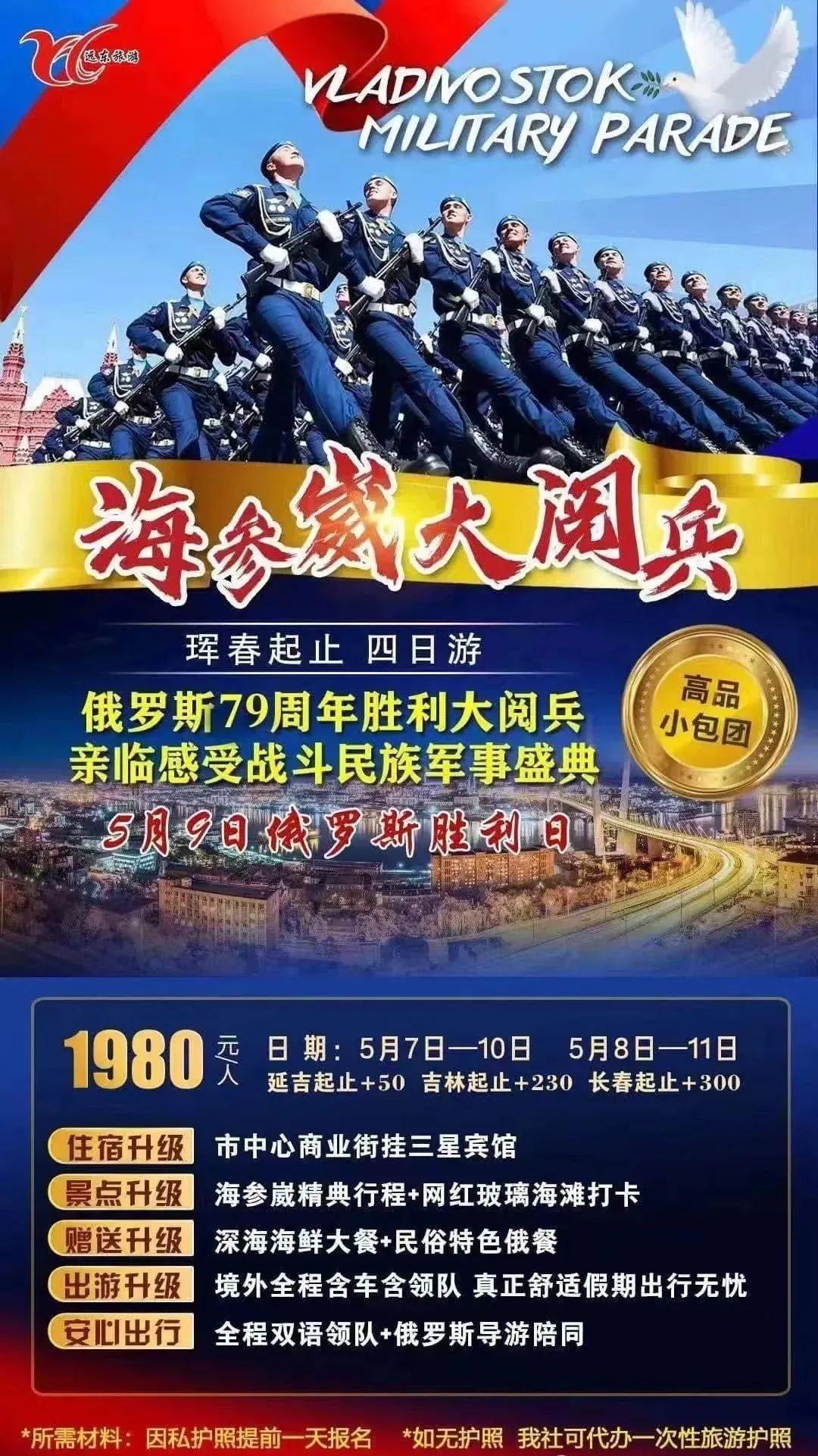
This move has caused discomfort for some, because Vladivostok was once Chinese territory, and the Chinese there were once harmed by invaders. In response, some believe that this history should be deeply understood, while others believe that we should transcend history and broaden our horizons.
Vladivostok was Chinese territory during the Qing Dynasty, and its Manchu name means “small fishing village by the sea,” giving a sense of peace and tranquility. However, in 1860, the Qing government ceded the territory east of the Ussuri River, including Vladivostok, to Russia, which renamed it Vladivostok, meaning “Conquer the East,” a name considered insulting. In the 1930s, invaders carried out a large-scale purge of the Chinese who originally lived there, resulting in many Chinese natives being massacred or exiled to the Gulag. By 1938, almost all the Chinese natives living there had been purged.
In December 2009, road construction workers near Vladivostok unearthed a large number of corpses. In May 2010, the Russian side conducted another excavation, and a total of about 480 bodies were unearthed, all of whom had been shot. A large number of personal items were also found at the scene, including coins from the 1930s, cigarette holders, children’s beads, cups, porcelain plates, eyeglass fragments, and glasses. In addition, Chinese and Russian newspapers were found, one of which was dated September 18, 1937. According to experts at the scene, the victims were all shot in the head after kneeling.

In view of this history, some have questioned the travel activities to Vladivostok to participate in the parade. They believe that on the one hand, two young Chinese women wearing kimonos dancing in the street in China caused public outrage, while on the other hand, some people openly put up travel posters, calling on Chinese people to go to that land that originally belonged to us to experience the military spectacle of another country. This comparison makes people feel indescribable.
Someone suggested that those who go to Vladivostok should carry the red flag to express their love for their country.
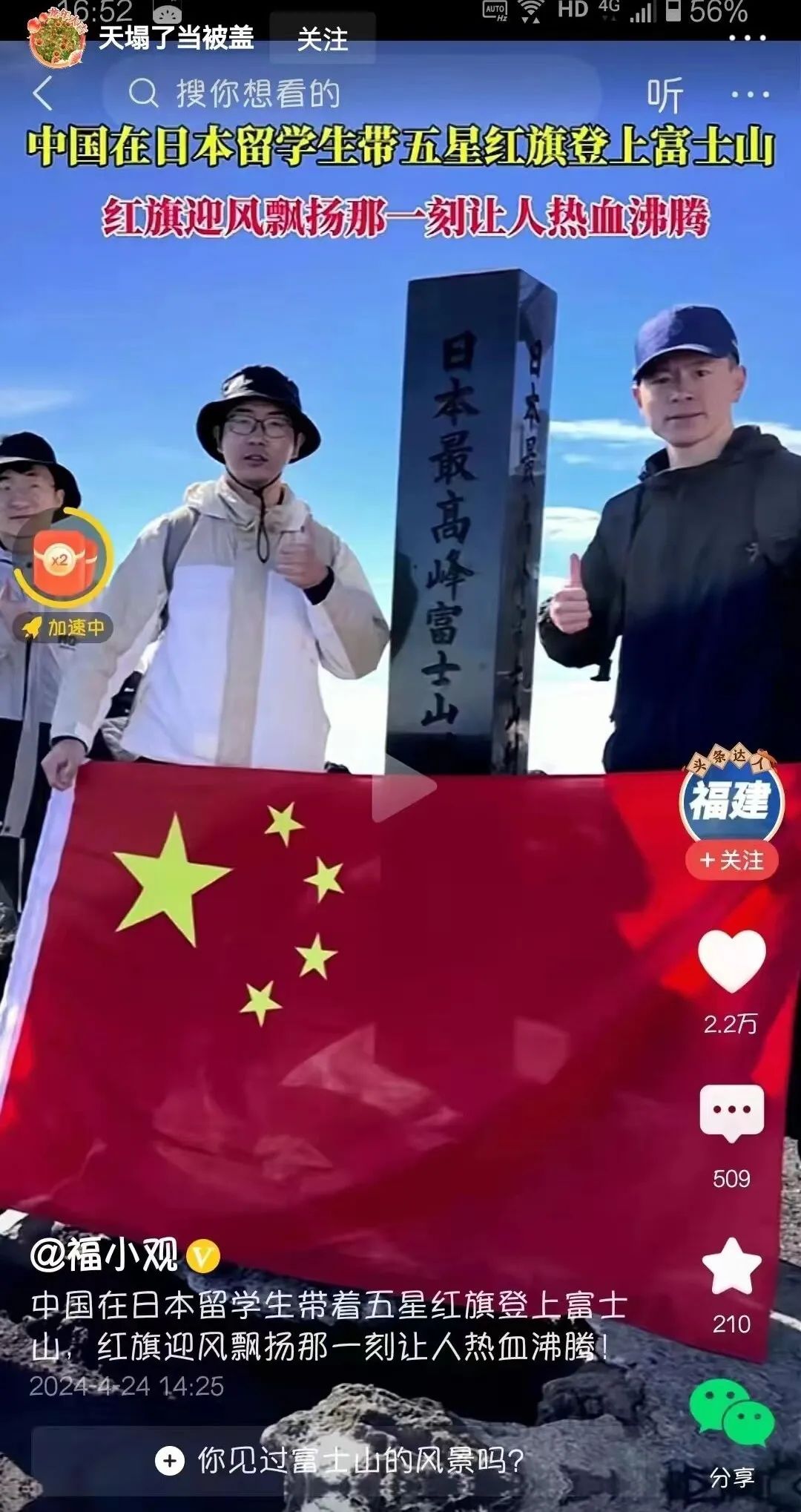
A picture circulating online shows several Chinese students climbing to the top of Mount Fuji, holding the red flag, which resonated with many people. Therefore, some people believe that if tourists to Vladivostok can also bring the red flag to express their love for their country, their courage will be commendable.
Faced with this situation, people have different views on how to view history and how to express patriotic feelings. In any case, history cannot be forgotten, and everyone has their own attitude towards history.
Discover more from 自由档案馆
Subscribe to get the latest posts sent to your email.