The commune has accelerated the development of rural industry, with more than 200,000 commune-run industrial units and a 70% increase in total output value.
The commune has opened up a broad path for diversified operations, and the proportion of forestry, animal husbandry, sideline production, and fisheries in the total agricultural output value has increased significantly.
The commune system ensures that agricultural and sideline products are purchased more, faster, and better, and the total purchase amount increased by 28.2% compared to 1958.
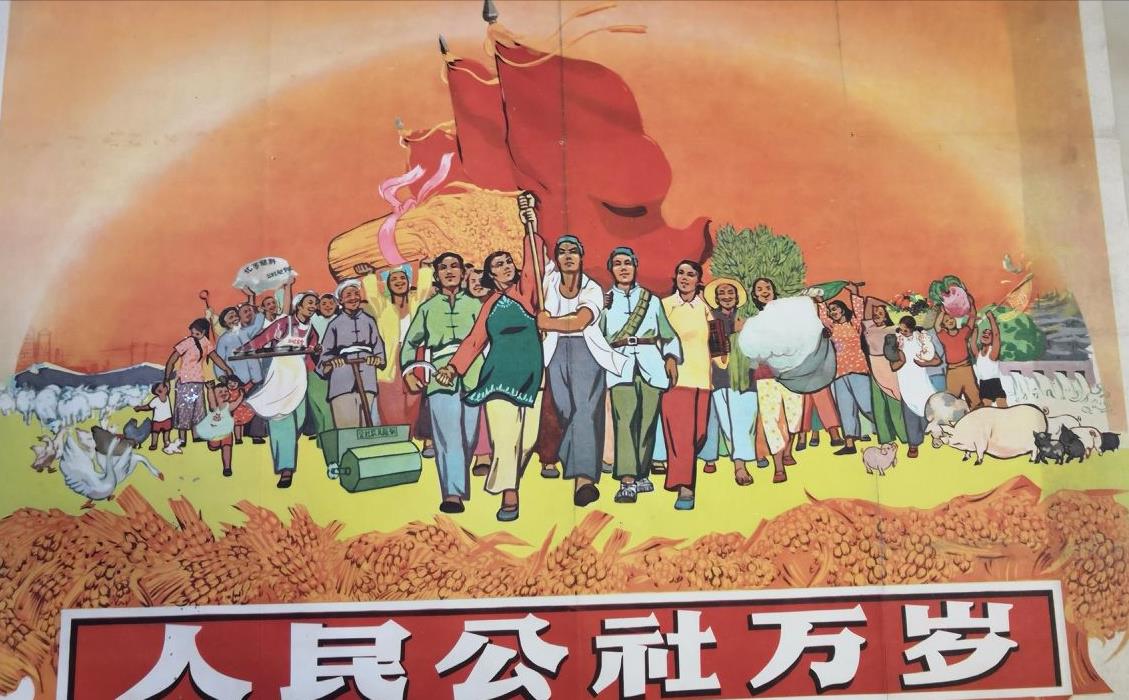
According to a report from Xinhua News Agency on the 26th, the industrial sector of China’s people’s communes has demonstrated strong vitality and a vast development prospect. According to preliminary statistics at the end of 1959, after consolidation and improvement, the number of national commune-run industrial units (excluding industrial units run below the commune production team) has reached more than 200,000, with more than 5 million employees; the total output value of commune-run industry for the whole year increased by 70% compared to 1958.
Commune-run industries include agricultural tool manufacturing and repair, chemicals, building materials, as well as food, sewing, and shoemaking industries; there are also mining industries that serve heavy industry, as well as industries for the preliminary processing of agricultural products. After a year of consolidation and improvement, commune-run factories have established relatively sound management systems, labor productivity has continuously improved, costs have gradually decreased, and accumulation has increased rapidly.
The industry of the people’s communes was born and grew stronger in the great people’s commune movement in China in 1958. In the past year or more, the industries serving agricultural production in the commune have developed most rapidly and played the most significant role. According to statistics, in 1959, the industrial output value of commune-run industries nationwide, directly or indirectly serving agricultural production, accounted for about 55%. Many communes have formed industrial networks for agricultural tool repair and small agricultural tool manufacturing, and general iron and wood agricultural tools can be supplied locally, and simple machinery can be repaired nearby, no longer needing support from other places. Many commune industries have trial-produced or manufactured power machinery and a large number of new agricultural tools, equipping various departments of agricultural production. For example, the Agricultural Tool Factory of Xuguang People’s Commune in Echeng County, Hubei Province, has successfully trial-produced more than thirty new agricultural tools, such as rice transplanters, seedling makers, field threshers, deep plows, and ox-drawn water carts, which effectively improved agricultural labor efficiency. The 122 ox-drawn water carts manufactured by the commune factory alone, after being put into production, relieved 3,166 mu of dry land from the threat of severe drought, increased irrigation efficiency by more than ten times, and also saved more than 1,400 man-days.
In terms of serving the lives of the members and developing collective welfare undertakings, many communes have set up their own clothing factories, shoe factories, paper mills, wineries, as well as flour mills, sugar mills, and other factories, producing a large number of products, directly meeting the needs of the masses’ lives. For example, a brigade of Shuangmiaozi People’s Commune in Changtu County, Liaoning Province, in order to solve the grain needs of the 12,000 people in the whole team, used 140 clumsy mills in the past, plus dozens of female laborers, but still could not meet the demand. Now, they have installed four rice mills and two vertical mills, and only three people are needed to fully meet the demand, saving a total of 131,000 man-days and more than 170,000 animal-days for the whole year, which were invested in agricultural production.
Commune-run industry also played a good role in supporting the production of the national heavy industry and serving the socialist market. They made full use of local resources and, under the principle of not competing with heavy industry for raw materials, built a batch of preliminary processing factories for agricultural and sideline products and building materials factories, producing a large number of light industrial raw materials, building materials, and mineral raw materials to support the production of heavy industry. Some factories directly produced a part of the goods to meet the needs of the market. From October 1958 to October 1959, the production capacity of small paper mills built by the people’s communes nationwide was equivalent to the production capacity of large paper mills built on average each year during the first five-year plan. These small paper mills have become a powerful assistant to large paper mills, and have produced a large number of paper to meet the needs of the domestic market in the past year.
The great development of commune industry has increased the public accumulation of the commune, expanded the economic strength of the commune level, and at the same time increased the proportion of industry in the countryside, demonstrating the brilliant prospects of industrialization in China’s countryside. According to a survey of 78 commune industries nationwide by the National Bureau of Statistics, these commune industries made a net profit of more than 12 million yuan last year, an increase of 2.6 times compared to 1958, accounting for about 40% of the total accumulation of the commune. After the accumulation of many communes increased, they have used more funds to equip agriculture and develop rural collective welfare undertakings.
Running industry in the countryside is a long-term wish of the vast number of Chinese farmers, and this ideal only became a reality after the commune. The people’s commune has a large organizational scale and a wide range of activities, which can provide the necessary labor force for commune industry when coordinating the arrangement of rural labor. In addition to drawing a part of the members as fixed workers in the factories, the people’s communes in various places also adopted the method of “small-scale work during the busy farming season and large-scale work during the slack farming season” for some commune-run industries with strong seasonality, temporarily drawing farmers to participate in industrial production. In this way, there are millions of fixed workers in China’s countryside, and there are tens of millions of people who are both workers and farmers, and who are versatile. These two teams are combined and closely cooperate with each other, becoming the backbone force for developing rural industry. At the same time, the economic strength of the people’s commune is relatively strong, and it can make full use of various material resources to run some large-scale industries. It is precisely because the people’s commune has played its great superiority that the commune-run industry has developed rapidly at an unstoppable pace.
According to a report from Xinhua News Agency on the 26th, in 1959, while actively developing agricultural production and commune-run industry, the national rural people’s communes also paid great attention to the development of forestry, animal husbandry, sideline production, and fisheries. The people’s communes, with five industries in parallel, not only enabled agricultural production to continue to leap forward last year, but also showed a prosperous scene in the production of forestry, animal husbandry, sideline production, and fisheries. In 1959, the grain and cotton ahead of schedule completed the targets for 1962 stipulated in the second five-year plan; a total of 280 million mu of forests were planted nationwide, an increase of 7% compared to 1958; the number of pigs raised nationwide reached 180 million, an increase of 13%, and there were also increases in livestock, sheep, poultry, etc.; fisheries and sideline production also had a large development, and the total output value of sideline production increased by more than one time. The proportion of the output value of forestry, animal husbandry, sideline production, and fisheries in the total agricultural output value increased significantly.
The people’s commune has opened up a broad path for diversified operations. Under the guidance of the Party’s policy of “taking grain as the key, making overall arrangements, and diversified operations”, the national people’s communes in 1959 implemented five industries in parallel on the agricultural front, and established specialized teams to expand the operation of other industries according to local conditions. Mountainous communes generally have forestry professional teams. In addition to the communes that are mainly engaged in fisheries in the fishing areas, there are also some communes with fisheries professional teams. All communes have professional organizations for developing animal husbandry production. Both the communes and the production teams actively developed sideline production by drawing a certain amount of labor in accordance with the principle of “small-scale work during the busy farming season and large-scale work during the slack farming season” last year. After the autumn harvest last year, every commune in the country established temporary specialized short-distance transportation teams and carried out active transportation business; they also organized the members to carry out a large-scale collection of wild plants, the “small autumn harvest”. According to preliminary statistics: last year, the labor force used by the national people’s communes for operating forestry, animal husbandry, sideline production, and fisheries accounted for 12% to 13% of the total labor force of the communes. Now, the people’s communes in the mountainous areas nationwide have more than 16,000 forest farms run by the commune and the team levels. The most prominent in animal husbandry production is the development of collective pig farming by the people’s communes in various places last year. Now, there are more than two million livestock farms and pig farms run by the people’s communes nationwide; there are also developments in raising poultry, rabbits, and bees. Fengjia Commune in Zhangwu County, Liaoning Province, ran 193 pig farms, 26 dairy farms, 9 poultry hatcheries, 45 rabbit farms, and 15 bee farms last year; plus other income, the members’ income of the commune increased by more than 50% compared to 1958. In terms of aquatic products, in addition to the communes jointly built by the original fishing cooperatives and agricultural cooperatives, the people’s communes in various places have generally developed the aquaculture business with the development of water conservancy construction.
As a result of the people’s communes’ five industries in parallel, the economies of the commune and the team have developed rapidly. In addition to commune-run industry, the commune level also has large-scale and well-equipped commune-run forest farms, livestock farms, and pig farms. Under the overall arrangement of the commune, the five industries are combined and promote each other, so that the economy at the basic accounting unit level has also developed faster. Wanzihu Commune in Yuanjiang County, Hunan Province, was built by merging the original five fishing cooperatives and two agricultural cooperatives on the side of Dongting Lake. After the establishment of the commune, fisheries, agriculture, animal husbandry, and sideline production have all developed. During the busy farming season last year, the fishing team and the animal husbandry team of this commune supported the agricultural team with more than 40,000 labor days, and fisheries and animal husbandry also provided a large amount of fertilizer for agriculture, and the food and feed for the fishing team and the animal husbandry team were also guaranteed. The commune added wind net boats and frame nets for the fishing team, and the fishing output increased by about one time compared to 1958. Before the establishment of Chikan Commune in Huaxian County, Guangdong Province, the original Bajiang Agricultural Cooperative had mineral resources such as magnetic soil and refractory materials, but it was unable to exploit them. After the establishment of the commune, these resources were developed and utilized. Due to the development of diversified operations, a considerable part of the poor teams nationwide last year quickly caught up with the rich teams in terms of production level.
According to a report from Xinhua News Agency on the 26th, the people’s commune system has played an increasingly significant role in ensuring the completion of agricultural product purchases and supplies. In 1959, the national agricultural and sideline products were purchased more, faster, and better, and a great situation that had never been seen before the commune was formed appeared.
In 1959, on the basis of the continued great leap forward in agricultural production, the total purchase amount of agricultural and sideline products by the national commercial departments increased by 28.2% compared to 1958. Among them, the purchase volume of grain increased by 19.4% compared to 1958, and the purchase volume of other agricultural products increased a lot. The total purchase amount of sideline products and local specialty products increased by 62.7% compared to 1958.
The quality of various agricultural and sideline products has improved compared to previous years. The quality of grain in storage generally meets the standards stipulated by the state. The cotton purchased nationwide has also generally improved by one grade, and a large number of good-quality second and third grade cotton has appeared, and the cotton below the sixth grade has greatly decreased.
The speed of the purchase work last year was also unprecedented before the commune was formed. According to the production year, the time for completing the grain purchase tasks in various parts of the country was one or two months earlier than in previous years. The time for completing the purchase tasks of flue-cured tobacco in various places was also one month earlier than in previous years.
While doing a good job in the purchase work, various places also launched mass agricultural product processing and short-distance transportation movements to ensure that the purchased agricultural products can be processed and transported out in a timely manner to supply light industrial production and market needs. By the end of December last year, 62% of the cottonseed purchased nationwide had been processed into ginned cotton and transported to cotton textile mills across the country. Most provinces and regions have gathered the purchased grain to the transportation lines, ready for the state to call upon at any time.
This great situation that appeared in the agricultural product purchase work in 1959 was a great victory of China’s people’s commune system. The people’s communes in various places correctly implemented the policy of self-sufficiency production and commodity production at the same time for a year, and also overcame various serious natural disasters, and achieved a comprehensive great leap forward in agriculture, forestry, animal husbandry, sideline production, and fisheries, and carefully and meticulously did a good job in the harvest work. This provided a solid material foundation for doing a good job in agricultural product purchase work. At the same time, due to the strong unified leadership of the people’s commune, various tasks in the countryside can be taken into account, comprehensively arranged, and the labor force can be fully utilized and reasonably allocated, thus ensuring that the purchase work is done faster and better from an organizational point of view.
The great power of the people’s commune in the purchase work is inseparable from the strengthening of leadership by the Party committees at all levels and the correct implementation of the state’s purchase policy. For example, in terms of grain purchase, various places generally closely combined purchase and distribution. On the one hand, according to regulations, they left enough food, seeds, and feed for the commune, and at the same time, they led the masses to vigorously carry out the movement of planned grain use and saving grain, ensuring that the members ate well and had reserves. On the other hand, for some grain-deficient areas and disaster areas, they arranged the unified sales work in a timely manner, ensuring the grain supply in these areas.
January 27, 1960 (New Year’s Eve) “People’s Daily”
Discover more from 自由档案馆
Subscribe to get the latest posts sent to your email.