Tips: This article is 5000 words long and relatively long. If you are used to reading short and fast articles, it is recommended that you exit immediately. You are not my target audience.
Written in the preface
Nowadays, when you open Weibo, there are various celebrity gossip and trivial news every day.
There are countless hot searches every day, but they are fleeting.

What’s the reversal of the sexual assault case of a girl, what’s the dispute over CoCo Lee’s estate, many readers and friends in the background asked me to write, but I refused.
In this era of entertainment to death, I want to leave some meaningful words.
Because in my heart, the story of two elderly people and AIDS is more worthy of being remembered by 1.4 billion Chinese people.
Their names are: Gao Yaojie, Wang Shuping.
You may be very unfamiliar, but I want to tell you that they once saved the lives of millions of Chinese people.
But the mainstream media in our country has always been evasive.
Now it’s time for you to know their story.
This is also a story about two whistleblowers.
The ending is the same as that of Dr. Li Wenliang.
At the end of 2019, the movie “The Whistleblower” was released.
I didn’t expect that I could see such a film in China in my lifetime, although it has been deleted because of its sensitivity.
But the experience of whistleblowers in the real world is much more shocking than in the movie.
At the end of the story——
She was expelled from public office, divorced, alienated, fled, wandered overseas, and finally died in a foreign land.
Those who retaliated against her are now high above, with their children and grandchildren.
Look, how magical the stories in this world are:
Those with a dark heart and vicious hands enjoy their old age, while those who save all beings die in a foreign land.
Killing and arson bring gold belts, building bridges and paving roads leave no corpses.
How explosive would their story be made into a movie?
01
This is a story about AIDS and two elderly people.
On the east coast of the Pacific Ocean, a Chinese old lady in her nineties has lived in Harlem, Upper Manhattan, New York, for nearly ten years, which is known as “the poorest and most crime-ridden area in the United States”.
She lives in a humble and simple apartment, is deaf in both ears, and the roof occasionally drips water…
She often sits in the damp room, her eyes like torches.
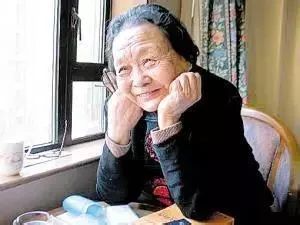
The old lady, with her “Chinese characteristic” bound feet, often hides in the house to write, eats poorly, and occasionally comes out in a wheelchair to bask in the sun.
People around her don’t know her origin, but they feel that this elderly Asian face is a bit strange.
She seems very lonely, with no relatives or friends; but at the same time, she seems very lively, with a constant stream of visiting students or scholars.
Her name is Gao Yaojie.
This name once appeared on the awards stage of “People Who Moved China” in 2003;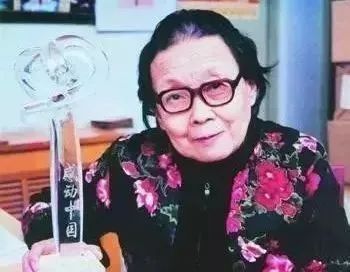
The first lady of the United States, Hillary Clinton’s guest of honor;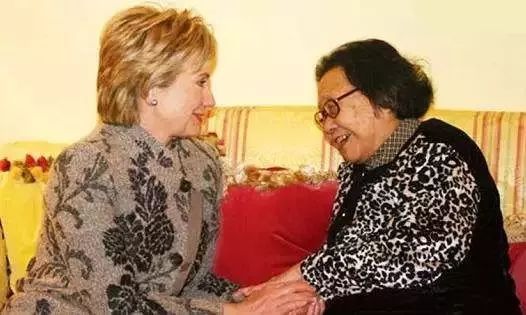
And on the plane from Guangzhou to the United States in August 2009…
02
Time goes back 30 years.
In that era, the situation was turbulent, and a magical China emerged.
But more magical things happened in Henan, where the blood plasma economy that shocked the world was once staged.
Stretch out your arm, reveal the veins, stretch out your fist, fifty yuan
In the late 1980s, the health product market began to develop rapidly in China, and blood was purchased in large quantities as raw materials for biological products. The market demand expanded rapidly, and the “blood plasma economy” followed the logic of profit and made rapid progress.
The local government of Henan Province at that time proposed “If you want to get rid of poverty and get rich, quickly go the way of selling blood.”
Due to the support of local governments and the encouragement of blood vendors, the blood plasma economy quickly formed an industry, and the official also proposed the propaganda slogan “If you want to become well-off, quickly sell blood plasma” and “Not selling blood is not patriotic”.
The old man’s son died of AIDS (infected by selling blood) and his grandson is also a virus carrier (mother-to-child infection)
Around the early 1990s, the blood in the bodies of Henan farmers became cheap raw materials for those “factories”.
Blood stations were another kind of factory in various cities and counties in Henan Province at that time, private, private, and legal. Underground alternative factories were even more spread throughout urban and rural areas, and there were countless of them.
Blood is money.
Some people sell blood crazily, drawing blood dozens of times within a week, and their blood is almost drained to death.
Some people don’t go to work and live on the money from selling blood every day, even calling their 7-year-old children to join them.
But what’s deadly is that some of the people who sell blood are AIDS patients, and some are hepatitis B and hepatitis C patients.
——The blood disaster in Central China.
03
A woman named Wang Shuping appeared.
She is the first hero to expose the Henan AIDS blood case.
In 1991, Wang Shuping began working at a blood station under the district health bureau.
04
Soon after, she discovered a terrible safety loophole in the “blood selling economy” that was in full swing in Henan at that time—
People with HIV and hepatitis virus sell blood, the blood products of the blood station are contaminated, and then spread to healthy blood donors and tens of thousands of innocent healthy people through different channels.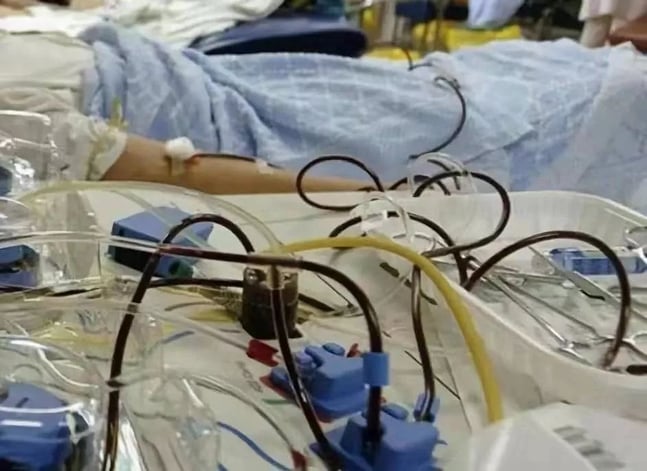
This is a very terrifying thing!
Wang Shuping suggested that the blood station should conduct HIV tests on all blood donors, and all blood stations should stop collecting blood, and report the proposal to the Provincial Health Department overnight—
But it was shelved, and no one knew the reason.
In the spring of 1993, on the plains of eastern Henan, an HIV virus from a blood donor from Kunming quickly infected more than 10 people.
The gift of fate has already marked the price in secret.
People are infected every day, and people are selling blood every day… Blood stations are still open, private, military district, Red Cross, and they are still in business. If this continues, at least 1,000 people will be infected in the whole district every day.
There was no way. In order to solve the urgent need, Wang Shuping founded the Zhoukou Clinical Testing Center at her own expense at the end of 1994.
She extracted 404 blood samples from blood donors in Zhoukou area, and then found an astonishing number of HIV positive infections. She was worried that the results were inaccurate, and used several different reagents in succession, but the results were shocking.
“I immediately reported the result to the director of the local health bureau at that time. The director said, you have done a great thing for Zhoukou.”
Wang Shuping said that the director had just taken office not long ago.
Report submitted by Wang Shuping to the Zhoukou District Health Bureau
Half a month later, she went to the director again to report, but she did not receive any reply.
“I know, they want to suppress this matter, so I will go to Beijing myself.”
Wang Shuping did what she said. At the end of 1995, she took 62 HIV positive blood samples and went to Beijing alone, and found the Chinese Academy of Preventive Medicine, hoping to make an authoritative identification here.
A blood sample test costs 700 yuan, and it costs more than 40,000 yuan to do all 62 samples. This is an astronomical figure for Wang Shuping, who paid for her own travel expenses to Beijing to seek results. It’s not that she feels sorry for the money, she really doesn’t have the money.
She stopped her salary at the beginning, and spent all the money on sampling and preliminary screening.
She cried on the spot, squatted in the hospital hall and cried loudly. She didn’t know what to do, what to do with so many innocent and pitiful people.
Perhaps it was God’s mercy.
Zeng Yi, the chief expert in epidemiology and an academician of the Chinese Academy of Sciences, happened to see her, and Wang Shuping told Zeng Yi about the whole process.
“Academician Zeng was very nervous when he heard it. He said don’t ask for this money, do 15 samples first.”
The identification results of the Chinese Academy of Preventive Medicine came out soon: 13 of the 15 blood samples were identified as HIV positive, and 2 were suspected.
You know the story later——
In March 1996, the country began to ban large and small blood stations for the purpose of making profits from blood plasma. In Henan, the blood station ban storm that started on the night of March 14 of this year was later called the “3.14 case”.
Yes, she has made contributions, she is a hero.
However, no matter in which era or country, it is necessary to pay a huge price to tell the truth.
In 1996, a leader asked her if she could change the numbers on her report. She said that she couldn’t change it, and the leader should change it himself. The leader asked her again, why others didn’t find the AIDS epidemic, why did she find it? Wang Shuping said that now is not the time to discuss who found the problem, but to quickly close the blood station.
Soon after Wang Shuping returned to Zhoukou from Beijing, a retired director of the Health Bureau quietly said to her: “Don’t work here, someone is going to cause you trouble.”
Wang Shuping didn’t listen, she said she had a clear conscience.
Wang Shuping met many people who came to the center to make trouble, and was repeatedly asked how many blood samples she sent to Beijing? What tests did she do? Then, from the beginning of 1996 until 1997, Wang Shuping’s salary was stopped.
“Whistleblowing” is a dangerous thing, because it will touch some dark interests, so Wang Shuping must pay a heavy price.
Her husband at the time worked in the Ministry of Health. Because his wife “blew the whistle” to expose the “blood disaster”, he was also excluded in the organization, and the two finally divorced.
In November 1996, Henan Province held an AIDS prevention conference, and Wang Shuping had a conflict with a leader who was speaking at the meeting. More than 10 days later, this leader went to Zhoukou to inspect the work and went to the clinical testing center specifically, and said to several medical staff who were working: “You don’t have to do it, this is not qualified.” Then, the clinical testing center was closed, Wang Shuping was removed from her post, and merged with other personnel into the Zhoukou District Health and Epidemic Prevention Station.
In December 1996, the Ministry of Health had an award to be given to those who had made contributions to AIDS work. Zeng Yi nominated Wang Shuping, but Henan Province did not report her name.
After the center was closed, Wang Shuping wrote three or four reports to the Ministry of Health, reporting the situation of her and her colleagues, but not only did it not work, but the situation deteriorated once after each report.
In 2001, she finally chose to leave her motherland. Unfortunately, she did not help her colleagues get back the wages that were stopped.
Her English name there is Sunshine, which means sunshine.
In that year, the AIDS crisis facing Central China was recognized, and at least 500,000 people were infected with the AIDS virus after selling blood at blood stations, of which Henan was the province with the most serious AIDS epidemic.
“I encountered huge trouble, involving the conflict between power, money and the powerless. I decided to stand up for the innocent people infected with hepatitis C virus and AIDS virus.” She once recalled her original intention.
On August 23, 2001, the Information Office of the State Council held a press conference in Beijing and officially disclosed the AIDS epidemic in Wenlou Village, Shangcai County, Henan Province.
The day before, the reporter who first reported the epidemic in Wenlou Village received a notice that he would not be employed by all media in the province.
Many years later, Wang Shuping recalled that she was not alone, and someone took her life to blow the whistle.
It’s worth it.
One is the first hero to expose the Henan AIDS blood case, and the other is the first person in China to prevent AIDS in the private sector.
But in that history, Gao Yaojie’s life has never intersected with Wang Shuping’s, but their fates are the same.
Gao Yaojie was a college student before the Cultural Revolution, and graduated from the Medical College of Henan University in 1954.
When she retired in the 1990s, she was already a gynecological expert who was well-known throughout Henan Province, and had also been received by national leaders many times.
At that time, Gao Yaojie, who was in her 60s, had both children and fame and fortune, and could have enjoyed a wealthy and stable old age, and slowly moved towards the end of her life.
However, a female patient completely changed Gao Yaojie’s life trajectory.
In 1996, Gao Yaojie, who had already retired, was invited to a hospital for consultation, and met a rural woman who was dying, and the HIV test result was positive.
Discover more from 自由档案馆
Subscribe to get the latest posts sent to your email.