Based on my experience of working and living in Beijing for many years.
Compared to my experience of working and traveling in multiple cities.
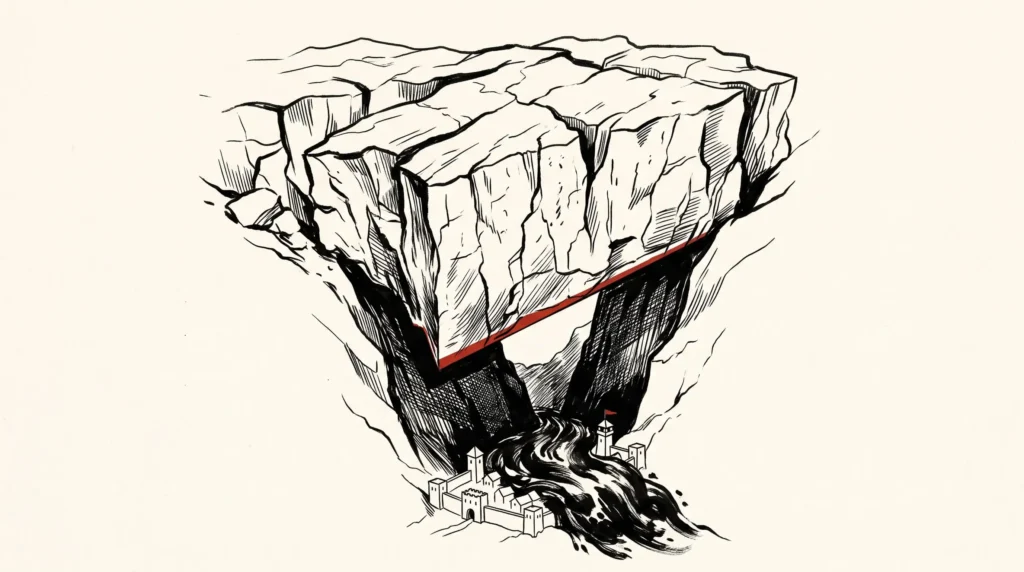
I can responsibly say that Beijing has never been as desolate as it is now.
The entire city presents a state of high isolation, desolation, and a severe lack of vitality.
The Tiananmen Square used to have no barriers, and you could take photos up close to the Great Hall of the People, but now it’s all fenced off. Many places in Beijing have been artificially divided. Schools, once synonymous with openness, including Tsinghua University, Peking University, and primary and secondary schools, are now all closed to the public.
Sanlitun used to be the fashion center of Beijing and even China. In the early years, it was full of beautiful women, and photographers followed them around. Now, the beautiful women are nowhere to be seen.
In Sanlitun’s Red Street and various restaurants, there used to be many banquets and drinking parties, with capital tycoons entertaining beautiful women in private rooms, and stars and film crews having team-building activities, but now they are gone.
Sanlitun doesn’t even have the superficial prosperity it once had.
Even the farmers’ markets in fifth-tier county towns are more crowded than Sanlitun.
There are fewer foreigners. The Liangmaqiao area used to be like a concession, with a bunch of white people running along the Liangma River every day, much like the Seine. Now, there are noticeably fewer foreigners in Beijing, fewer white people, fewer black people, and fewer people of mixed West Asian descent.
Another change in Beijing is that the streets are not lively. Especially at night, there are no people on the streets. There are no street vendors, no people selling things, no photographers, no singers, no one at all.
I was quite shocked when I went to Chongqing, Shanghai, Guangzhou, and Chengdu. Regardless of winter or summer, the streets are packed with people.
So, by comparison, you’ll find that this is not a nationwide problem; it might just be a problem with Beijing.
The essence of Beijing’s desolation is still an economic problem.
Beijing’s economy was once very strong, with several legs running together.
One is technology, represented by the internet, located in Haidian, but everyone knows the situation of the internet in recent years.
One is finance, located in Xicheng. Finance is now under strict regulation, and this field is dead, with no vitality.
One is education, also located in Haidian. It’s not an exaggeration to say that education has suffered the most among all industries.
One is culture, located in Chaoyang, which includes the film, music, art, and media industries. With the economic downturn, culture lacks vitality, and Beijing’s cultural industry is now barely hanging on.
In fact, there is also foreign investment, also located in Chaoyang. Beijing’s foreign investment used to be very strong, but everyone knows the situation of foreign investment in recent years.
The last invisible one is tourism, which belongs to all of Beijing, but now everyone likes to go to Harbin and Zibo; they don’t like to come to Beijing because it’s expensive and not new.
What does Beijing have now?
Once running on four legs, with two trekking poles in hand, now four of the six legs are broken, and it’s difficult to crawl on the ground with the two remaining limbs. Isn’t it difficult?
Of course, if you look at Beijing’s economic data, it’s still good. Why?
Because Beijing still has a large number of large state-owned enterprises and large central enterprises.
They receive nationwide income, which is all counted in Beijing.
But what is the real situation of those job opportunities that truly support a large number of ordinary Beijing citizens, such as technology, education, finance, culture, foreign investment, and tourism industries?
It really should attract everyone’s attention.
After all, the capital is the capital, and it must look good on the surface, but what about the inside? Can it withstand scrutiny?
I can’t say more.
Discover more from 自由档案馆
Subscribe to get the latest posts sent to your email.