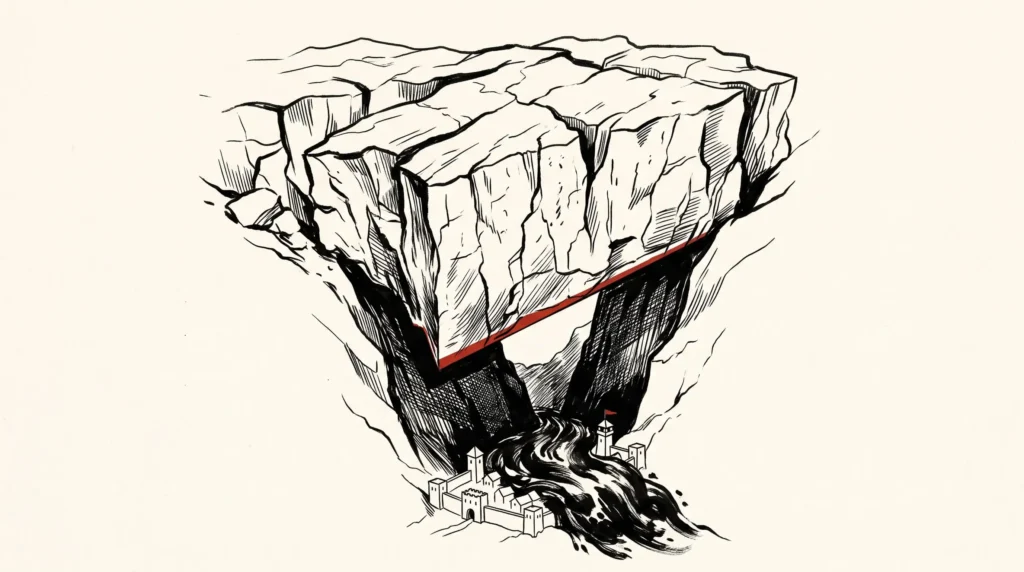
Now, Henan may be in a crisis: continuous rain, and the wheat is just at the ripening season. Around June 1st every year, from south to north, large harvesters will work one after another.
City dwellers eating bread may find it hard to understand how bad it would be if it rains when harvesting wheat.
Another reality is that most of Henan is a plain area, and large-scale planting has been realized: there is very little labor in the countryside, and they are very dependent on these large harvesters. 30 years ago, people would put in labor to rush to harvest, but now farmers can only wait for the arrival of the harvesters.
Two friends sent me infuriating news: in Nanyang, hundreds of large harvesters were blocked on the highway and not allowed to come down, and it is said that they were blocked for several days. Nanyang, located at the southernmost tip of Henan, has the earliest ripening wheat, and they also rotted in the fields the earliest.
China National Radio interviewed the Nanyang Agriculture Bureau. A leader said, “The problem has basically been solved” (it seems the problem is still very big), because some “machine operators” did not go through the procedures for large-item transportation and encountered traffic problems at the highway toll station. “After recent coordination work, these problems have been solved.”
This official’s response is very rigorous and also very stereotyped. If we penetrate his stereotyped barrier, we can still feel a kind of shocking: how many days is the “recent coordination work”? Are the machine operators busy making up the procedures during these days? And what is the mood of the farmers in the fields?
Seeing a photo, there are female traffic police officers, holding a tape measure, carefully measuring the size of the harvester – they are confirming whether they are “large items” or “large machinery”. Their seriousness makes people feel absurd.
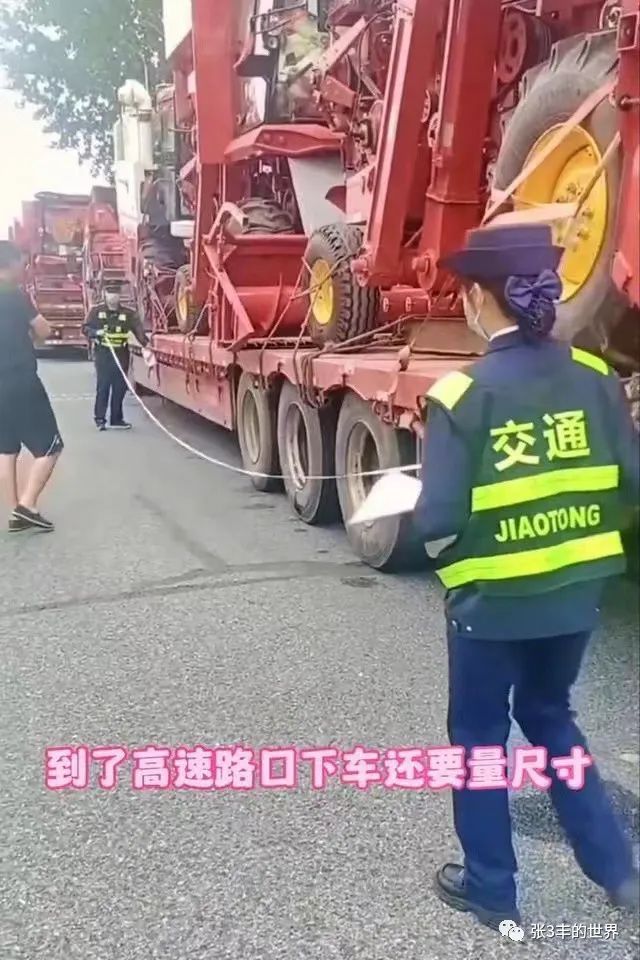
This kind of “seriousness” may be based on an impulse to fine. They saw a large number of large machines coming, did not think that they were harvesters, and did not think of the wheat fields and the anxious farmers. The first thing they thought of was their own “business”: check whether the procedures are complete. If not, they may be ecstatic.
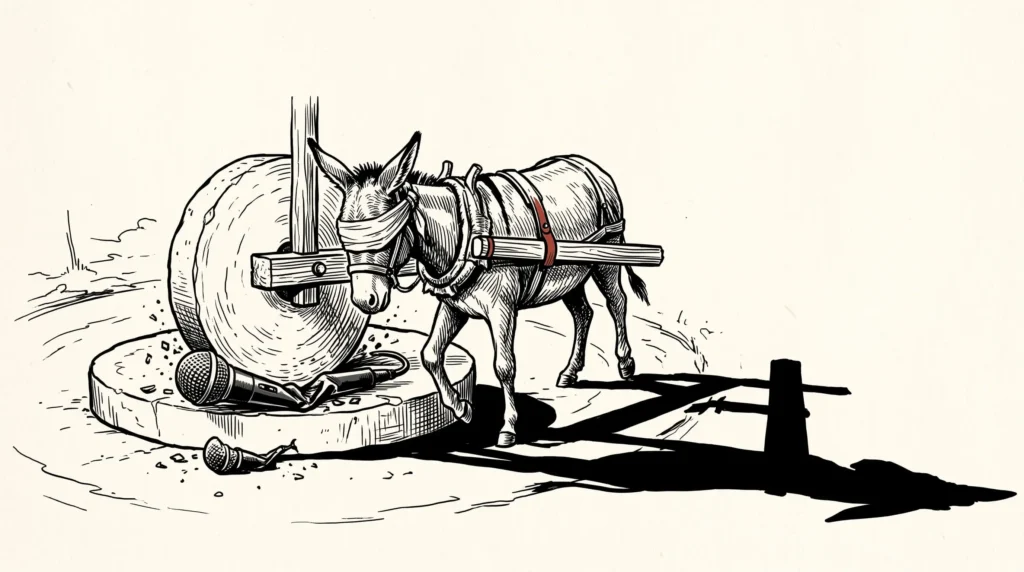
Of course, thinking this way is a bit malicious. A more likely situation is that they are just following the regulations and documents, and are just trying to complete their work. I think this possibility is greater and more terrible: what they follow is a document logic, a kind of “impartial” indifference.
This shows that they have completely “lived in the documents” and lost their sense of reality.
In this case, you are promoting forest clearing for farming, or laying a red carpet in the wheat field (happened in Shenqiu, Zhoukou), even if your feet are standing in the field, you are still detached from reality, because you have become a part of the document.
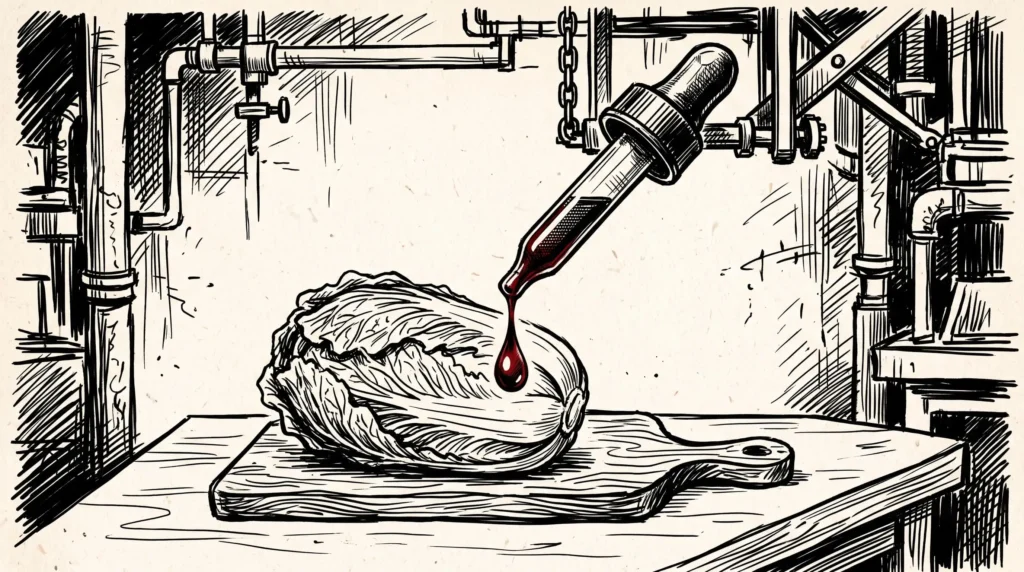
Not long ago, I saw a photo, which also happened in Nanyang: some institutional leaders and experts learned barbecue experience from Zibo. In a meeting room, there was a banner for the seminar, and the participants were facing mineral water and speeches – they were brainstorming and innovating, combining the Zibo experience with the actual situation in Nanyang.
Of course, only on the documents. That’s all. I believe that a perfect meeting minutes must have been formed, and everyone has completed their work.
Such work is of course meaningless. There must be barbecue stalls in Nanyang, even if you go to the barbecue stalls to hold a meeting, order a few barbecues, and chat with the stall owners, ask them “why Nanyang is not working”, it is better than discussing in the office.
The sad thing is that such meaningless work is also a lot.
Perhaps everyone is very busy, so busy that they forget how the wheat grows, and also forget how hard the farmers are.
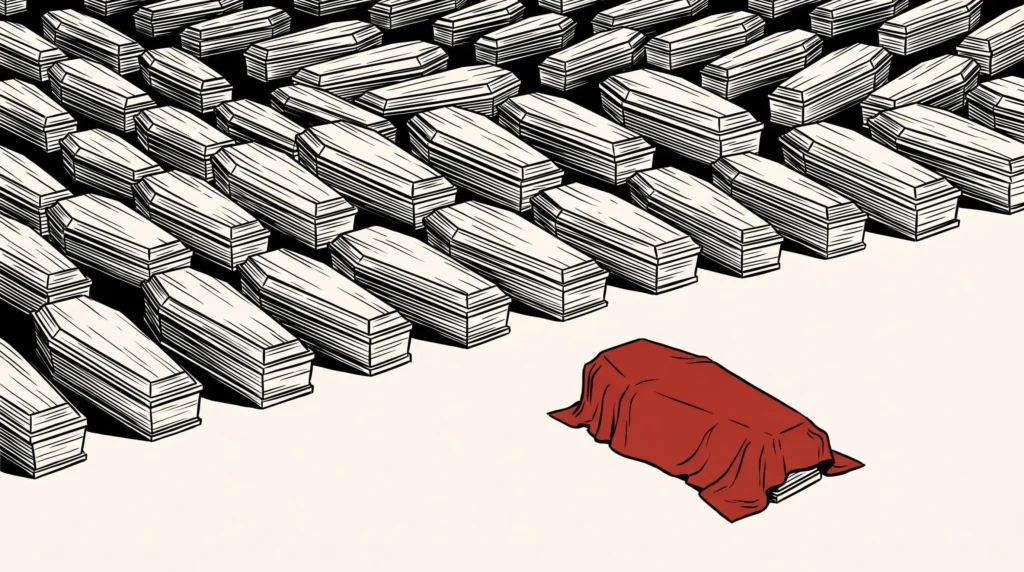
In Henan, this may mean that formalism has reached a new stage: if agriculture and farmers are the bottom line of society, it is especially true in Henan. If you don’t have land and wheat in your heart, you are 100% ungrateful.
Discover more from 自由档案馆
Subscribe to get the latest posts sent to your email.