


In January 2024, a large number of videos about "Japanese schools" appeared on WeChat Video, claiming that "China has 35 Japanese schools" and "China accounts for 40% of the 95 Japanese schools worldwide", many of which received tens of thousands or even 100,000+ views or likes.

Even after the recent attack on a ten-year-old child, the questions of concern to many citizens are still:
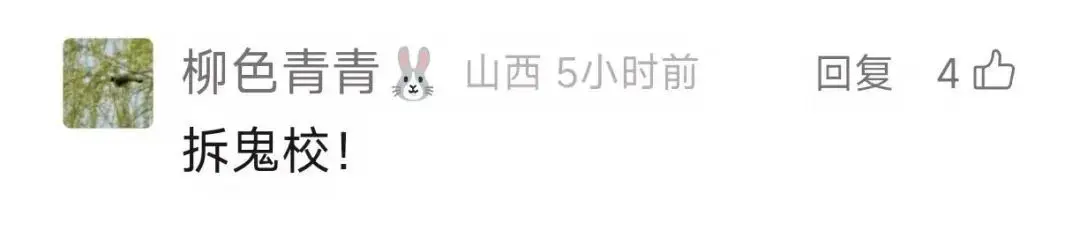

The above are comments from netizens under a report on Phoenix.com about the attack on a ten-year-old child attending a Japanese school.
First, imagine a scenario: when a child is murdered by a murderer and a family is plunged into eternal sorrow, the victim's family opens the internet and sees not condemnation of the violence, not sympathy for the family, but questions about why China should have Japanese schools. Regardless of the facts, at least such comments are very inappropriate. The following are some simple Q&A to address the doubts in the minds of some citizens.
1. Why have Japanese schools?
- Because the children of employees of Japanese companies and Japanese expatriates in China need to go to school.
2. Who allowed the construction of Japanese schools on Chinese land?
The "Interim Measures for the Management of Schools for Children of Foreign Personnel" issued by the State Education Commission (the predecessor of the Ministry of Education) on April 5, 1995, stipulates that as long as the requirements are met and reported to the local education department for approval, schools for foreign children can be established.
3. Why do they only recruit Japanese students and not Chinese students? Discrimination?
- The Ministry of Education of our country stipulates that Chinese students are not allowed to attend Japanese schools.
4. Does our country only have Japanese schools and no other foreign schools?
- Our country not only has schools for children of foreign personnel for Japanese, but also other foreign children's schools that meet the regulations. There are currently 116 approved foreign personnel children's schools, which enroll foreign students from Japan, South Korea, Europe, America and other places.
5. Does China have 35 Japanese schools, accounting for 40% of all Japanese schools in the world?
- 15.95%. Japan has established 94 foreign schools in 49 countries and 1 region, of which Japan has established 15 foreign schools in China.
6. Do Japanese schools adopt closed teaching? Chinese people know nothing about the school?
- Japanese schools are supervised by the Chinese government in terms of the behavior of school personnel, data filing, and construction land. School internal information can be consulted through the official website.
7. Even the United States, an ally of Japan, does not allow the establishment of Japanese schools, but China opens the door?
- The United States has 4 Japanese schools, and Russia also has 1.
8. Japanese schools do not allow Chinese people to enter, like a concession?
- In China, no matter what school, security work is very strict. Schools can formulate rules and regulations such as entry and exit registration, but it can be confirmed that there is no Japanese Marine Corps guarding the gate of Japanese schools.
9. Protective fences, exterior walls, barbed wire, reinforced gates, automatic doors, intercoms, emergency exits, guardrails, surveillance cameras, infrared sensors, etc. are all available, why is this?
- Because there are always some malicious and dangerous factors.
10. What kind of people are these schools cultivating? Where do the graduates go?
- There is no existing statistical data, but where can the graduates of kindergarten, primary school, junior high school, and high school go?
11. After the children studying in Japanese schools in China graduate, do they change to Chinese surnames, register with Chinese household registration, and all stay in China?
- If one of the parents is a Chinese citizen, according to the Nationality Law, a Sino-Japanese mixed-race person can choose their nationality at the age of 18, which has nothing to do with whether they graduate from a Japanese school or not.