While there are real costs associated with blood from collection to transfusion, if this accounting is not clearly and credibly explained to the public, the gap will ferment into distrust.
Phoenix Network Original While there are real costs associated with blood from collection to transfusion, if this accounting is not clearly and credibly explained to the public, the gap will ferment into distrust.
Author丨Wang Chenguang
Former Professor at Peking Union Medical College
Recently, “Outlook” published an article directly addressing the “predicament of voluntary blood donation,” from health concerns that “damage vitality” to the most trust-shattering phrase “voluntary blood donation, paid blood use,” voluntary blood donation is facing an unprecedented crisis of trust and mobilization dilemma.

Medical Perspective: The notion that blood donation “damages vitality” is a misconception
When discussing the public’s willingness to donate blood, we should start with a fact that is often overlooked: for a healthy adult, regular blood donation is physiologically safe, and the foundation of this safety is the body’s powerful blood regeneration capacity.
Blood is not a static resource that “diminishes with use” but a living tissue that is constantly being renewed. An adult body contains about four to five thousand milliliters of blood, and the maximum for a single whole blood donation is four hundred milliliters, accounting for less than one-tenth of the total. After donation, the body activates a mature compensatory mechanism that has evolved over time.
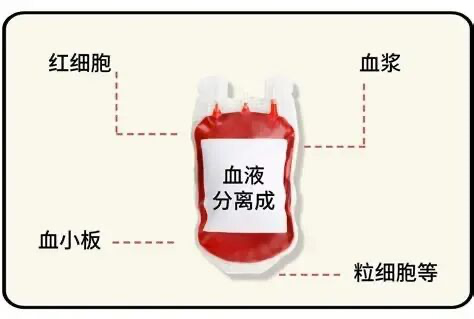
Blood plasma, which constitutes the largest proportion of blood, is mainly composed of water and various proteins. The blood volume is restored most quickly after blood donation – through drinking water and tissue fluid rehydration, the water in blood plasma can be replenished within one to two days, and plasma proteins like albumin are resynthesized by the liver within a few days. This is why apheresis can be performed much more frequently than whole blood donation: plasma itself regenerates quickly, and apheresis returns formed elements such as red blood cells to the donor.
Red blood cells are what truly take time to recover. Red blood cells are differentiated and produced by hematopoietic stem cells in the bone marrow, and their lifespan is about 120 days. The human body is already renewing a batch every day. The reduction in red blood cells caused by blood donation is compensated through a sophisticated feedback system: after a temporary decrease in oxygen-carrying capacity, the kidneys sense this change, secrete more erythropoietin (EPO), and stimulate the bone marrow to accelerate blood production. With sufficient iron and nutrient supply, red blood cell counts generally recover within three to four weeks, although the complete replenishment of stored iron may take a longer time.
Precisely because of this regenerative mechanism, regular blood donation does not cause perceptible long-term harm to healthy individuals; occasional dizziness, fatigue, and other reactions are mostly due to transient fluctuations in blood volume or nervous emotions, which can be relieved by rest and hydration, far from the folk imagination of “damaging vitality” or “harming the body.”
It is worth specifically pointing out that the setting of blood donation intervals is precisely the safety boundary established on the basis of the iron reserve recovery rhythm mentioned above. China adopts a global standard that is quite conservative in this regard – according to the current national standard, the interval for whole blood donation in China is no less than six months, and it applies equally to both men and women. Compared to international common standards, this interval is significantly longer: in the United States, both men and women can donate blood every eight weeks; the UK allows men to donate every twelve weeks and women every sixteen weeks; France and Germany allow men every eight weeks and women every twelve weeks.
In other words, men in mainstream Western countries can donate blood more than six times a year, while a male donor in China can donate whole blood at most twice a year.
This difference is not because Chinese people recover physiologically more slowly, but due to different policy orientations – longer intervals mean greater safety redundancy. Of course, this also means that the amount of blood that can be contributed by the same group of donors is suppressed.
A randomized controlled trial in the UK involving over 45,000 blood donors (INTERVAL study) proved that shortening the interval to every eight weeks (for men) or every twelve weeks (for women) had no significant impact on donors’ quality of life, physical fitness, or cognitive function. This suggests that the current six-month interval in China has considerable room for moderate optimization based on evidence-based medicine.
The public’s hesitation towards blood donation is not solely due to concerns about health risks, but also includes a series of social, cultural, and institutional factors, which will be examined layer by layer below.

Layer 1: Strict Standards Exclude a Significant Number of Donors
When discussing willingness to donate blood, people often focus on “whether they are willing,” but tend to overlook a prerequisite: under current regulations, a considerable number of people who are willing are actually “not allowed” or “temporarily unable” to donate blood.
These strict entry barriers are stipulated by the national standard “Requirements for Health Examination of Blood Donors” (GB 18467-2011, currently in effect). Although intended to protect the safety of both donors and recipients, they objectively narrow the base of eligible donors.
The most obvious is the age limit. The recommended age for blood donation is 18 to 55 years old; only in some regions can the age be extended to 60 years old for repeat donors with no previous adverse reactions and who meet health examination requirements.
This means that although the average life expectancy in China has exceeded 78 years and many people around 60 years old are still healthy, they are excluded from the donor pool at the institutional level.
Young people are the backbone of blood donation, and the national health authorities also admit that donors over 50 years old account for a very small proportion. Especially with China facing low fertility rates and a sharp decline in annual newborns, the consequence will be accelerated population aging and a decreasing proportion of young people. Against this backdrop, this seemingly stable age range for blood donation is actually facing structural pressure from a continuously shrinking donor population on the supply side.
Secondly, there are a series of physiological indicator thresholds. Blood pressure is a particularly prominent indicator of differences in standards between China and other countries: the Chinese national standard requires systolic blood pressure between 90 and 140 mmHg and diastolic blood pressure between 60 and 90 mmHg, with a pulse pressure difference of not less than 30 mmHg.
This upper limit is actually quite strict – 140/90 is the diagnostic threshold for hypertension in clinical practice, effectively barring all individuals whose blood pressure reaches the hypertension standard, as well as many healthy individuals whose blood pressure is temporarily elevated due to situational nervousness (i.e., “white coat effect”).
In contrast, the standards in Europe and the United States are much more lenient. The US FDA’s federal regulations and the Red Cross standards both stipulate that as long as the donor’s systolic blood pressure is not higher than 180 and not lower than 90, and diastolic blood pressure is not higher than 100 and not lower than 50, they are eligible; the Red Cross only defers individuals whose blood pressure exceeds 180/100, as such high blood pressure requires prompt medical attention, and taking antihypertensive medication does not affect eligibility for blood donation.
The World Health Organization’s guidelines only list systolic blood pressure between 100-140 and diastolic blood pressure between 60-90 as “suggested” reference ranges, explicitly acknowledging in their wording that these are relatively arbitrary limits.
China’s direct alignment of the upper limit of blood donation blood pressure with the hypertension diagnostic line is intended to prudently protect donors, but it objectively narrows the eligible population compared to international practices – especially considering that the prevalence of hypertension among Chinese adults is not low, this hurdle filters out a considerable number of potential donors.
Hemoglobin requirements are not less than 120 g/L for men and not less than 115 g/L for women. This hurdle is particularly likely to screen out women of childbearing age with latent iron deficiency or mild anemia. While these indicators are reasonable on their own, when superimposed, they constitute a not-low comprehensive threshold: a person who considers themselves “very healthy” and is eager to donate blood may be rejected for failing to meet just one criterion on the spot.
Furthermore, there are restrictions on blood donation intervals and frequency.
As mentioned earlier, the interval for whole blood donation is no less than six months, meaning a dedicated donor can donate whole blood at most twice a year; the interval for apheresis platelet donation is no less than two weeks, with a maximum of twenty-four times per year, and there are also conversion intervals between whole blood and apheresis donations.
These regulations are justifiable from a safety perspective, but they are significantly tighter compared to Europe and the US. Objectively, this means that even for highly motivated individuals, there is a naturally lower upper limit to their potential “production capacity.”
Blood supply cannot rely on high-frequency donations from a few enthusiastic individuals; it must depend on a sufficiently large base of blood donors.
In addition, the health screening process excludes a large number of individuals with chronic diseases, recent surgeries, specific medication histories, or specific travel histories. When these hard thresholds are added up, a frequently overlooked truth becomes clear: the shortage of blood supply in China is partly due to the compression of the base of “eligible and currently available” donors.
Discussions on increasing blood donation rates that focus solely on mobilization and publicity, while ignoring this structural narrowing at the entry point, will be one-sided.

Layer 2: The Dilemma of Trust, Incentive Realization, and Mobilization Methods
Once the hard threshold is crossed, the next obstacles are at the institutional operation level.
The core issue is the trust deficit. Voluntary blood donation is free at the collection point, but patients still have to pay for a series of costs such as testing, storage, transportation, and separation when receiving clinical blood transfusions. The discrepancy between “voluntary donation, paid use” is often naively misunderstood by many as “blood is donated for free, but people make money in between.”
In reality, this is essentially a transparency issue. There are real costs associated with blood from collection to transfusion, but if this accounting is not clearly and credibly explained to the public, the gap will ferment into distrust.
Once the question of “where does my donated blood go, and is it being used for profit?” arises in the public’s mind, the moral purity of blood donation is compromised.
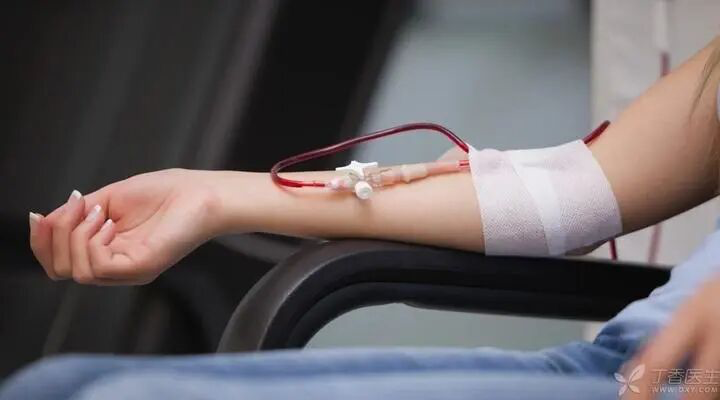
Closely related to this is the difficulty in realizing blood use guarantees. Chinese law stipulates that voluntary blood donors and their relatives can enjoy fee reductions or reimbursements for blood use in the future, which is a promise of compensation from the system to the donors. However, for a long time, problems such as difficulty in cross-regional reimbursement, cumbersome procedures, the need for advance payment followed by reimbursement with long cycles, and so on have been widespread.
When an incentive promise cannot be smoothly fulfilled, its credibility in the public’s mind is weakened. People may not actually expect future blood use, but the fact that “a promise was made but not kept” itself erodes institutional credibility. Reforms such as “one-stop settlement for blood use fee reduction” and “national data networking” promoted in various places in recent years are commendable in direction.
However, the implementation varies, and the impression has not been fundamentally changed.
Thirdly, administrative quotas crowd out intrinsic motivation. Some places, in order to meet blood donation targets, habitually assign tasks to civil servants, students, and employees in enterprises through hierarchical distribution. While this practice can indeed increase blood donation volume in the short term, in the long run, it transforms a voluntary act that should stem from altruism into a task that is assigned.
Psychology calls this the “crowding-out effect” of motivation: when something changes from “a good deed I want to do” to “a target I am required to complete,” the pure intention of contribution within people is quietly withdrawn.

Layer 3: The Contradiction Between the Voluntary Concept and Commercial Plasma
Expanding the perspective a bit further reveals a deeper inherent contradiction in China’s blood system: two systems with opposite logics are actually operating simultaneously.
On one hand, there is blood donation, which is purely voluntary, cannot involve any remuneration, and is driven by moral mobilization. On the other hand, there is raw plasma, which has subsidies at the collection point, is operated commercially by blood product companies at the processing end, and its final products are sold at drug prices. The entire industry chain is commercialized.
Government departments deliberately distinguish the nutritional subsidies/work-loss compensation for apheresis plasma from selling blood in their system design, emphasizing that it is not the price for purchasing plasma. However, this coexistence directly infiltrates ordinary people’s cognition, creating a signal split. To an observer, the reward signal received for blood donation is contradictory: on one hand, they are told that blood donation is selfless contribution and money should not be discussed; on the other hand, they see legal paid plasma collection stations operating normally.
This can easily lead to questions like “Since plasma can receive subsidies, why do patients have to pay for the costs of whole blood?” and even suspicion: “Is the voluntarily donated blood being commercialized for profit at some stage?”
Behind this contradiction lies the projection of a global institutional debate in China. Regarding blood donation, there have long been two schools of thought in academia: one is deeply influenced by the book “The Gift Relationship” by Richard Titmuss. It argues that paying money will crowd out altruistic motives, attract individuals who conceal health risks for economic reasons, and thus reduce blood safety, so clinical blood use must adhere to pure voluntary donation.
The other school of thought believes that moderate economic incentives can effectively expand supply. The key to blood safety lies in strict testing and screening, not in whether there is remuneration.
China has chosen the former pure voluntary route for clinical blood donation, but has adopted the latter incentive logic in the field of plasma. This institutional inconsistency makes it difficult for the state to legitimately use economic leverage to alleviate seasonal shortages of clinical blood sources. Because once the discussion of payment for clinical blood donation is opened, it will affect the entire moral legitimacy on which voluntary blood donation is based.
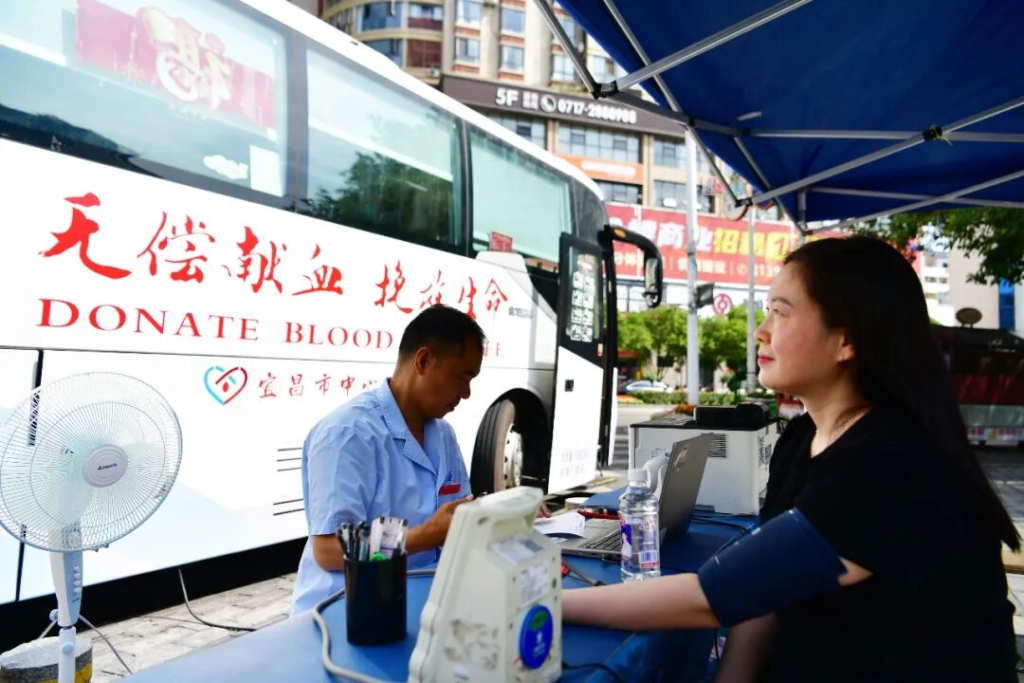
This contradiction cannot be eliminated, only explained and guided.
First, acknowledge the safety basis for the dual tracks: clinical blood collection is directly transfused into the body and lacks strict industrial inactivation steps, so potential risks arising from economic motives must be excluded; plasma is a pharmaceutical raw material with downstream strong inactivation processes, so it can tolerate incentives.
This combination of voluntary clinical blood collection and paid plasma has precedents internationally. The United States, for example, has become the world’s major supplier of plasma, while Europe, leaning towards voluntary donation at both ends, is severely dependent on imported plasma. China, with its large population and facing supply chain security pressures, would only turn shortages into patient suffering if it copied a fully voluntary approach.
The fragility of the system lies not in the differences themselves, but in the lack of explanation and reliance on mere wording to differentiate. Once seen through, it breeds distrust. Bringing the reasons to the forefront transforms the contradiction from a “veiled mystery” into differentiated governance based on risk levels.
Looking at these layers of obstacles together, the conclusion is quite clear. Blood donation is medically safe. The regenerative capacity of the human body provides a solid guarantee for this, and regular blood donation does not harm the health of healthy individuals. China’s current longer whole blood donation interval still has considerable room for evidence-based optimization.
The insufficient willingness is almost entirely due to factors outside the body, not the body itself. It is the underestimated strict entry barriers (age, weight, blood pressure, hemoglobin, blood donation interval, etc.) that compress the base of eligible donors, followed by the soft dilemmas in institutional operation such as trust deficit, ineffective realization of blood use incentives, and administrative quotas crowding out intrinsic motivation that erode proactivity, as well as the logical conflict arising from the long-term coexistence of the pure voluntary concept and the commercialized plasma system.
This article is an exclusive original manuscript from Phoenix Network’s commentary department and represents only the author’s position.
Editor-in-Chief丨Berlin
If you think this article is good,
we hope you can click “Watching” at the bottom of the article↘,
or set “Wind Sound OPINION” as a star (top right corner of the official account interface, three dots),
so that the system can continue to push high-quality comments to you.
Discover more from 自由档案馆
Subscribe to get the latest posts sent to your email.