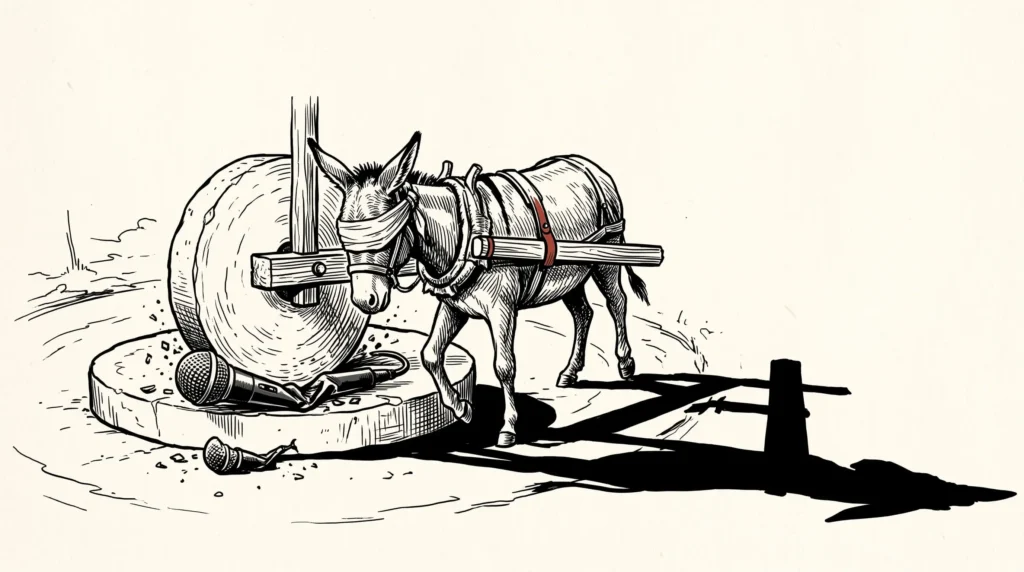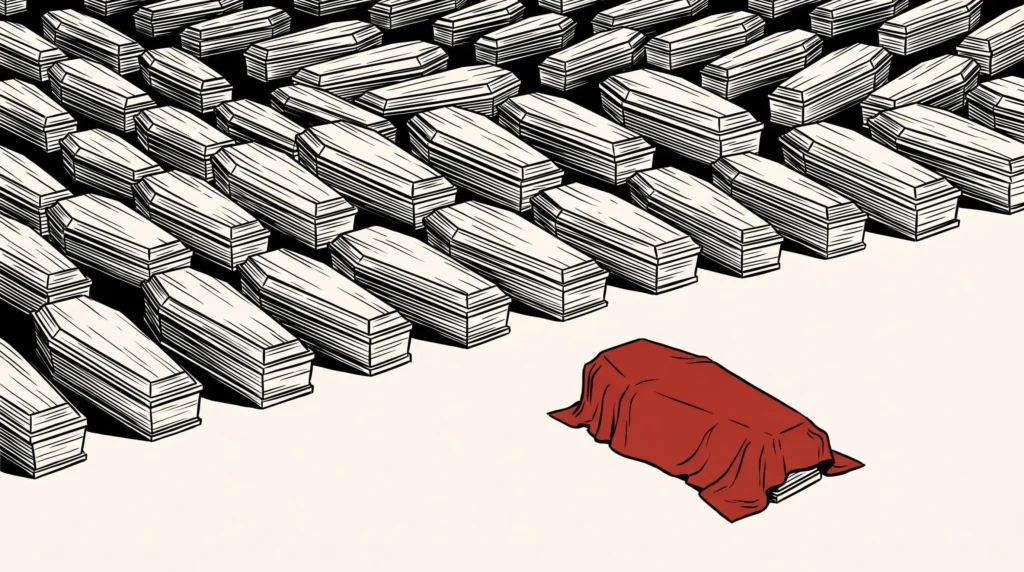
This year’s Halloween, Shanghai is quiet.
A quick search online basically shows last year’s content—last year’s Shanghai Halloween was a meaningful cultural event. It monopolized almost all the laughs online at the time, such as An Lingrong appearing in all the self-media, Xiang Tai in the live broadcast, Li Jiaqi with a pout, the downtrodden B, the Naying and Faye Wong of “Meeting in 1998”.
More importantly, it realized the localization of Halloween on a large scale for the first time, turning Halloween into a “Wan Geng Festival” (a festival of internet memes) for young Chinese people. There were no pumpkin lanterns or ghost capes, but various creative and unexpected ideas.
But even so, some people are still not at ease.
Online news shows that the sunken square of “FOUND158” on Julu Road, which once became a famous scenic spot in Shanghai last year, has been surrounded by yellow fences. The various “strange costumes” that should have appeared disappeared under the “persuasion” of security personnel wearing yellow vests. Even the person dressed as the God of Wealth was “sent back”.
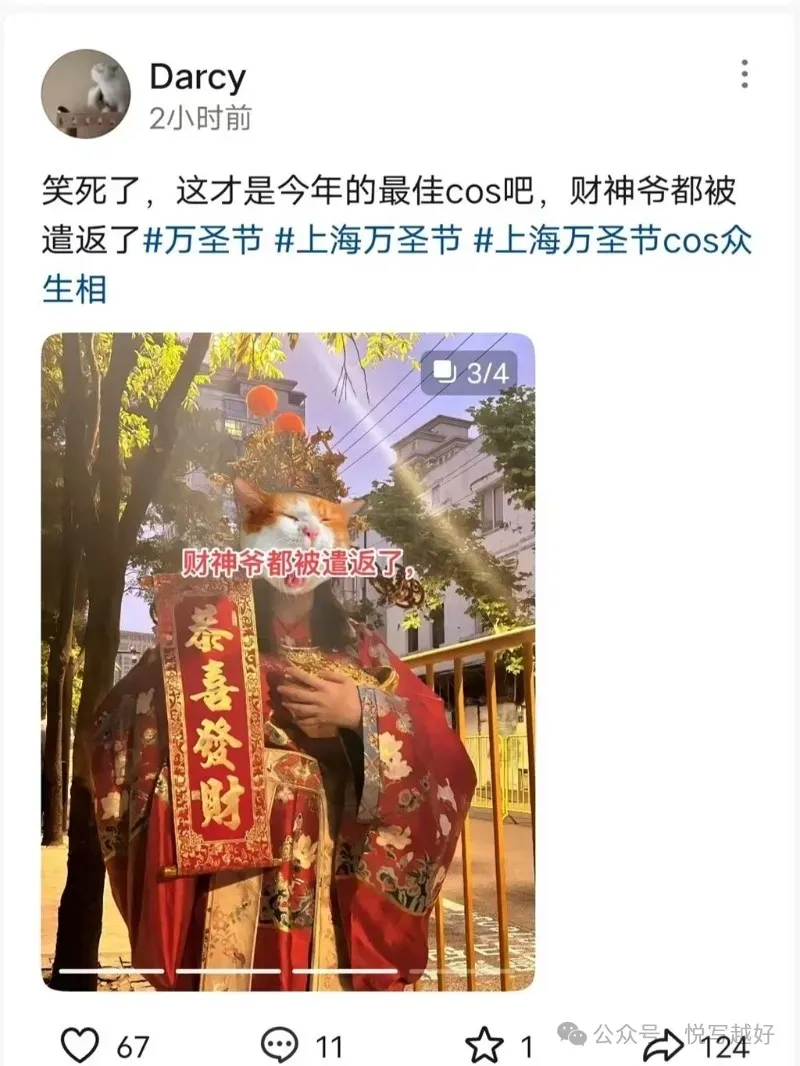
To be honest, I don’t understand this at all. It’s just a rebellion against a mediocre life, a rare festival for young people to release their emotions. Is it necessary to be so nervous and treat it like a formidable enemy?
I don’t know if it has anything to do with Shanghai’s “ban”, but this year’s Wan Geng Festival headquarters has moved to Hangzhou.
On the last weekend before Halloween 2024, many young people went straight to the West Lake. You don’t have to dress up as a ghost, but you can’t not dress up as a “meme”. What the mantis combination, sun-kissed grapes and giant peak grapes… Abstract memes everywhere, I remembered a sentence someone said: It’s not that you can’t afford a mental hospital, it’s that Halloween is more cost-effective.
Let’s take a look at a group of photos.
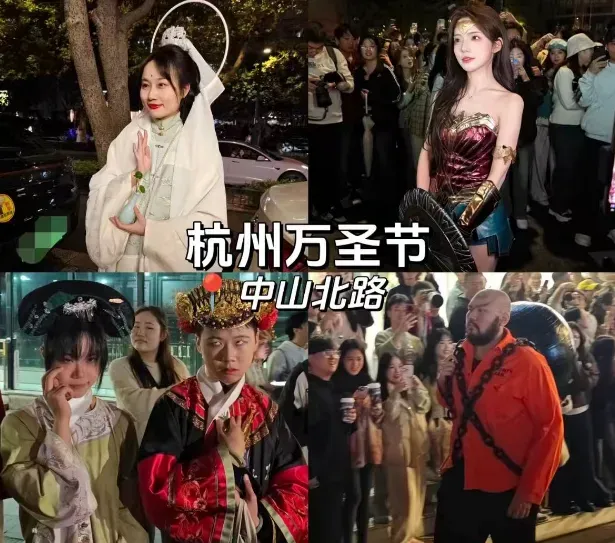
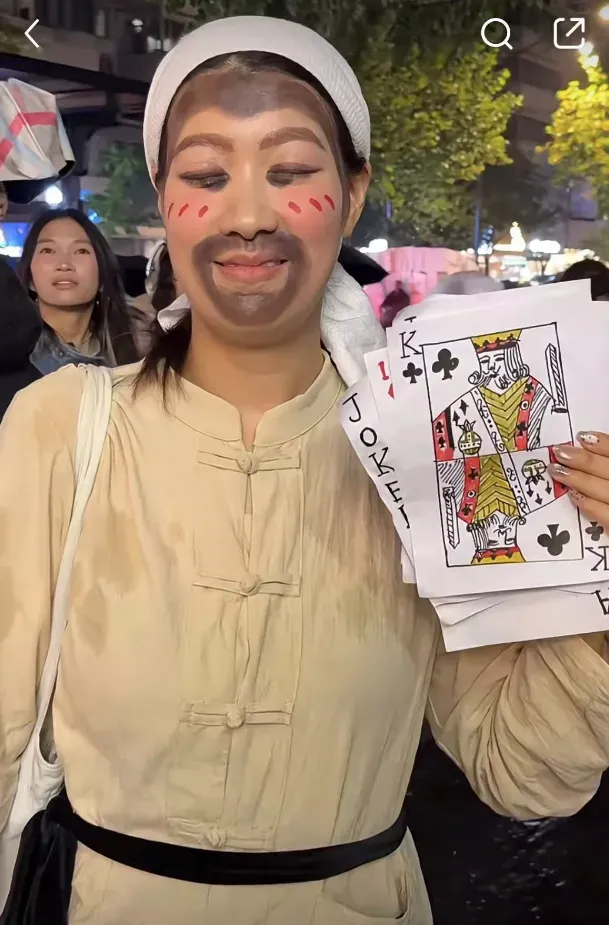

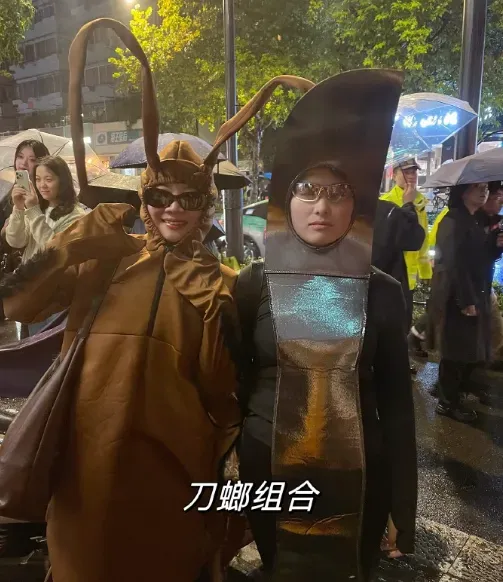
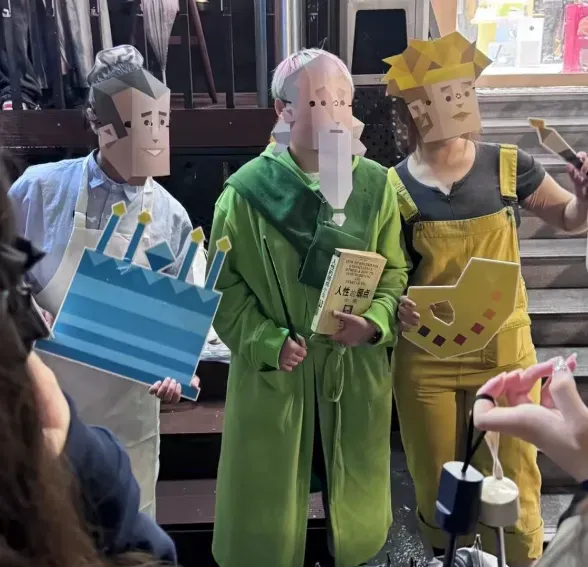
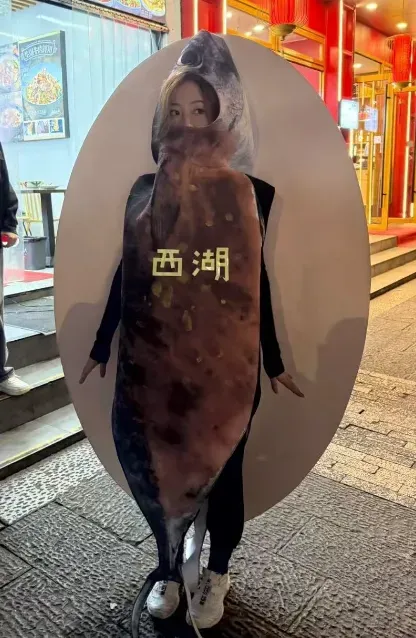

Young people who usually suppress themselves in their studies, work, and life seem to have truly come alive at this moment.
Has the Wan Geng Festival in Hangzhou caused any problems? I actually think that for this city, the Wan Geng Festival is a plus.
Let’s go back to Shanghai.
To be honest, Shanghai is a city I really like. My colleague Ma Jiyuan and his uncle, Shanghai writer Ma Shanglong, wrote in their co-authored new book “Shanghai Order, Shenzhen Temperament” that the formation of Shanghai people is like brewing wine, which has gone through time’s fermentation and precipitation. I agree with this statement. Jiangnan culture and world civilization meet and clash here, forming a Shanghai character with visibility.
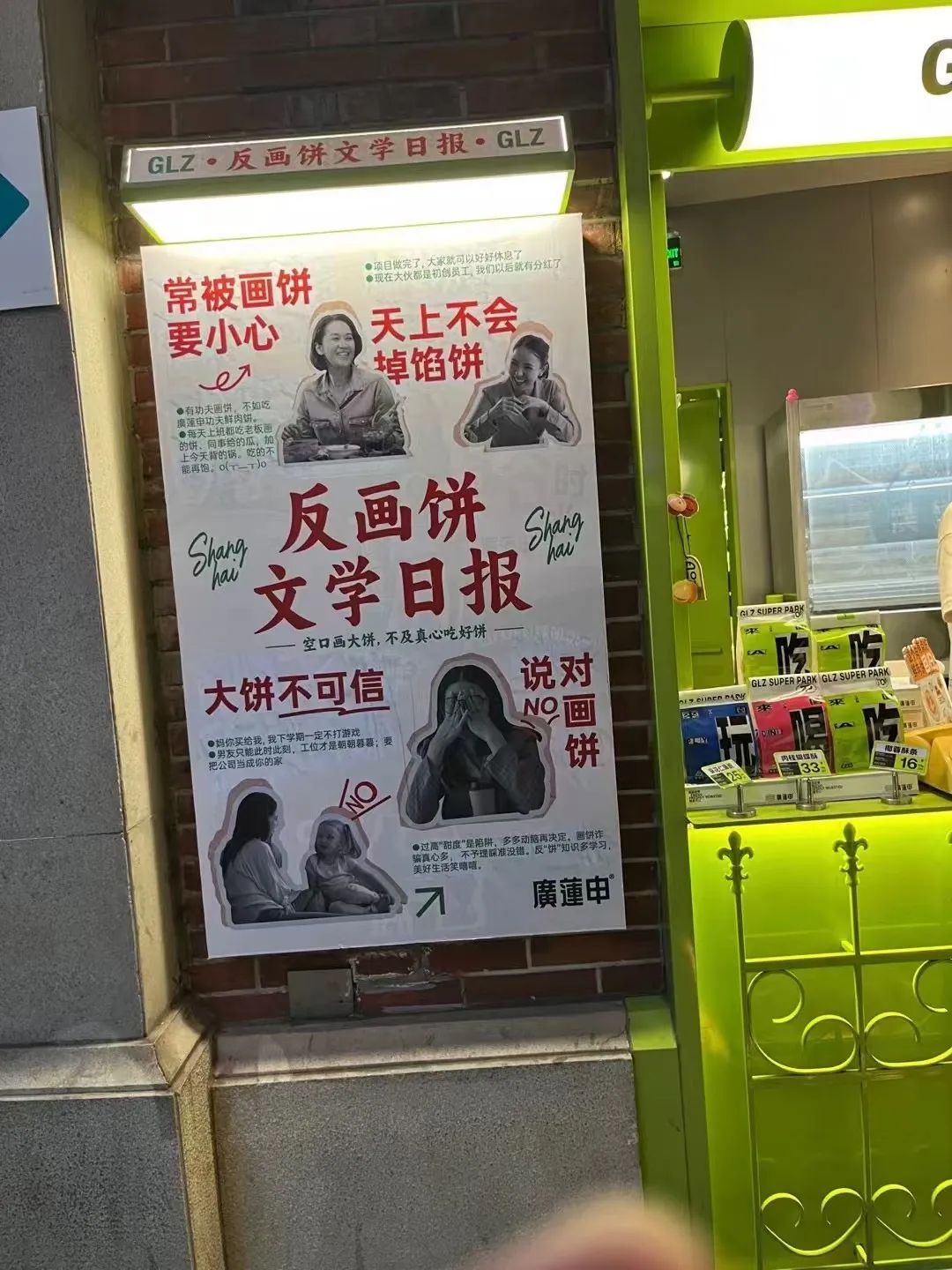
Last autumn, I went to Shanghai for the first time—shame—and took a few photos on the street. The “Anti-Pie Painting Literature Daily” in a restaurant actually had a bit of the meaning of the Wan Geng Festival.
So, I am quite disappointed with this performance of the city.
Regarding Shanghai, besides the removal of Halloween, another thing that made me feel emotional is that I recently saw an article titled “The Most International City in China, Closing Down the Only Foreign Language Channel”. The article says that the Shanghai foreign language channel is suspected of being closed.
The Shanghai foreign language channel started broadcasting in 2008, the year of the world-renowned Olympic Games. An important purpose of its launch was to serve the 2010 Shanghai World Expo, which was another large-scale international event held by China after the Beijing Olympics.
In those years, China’s grand events and happy events continued, occupying the center of the international stage, with frequent interactions between China and foreign countries, and international friends filling the door. The launch of the Shanghai foreign language channel, in the words of the official at the time, was:
“Reflecting the open awareness and service awareness that Shanghai, as an international metropolis, should have.”
Now, it is suspected of being closed. One of the reasons is that there are fewer foreigners in Shanghai, and the audience has been lost. Since 2020, the Shanghai Municipal Statistics Bureau has no longer separately provided data on the foreign permanent population in Shanghai, but it can be confirmed that with the withdrawal of foreign companies and some other reasons that are inconvenient to say, many foreigners have left Shanghai and returned to their own countries or gone elsewhere.
Is there any hidden connection between the suspected closure of the foreign language channel and the ban on “strange costumes”?
I don’t know.
All I know is that Christmas is coming in a few days.
I don’t know if there will be voices against Christmas at that time. In recent years, we have continuously seen that some places have issued bans, not allowing businesses to hang Christmas decorations, conduct Christmas promotions, and even stipulating that they must clear window paintings related to Christmas along the street. In short, they want to carry out a “scorched earth policy” against Christmas.
I want to say that the attitude towards Christmas and the presence or absence of a Christmas festive atmosphere can also become an observation and measurement indicator of a place’s civilization development level. You must know that in such an era that emphasizes openness, expelling foreign festivals is not a glory for a city.
I also want to say that wherever you hold an open and inclusive attitude towards the world, you can choose to place your own body and dreams there.
Discover more from 自由档案馆
Subscribe to get the latest posts sent to your email.