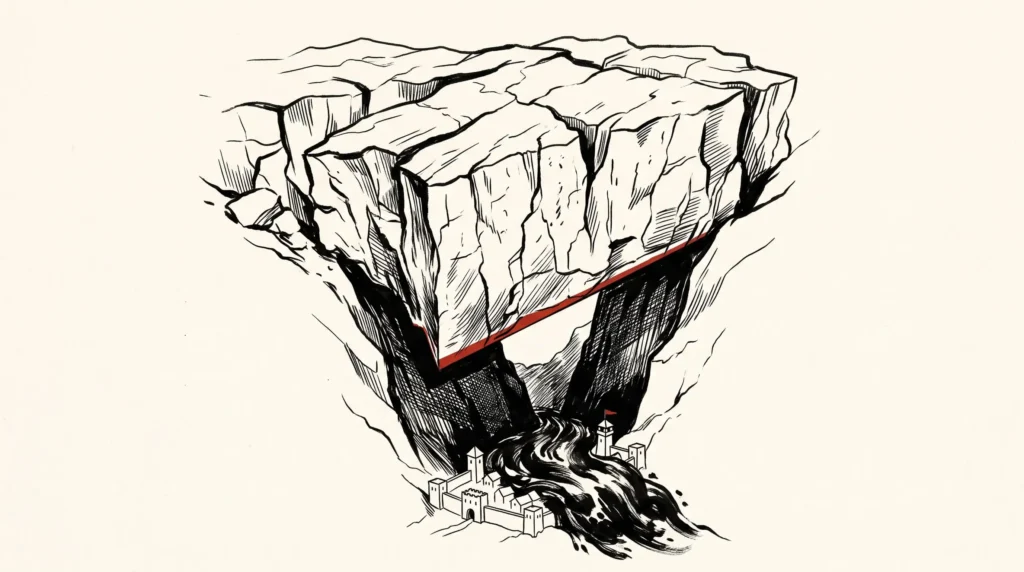
The latest financial data shows that in the first seven months of this year, the national fiscal deficit reached 5.74 trillion yuan.
Some people always say, don’t worry, there’s the top. But looking at the whole country, last year’s fiscal revenue was 21.7 trillion yuan, expenditure was over 27 trillion yuan, and the deficit was 5.3 trillion yuan!
Among them, local governments spent 23.6 trillion yuan, which means that even if all 21.7 trillion yuan were given to local governments, there would still be a 1.9 trillion yuan shortfall!
What about this year? It will only get worse!
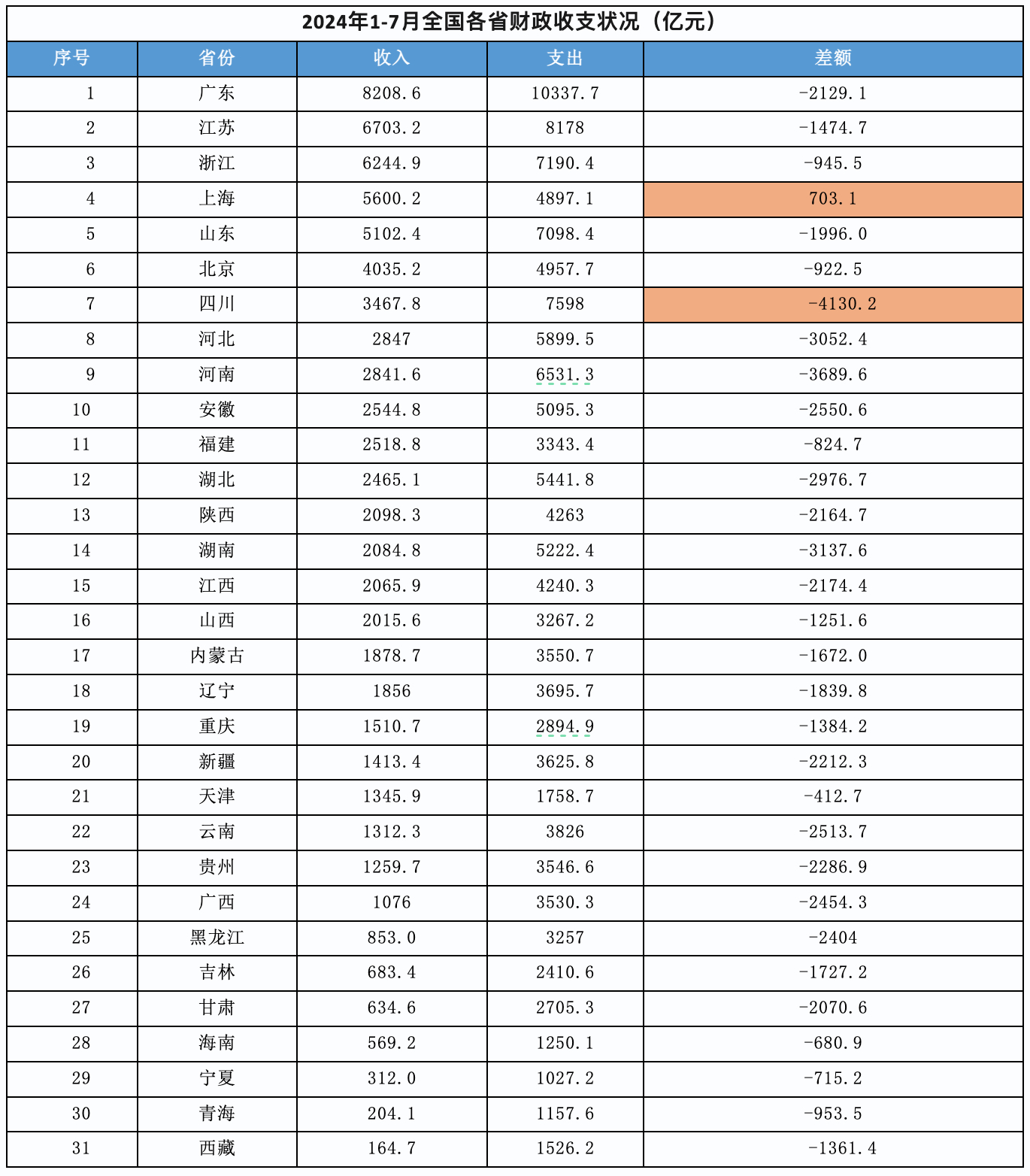
Look at this table, except for Shanghai, it can be said that the entire army is wiped out!
The process of sinking is also very clear: in 2000, there were 12 net contributing provinces, in 2010 it dropped to 10, in 2020 it dropped to 8, and in 2024 it dropped to one!
But the top hasn’t benefited either, it’s hard to be a family. Taking last year as an example, the top transferred 10.3 trillion yuan to local governments, but its own revenue was only less than 10 trillion yuan, which means that even if the top gave everything to local governments, there would still be a 300 billion yuan shortfall!
Even so, various places are still ‘selling their pots and pans’ to show the top, and the intention of asking for money is obvious.
So, where exactly does such a huge amount of revenue go?
One data point says that 80 million public servants consumed 40% of the total expenditure!
Of course, the public servants supported by the treasury are not all civil servants. According to statistics, as of last year, the estimated number of civil servants in our country was 7.1 million. Adding in those in public service, party and mass organizations, trade unions, women’s federations, etc., totaling 13 million, and those in medical, education and other public institutions, totaling 31 million, there are a total of 51 million people. Adding in retirees, the total number exceeds 80 million, accounting for about 5.66% of the national population.
These consumption units are not like the private enterprises that bear half of the tax revenue and are considered ‘their own people’, but rather ‘relatives’.
If ‘relatives’ don’t have food to eat, wouldn’t they have to sell their pots and pans? You see, when the economy was good in the past, some people suggested selling state-owned enterprises or transferring state-owned enterprises to social security funds to cope with the aging crisis that had already arrived, but they were rejected for various reasons.
Now that ‘relatives’ can’t eat, they are selling state-owned assets in various ways, and no one seems to say anything bad.
Fortunately, the right to issue currency is in hand. In Kang’s words, a hundred-dollar bill with a cost of about 17 cents can be exchanged for goods worth 100 dollars, which is a ‘harvest’. But he may have forgotten, which currency isn’t?
But this is, after all, a hormone, and it can’t be taken often, otherwise it won’t be long.
In fact, China’s M2 doubled from 100 trillion yuan in 2013 to 200 trillion yuan in January 2020, which is exaggerated enough.
As for the top spending money? It all depends on the deficit!
What do local governments want?
Since the parents have no oil and water, then each will show their skills, borrowing, defaulting on debts, fines, and ‘deep-sea fishing’ are all means.
Official data shows that as of the end of October last year, the total local government debt was about 40.1 trillion yuan; Goldman Sachs estimated the number to be 94 trillion yuan last August.
Regardless of which data, this exceeds the annual revenue. Now local governments can still afford the interest, which is considered healthy finance.
As for defaulting on debts, the case of the ‘debt-to-criminalization’ of the Ma boss in Guizhou is by no means an isolated case.
As for fines, taking Liaoning Province as an example, the proportion of fines and confiscations in fiscal revenue is the highest in the country, and the annual growth rate in some areas is 100%.
Of course, this is not just traffic violation fines, but also includes anti-corruption income. There are also mature routines in this area. If officials can’t come up with money, they arrange for three or so private enterprises to pay. The entrepreneur from Changzhou who jumped off a building in the second half of last year was such a role.
As for ‘deep-sea fishing’, that’s even more time-honored. A local constable targeted a company in the south and handled a 3 million yuan case. Every year-end, he would come to ‘collect New Year’s gifts’. It was rumored that the first year he asked for 60 million yuan and got it; the second year, 120 million yuan and got it; the third year, 600 million yuan, and the local government couldn’t handle it, so they took the initiative and locked up everyone in the company in a hotel, ‘arrest-style protection’, leaving hundreds of people from out of town empty-handed, which eventually caused a big storm in the ministry and online.
So much so that a police station in Hangzhou issued a ‘anti-arrest’ guide to enterprises in its jurisdiction:
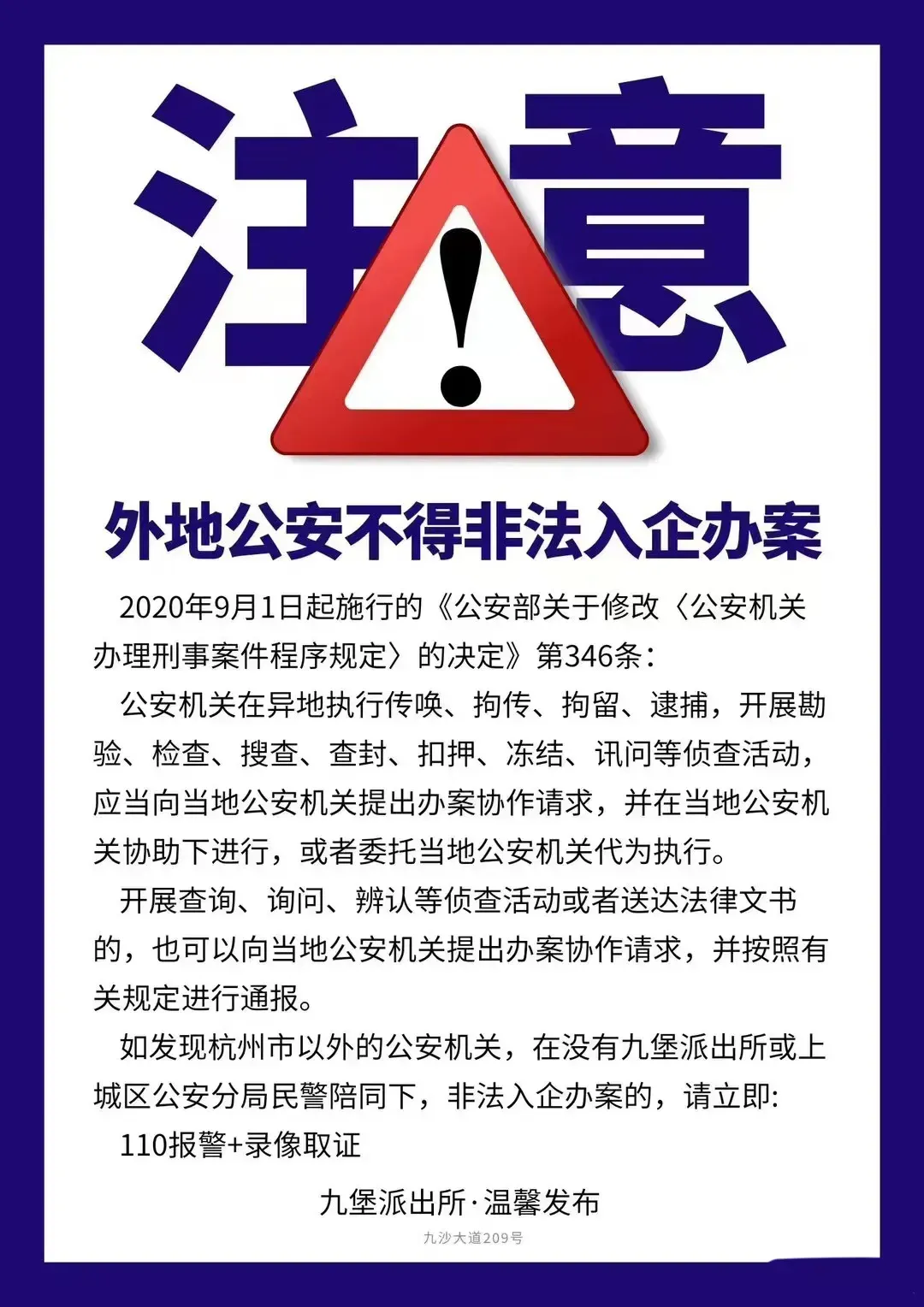
But if you change the institution, such as the Supervision Commission office? You don’t need to be so troublesome to have the local government cooperate, perfectly bypassing it!
Recently, there have been two more incidents.
One is the New Lake Group of Mr. Huang, the former richest man in Zhejiang, who was sentenced by Hubei to be responsible for the personal bribery of a former shareholder of a company acquired 15 years ago; at the same time, two funds issued by the company exploded.
This matter is somewhat similar to investigating 15 years ago, and if it is recognized, the impact will be far-reaching. Zhejiang official media and some scholars have also come out to speak.
What I find strange about this matter is that Mr. Huang’s style of doing things is a mystery, but his identity is generally clear. I don’t know if Hubei really doesn’t understand, or what reason, they dared to take action against him, I can’t figure it out.
The other is Xiao Yonghui, the financial director of Shenzhen Transsion Holdings, who was placed under residential surveillance by the Supervision Commission in Zhen’an.
Transsion is a mobile phone company with its base in Shenzhen, and its market is mainly overseas. In the first half of this year, its global market share was 14.4%, ranking second among global mobile phone brand manufacturers.
How could such a company be targeted by a county Supervision Commission there? Inconceivable!
Official media unabashedly used the term ‘deep-sea fishing’ to describe these two cases.
It is obvious that the pigs in their own pen have even had their bone marrow knocked out and eaten, and they can only reach into other people’s bowls.
Next, don’t be surprised by anything that happens.
Of course, I always maintain an optimistic and positive atmosphere for solving financial difficulties.
My father’s life’s record, can’t just throw it away, right? When the old man is gone, can’t he leave nothing behind, right?
Discover more from 自由档案馆
Subscribe to get the latest posts sent to your email.