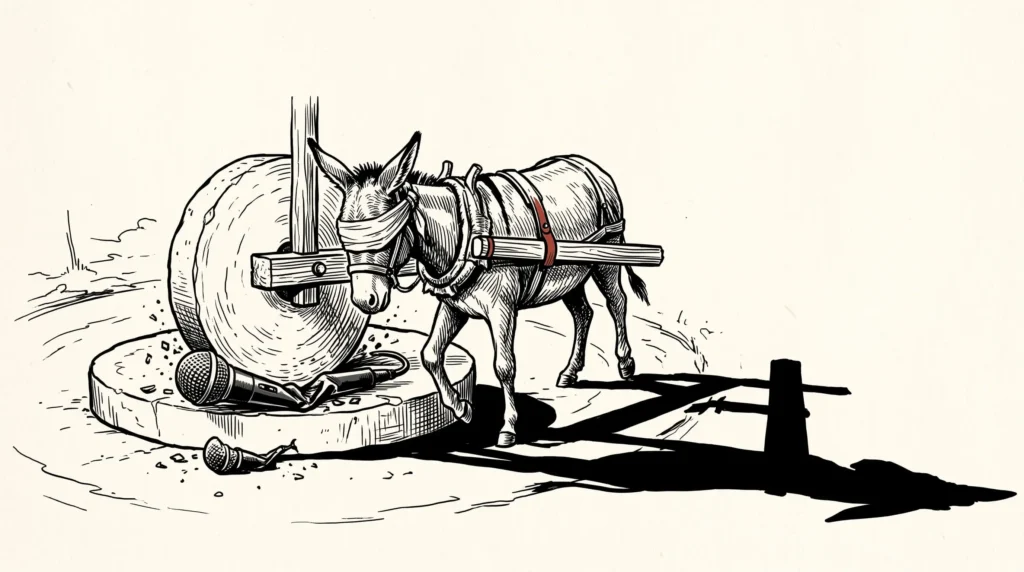
There was a famous case regarding tax collection that occurred in Jiangsu that year. This case was initially highlighted as a key example, but it was later discontinued. You’ll understand what happened if you read it carefully.
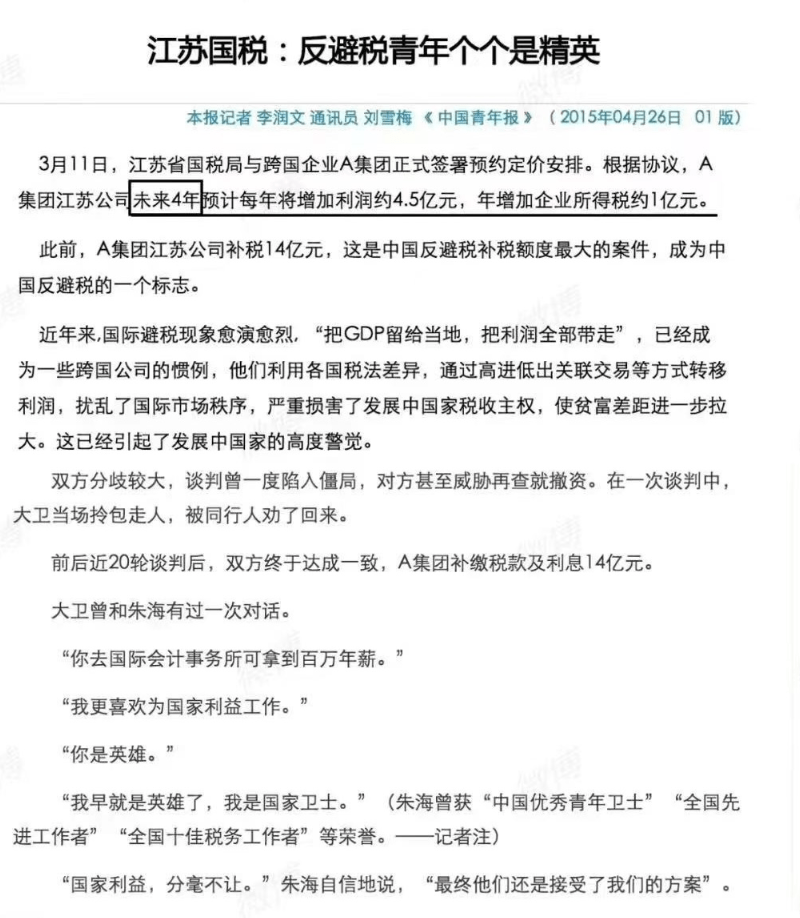
In 2015, an article was published titled “Jiangsu State Taxation: Anti-Tax Avoidance Youth Are All Elites.” It discussed how the Jiangsu State Taxation Bureau “taxed” a multinational company, A, according to relevant regulations. Initially, there was an unspoken agreement: they would invest, boost local employment, and then keep the profits abroad. However, according to Chinese regulations, such actions could be subject to tax audits.
Taxing large enterprises isn’t just a matter of issuing a notice; it often involves tax negotiations. This means negotiating with the company to have them pay taxes according to certain standards and continue operations. The outcome of the negotiations with this company was that they first paid 1.4 billion in back taxes, and then they would continue operations in China, increasing profits by 450 million each year for the next four years, and then increasing corporate income tax by 100 million.
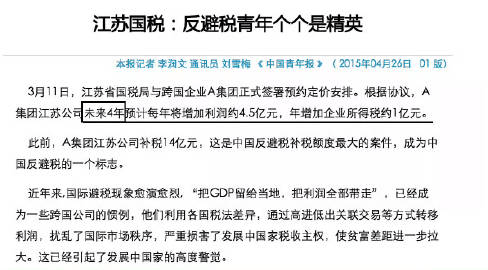
This matter was considered a great success at the time, leading to numerous news reports. However, because the basic knowledge of taxation is somewhat complex, many people didn’t understand it. The article’s tone was very high, praising the tax authorities in a way that was somewhat detached from reality.
This is Figure 2. It describes how the tax authorities strategized, with the foreigners saying they couldn’t continue and wanted to leave. The tax authorities then used a series of techniques to get them to accept the plan. The negotiators praised the tax authorities’ strong abilities, saying they could earn millions in annual salaries at international accounting firms.
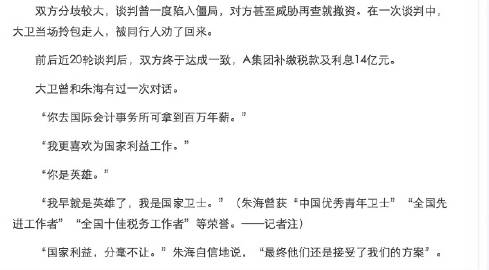
This kind of article is essentially praising oneself through the words of others. After all, the overall treatment within the tax system is very good. So, whenever they publish articles, they claim that they are at an international level and earn even more.
So, why wasn’t this case promoted later?
Because the company mentioned in the article was the famous Seagate. The agreement they reached with the tax authorities was a delaying tactic. They signed the agreement in 2015, stating that they would gradually bring profits back to China over the next four years, but by the end of 2016, they closed down their large factory with 2,000 employees.
You can understand that a factory with 2,000 employees has such a large production capacity. It would take at least two years for such a multinational company to reallocate.
The implication is that they were already preparing to leave when they signed the agreement. If you read the article again, you’ll find that the tax authorities actually got things wrong. They were certain the company wouldn’t leave, but the company left during the negotiations. The so-called tax negotiation was just a way for them to cut their losses.

The tax authorities always do the right thing when it comes to tax law. But in reality, this is a major blow to attracting investment. Because when these large factories come, they negotiate with the local governments. They come with large investments, solve the employment of thousands of people, and even bring an industrial chain. But the tax authorities often coordinate when the local government has money, with preferential treatment and tacit agreements; when there is no money, they come to audit again, which is a matter of uncertainty.
Reading this case again today, your feelings will definitely be very different.
Related reading: People’s Daily Online|Jiangsu State Taxation: Anti-Tax Avoidance Youth Are All Elites
Discover more from 自由档案馆
Subscribe to get the latest posts sent to your email.