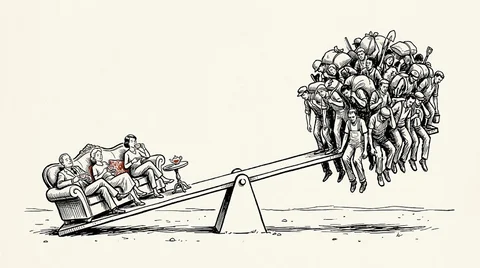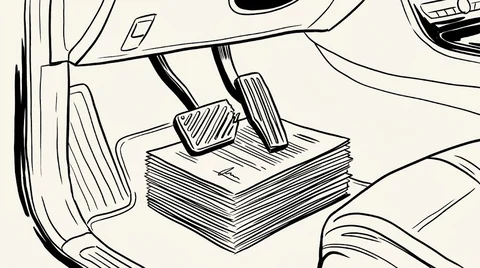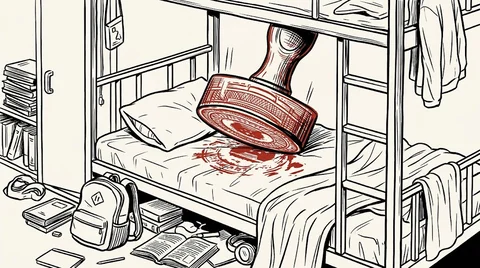


I've heard these days that "foreign forces" have spent a lot of money to mobilize many internet celebrities and bloggers to infiltrate our internet:
To spread the bad idea of "if you can't roll, just lie down".
Seeing this news, I was overjoyed. Why was I happy? The IQ and awareness of this group of "foreign forces" are too low!

You know, the spirit of the important meeting held by the high-level officials is "anti-involution".
The lesson of "Japan's Lost 30 Years" also shows that "lying down" is a necessary process to reduce internal consumption, promote consumption, and eliminate backward production capacity.
The reason why developed countries don't have involution is because their laws and regulations crack down on "involution kings". For example, France stipulates that drivers must rest for 45 minutes after driving for 4.5 hours, and must take a mandatory vacation after driving for 12 consecutive days, otherwise they will be fined.
These are all good ways to reduce internal consumption and improve the consumption economy. Why do "foreign forces" still actively help us promote these methods?
Is it because they think that China's economic growth is not fast enough, so they pay out of their own pockets and take risks, wanting to speed up the old Chinese?
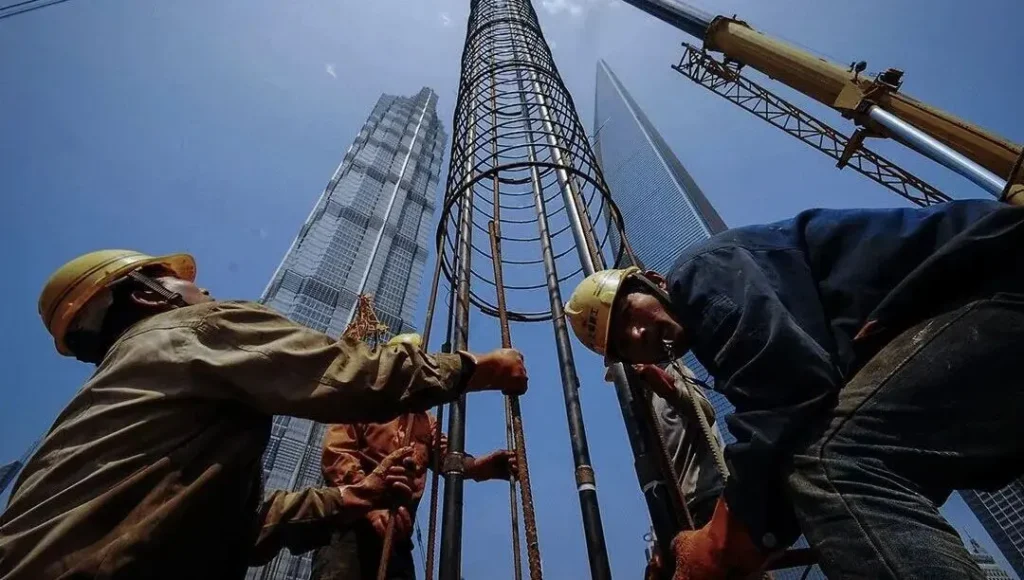
Here, I have to criticize some of our propaganda departments. Before doing propaganda, learn and understand the spirit of the above economic meetings, and don't go against it.
In fact, Chinese people have never lied down. Let's just say a few data:
According to the report of the "World Labor Organization", the average annual working hours of Chinese people is 2548 hours, which is equivalent to working 10.19 hours per day (calculated on working days), ranking first!
Japan, 37% less than us (about 6.4 hours per day); Germany, only works 5 hours a day.
At the same time, China has nearly 780 million labor population, with a total working time of about 1.99 trillion hours, which is 6 times that of the United States and 5879 times that of Luxembourg. The sum of the next 30 or more countries is not even half of ours!
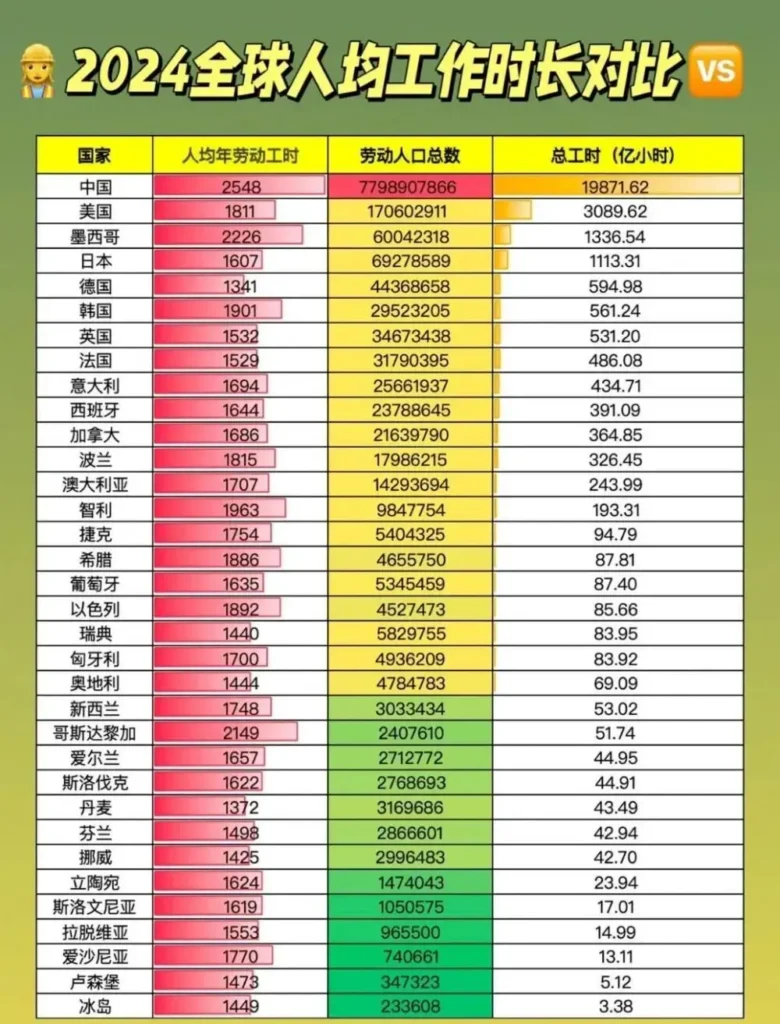
In a word: Chinese people are too capable, too involved!
And now, the above also realizes that this kind of involvement, this kind of ability, is not all good for economic development.
Therefore, recent policies and measures have been introduced intensively:
For example, ride-hailing drivers are limited to driving for 8 hours; takeaway delivery personnel should issue fatigue prompts after receiving orders for more than 4 hours and suspend dispatch for 20 minutes.
For example, repeatedly talk to relevant platform companies and increase penalties to prevent companies from getting involved.
Even retired cadres within the system have been "regulated": strictly restrict old comrades from taking up positions in enterprises after retirement, unless they voluntarily give up all retirement benefits.
So, in such a background, is it really appropriate to encourage "involution" and "struggle"?

Today's China is different from the past. The era of counterfeit goods everywhere and even buying toilet lids in Japan has also become history:
The sales of domestic cars have exceeded Japan for the first time, ranking first in the world.
LNG shipbuilding industry has surpassed Japan and is about to catch up with South Korea, which ranks first in the world.
Zhang Xue's locomotive made a splash in the world's top events.
The number of AI and artificial intelligence applications far exceeds that of the United States.
The second largest economy and the largest industrial country. Behind these dazzling words, it is not the opportunities given by the big environment and the big era, but the sacrifices and contributions made by Chinese people that other countries have never had.
We should look back, or tell our elders and ourselves:
You don't have to work so hard.

Where are the demographic dividend and the era dividend?
These dividends were accumulated by the older generation of migrant workers who risked pneumoconiosis and worked more than ten hours a day!
It's the passengers on the train who saved from instant noodles and peanuts!
It's the programmers in the office building who worked 996!

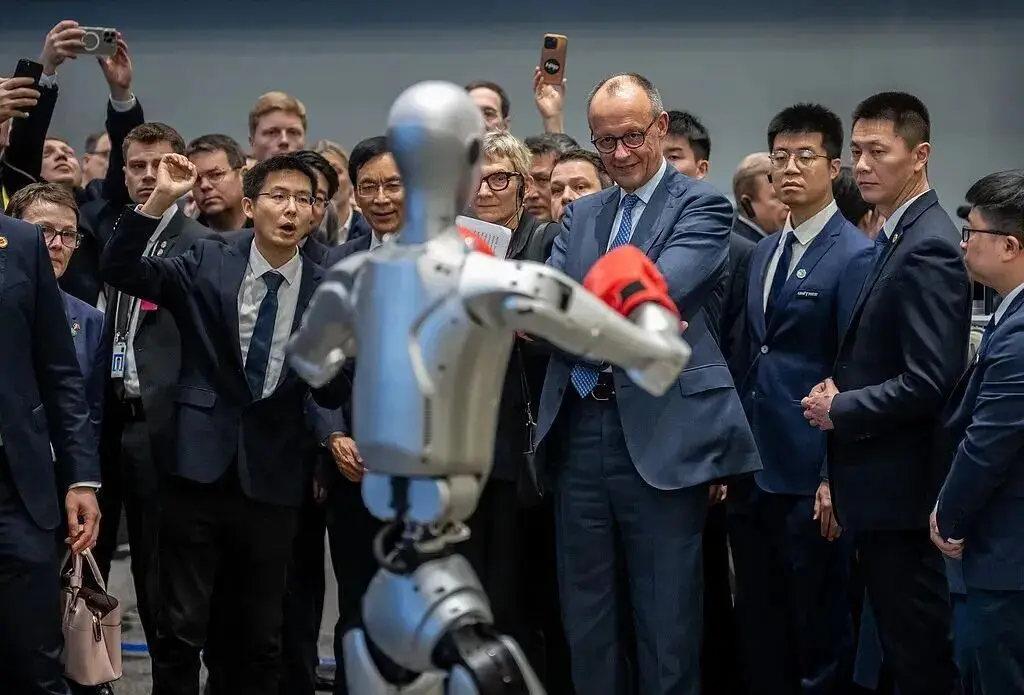
The German Chancellor visited China two months ago, and the first thing he did after returning was to brainwash the Germans:
"Our productivity is indeed insufficient... If you come back from China, you will be more aware that the balance between work and life and the four-day work week cannot maintain the prosperity of our country for a long time.""
It's almost Labor Day. How did Labor Day come about?
On May 1, 1886, because they couldn't stand the oppression of capitalists, workers all over the United States demonstrated in the streets and demanded an eight-hour workday.
On May 3, at a rally outside the McCormick harvester company factory, American police shot at the workers, killing two workers.
After that, 2500 workers were filled with emotion and went to ask for an explanation. As a result, the US government sent 180 fully armed police to fire on the masses, and people fled everywhere, causing a large number of casualties, which caused social upheaval.
After that, the international community took it as a warning, and finally decided to take May 1 as International Labor Day, and its core spirit is to demand an eight-hour workday and protect the interests of workers.
It is said that we should cross the river by feeling the stones of the United States, and the "foreign forces" are also helping us move the stones.
As the old saying goes, you should rest when you should rest, but don't use these stones to smash your own feet!