

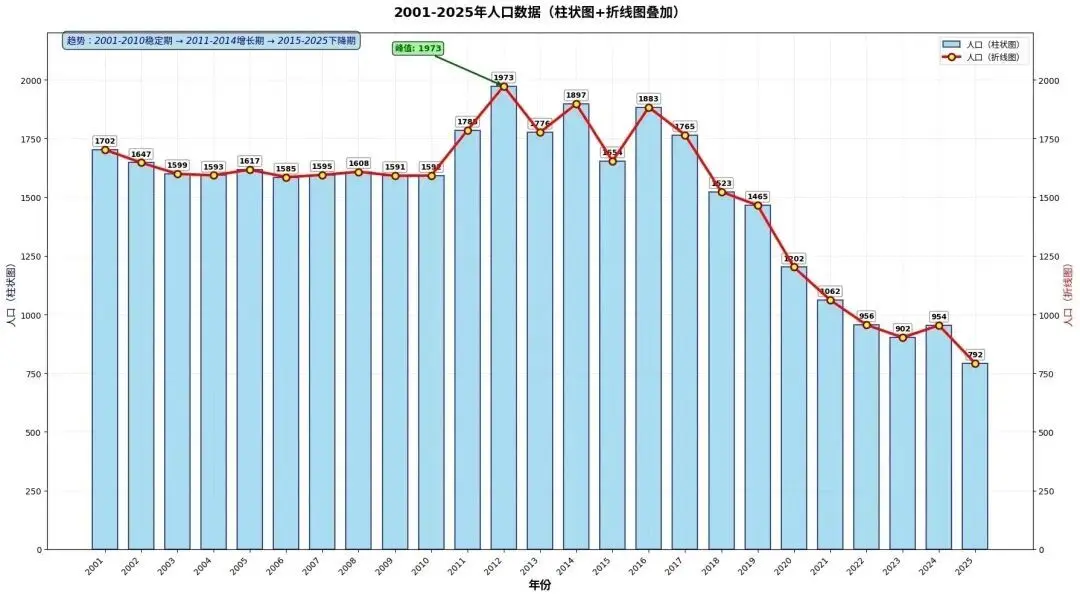
In recent years, China's birth population has continuously hit new lows.
The birth population in 2025 is expected to be around 7.92 million.
Compared to 17.86 million when the universal two-child policy was introduced in 2016, this is a reduction of nearly 10 million in just 9 years.
What's more concerning is that China's total fertility rate has fallen to around 1. What does that mean? The internationally recognized level for population replacement is 2.1.
In other words, for the population size to remain stable, each couple must have at least 2.1 children on average. China has now fallen to about half of this level.
It's not only lower than the United States, France, and the United Kingdom, but even lower than Japan, making it one of the countries with the lowest fertility rates globally. Many people think: Isn't it good to have fewer people? Less competition, more resources.
But if you extend the timeline to 10, 20, or 30 years from now, you'll find that:
The real impact of low fertility rates goes far beyond whether kindergartens are empty. It's a systemic change affecting economic growth, social structure, fiscal systems, and even national competitiveness.
Many people haven't realized: China's biggest challenge in the future may not be real estate or trade friction, but negative population growth.
01
What does a declining fertility rate essentially mean?
Many discussions like to attribute the cause to one sentence:
"Young people are unwilling to have children."
But this is actually just the result. The real problem is that the current economic structure makes more and more families feel they "cannot afford to have children."
Over the past 40 years, China has undergone rapid industrialization; housing prices have risen, educational competition has intensified, medical costs have increased, and employment uncertainty has grown.
At the same time, the proportion of labor income has not increased synchronously.
This has led to a phenomenon: the cost of raising children is getting higher and higher, while the return on raising children is getting lower and lower.
In an agricultural society, children were a means of production; one more child meant one more labor force. In the early stages of industrialization, children were a guarantee for old age.
But in modern urban society, children have become a high-input, high-cost, long-term investment; from birth to university graduation, many urban families spend over 1 million yuan with no guaranteed return.
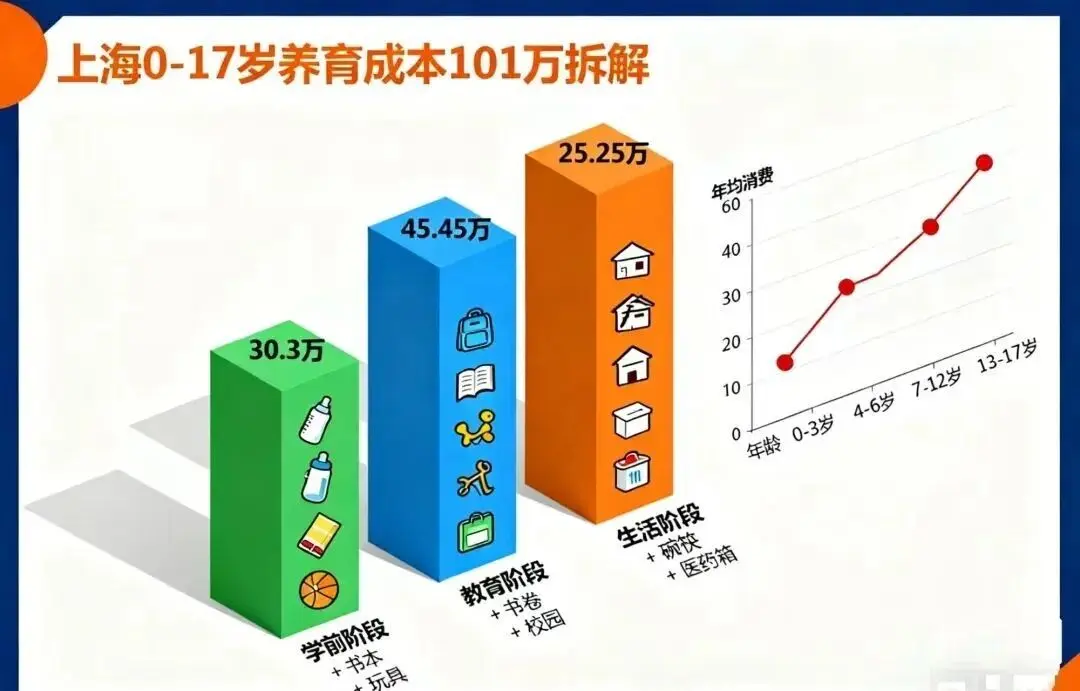
So, more and more families are starting to recalculate.
The ultimate result is: having fewer children, not having children, or delaying having children.
02
The decline in birth population will first impact education.
Many people feel that population issues are distant from them.
In reality, the impact has already begun.
The most obvious is the education industry. In the past few years, many places across the country have already seen a wave of kindergarten closures, enrollment difficulties in primary schools, and reductions in teacher positions.
Some county-town kindergartens have even seen entire classes disappear, for a very simple reason: there are no children left.
Data shows that the birth population in 2025 will only be 7.92 million.
This means that the number of children entering primary school in 6 years will likely remain around this level, while the number of children who entered primary school nine years ago was close to 17 million.
In other words, over the next decade or more, China's education system will face a continuously shrinking student population, and a large amount of educational resources will become surplus.
Especially: the early childhood education sector, the tutoring industry, normal university programs, and the school district housing market will all be profoundly affected.
Many people don't realize that one of the most profitable assets in the past twenty years – school district housing – its value logic is actually based on population growth.
If there are fewer and fewer children, and high-quality educational resources are no longer scarce, the premium logic of school district housing will gradually loosen.
03
A bigger problem is the shrinking labor force.
The education industry is just the first domino to fall.
What truly affects the entire country is the labor force.
Population issues have a certain lag; one less child born today won't immediately affect the economy.
But in 20 years, this child should have become a worker, engineer, doctor, programmer, or researcher, but they don't exist now.
What does this mean?
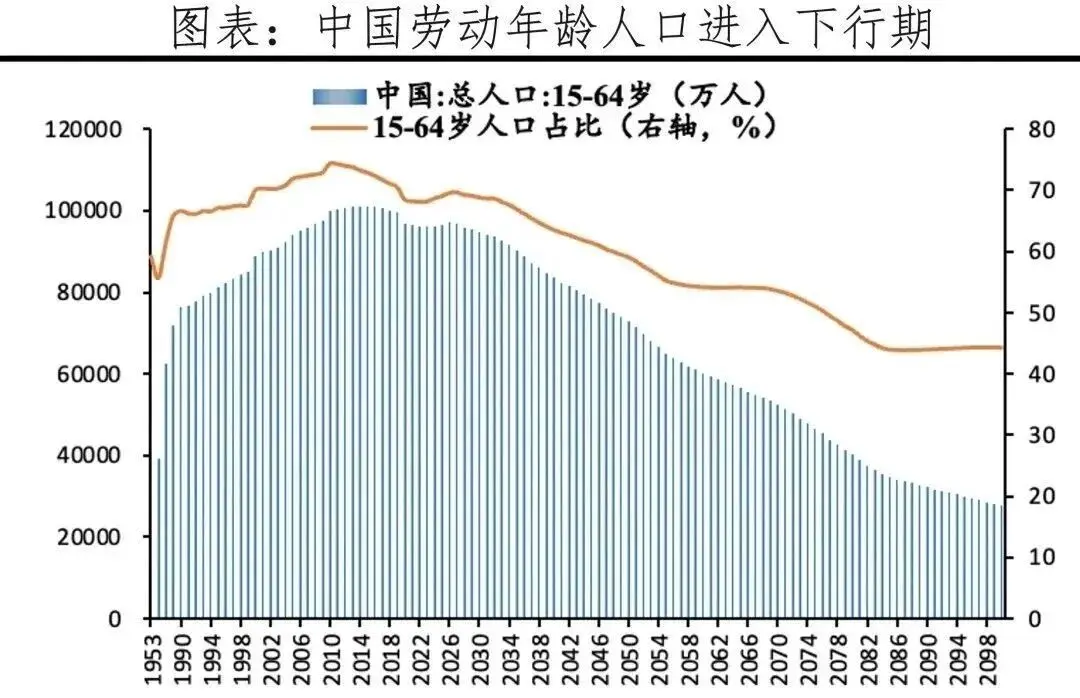
It means a continuous decrease in the working-age population in the future.
In fact, this has already happened. China's working-age population peaked in 2010 and has been declining since, meaning the demographic dividend that China has relied on is disappearing.
Why has China's economy grown so rapidly over the past 40 years?
Besides reform and opening up, there is another important reason.
That is the continuous influx of young labor into the market. Companies never lacked workers, wage increases were relatively controllable, and manufacturing could expand rapidly.
This is the demographic dividend.
But now the situation is reversing. In the future, China may face: increasing difficulty in recruiting workers, rising labor costs, declining manufacturing competitiveness, and a reduced supply of innovative talent.
Many people always say: Artificial intelligence will replace labor. This will indeed alleviate some problems, but it cannot completely replace it; because innovation, research and development, consumption, and entrepreneurship essentially still require people.
Without young people, economic vitality will decline.
04
The real danger is "aging combined with low fertility rates".
Aging itself is not scary.
Many developed countries are aging.
What's scary is: getting old before getting rich.
Currently, China's population aged 60 and above has exceeded 300 million, equivalent to the population of the United States. In the next 20 years, the elderly population will continue to increase.
At the same time, the young population is decreasing, creating an increasingly sharp contradiction: more and more people to support in retirement, and fewer and fewer people paying into the pension fund.
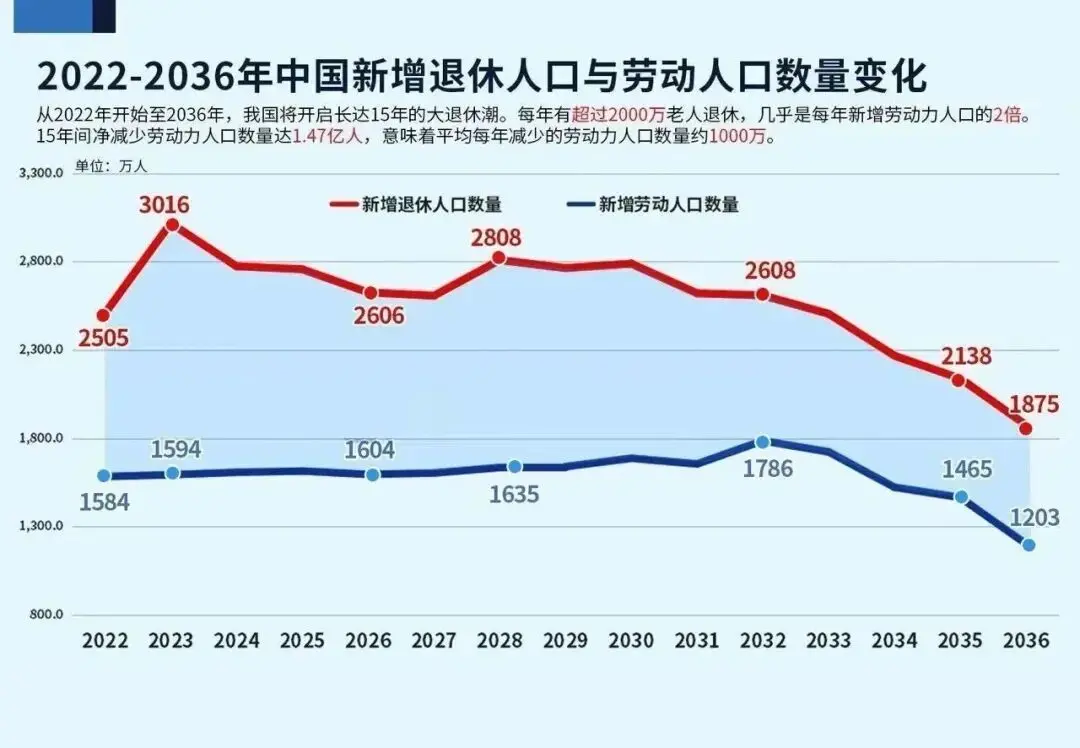
What was the past pension system like?
It was like a continuously expanding pyramid, with more and more young people at the bottom supporting the elderly at the top.
What about now?
The pyramid is turning into an inverted pyramid, with more and more elderly at the top and fewer and fewer young people at the bottom, making the pressure to support the elderly greater and greater.
The ultimate pressure will gradually be transmitted to: the social security system, the medical insurance system, and local finances.
The shadow of demographic changes can already be seen behind the financial difficulties of many local governments. Because population not only determines consumption but also the source of tax revenue.
05
Why has real estate been hit so hard?
Many people understand the adjustment in the property market as an economic cycle, but demographic changes are also an important factor.
The core logic of the rapid development of real estate over the past two decades is:
New population, new families, new housing demand. Millions of couples getting married every year, continuously creating new housing purchase demand.
But now the situation has changed: the number of marriages is declining, the birth population is declining, family sizes are shrinking, and the number of single-person households is increasing, meaning new housing demand is continuously decreasing.
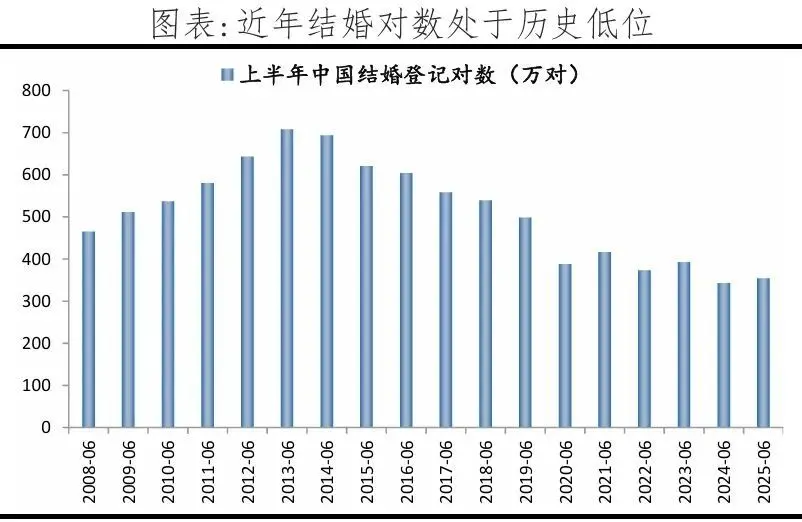
The future real estate market will become increasingly polarized:
Core areas in core cities will still have demand, while ordinary cities and population outflow areas will face shrinking demand.
Many people believe that the property market can return to the prosperity of 2016, but from a demographic perspective, this possibility is becoming increasingly low.
06
Behind the decline in fertility rates, there is actually a consumption problem.
Many people don't realize that population issues will ultimately return to economic issues.
What are children?
Essentially, they are a form of long-term consumption. When a family decides to have children, it means continuous investment for the next twenty years.
If everyone is unwilling to have children, what does that indicate?
It indicates that many families are not optimistic about their future income expectations.
Therefore, low fertility rates are not just demographic indicators, but also economic signals.
They reflect the result of the combined effects of: family balance sheets, income growth expectations, social security levels, education and housing costs, and other factors.
In other words: young people haven't suddenly stopped liking children, but are forced to recalculate risks in the face of reality.
07
Will China become the next Japan?
This is a question many people are concerned about.
The answer is: it will be similar, but not exactly the same.
Japan's problem lies in: population decline combined with the bursting of its asset bubble, ultimately entering a period of long-term low growth.
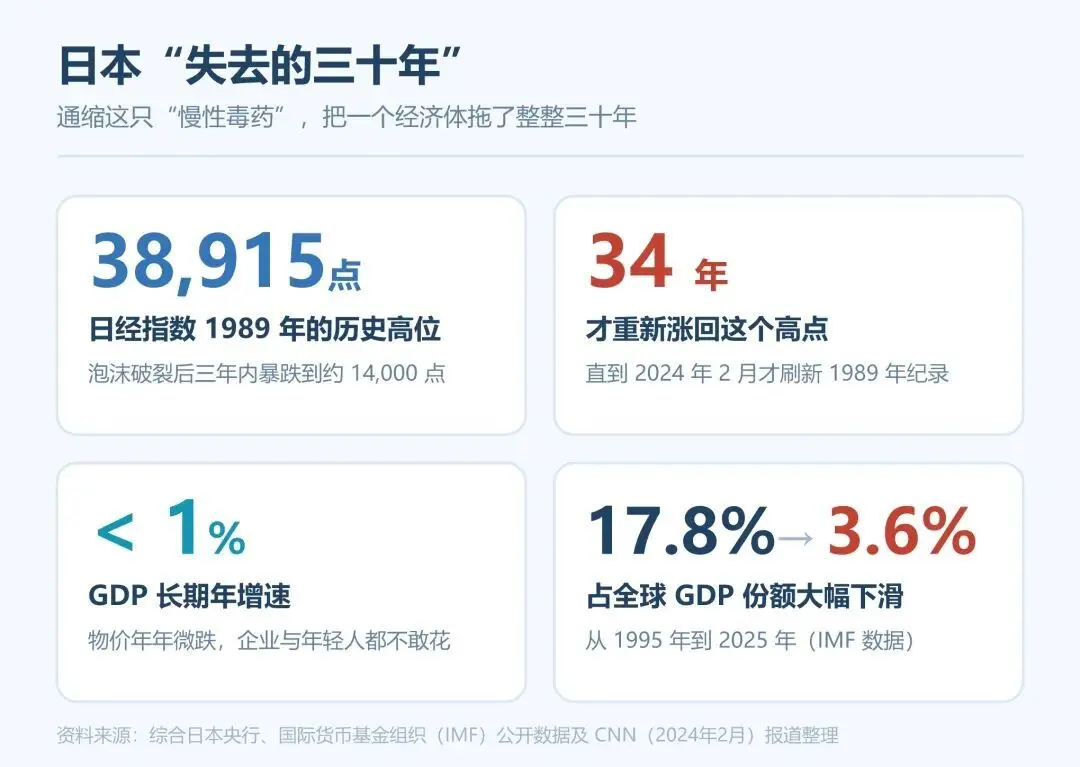
China also faces population decline combined with the bursting of an asset bubble, but China possesses: a complete industrial system, a super-large market, the world's strongest manufacturing capabilities, and continuous technological upgrades.
Therefore, China may not simply replicate Japan, but one aspect is very similar: future economic growth can no longer rely on population expansion, but must rely on efficiency improvements.
In the past: more and more people drove growth.
In the future: each person creating more value will drive growth.
This will become the biggest transformation of China's economy in the coming decades.
08
What's more noteworthy are the issues behind fertility rates.
Many discussions always debate: Should we encourage childbirth? Should we give money? Should we increase childbearing subsidies?
These measures are certainly helpful, but they are only superficial.
What truly determines fertility rates has never been slogans, but whether a young family can see a future.
If an ordinary family can:
Afford a house.
Afford to raise children.
Afford medical care.
Not worry about education.
Not worry about unemployment.
Then fertility rates will naturally rise.
Conversely, even with generous subsidies, the effect will be limited, because childbirth is essentially a long-term investment in confidence.
09
A decline in fertility rates doesn't reduce children, but the future.
Many people see: tens of thousands fewer births this year.
But the cruelest part of population issues is: it doesn't erupt immediately, but is like a slowly sinking curve.
Children born fewer today will become a missing labor force in 20 years, a deficient consumer group in 30 years, and a pressure on the pension system in 40 years.
Therefore, low fertility has never been a family issue.
It is an issue of a nation's future.
Real estate can be adjusted by policy, and economic cycles can be repaired by stimulus. But once the population declines, it often takes decades to reverse.
For China, the real challenge may not be how to get young people to have more children, but how to rebuild a social environment that allows young people to dare to plan for the future.
Because the most precious resource of a society has never been land, capital, or technology. It is people who are willing to believe in the future.