


By | Special Writer for Southern Weekend Lin Chengxi
Editor in charge | Qian Wei
Qiao Man hadn't had a bowel movement for a week. At 6:10 in the morning, she sat on the toilet, watching time pass by, but she didn't feel the urge to go.
But there was no time, the commute took about 10 minutes, and she had to arrive at school by 6:30, she calculated the time, quickly got up, hastily packed her things, and went out without eating breakfast.
Similar situations happen every day, and constipation has become Qiao Man's daily routine. Qiao Man is a high school student in a county town in Shandong Province, and she said: "This year, I haven't had a smooth bowel movement for a day."
Many doctors explained that middle school students are not the main group of people with constipation, but if this age group has constipation problems, it is the result of the long-term effects of multiple factors, which is related to diet structure, exercise, and past medical history, as well as toilet environment and study pressure.
"Can't go"
Not long after the start of the second year of high school, Qiao Man had constipation problems, "bowel movement once every three or four days". At first, she didn't take it to heart, thinking it was just a simple case of getting angry. After a month, Qiao Man realized: "I'm constipated".
Along with constipation, there was also frequent abdominal pain. Qiao Man often felt that her stomach was like a balloon about to burst, swollen and uncomfortable, gas flowing in her body, accompanied by bouts of abdominal pain. Abdominal pain came at any time, sometimes during morning reading, sometimes during class, sometimes during evening self-study, she couldn't sit still, could only hunch over, gently rubbing her belly under the table with one hand, enduring the pain with all her strength. When the pain was really unbearable, Qiao Man could only ask the homeroom teacher for leave to go home and rest.
She saw both Western and Chinese medicine. Doctors analyzed that constipation might be related to high study pressure, lack of sleep, drinking less water, and excessive liver fire, and advised her to increase exercise time, but she helplessly told the other party: "I don't have time."
Get up at 5:50 in the morning, enter the class for morning reading before 6:30, leave school at 12:00 noon, arrive at school for class at 13:50, leave school at 18:15, during which there is 30 minutes to eat dinner in the cafeteria, and evening self-study lasts from 18:45 to 21:50.
This is Qiao Man's daily life trajectory, and it is also the common portrayal of more than 14,000 students in her middle school. In 2024, this super middle school had many students admitted to Tsinghua University and Peking University. The school cuts students' lives into precise scales, precisely calculating every minute and second of students' eating, sleeping, and commuting. Students are like highly efficient machine parts, doing prescribed things within the prescribed time, and not allowing any deviation.
The "8+2" mode is implemented during the break between classes, that is, the ten-minute break between classes is divided into eight minutes of free activity and two minutes that must return to the classroom in advance and be quiet. If the teacher delays the class, the students only have four or five minutes left to go to the toilet.
There are about 400 students on the floor where Qiao Man is located, about 200 of whom are girls, and there are female toilets at the ends of both sides of the corridor, with a total of 16 squatting positions. According to the notice of the Ministry of Education and other three ministries on printing and distributing the "Basic Standards for Trial Implementation of National School Sports and Health Conditions", it is emphasized that: "Girls should have one squatting position per 15 people; boys should have one squatting position per 30 people", the number of toilet squatting positions set up by the school meets the standard.
But that's not the case. There are problems such as damaged toilet doors and flushing failures in the girls' toilets, and the number of toilets that can be used normally on the floor is about 10, that is, one female toilet squatting position corresponds to more than 20 people.
Every time the class is over, the students rush to the toilet, competing for the limited positions. The girls' toilet will always line up, and when the preparatory bell rings, the crowd scatters and runs back to their respective classes. Especially around 10:00 in the morning, this is the peak period for the girls' toilet. Because they have to quickly gather on the playground, Qiao Man can only hold back her bowel movement and go to the toilet after the running exercise or the next class break.
However, during the relatively ample time of morning reading and evening self-study, the school prohibits students from going to the toilet. This leads her to rarely have bowel movements at school and learns to hold back. The same is true for urination. To reduce the number of times she goes to the toilet, she rarely drinks water, and sometimes even forgets to drink water, and the water cup is still full at the end of the day.
In addition to evening self-study, Qiao Man will also deliberately suppress the urge to defecate when she has classes on weekends. The school only has a half-month holiday, and on weekends without rest, the time is arranged more tightly, with two consecutive classes before taking a break, and ten minutes each time. At this time, the toilet is crowded, and the time for going to the toilet during the break is not enough, so holding back becomes a habit. Over time, it leads to constipation.
Under this work and rest system, Qiao Man has learned to compress the time for eating and resting, such as not having time to eat breakfast in the morning because she squats in the toilet for too long; she will wolf down her food at noon and control her lunch within ten minutes; she will squat in the bathroom for nearly an hour at home in the evening, and she said: "Usually I can't go, but squatting will make me feel a little better."
"Constipation really affects my study state." Qiao Man said. She has been following several bloggers who explain the knowledge points of various subjects in high school, covering Chinese composition materials, English writing, and physics test analysis. After taking leave to go home due to abdominal pain, in order not to fall behind in the course progress, she watched these videos to self-study, and she has listened to almost every class. Qiao Man said that at the time when she should have rested, she wanted to stop and rest, but she still didn't dare to stop.
Not much, but serious
Qiao Man has discussed her troubles with her classmates, but after asking around, she found that her friends only had bowel movements every two or three days at most, and no one had a situation as serious as hers.
Zhao Juan, a chief physician in the Department of Pediatrics at a high-end private hospital in Beijing, saw a 13-year-old girl a while ago. She had no bowel movement problems during her primary school years. Since entering middle school, she only had a bowel movement once a week, and she hadn't had a bowel movement for two weeks on the day of the visit. During the conversation, Zhao Juan carefully inquired about the girl's daily routine and found that she didn't have time to have a bowel movement at school. The other party also said that the bowel movement frequency of the students around her was similar to her own.
Zhao Juan told Southern Weekend that among the patients she has seen, it is rare for middle school students to specifically consult for constipation problems, and this is the first time she has seen a middle school student who hasn't had a bowel movement for two weeks. The patient's problem is an individual case, which is largely related to the school's overly strict management style.
But from a national perspective, Qiao Man is not alone. Doctors such as Zhuang Yuxiao from the Affiliated Hospital of Shanghai University of Traditional Chinese Medicine once conducted a screening and investigation of functional constipation in middle school students under the age of 18 in Chongming District, Shanghai in 2019. In the article "Screening Status of Functional Constipation in Middle School Students in Chongming District, Shanghai" published later, they wrote that among the 4,969 students who participated in the survey, 693 students had functional constipation, with a prevalence rate of 13.95%. This means that among the students surveyed, 13 out of every 100 people have functional constipation.
Currently, there is still little research on constipation in middle school students. A search on CNKI found that from 2000 to the present, there are more than 500 articles related to constipation in children and adolescents, but there are only more than 10 articles that directly mention the relationship between academic pressure and constipation. Zhao Juan explained that in the adolescent group, children aged 3-5 are the main group of people with constipation. Middle school students have higher intestinal function, mental development, and bowel movement coordination, so they are not the focus of research and are not the main group of people with constipation.
Since switching from surgery to a constipation specialist in 2022, Liu Weidong, a doctor at Hebei Children's Hospital, has successively seen many middle school students with constipation. According to his rough estimate, the constipation clinic he is in is still mainly for preschool children, and middle school students who come to see a doctor only account for about 1/5 of the total number of patients. But those with severe constipation are almost all middle school students, who often have bowel movements once a week or even longer.
"I have encountered 10 students who haven't had a bowel movement for more than a month," Liu Weidong said. He also pointed out that among the constipated students he has seen, most of them are boarding students, "because their time is strictly controlled, and they can't eat enough vegetables in the cafeteria."
Li Shanshan once studied in a county town middle school in Hebei Province. She remembers that every morning at 5:40, they started running exercises, people were densely packed together, mechanically repeating the movements, and shouting slogans. The subsequent work and rest were roughly the same as those of the school where Qiao Man was located.
The difference is that, as boarding students, their rest time is also strictly controlled, and they have even less time to arrange on their own. The school's lunch and dinner time is only half an hour. Most of them need to run to the cafeteria to eat. If they want to go to the toilet, it means they don't have time to eat. During the lunch break and the 45 minutes after the lights are turned off at 22:10, students are prohibited from getting out of bed and walking around at will. Whenever Li Shanshan wants to go to the toilet, but because of the regulations, she must lie in bed, she will repeatedly suppress the urge to defecate, and unconsciously fall asleep, missing the time for bowel movements.
Li Shanshan's stomach is not good. Faced with heavy oil and spicy cafeteria dishes such as fish-flavored shredded pork and spicy chicken, she usually eats very little, only half a steamed bun and half a bowl of vegetables. Insufficient dietary fiber intake, coupled with the habit of holding back, having a bowel movement once a week has become a norm she has to accept. One night before going to bed, she habitually rubbed her belly and accidentally touched a hard lump. After a while, she realized that this might be the feces that had accumulated in her body for several days.
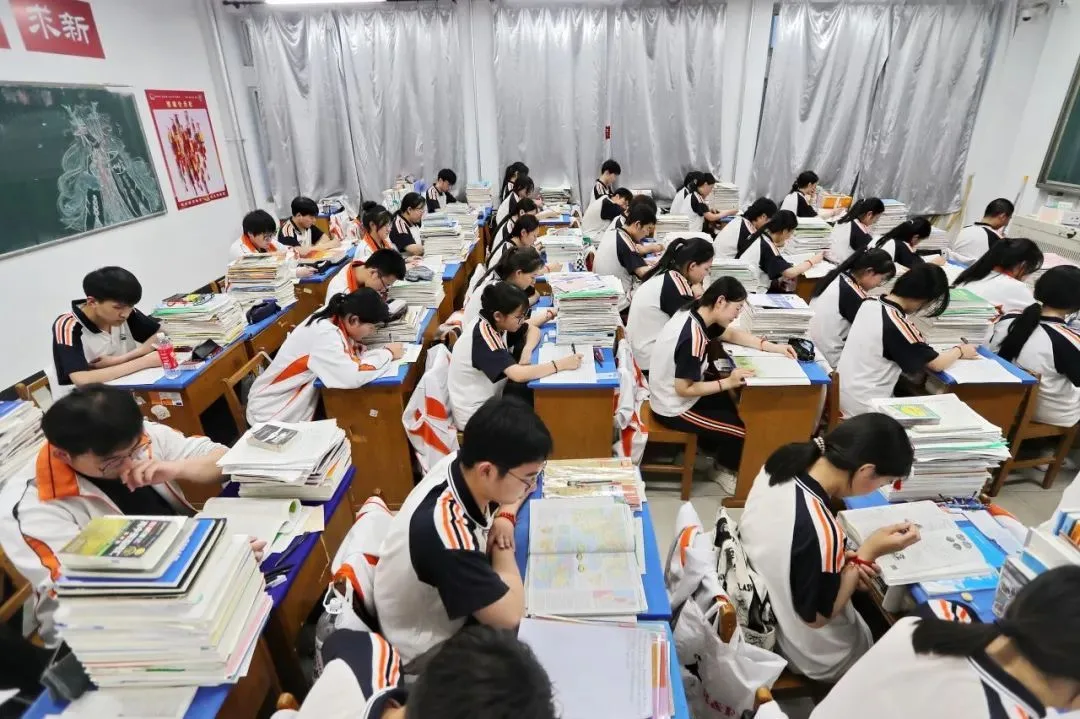
On June 3, 2024, in Qinhuangdao, Hebei, high school students in their third year of high school at the New Century Senior High School are reviewing in the classroom.
More psychological problems
Because she couldn't find any patients around her, Qiao Man couldn't help but suspect, is there something special about her constitution?
Feng Wei, a doctor at the Integrated Traditional Chinese and Western Medicine Hospital of Jinan, has been working in the Department of Anorectal Surgery for many years. Every weekend and holiday, she will encounter middle school students who come to consult about constipation problems. She explained that the causes of constipation are varied. On the one hand, it is because of the dietary structure. The north mainly uses flour and grains as food, and teenagers like to eat high-calorie, high-sugar, and high-salt foods, and they eat less fresh vegetables and fruits, which leads to less dietary fiber intake. On the other hand, students have short activity time at school, lack of exercise, and long-term sedentary behavior, which slows down intestinal peristalsis.
The doctor, who has been working for 17 years, also said that in her impression, there have always been students with constipation coming to consult, but there has been an increasing trend in recent years. However, it is not yet possible to conclude whether the reason for this change is related to the changes in her clinic time and frequency or a new phenomenon.
Liu Weidong added that some of the students he has seen had a history of constipation in their childhood, which improved with age, but the problem reappeared after entering middle school due to changing environments and boarding. High study pressure and long-term emotional tension are common triggering factors.
Qiao Man also expressed this distress. When she first entered high school, her grades were in the top ten in the class. Due to not adapting to the strict high school life, her grades later dropped to the middle and lower levels of the class.
Every day when passing through the teaching building hall, Qiao Man's eyes will always involuntarily stay on the notice sheet, which lists the students' names, the points deducted, and the reasons for the deduction. Entering and leaving the classroom at will, talking, sleeping, eating snacks, going to the toilet... will be regarded as violating school regulations, and some explanations even make her feel absurd, such as getting up a few minutes early and packing luggage in the dormitory will be classified as "errors".
When it comes to self-study time, the head of the grade and the on-duty teachers are always shuttling through the corridors, inspecting every class and every student. When footsteps sound outside the classroom, Qiao Man will deliberately control herself, straighten her back, and pretend to know nothing and continue to write homework, "because if I raise my head, I will be deducted points, not to mention going to the toilet." Once going to the toilet is discovered by the patrolling teacher, the student's personal moral education points and class quantification points will be deducted and appear on the notice sheet of the following week, "No one wants to be deducted points," Qiao Man said.
There are also two cameras installed in the classroom, monitoring the students' every move from 360° without dead ends. Qiao Man's homeroom teacher is relatively lenient in management, and is therefore often criticized by the school leaders for "lack of management". After being criticized many times, the homeroom teacher will earnestly tell them, "The leaders are watching the monitor again, everyone pay attention" "Hold it in if you can, and go to the toilet after class".
Recently, the school has issued new regulations that students are not allowed to go to the playground during the 30 minutes of dinner time, and the badminton rackets that used to be placed in the back row of the classroom have been collected into the teacher's office.
Under such detailed and strict regulations, students have almost no room to breathe. Qiao Man said: "The school hopes that all students will be obedient and tries to control the students into a person without any personality through all means."
After a year of adaptation, Qiao Man gradually adapted to this life. She set a goal to hope that her grades would return to the top ten in the class. She said, "I really want to study well", but the pressure is also greater. After school in the evening, Qiao Man will continue to study. 23:00 is the time when she is most sleepy. In order to resist sleepiness, she will wash her face with cold water in the bathroom, or drink a bottle of coffee to keep herself awake. She ends her studies until midnight, "only sleeping five or six hours a day". Moreover, every time it is close to the monthly exam, the degree of constipation will worsen, and even the abdominal pain will make her unable to speak.
The article "Screening Status of Functional Constipation in Middle School Students in Chongming District, Shanghai" pointed out that the probability of functional constipation in students in the high school group who are close to graduation is higher than that in the non-close-to-graduation group, and the prevalence rate in the demonstration high school group is higher than that in the ordinary high school group, that is to say, the occurrence of functional constipation in middle school students is positively correlated with academic burden.
In Liu Weidong's memory, most of the middle school students he has seen are introverted and not good at speaking. He emphasized that middle school students not only have the problem of constipation, but also have more psychological problems. He met a middle school student from Xingtai, whose grades were very good and always ranked first in the grade. But once his total score was within twenty points of the second place, he would be so anxious that he would be constipated. Even if his parents comforted him not to study so hard, he still didn't dare to relax for a moment.
Liu Weidong explained that constipation and emotions will interact with each other. Many sites in the intestinal tract and nervous system are connected, and the signals of the intestinal tract can be quickly transmitted to the nervous system within a few seconds. Serotonin is an important mood regulator, and 90% of the serotonin in the human body depends on the intestinal flora to produce. When the human body feels external pressure, the intestinal flora will be affected, the secretion of beneficial bacteria will decrease, and the harmful bacteria will increase, which will reduce the secretion of serotonin and affect emotions. If students are constipated for a long time, they will also produce anxiety, which will then affect bowel movements.
The neglected freedom of going to the toilet
Lei Wanghong, an associate professor at the School of Public Administration of Central South University, has been paying attention to urban and rural education for many years. During the research process, many students have told her that they do not have the freedom to go to the toilet at school. This happens not only in county middle schools, but also in famous schools in cities.
She explained that the county middle school model is the same as those super middle schools, both of which are frantically pursuing grades. The competition between schools is fierce, especially in county middle schools, which lack external resources, limited teachers, and limited high-quality students. They can only rely on the compression of time and increase the investment of the sea of questions to form their own comparative advantages. In this process, the students' right to freedom of going to the toilet is naturally ignored.
Doctor Feng Wei is the mother of two children. She observed that many students are unwilling to go to the toilet at school since their primary school years. Speaking of the reason, Feng Wei said that on the one hand, it is limited by the break time, and on the other hand, the toilet environment is poor, which makes it difficult for children to adapt. Another parent from Guangdong also revealed that her child is unwilling to go to the toilet at school and sometimes has constipation. She said helplessly: "There is no way, we can only let the child slowly adapt to the school's work and rest arrangements."
Zhao Juan is engaged in general practice and health care for pediatrics. In her daily practice, she will habitually ask students about their bowel movements. She found that many students will subconsciously avoid the problem, and only when the parents remind them "Aren't you constipated? You can tell the doctor", will they answer positively. She further explained that compared with young children, bowel habits are no longer the focus of attention for adolescents, and because it is too private, children in puberty are unwilling to discuss it publicly.
The 13-year-old girl told her that because the students around her also had bowel movements once a week, she always thought it was a normal thing, and it was not until she hadn't had a bowel movement for two weeks that she realized there was a problem. Zhao Juan said: "This is a very terrible thing. Not only does the school not pay attention to the students' bowel movement problems, but the students themselves also ignore it."
The harm of constipation is often underestimated, and when middle school students are ashamed to mention it, they will seek help through non-public channels. Liu Weidong noticed in his work that there is a phenomenon of students privately circulating drugs to treat constipation. Some students buy the internet celebrity product Japanese Xiaofen Pills, "This is very dangerous". Liu Weidong further explained that the pharmacological effect of Japanese Xiaofen Pills is to stimulate the colon to produce high-frequency contractions. Although it can quickly relieve the symptoms of constipation, long-term use will not only cause drug dependence, but also may cause colon lesions, "Many students only pay attention to the immediate effect and lack awareness of the potential risks".
"We can't focus on grades so closely," Feng Wei said. She believes that bowel movements, as a basic physiological need of students, should be respected, "We should leave time for children to defecate, let the children have a good bowel movement, return the ten minutes of break time to the children, return the physical education class to the children, return the weekend rest time to the children, and return the freedom of going to the toilet to the children. Because nothing is more important than the physical and mental health of the children."
In the summer after the college entrance examination, Li Shanshan unexpectedly found that her bowel movements were normal. The constipation problem that had troubled her for three years naturally ended with the end of her high school life. Now, time is no longer cut by minutes, she no longer has to worry about being deducted points all the time, but frequently participates in club activities and volunteer activities, enjoying her university life. She said: "I finally feel free."
(At the request of the interviewee, Qiao Man and Li Shanshan are pseudonyms)