



A structural force needs to be added

Photo by Shovitchettri from Pexel
By / Youyou Lumen Huang Zhijie
Yesterday I wrote "Formaldehyde Cabbage, A Poison for 14 Years".
Every time I write such articles, I feel heartbroken. I haven't recovered all day today, I feel very low and hurt.
Regarding formaldehyde, I once vowed to fight against "formaldehyde rooms" and organized a public writing event called "Nine Hundred Stories of Formaldehyde Rooms" here at Youyou Lumen. We achieved some results at the time and improved the situation. Looking back now, it has been eight years, and it has all faded into dust and gone with the long river of history.
To prevent formaldehyde, many people have repeatedly chosen furniture coatings, extended renovation and ventilation times, and repeatedly performed air formaldehyde removal, but unexpectedly, there is still formaldehyde cabbage. It is truly unpreventable.
For many years, formaldehyde cabbage has been circulating in the market. The problem is that "formaldehyde cabbage" is not the only situation of its kind.
Formaldehyde cabbage came to our attention because it was accidentally photographed and exposed by a self-media blogger (@Fisherman and Hunter Qi Ge) from outside the industry, who was originally a "fishing enthusiast", at the roadside. Just like a reporter from Fujian Radio and Television Station accidentally exposed "poisonous bayberries" during a random investigation at a roadside collection station a while ago.
The inevitabilities beyond the accidental, the certainties beyond the random, are what concern us even more.
So, are we really helpless when it comes to food safety for vegetables, fruits, meat, etc.? Is this an unsolvable problem for the current system operating in society? Are we destined to coexist with toxic food for a long time?
Not so.
In my observation: The existing social regulatory system and operating mechanisms are absolutely capable of ensuring food safety, including all foods such as vegetables, meat, and fruits. It's just that a variable has affected the outcome.
Just the other day, on August 17th, the General Administration of Customs published an article titled "Guarding Hong Kong's Livelihood 'Vegetable Basket' - Huangpu Customs Ensures Safety and Smooth Supply of Agricultural and Food Products to Hong Kong Throughout the Entire Chain".
The article introduced a series of measures to ensure the quality and safety of vegetables supplied to Hong Kong:

"Ensuring the quality and safety of vegetables supplied to Hong Kong is rooted in the source. Dongguan Customs, under Huangpu Customs, guides the establishment of a full-chain quality control system from planting bases to processing and distribution in the vegetable production and processing enterprises under its jurisdiction. In the planting stage, customs urges enterprises to strictly screen and register planting bases, and conduct regular monitoring of soil environment and irrigation water quality to ensure that the source of planting meets safety standards; in the harvesting stage, strict management of safety intervals is implemented, and records of pesticide use are verified before harvesting, ensuring the first checkpoint from the field; in the processing stage, enterprises are guided to establish self-inspection laboratories to conduct batch-by-batch self-inspection of indicators such as pesticide residues and heavy metals, and processing and shipping are allowed only after passing the inspection."
"On this basis, Dongguan Customs has established a dual control mechanism of enterprise self-inspection and customs supervision and sampling, dynamically adjusting the inspection ratio based on risk monitoring results, achieving full-chain quality control of vegetables supplied to Hong Kong from field planting to port clearance. At the same time, it regularly conducts inspections of registered bases to check records of agricultural input use and pest and disease control, and urges rectification of problems in a timely manner. Since 2026, the quality and safety of vegetables supplied to Hong Kong in the jurisdiction of this customs have remained stable, and no quality and safety accidents have occurred."
Not only vegetables, but also live pigs, pre-packaged dishes, and marinated grilled skewers, customs have a set of measures to ensure the "quality and safety of agricultural and food products supplied to Hong Kong".
Therefore, our existing domestic system is fully capable of ensuring food safety.
The problem is that the customs system is only responsible for import and export food, not for the domestic sales sector.
In addition to customs, the current food safety work includes a regular regulatory system: the Food Safety Committee system (coordination and consultation), the market supervision system (core administrative law enforcement department, responsible for full-process supervision), the agricultural and rural affairs department (responsible for the stage from planting and breeding to entering wholesale and retail), the health and health department (responsible for food safety assessment and related standard setting), the public security department (investigating food safety criminal cases), the ecological environment department (responsible for tracing and rectifying soil heavy metals), and the transportation department (responsible for supervision during transportation).
Since a customs system has successfully solved the food safety problem in the import and export field, it shows that food safety is not an insurmountable problem of the century.
With existing experience, there is no need to grope for stones to cross the river.
For example, a while ago, while poisonous bayberries were rampant, Chinese export bayberries were selling well in various countries without safety issues. Specifically, the customs system has the "Measures for the Supervision and Administration of Inspection and Quarantine of Export Fruits", which implements a "registration system" for orchards and packaging plants of exported fruits, sets various conditions, and after registration, there is daily supervision, including monitoring of harmful organisms, monitoring and supervision of toxic and harmful substances, and finally, inspection and quarantine at the time of export. With such a combination of measures, "chemical bayberries" are almost impossible to appear in export fruits.
Vegetables and meat are similar.
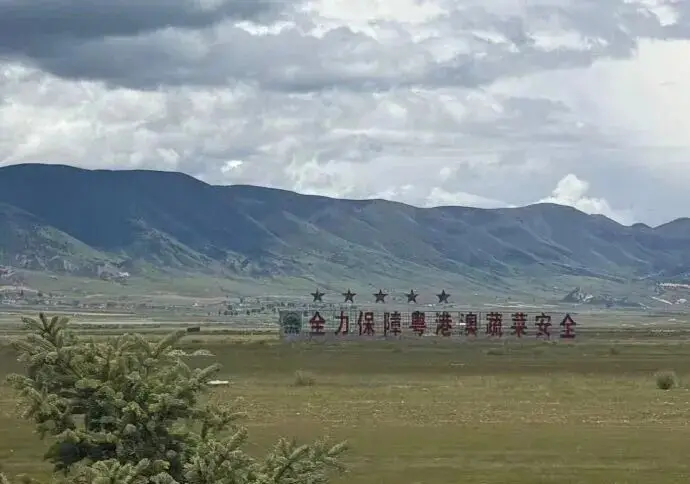
Now, the question is: Can the other at least seven systems (Food Safety Committee, Market Supervision, Agriculture and Rural Affairs, Health Supervision, Public Security, Ecological Environment, Transportation), which have much larger administrative, human, and financial resources than customs, "copy the homework"?
Yes, but there is one more factor I haven't mentioned:
The reason why this not-so-profound regulatory system of customs is effective is more importantly due to: external pressure.
The responsible entities for export food are clearly defined. On the other side of customs, there are import management agencies in other countries. Once illegal food is detected by the importing country, the entire batch of goods will be refused entry or detained and destroyed, the enterprise will be blacklisted, followed by high disposal costs, fines, breach of contract compensation, credit rating downgrade, and subsequent customs clearance difficulties...
In a word, because "laws will be enforced", the cost of violating laws for export food has greatly increased, highlighting the coercive force.
In comparison, I believe that the strength and quality of the seven party and government systems, such as market supervision, are no less than that of the customs system. In contrast, the reason for the frequent occurrence of domestic food safety problems is the lack of external checks and balances and coercive forces of "law enforcement".
Everyone is working hard, but as long as one link "selectively enforces the law", all efforts will be in vain.
This is a structural problem.
Currently, the media and public opinion have taken on the role of checks and balances. Whether it is poisonous bayberries, formaldehyde cabbage, or other toxic foods, the media has not stopped exposing them over the years, and some people have even paid a high price for it.
Unfortunately, the media and public opinion are ultimately not strong enough and need to grow.
Therefore, to solve the food safety problem, the strength of the current regulatory system is sufficient. What needs to be added is a structural check and balance force. This force can either be newly established, or a certain existing regulatory agency can be transformed, or the media and public opinion, which temporarily play the role of checks and balances, can be strengthened.
In short, reform must be fundamental and structural. Otherwise, toxic food incidents will occur one after another, with no end in sight. What do you all think?
Youyou Lumen 20260823