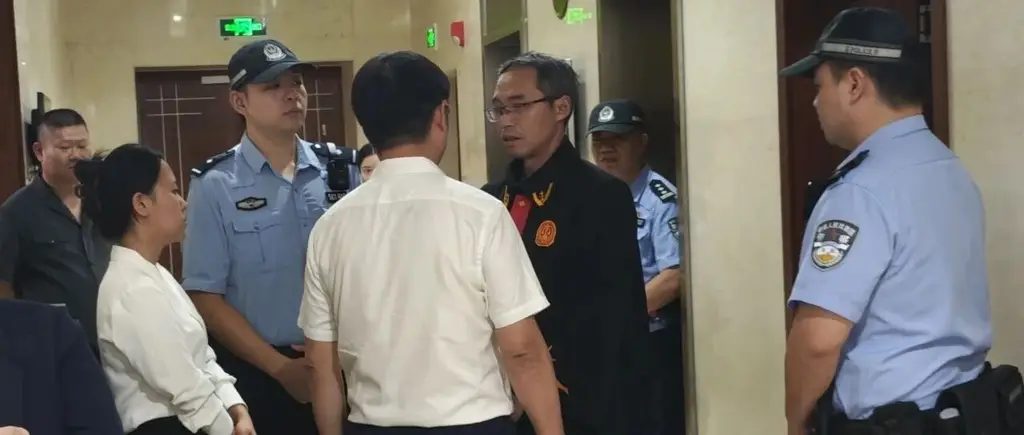
Today we continue to talk about the topic of the “20th National Congress”. In fact, the topic we discussed yesterday was a marginal topic in the entire “20th National Congress” agenda. I know that many Chinese YouTubers are particularly keen on discussing topics similar to yesterday’s, such as the events of Xi Jinping humiliating Hu Jintao, Hu Jintao being escorted out, and the conspiracies behind them, because these topics are particularly in line with the characteristics of conversation topics. In addition, conspiracy theories themselves are actually impossible to falsify, so they provide such a space for discussion for many people.
But in my opinion, these topics are not the mainstream topics in the “20th National Congress”, because they are not closely related to the core topics of the entire “20th National Congress”. So what are the core topics of the “20th National Congress”? In my opinion, the core topics are the impact of the new power structure formed by the “20th National Congress” on the future of China and the future of the world. This is its core topic. So today we will talk about this core topic and my views.
This question can actually be asked in another way, which is how long Xi Jinping will be in power. As we all know, at the “20th National Congress”, Xi Jinping was re-elected as the General Secretary of the Communist Party of China, starting his unprecedented third term. This is something that has never happened since the reform and opening up, because after Deng Xiaoping’s reform and opening up, he established a rule that the life-long system of leading cadres should be abolished, and the terms of office of all leading cadres should not exceed two terms, whether it is the General Secretary of the Communist Party or the President of the People’s Republic of China. However, Xi broke all this. So the next suspense is: will he continue to be in power? How long will he be in power?
In the history of the founding of the Communist Party of China, there are actually two people who have a life-long system. The first is Lao Mao, who basically became a life-long leader after the “Seventh National Congress” of the Party, and it was even more so after the founding of the People’s Republic of China. Although he experienced storms such as the “Great Leap Forward”, it did not shake his position, because there was also a lack of a mechanism within the party to remove him. The second life-long system is Deng Xiaoping. Deng Xiaoping was very smart. On the one hand, he saw the huge disasters that Lao Mao’s life-long system brought to the Communist Party of China and Chinese society, and he could no longer implement the life-long system, but he himself also had a strong control over power. Deng had never been the General Secretary of the Central Committee of the Communist Party of China, because he knew that once he became the General Secretary, he would be restricted by the term system. So he controlled the military power, and basically controlled the political power. When Zhao Ziyang did not listen to him, he abolished Zhao Ziyang.
In fact, Deng’s influence came not only from his position, but also from his personal authority. And this ability has basically disappeared among the Communist Party members after Deng. So we see that Jiang Zemin and Hu Jintao, although they have been General Secretaries, their political influence on the successors’ political operations has been very weak after they retired. Therefore, I personally believe that the Communist Party members after Deng no longer have political influence beyond their positions.
Because of this, we can see some clues from this “20th National Congress”. Xi did not abolish the system of the General Secretary of the Communist Party, but still maintained the system of the seven people in the Politburo, and the form is still a collective leadership. But the next question is: how many more terms will he continue to serve? Will he continue to be re-elected and serve forever?
As we all know, the current leaders of the Communist Party of China are all quite long-lived, such as Song Ping, who is 105 years old, Jiang Zemin, who is over 90 years old, and Hu Jintao, who is 79 years old. Judging from Xi Jinping’s physical condition, he should have no problem living for another 30 years. If he continues to be re-elected, it is also possible to serve another 5 or 6 terms. Therefore, everyone is worried and asking: how many terms will Xi Jinping serve?
Obviously, Xi Jinping will not answer this question clearly now, so as an analyst, we need to speculate on how many terms he is most likely to serve through other means. I mentioned in the program before the “20th National Congress” that we should observe whether Xi Jinping will, like Deng Xiaoping, draw a mid-term long-term goal. Sure enough, Xi Jinping proposed the goal of the Communist Party of China’s centenary, that is, to comprehensively build a moderately prosperous society, and outlined a blueprint for the next 30 years, that is, to achieve the great rejuvenation of the Chinese nation through Chinese-style modernization.
The “great rejuvenation of the Chinese nation” includes two hard indicators: first, GDP returns to the top in the world; second, the reunification of the motherland is achieved. Achieving these goals through “Chinese-style modernization” is Xi Jinping’s vision for the next 30 years. He divides the next 30 years into two periods, with 2035 as the boundary, and basically realizes socialist modernization in the first 15 years.
Therefore, I speculate that 2037 is a very important node, that is, Xi Jinping may only consider handing over power around 2037. By then, the goal of GDP returning to the top in the world may be achieved, and if the reunification of Taiwan is still an uncertain factor, he may continue to be in power. In short, before 2037, he is unlikely to consider the issue of power transfer and succession within the party.
If we follow this inference, Xi Jinping’s re-election may last until 2037, that is, another three terms. This is my prediction of Xi Jinping’s term. Of course, in the next 10 years, his power may be further consolidated, and others in the party may completely submit to him, and at this time, even if he wants to retire, someone may not let him retire. This is the power of the life-long system.
Around this issue, we can foresee some changes and impacts. First of all, power will become more and more concentrated. In this “20th National Congress”, the Tuan faction in the Politburo was completely wiped out, Li Keqiang and Wang Yang, who were 67 years old, stepped down, while Wang Yi, who was 69 years old, entered the Politburo, and Zhang Youxia, who was 72 years old, also entered the Politburo. This shows that the past rule of “seven up and eight down” has been broken, and all the rules have become one rule, that is, to listen to one person, to listen to Xi Jinping.
Secondly, factions within the party will suffer ruthless blows. Factions within the party pose a threat, regardless of whether these people actually pose a threat to Xi Jinping, he will definitely not allow a second faction within the party, regardless of whether the second faction is enlightened. Because the power under the life-long system cannot tolerate the existence of factions, only the term system can allow factions.
Third, the revision of the party constitution mentions that “the party is the most important and highest political force”, which has never appeared in the past. After the reform and opening up, the party operated within the framework of the law, but this revision of the party constitution shows that the past direction of reform has been interrupted, and the future trend will be more obvious, that is, power decides everything, and the law is just a piece of paper.
For an autocratic system, the biggest challenge is the succession of power. This is especially true for non-bloodline power systems. In the next 15 years, if Xi Jinping considers handing over power, there may be a bloodbath; if he continues to be in power, then what will happen?
We can only continue to witness this great era of change in China, and witness the various possibilities that this country and this era present to us. I hope we can live well and continue to witness this history.
Discover more from 自由档案馆
Subscribe to get the latest posts sent to your email.