

Recently, two incidents have shown me the same phenomenon: after debunking, people still don't believe. It's not that they don't believe the truth, but that they don't believe the act of "debunking" itself.
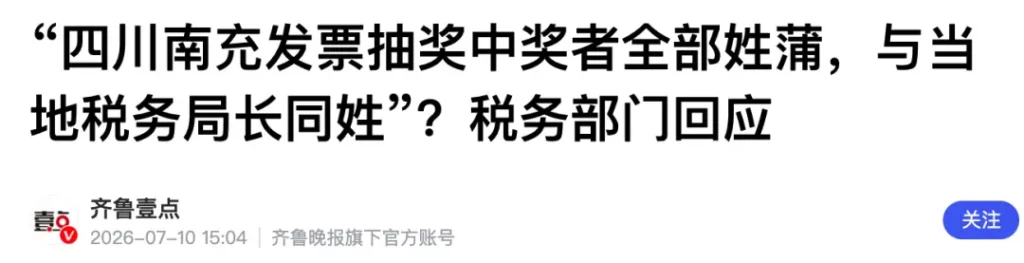
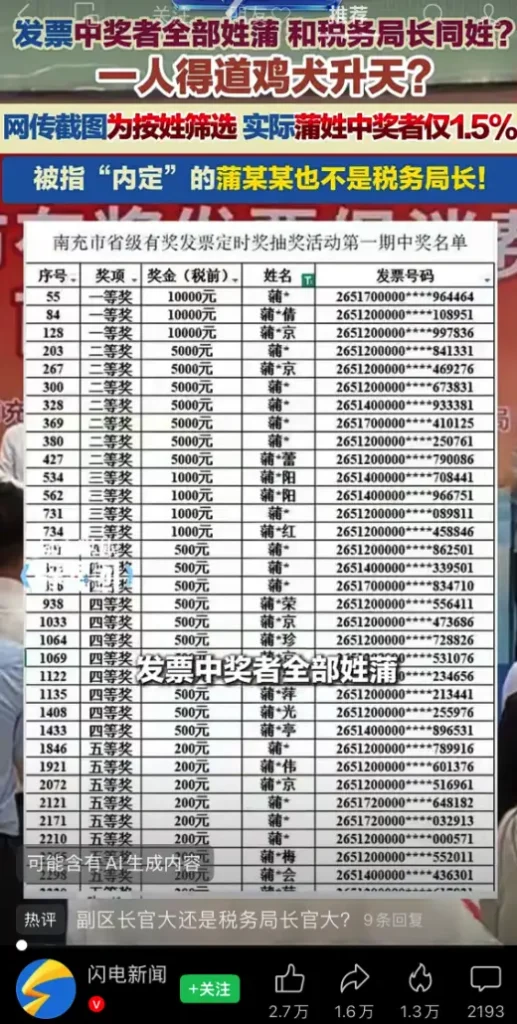
The first incident involved a "provincial lucky draw for invoices" where all the winners were surnamed Pu.
Even more absurdly, someone used AI to check and found that the local tax bureau chief was also surnamed Pu – wow, this script is more dramatic than a TV series.
This matter was a hot topic for several days, and I didn't write about it because I felt it was too exaggerated and ridiculous.
The latest official notice confirmed this, with two points. First, the person surnamed Pu was not a leader in the tax bureau. Second, the list was generated by filtering over 1,600 winners in an Excel spreadsheet to find all those surnamed Pu.
But the point I want to make is not "as expected," but the comment section.
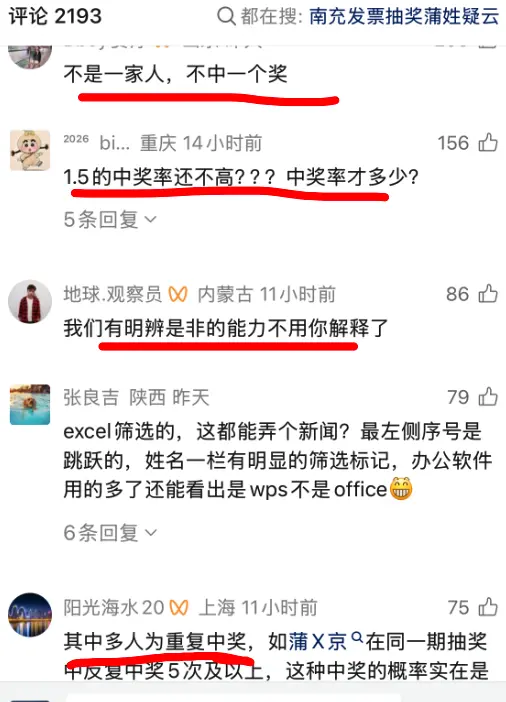
Debunking is a technical job, while believing rumors is a matter of public sentiment. How do the people and netizens in the comment section view this debunking? With sudden realization, or with finger-pointing?
Yes, it's the latter. People still don't believe, and there are many voices of doubt.
Actually, I can feel that after the official "explanation" was released, most netizens didn't know how to refute it, and some even subconsciously believed they had "misunderstood" before. But even so, they still doubted. It's like they can't say it out loud but can't get over it in their hearts.
The problem exposed by this phenomenon is even more serious than the "all invoice winners surnamed Pu" incident itself. This is a disconnect; when debunking is no longer convincing, it becomes the best breeding ground for rumors.
So, why are there still doubts in the comments after debunking? Why are so many people unwilling to believe? The answer lies with certain people themselves.
If the first incident was "debunked but no one believed"; then the second incident is "even the admission is not believed."
In Changde, Hunan, Zhang, the chairman of Fengrun Agricultural Development Co., Ltd., accepted gifts in his office not long ago, and the surveillance video was posted online.
For example, if the previous incident was: a state-owned enterprise chairman accepting gifts was exposed, debunked as fake, and the surveillance footage was claimed to be fabricated. Then people didn't believe it and doubted.
Then this incident is: a state-owned enterprise chairman accepting gifts was exposed, and the official response was: he did indeed accept gifts, has been removed from his post, and is under further investigation for more serious punishment. As a result, people were still suspicious, asking another question: who filmed this video? Was it his competitor? Was it an internal conflict?
This feeling is simply wonderful. The netizens' directions of doubt are completely different: one is "you say it's fake, I don't believe it"; the other is "you say it's real, I don't believe it either." The former doubts the debunking, the latter doubts the motive. But they lead to the same place: the account of credibility has been overdrawn to the point where even "deposits" are suspected of being counterfeit currency.
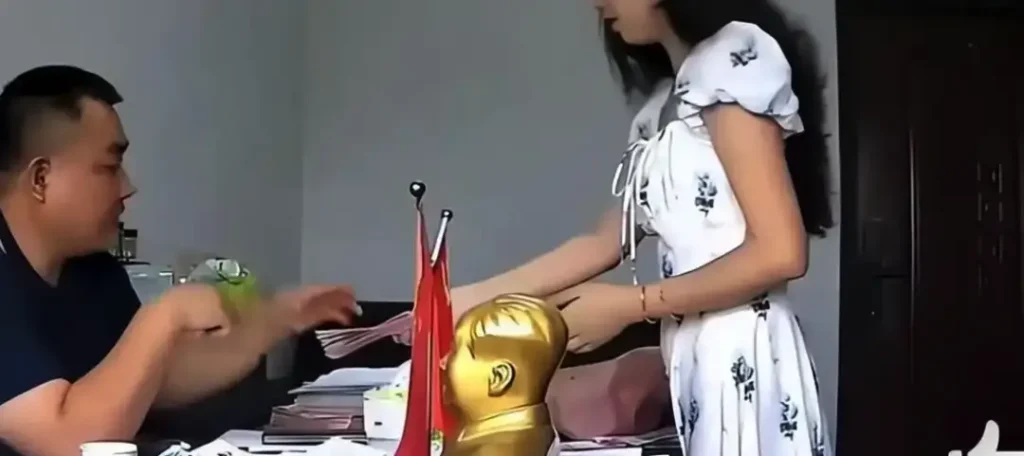
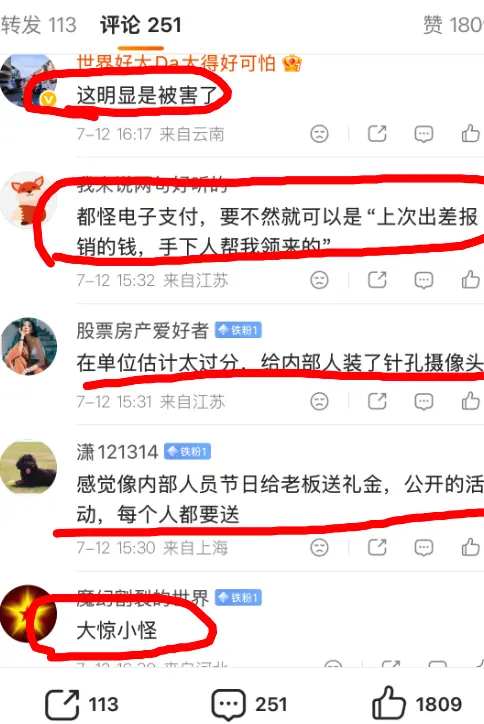
Actually, we can't entirely blame everyone for overthinking, as it was indeed absurd. It's just that the absurdity isn't in the event itself, but in the logic behind it. Who would believe that a state-owned enterprise leader accepting gifts would be the only one? Anyone who believes that is a fool. It doesn't make sense that he openly accepted gifts in his office, from several people, with a lot of cash.
If it was filmed by a camera in the office, and he didn't know there was a camera, then who installed the camera? And what was the motive of the person who installed it?
I have no sympathy for such a corrupt state-owned enterprise official, but if it was a "dog eat dog" situation as netizens speculated, then the other party might be even more terrifying and have bigger appetites. People's concerns are not unfounded. There's even a mentality of: "Stop this charade, we're really scared of you."
Rumors stop with the wise, but the wise stop with disbelief. This is truly a unique characteristic that cannot be cultivated overnight.
To be honest, I never expected that the reason for debunking not being believed would not be the rumor itself, but the person doing the debunking. The tension of this reversal is simply explosive.