


Wang Fujian, the former deputy chief physician of the emergency surgery department of the First Affiliated Hospital of Zhengzhou University, was sentenced to 12 years. It is conceivable how lawless his behavior was to be sentenced to this extent.
The devices that had already been implanted in the patient's body 'disappeared' on the X-ray. There were stainless steel needles on it, which could not be absorbed by the human body. There is only one possibility, that is, it was not implanted at all at that time.
But as the owner of that body, the patient himself knew nothing.
In addition to the ones that should have been implanted but were not, there were also those that should not have been implanted but were. For example, sewing mismatched anastomosis devices into the flesh of other patients.
There are reasons for these behaviors, profit! The deputy director and the medical equipment supplier reached a private agreement to receive a 20% rebate on the unit price. Then, the more he used, the more rebates he would get.
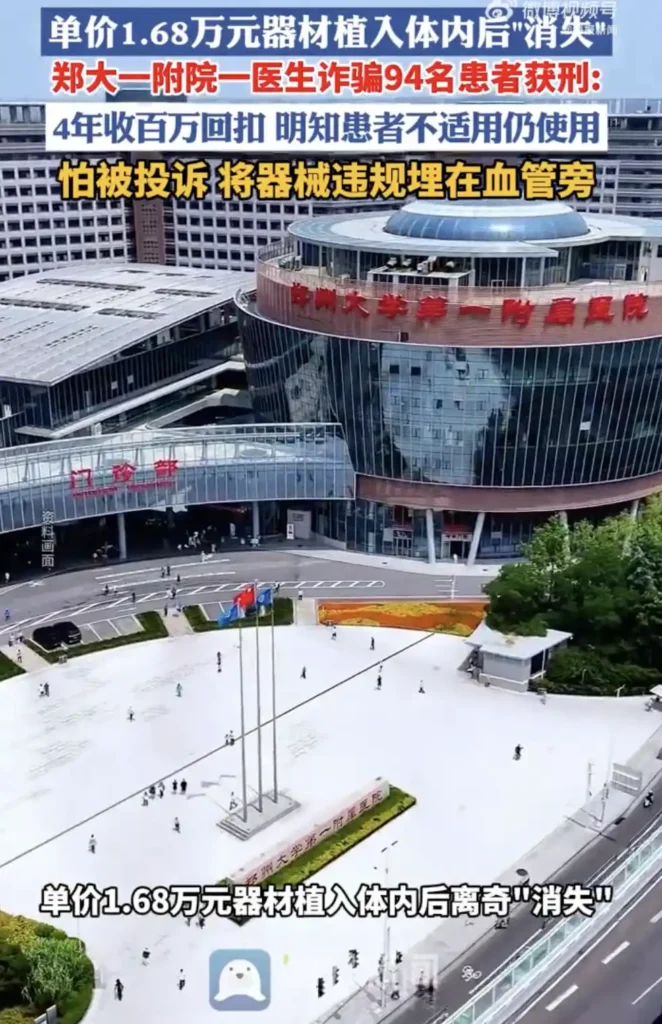
Wang Fujian was sentenced, and he deserved it. But will such a terrifying problem continue to appear in other corners? I think it will definitely happen. The sentencing of Wang Fujian is mainly a punishment, not compensation for the 94 patients who were harmed, nor is it to prevent the same type of problem. Because the key loophole has not been mentioned much: the right to know.
【What should have been implanted was not implanted; what should not have been implanted was implanted; the patient himself was unaware throughout the process】
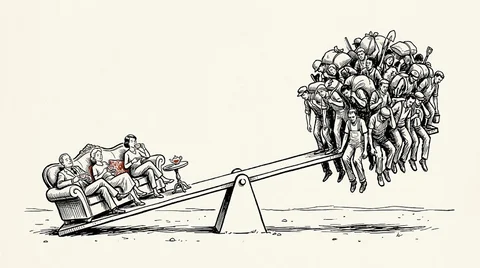
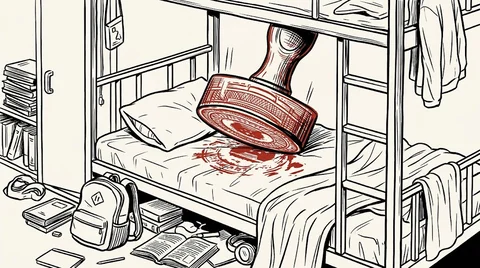
The patient was excluded from the three key nodes of knowing, judging, and choosing. Once this mode is entered, the person being treated is like a carrier being used, and has already lost the right to know and dispose of their own body during the process.
This is the cruelty of reality. The doctor's words are regarded as professional, authoritative, and unquestionable, while the patient does not even have a clue as to whether I should question it. I understand it as a default brought about by a long-term behavioral habit: ordinary people do not need to know too much, they only need to cooperate.
This is a dangerous state.
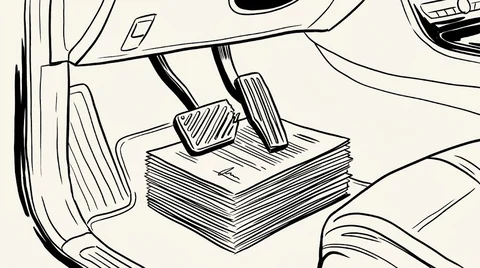
From another perspective, look, a public tertiary hospital, a deputy chief physician of the emergency surgery department, the medical equipment purchased and the unit price should be subject to public and social supervision, right? But in fact, it is almost impossible for ordinary people to know. Even if you give you a channel for supervision, it will be extremely complicated, making you retreat.
There is no need to hide it, all behaviors are pointing to the same end: not wanting and unwilling to let you know. Whether it is problematic behavior or a situation without problems, we do not want the outside world to see it.
It can be seen how important the right to know is. If you don't 'know', talking about supervision is nonsense.
Today, a reporter from the Beijing News investigated several mental hospitals in Xiangyang and Yichang, where people who were not sick were sent in, and people who had returned to normal were locked up for 5 or 8 years, leading to someone committing suicide... also covering the same problem: the right to know.
Think about it: whether a person has a mental illness, who has the final say?
The answer is the doctor.
What if this doctor is talking nonsense?
The patient has no way, and their family members are the same.
Why is this?
Because society and the public cannot supervise the situation in a mental hospital at all. Otherwise, tell me how to supervise. Even investigative reporters need to disguise themselves as specific people to sneak in, stay inside for a period of time to secretly record and observe, and finally investigate such a shocking scene. Violence, slapping, daring not to obey will tie people up for 3 days, controlling their personal freedom, not allowing them to be discharged... It's shocking.

The key reason is still those three words, 'the right to know'. If the outside world can easily see the situation inside, how can these things be done in front of millions and hundreds of millions of people?
If you don't know, you can't achieve the 'supervision' that you often talk about.
Suspicion is useless, you must clearly see, those are the evidence, the testimony, which cannot be easily ignored.
Dou'e, many people have heard of it, but not necessarily the specific story. This woman, who was sold to Cai's family as a child bride, was widowed and lived with her mother-in-law, but was taken by Zhang Luer. The latter designed to poison Cai's mother-in-law, but accidentally put the poison in his own father's bowl, and Zhang Luer's father died on the spot.
This case is not complicated at all, but the outside world has no right to know, and the officials who are trying the case only want someone to plead guilty, the case to be closed, and the superiors not to be held accountable. So torture came on the stage, and Dou'e was forced to plead guilty. No blood under the knife, snow in midsummer, and a three-year drought, leaving this satirical dark artistic masterpiece for later generations.
Some people say that it's good that the injustice was finally vindicated.
But I want to say that Dou'e is dead, and what is the meaning of the so-called vindication? Moreover, this kind of vindication is even more ironic. They did not find and realize their mistakes, they only saw that the anomaly was too terrifying and alarmed the court.
In other words: if there was no snow, no drought, this unjust case would have been permanently sealed.