During the National Day holiday, government canteens in cities such as Shunde, Guangdong, and Rongchang, Chongqing, were opened to tourists.
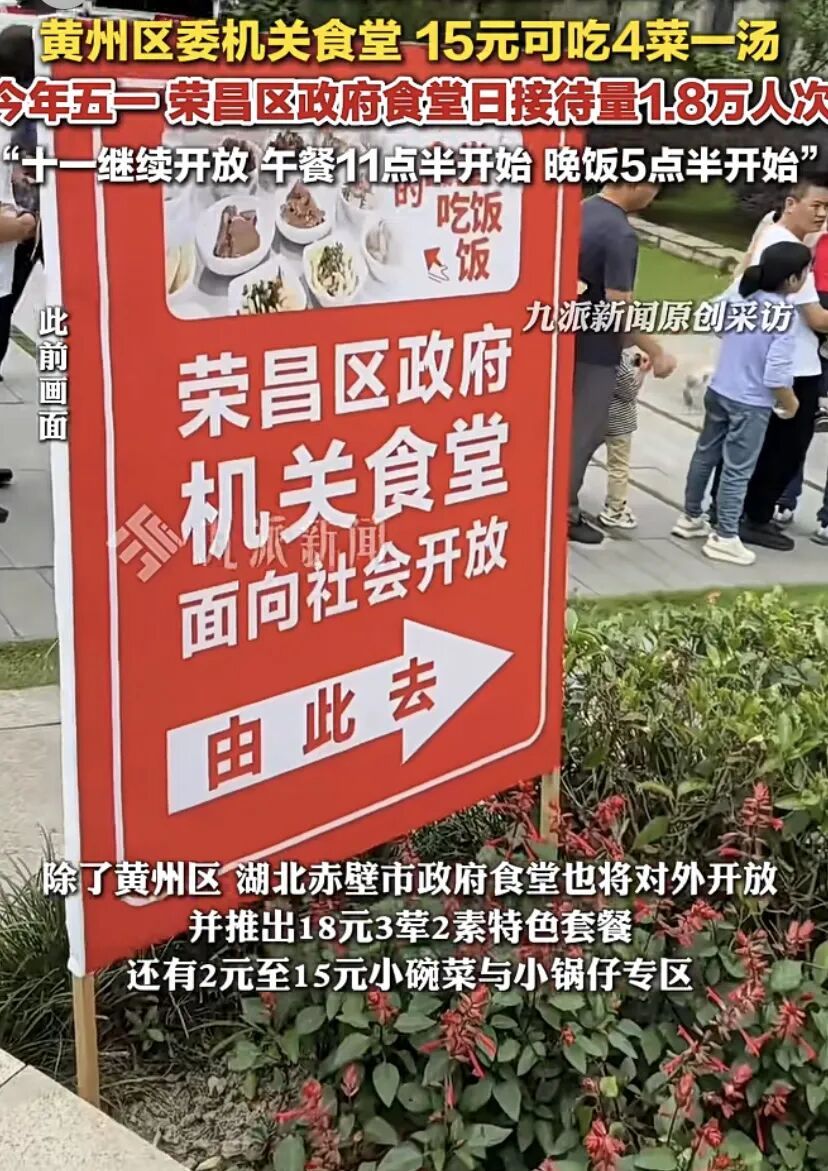
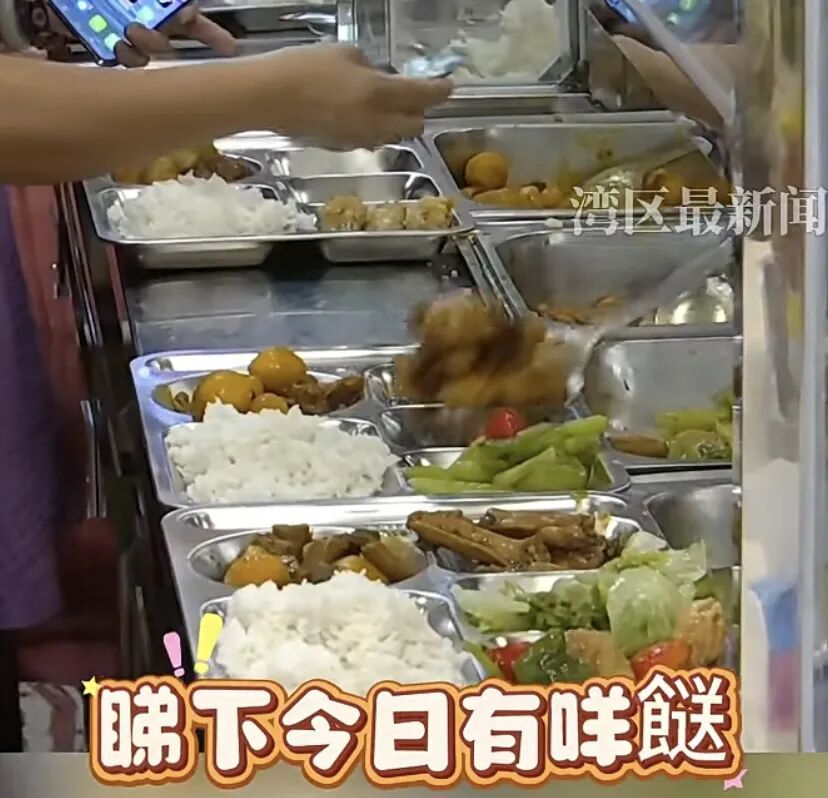
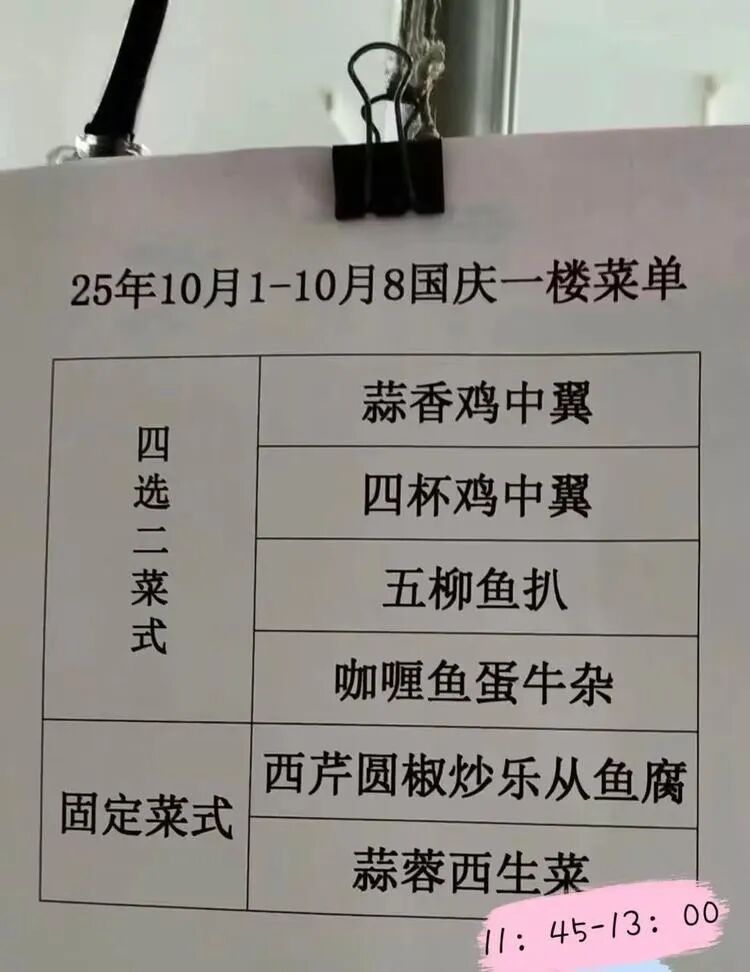
The set meal price of 15 to 20 yuan, clean and hygienic environment, fresh dishes with a rich variety of meat and vegetables, made the tourists envy the daily life of the people’s servants.
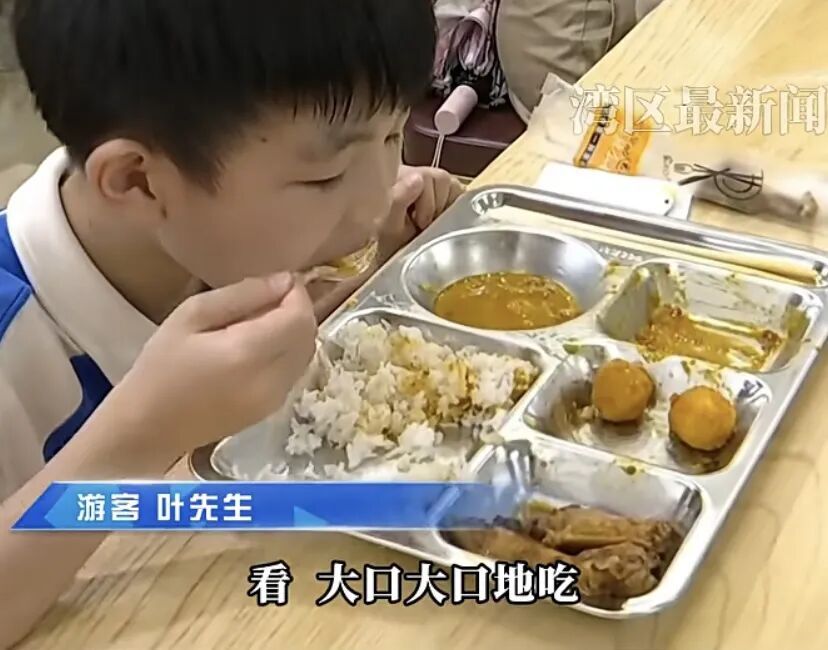
The usually difficult-to-please children were also very satisfied with the canteen, eating heartily.
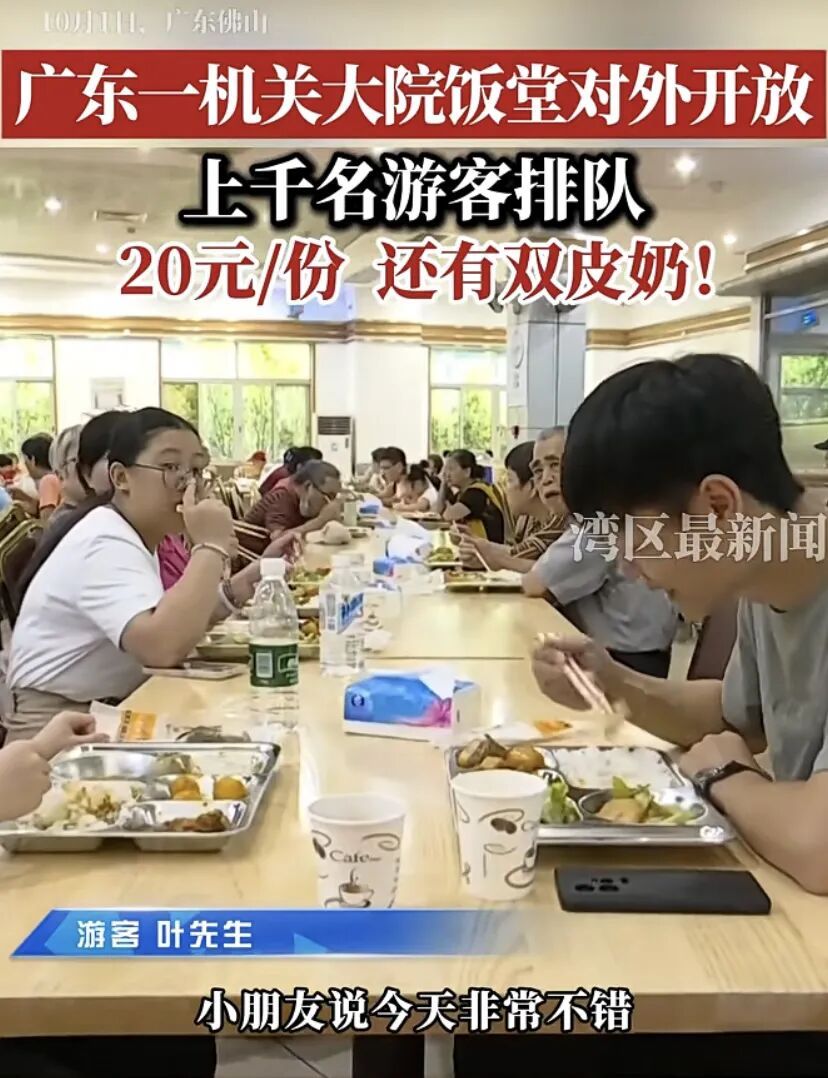
Although the opening of government canteens to the public is basically impossible to become the norm in China, the fleeting glimpse during the holiday also gave everyone a lot of inspiration, and helped people confirm a truth with clear and powerful reality:
It is completely feasible to run a hygienic, nutritious, affordable, and not-unpalatable canteen for a fixed group of customers.
So the question is:
Why are the lunches in some cities and some schools not satisfactory, and even fall to the point where parents and children complain?
This is probably not just a problem of a single catering company, there must be something wrong.
Because I used to be a reporter and went everywhere to interview, I have eaten in many government canteens, including the canteen of the Ministry of Agriculture, the canteen of the Shanghai Municipal Government, the canteens of many districts and counties in Guangdong, and the canteen of our Southern Press Group. I can’t say that every one is particularly good, but hygiene, nutrition, affordability, and not unpalatable are all achieved.
Of course, some government canteens have financial subsidies and benefits, so you can eat well for a few yuan, which we can’t envy, and many have changed the rules and are not so ridiculously cheap. But in general, it won’t lose money to make lunch for 15 to 20 yuan.
This price, at least for primary and secondary schools in cities above the county level in China, is completely affordable for parents.
Except for a few township schools that have not yet completed the merger, the scale of teachers and students in primary and secondary schools in China is generally above 300 people, and some are even thousands of people. Considering only one lunch on weekdays, a canteen for 500 teachers and students, with 10 employees from chefs to helpers to cleaners, is enough.
At the wage level in most parts of China, the total salary expenditure for these 10 employees will not exceed 60,000 yuan per month, which can also include a senior chef, plus the consulting service of a professional nutritionist. Even considering the full salary during the winter and summer vacations, the labor cost per teacher and student per lunch (calculated at 190 meals per school year) is only 7.5 yuan.
In fact, few school canteens are equipped with such ample staff, and full wages will not be paid during the winter and summer vacations, so the real labor cost will only be lower.
The remaining 10 yuan or more is allocated to the ingredients and equipment costs for each meal, which can be considered very sufficient for the big pot meal. You know, the food cost standard for three meals a day for ordinary soldiers in the Chinese army is only 11 yuan (excluding wages and equipment), which has already met the nutritional supply for an adult’s daily military training.
Children have 11 yuan of ingredient costs for one meal. If they are all used in practice, they can eat to a luxurious degree.
In the example I wrote in my previous article, the lunch in a certain township school we sponsored, including labor and ingredients, only cost 8 yuan per meal to eat two dishes of meat, one dish of vegetables, one bowl of rice, and one soup.
Let’s talk about the issue of the venue. Some people habitually look for excuses to shirk responsibility, saying that some schools have tight venues and are not enough to build a canteen, which is completely nonsense.
A school that can accommodate more than 500 teachers and students should have reserved a place for the canteen when planning and building.
Even if, due to historical reasons or the land is tight in the downtown area, a restaurant for students to eat together cannot be set up, at least a few rooms can be vacated to make a kitchen. After the kitchen is done, the meals are distributed to the classrooms, and it is completely feasible for the children to eat at their desks, which is also the operating method of most external catering schools.
Therefore, excluding the above objective factors, the school canteen cannot be run well, and only subjective reasons are left. Compared with government canteens, we can easily find the crux of why school canteens are not run well:
First, the people who eat have no say
Due to the absolute dominant position of the school over students and parents, unless a serious food safety accident occurs, it is almost useless for students and parents to feedback on canteen problems. In fact, because of concerns about the school teachers giving the children small shoes, very few parents are willing to directly feedback on the children’s dining problems.
Second, the school deliberately shirks responsibility
Currently, more and more schools choose to let external catering companies provide lunch. The main reason is that it is easier, which can save the trivial work of managing the canteen and the heavy food safety responsibility. Although this responsibility should be borne by the school itself.
In my opinion, schools with more than 500 teachers and students should be forced to build and operate canteens, which is completely reasonable at the economic level and will not waste resources. Some district and county governments or departmental units only have one or two hundred people to eat, and they have also planned canteens, so why can’t it be done in schools?
Students should be treated with respect, which is what a normal society should have.
Third, the non-profit nature of school canteens is not clear
In many fields, the market-oriented and commercialized model is indeed more efficient and can get better results, but in the closed environment of primary and secondary schools, because of the natural monopoly attribute, once the canteen is commercialized, it will almost inevitably become a tool to seize huge profits.
If we want to commercialize primary and secondary school canteens, we should allow students to bring their own meals and eat outside, and we cannot both monopolize and force and at the same time commercialize.
Discover more from 自由档案馆
Subscribe to get the latest posts sent to your email.