When Zhang Mengfan was first seen, a CCTV reporter noticed a detail: the skin around his eyes looked particularly thin. Later, it was known that it was from wiping away tears. Zhang Mengfan never shed tears in front of the camera; when he really couldn’t hold back, he would lower his head and say nothing. Through the reflective glass, one could see that face, flushed and contorted with pain, and the reddened eye sockets. But when he looked up again, he would return to being that calm narrator.
That interview was less than 20 days after the explosion on August 12, 2015.
That night, an explosion caused by hazardous chemicals occurred at Tianjin Port, and the Eighth Street Brigade, where Zhang Mengfan was stationed, was the closest fire brigade to the scene. Twenty-six firefighters from the brigade received the mission and rushed to the scene in four vehicles. Zhang Mengfan, who was recovering from a fractured hip, was transferred from a combatant to a communicator and stayed at the brigade. On that day, eight comrades who went on the mission were killed, and 18 were burned to varying degrees.
21-year-old Zhang Mengfan became the luckiest one.
The explosion left a deep pit at the scene, larger than half a football field, and scorched earth that spread over a hundred meters, also leaving a wasteland in Zhang Mengfan’s heart. In his hometown of Xiaogan, Hubei, he specially kept a wardrobe to store his firefighter uniform, military uniform, more than 100 train tickets from visiting the families of his comrades, and two pieces of paper—the dispatch order from that night, and an A4 paper with the names and phone numbers of eight comrades. In recent years, whenever he takes a vacation, besides returning to his hometown, he goes to Tianjin, Henan, and other places to “visit relatives”—these are the hometowns of the eight deceased comrades. Visiting and taking care of their families is the best way of redemption that Zhang Mengfan can think of.
Ten years later, facing the media again, Zhang Mengfan’s tone was calm, without the contorted face of pain. Two or three years ago, he suddenly found that he no longer broke down when he heard sad music, nor did he feel abandoned by the whole world when he woke up from a nap and found that the sky was already dark. He seemed to have gotten better, “living his own life,” which he had never expected.
And this is also the reason why we want to tell this story. We have no intention of creating a tragic hero or digging up the embers of a disaster. We are more concerned with how a survivor deals with the guilt, responsibility, and self-struggle brought about by survival over the long ten years. Zhang Mengfan said that his deepest connection is still closely linked to that explosion.
Because he doesn’t want to forget, and he’s also afraid that they will be forgotten.
That mushroom cloud
In recent years, Zhang Mengfan has been “drifting” on the road—nominally working in Chengdu, but actually spending most of his time in hotels. As an external liaison producer for a media company, he is accustomed to a life of packing and going. Even when he returns to Chengdu, he stays in a hotel. His entire belongings consist of only two sets of clothes, a pair of slippers, a toiletries bag, a thermometer, and a few work documents, which can be easily packed into a backpack and a carry-on suitcase.
This is a completely different way of life from before. He once thought he would stay in the army for the rest of his life, living in a collective, under strict management. Until that night ten years ago, when he saw that mushroom cloud, more than ten meters high, rise into the sky—when the explosion was mentioned, this was the first image that flashed into Zhang Mengfan’s mind.
Besides this mushroom cloud, which resembled a scene from a disaster movie, there were some unusual signs that night: around 11 p.m., Zhang Mengfan was awakened from his sleep by the bright red light in the sky, and he thought it was dawn; the fire information on the dispatch order was very vague, neither knowing the exact fire point nor what substance was on fire—in his five years of service, it was the first time he had seen such a vague mission order.
Zhang Mengfan handed the dispatch order to the fire scene clerk, Zi Qinghai. A minute later, everyone gathered and set off in four fire trucks. In early August, Zhang Mengfan fell during a running training session, causing a dislocated thigh and a fractured hip, so that night, his job was to stay in the duty room, turn on the communication equipment, and report the situation to the front line to the brigade.
But that night, the radio was unusually quiet, with no one answering.
When the first explosion occurred, the glass shook violently. Zhang Mengfan instinctively ran outside, remembering that he had not brought his radio and mobile phone, so he returned to the duty room. When he went out again, the second explosion came, and he hid in the hallway on the second floor. The ceiling and glass were all shattered, and they splashed behind him, with the glass directly piercing into the wall.
Running out of the camp, Zhang Mengfan saw a mushroom cloud rising in the sky.
His heart sank, realizing that this was definitely not an ordinary fire. He wanted to rush to the scene to find his comrades. At this time, residents who had hastily escaped gathered on the roadside at the gate of the brigade. Some were only wearing underwear, some were crying and shouting, and some were holding him and crying and not letting go.
It was already three o’clock in the morning when the residents were appeased. Zhang Mengfan returned to the brigade and kept calling everyone at the scene, but no one answered until nearly dawn.
According to the “8·12” Special Fire and Explosion Accident Investigation Report, the Ruihai Company warehouse, where the explosion occurred, had illegally obtained operating qualifications and was not qualified to store dangerous goods and explosives. Zhang Mengfan once recalled to the media that more than a month before the explosion, the brigade would conduct live exercises every week at the units in the jurisdiction that stored hazardous chemicals, and also drew drawings of these factories, accurate to the location of the fire hydrants, but Ruihai Company did not belong to their jurisdiction.
In this explosion, a total of 99 firefighters were killed, exceeding the total number of deaths of firefighters in China from 2005 to 2014. And the Eighth Street Brigade, which was closest to the scene and arrived at the scene the earliest, had no one return that night, and eventually 8 people were killed and 18 were injured.
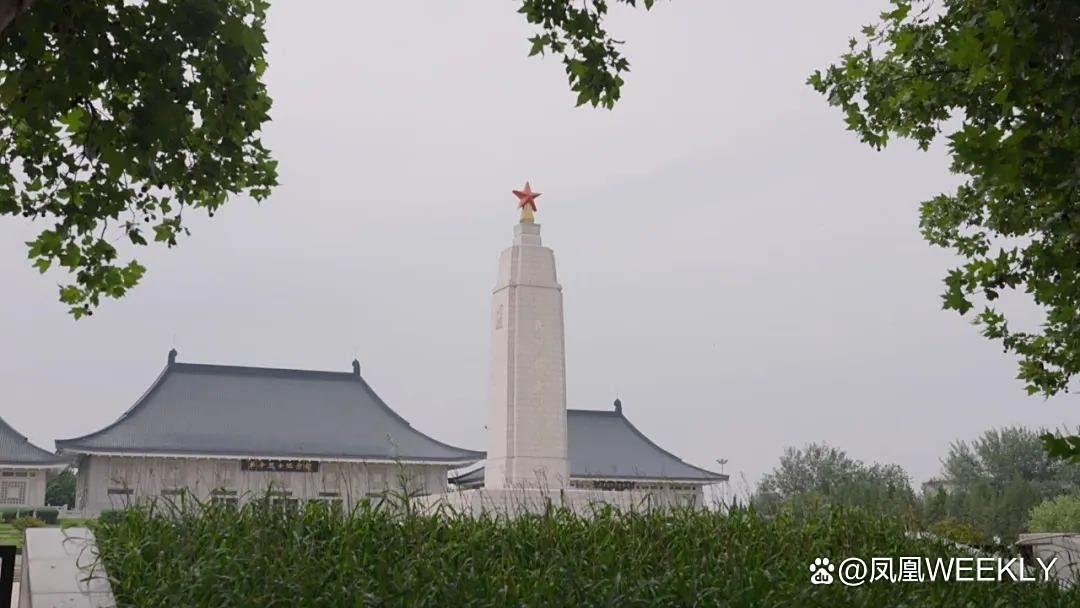
Tianjin Martyrs Cemetery
Ignoring the leaders’ opposition, Zhang Mengfan insisted on staying in the severely damaged brigade. He wanted to guard this isolated island, waiting for news of his comrades, and also afraid that the families would come and not be able to find anyone.
Footsteps suddenly came from the hallway. Zhang Mengfan thought it was his comrades who had returned, and when he rushed out to look, it was the family of his comrade Liang Shilei. Liang Shilei was the acting captain, and had already asked for leave from the team before the explosion, saying that he would go to get a marriage certificate in August.
The families in Tianjin came one after another, and cries were heard from time to time. A father sat in a chair for a long time, silently smoking; a mother looked extremely calm on the outside, but revealed extreme sadness from the inside out—this was the mother of comrade Liu Cheng. Zhang Mengfan clearly felt that her heart had died.
Zi Qinghai was from Zhoukou, Henan. His family drove for six or seven hours to Tianjin. Before receiving definite news, Zhang Mengfan could only say that his comrades had gone on duty and had to wait for news. Zi Qinghai’s parents couldn’t sit still, so they followed the volunteers to hospitals treating the injured and looked for people one by one. Finally, they received the news of their son’s death.
New recruits cannot go home for the first two years, and Zi Qinghai had only 20 days left before his two-year term expired, and then he could choose to retire or transfer to a non-commissioned officer and continue to stay in the team.
Identifying the remains of comrades was more heartbreaking than comforting the families. The bodies that had experienced the explosion were often incomplete, and comrades who had lived together for many years needed to repeatedly identify them. During that time, Zhang Mengfan assisted the search and rescue personnel in identification during the day, and stayed by the phone at night, waiting to receive calls from the families. In order to mobilize more forces to find people, he created a QQ group to collect clues about the “8·12” accident, and hundreds of people applied to join the group every day, sharing rescue information collected from online and offline.
The first person confirmed to have died was Yang Gang. According to the requirements, all the soldiers’ belongings must be sealed and not moved. Zhang Mengfan violated the order and took a broom into Yang Gang’s dormitory to help him clean up the glass shards on the bed. Yang Gang had brought coffee beans from his hometown to Tianjin and planted them in the courtyard of the brigade.
Zhang Mengfan went to water the coffee beans every day, and the tender seedlings bloomed their first flowers less than half a month after the explosion.
During that time, Zhang Mengfan became more courageous than ever before. He was introverted since childhood and didn’t dare to look directly at others’ eyes when talking to them. He described himself as always being the worst student in the class, timid, cowardly, and honest. In the brigade, he always stayed in an inconspicuous corner, waiting for his teammates to initiate activities. But after the explosion, he stayed in the brigade alone, receiving families and volunteers, dealing with various media, collecting information to find missing people, organizing the belongings of his teammates, as if he had broken free from his former shell and become strong.
Zhang Mengfan remembers that at the time, a Shanghai elementary school student sent 50 yuan to the brigade, with the message “Warmly慰问 to you, salute.” He immediately opened a Weibo account and shared the bits and pieces of his time with his comrades, photos and social media information of the sacrificed comrades, and his own rambling thoughts and dreams online.
He hopes that more people will know and remember the brothers of the Eighth Street Brigade.
“Is the taste of living a life of ease and comfort good?” Not long after, a netizen said this in the comment section—this added to Zhang Mengfan’s secret guilt as a survivor. Some people even thought he was using his comrades to hype himself up. In an interview in 2019, Zhang Mengfan revealed that those questioning voices made him, who was just 20 years old at the time, feel down for a while.
Survivors
Living made Zhang Mengfan feel guilty.
He regretted not being able to go to the scene together, even if it wouldn’t have changed the outcome much; he still imagines that if he could have foreseen the accident, even if he had to bear a greater responsibility, he wouldn’t have handed the dispatch order to his comrades, “I still wanted them to live.”
But he hardly reveals his emotions in front of others, and that’s how he was when facing the media ten years ago. At first, he would hold back, then secretly turn away and wipe away tears; after repeated narrations, he gradually became numb, answering like a machine. Only when he was alone would he release himself.
After the big explosion, Zhang Mengfan suffered from depression. In recent years, he has started to tell people about it. Before that, he hadn’t told anyone, including his parents, except for a psychologist. The treatment was carried out secretly, and the money was borrowed from Alipay.
After the accident, professional psychologists were sent to his brigade to provide guidance regularly. When they left, the doctors left their contact information, but Zhang Mengfan never actively sought help. He was afraid of bothering others, and also afraid of his family worrying. The only way was to digest it himself.
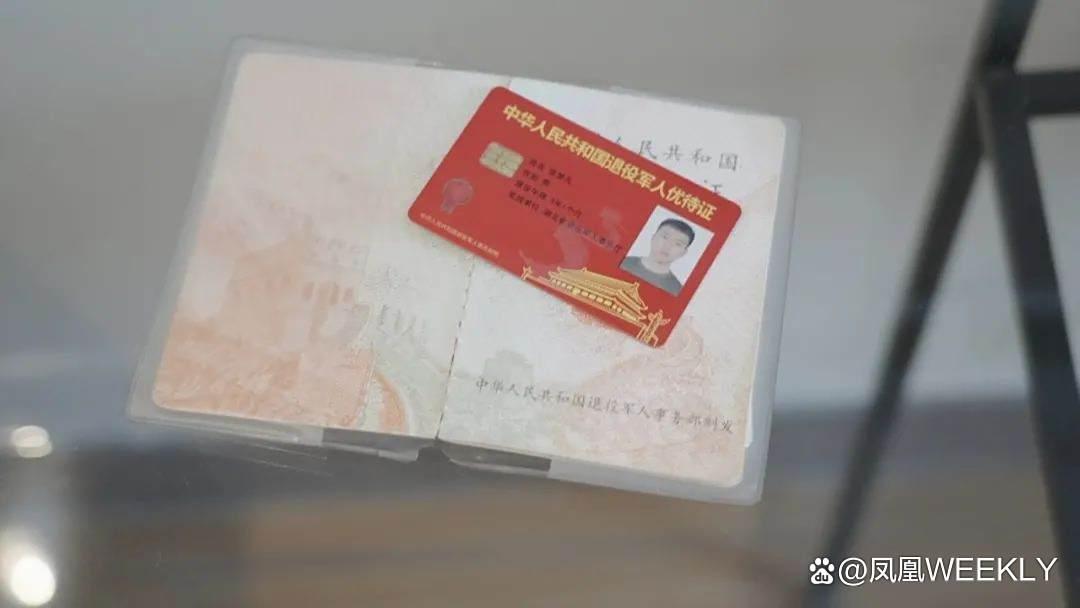
Zhang Mengfan’s veteran preferential treatment certificate
Zhang Mengfan didn’t miss a single memorial service for the 8 comrades. Once, he attended three in the same funeral home on the same day. He felt it was ironic, “like going to work.”
On the way back from a memorial service, he couldn’t help but cry—this was an extremely rare moment when he broke down in front of outsiders. During the “National Day” in 2015, the comrades who had been discharged from the hospital gathered at the brigade once, and everyone set out tableware and wine for the deceased comrades. Someone talked about the night of the explosion, and Zhang Mengfan lowered his head and suddenly blurted out, “The brothers died too unjustly,” and then burst into uncontrollable tears.
When he was alone, he would always think of the days when he trained and played with his comrades. He ordered himself not to think about it anymore, but he couldn’t control it at all. On the third day after the explosion, he dreamed of Yang Gang—that was the first comrade confirmed to have died. He wanted to talk to Yang Gang, but the other person was just watching from the side and didn’t pay attention to him. More than 20 days later, during a nap, he dreamed of Liu Cheng, Yang Gang, Zi Qinghai, and several other comrades who had died. He gradually realized that he was dreaming and wanted to wake up, but his whole body was unable to move. After finally waking up with great effort, he regretted it—he wanted to dream a little longer and see them a few more times.
In the following year or two, his comrades would always appear in his dreams. Zhang Mengfan struggled to wake up, and in a daze, he returned to reality, only to realize that they were no longer there. He thought, it would be better to leave this world together. As soon as this thought appeared, he would force himself to quickly think of his parents and restrain this impulse.
Redemption
Regarding the guilt of survival, many people advised Zhang Mengfan that it was unnecessary, but he couldn’t get out of this state.
He decided to put the focus of his life on his comrades. He retired at the end of 2015, leaving the army where he had planned to stay for a lifetime. The biggest motivation was to visit the families of the 8 deceased comrades.
“Some people sacrificed, some were injured, and they will be left with imperfections for the rest of their lives, but I am fine.” Although many people comforted him, he always couldn’t get over the hurdle in his heart. He had to visit those families, see how they were doing, and what help they needed. He felt that only when this page was truly turned over could he start a new life.
This is what he wanted to do most and what he was most afraid of doing. Before being interviewed by “Cold and Warm Life,” he said that he was actually very nervous, “because I don’t know what to say, I’m worried that the families of my comrades will be very emotional when they see me and ask me: why did you survive, but my son sacrificed?” He had photos of each comrade’s relatives saved on his phone, and holding their roster, he went on his first trip alone. He hadn’t told anyone, and the cost of this trip was borrowed from Alipay.
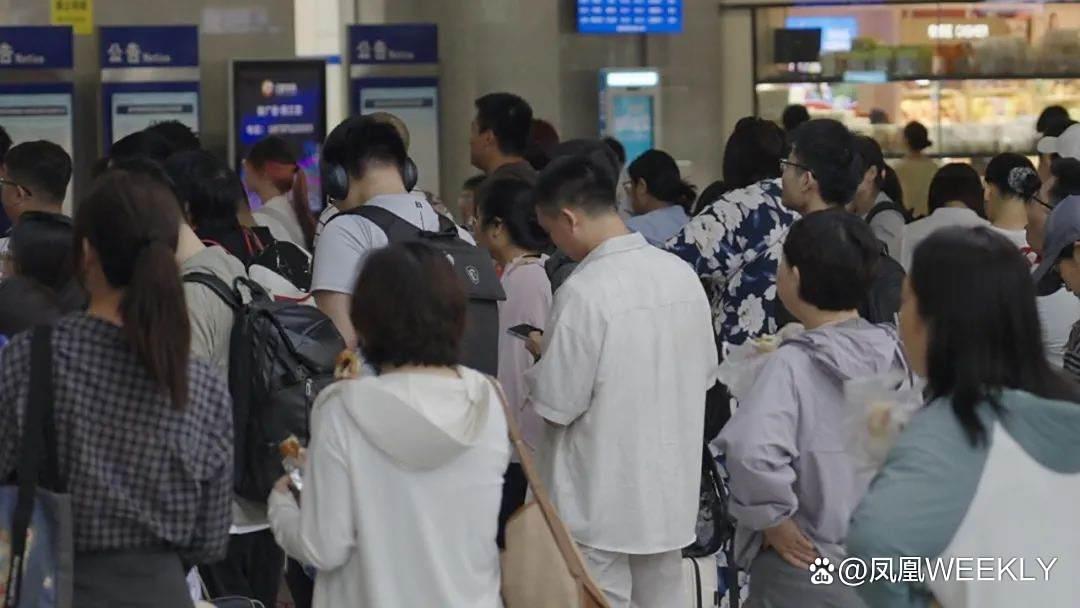
Zhang Mengfan at the high-speed rail station
The first place he went was Yang Gang’s home. His home was in the mountains of Zhong County, Chongqing. It took Zhang Mengfan 12 hours to get there, taking a train, then a bus, and then a motorcycle. When Yang Gang’s parents saw him, they didn’t ask a single question, and they didn’t even feel unfamiliar. They took him home and cooked Yang Gang’s favorite dishes for him. The parents placed Yang Gang’s tomb on the hillside that they passed every day on their way to and from work. Every time they passed by on their motorcycle, they would honk the horn and greet their son.
In Tianjin, he accompanied the father of Liang Shilei, the captain, to drink, and accompanied Liu Cheng’s single mother to handle her son’s funeral; in Yongzhou, Hunan, he received the first piece of good news—the 43-year-old mother of comrade Cai Jiayuan became pregnant with a new life through IVF.
Zhang Mengfan’s last visit was to Zi Qinghai’s home. Zi Qinghai was his closest younger brother in the team, living in the same dormitory and working the same shift. Zi Qinghai’s parents were in a very bad state at the time—his mother, Guo Xianzheng, hardly went out, and everyone around her knew that her child was gone. She was afraid of being cared for, and any care would make her sad. She cried at home every day, crying until her eyes hurt.
When Zhang Mengfan came, looking at this boy with the same gentle personality as her son, she always felt that her son had returned. The couple felt sorry for him, took him out to eat delicious food, went to Phoenix Mountain in the suburbs of Xinxiang to stroll, and also advised him to let go. When the old couple were sad, they would also go to Phoenix Mountain to see the scenery.
After nearly a year, Zhang Mengfan visited the homes of the 8 comrades and gained 8 more parents. The parents all treated him as their own child. Knowing that he had retired and had no income, they insisted on giving him money, but he refused. This kind of bond could be traced back to the second day after the explosion—at the time, a screenshot of a WeChat conversation was circulating online. A firefighter with the nickname “Liu Shuxuan” told a friend, “I can’t come back, my dad is your dad,” and also said that comrade Gangzi “is gone, sacrificed.” “Gangzi” refers to Yang Gang.
Reconstruction
Zhang Mengfan’s parents initially did not support his plan to visit the families. They were worried that he would be constantly pulled back into pain and fall into a breakdown. But Zhang Mengfan was stubborn, and no one could persuade him once he had made up his mind.
After a while, he found that when he went to the families and talked about the deceased comrades, they could all get some comfort. He witnessed the new hope that grew in the broken families, which in turn healed him.
In 2016, when he went to “visit relatives” at Zi Qinghai’s home, Zhang Mengfan told Guo Xianzheng that Cai Jiayuan’s mother had successfully become pregnant through IVF. Guo Xianzheng had the same idea. Although Zi Qinghai had a sister, the pain of “a child raised to 20 years old suddenly disappearing” was still unbearable. In order to move forward, she decided to have another child.
The road to seeking medical treatment was very difficult—she was 47 years old at the time and had undergone a tubal ligation. A hospital in Xinxiang performed surgery to open her fallopian tubes, but she still couldn’t get pregnant after several months of treatment. After going to Zhengzhou for an examination, the doctor said she only had a 5% chance of getting pregnant.
In Beijing, the public hospitals directly refused her when they heard her age.
Standing on the overpass outside the hospital, Guo Xianzheng wanted to jump. Coincidentally, a reporter she knew called and said that they had found the person involved in the news of “a sixty-year-old mother who lost her only child, Guo Minsheng, had twins.” The person recommended a private hospital in Beijing. The couple went back and forth to Beijing many times, taking medicine, undergoing examinations, and being hospitalized, spending hundreds of thousands of yuan from their family savings. Guo Xianzheng finally became pregnant with twins in July 2017. They felt that life had a new hope.
In March 2018, Guo Xianzheng gave birth to twin sons by cesarean section, who were named “Shengen” and “Haen” respectively, and were usually called “Dabao” and “Xiaobao.” Zhang Mengfan specially went to the hospital and saw the newborns through the monitor.
But soon, some people online questioned their advanced maternal age, and the language was malicious. Zhang Mengfan rarely lost his temper on Weibo and fought back. His comrades were gone, and he couldn’t tolerate any insult to their families. This touched his bottom line.
Zhang Mengfan has been in contact with the families, especially the Zi Qinghai family. Guo Xianzheng is cheerful and will call him to discuss things, and she will also inform him of good news as soon as possible. In July of this year, as soon as the project in hand was finished, Zhang Mengfan rushed to Xinxiang. When Guo Xianzheng saw him, she ran over to hug him, and the two children immediately clung to him.
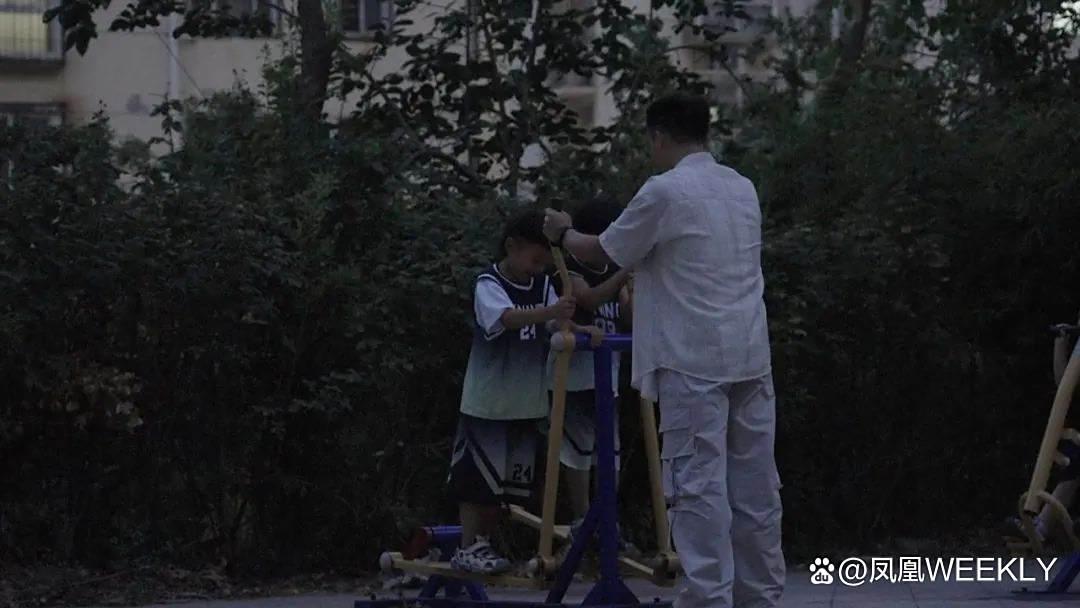
Zhang Mengfan went to Zi Qinghai’s home to “visit relatives” and played with the two children
Guo Xianzheng told Zhang Mengfan that the process of raising children was much more difficult than she had imagined. She and her husband, Zi Fuchang, are both old, and they can only ask friends for help. The schedule of the old couple also revolves around the children: making breakfast, sending them to school, helping with homework, and each taking care of one child. The teachers require the children to speak Mandarin at school and also encourage parents to speak Mandarin at home. Guo Xianzheng learned pronunciation from short videos.
In order to spend more time with the children, the couple insists on exercising every day. Zi Fuchang regularly dyes his hair black, and Guo Xianzheng pays special attention to taking care of herself. When someone asks her if she is the children’s grandmother, she pretends not to hear. If asked why she wants children at such an old age, she just says, “We got married late.”
In these seven years, they have almost devoted all their attention to the two children and have not been separated from them for a single day. The children don’t know that they have an older brother, and Guo Xianzheng plans to tell them when they are a few years older. They put Zi Qinghai’s martyr certificate and the few books he often read in the army in a green cloth bag he used in the army and kept it in the highest cabinet in the house.
When everyone sits together, they inevitably mention Zi Qinghai. Guo Xianzheng is emotional and can’t help but shed tears; Zi Fuchang turns his head away and remains silent for a long time, his eyes full of bloodshot eyes. But this silence is always quickly broken by the laughter and play of the children.
The wounds of the past are growing new flesh. Guo Xianzheng told us, and constantly reminded herself, “The child is gone, but the living still have to live, right?”
In recent years, Guo Xianzheng and her husband, and Zhang Mengfan, have found that the other’s smiles are becoming more and more frequent. Zhang Mengfan actually doesn’t like children. When he goes back to his hometown for the New Year, he tries to avoid the younger generation in the family, but every time he goes to Zi Qinghai’s home, he always smiles unconsciously—the kind with a grin, and then sits on the ground and plays with the children for a whole afternoon.
Fighting against oblivion
Zhang Mengfan seems to have gotten better.
In the first two years after the explosion, when he was interviewed by the media, he was asked about his greatest expectation for the future, and he always said, “I hope the families can live on.” He said that at the time, he was only thinking about his comrades and their families, and he didn’t consider himself at all. Seeing that the families of his comrades were all coming out of the shadows, he also tried to rebuild his own life.
He looked for a psychologist online. When he called the doctor, he didn’t pour out his pain, but directly asked what methods could be used to curb his suicidal thoughts. The doctor gave some suggestions—taking medicine and going to a vast place. Zhang Mengfan didn’t want to take the medicine after taking it for a month or two. After that, he chose to travel all over the country.
In Lijiang Ancient City, there was a patio in the courtyard of the inn, and he lay on a recliner under the patio, looking at the clouds in the sky. He didn’t think about anything, and he would lie there for a whole afternoon. The feeling of emptiness made him comfortable, so he stayed for another day and continued to daydream. He walked and stopped in various quiet and open environments for almost a year, and Zhang Mengfan didn’t want to die so much.
The online comments were not so important to him either. He said that he cared more about the people who stayed—the families of his comrades. In these years of contact with the families, he realized that survival is also a kind of luck, and this luck means that he has to bear more responsibility.
In 2024, he fell in love and had “his own life” that he had never expected. His girlfriend is a Shandong girl working in Wuhan. In July of this year, when they met in Xinxiang, he told Zi Qinghai’s parents that he was dating someone and would bring his girlfriend to see them next time, and he also said that he planned to get married next year.
But on the other hand, he is also unwilling to forget.
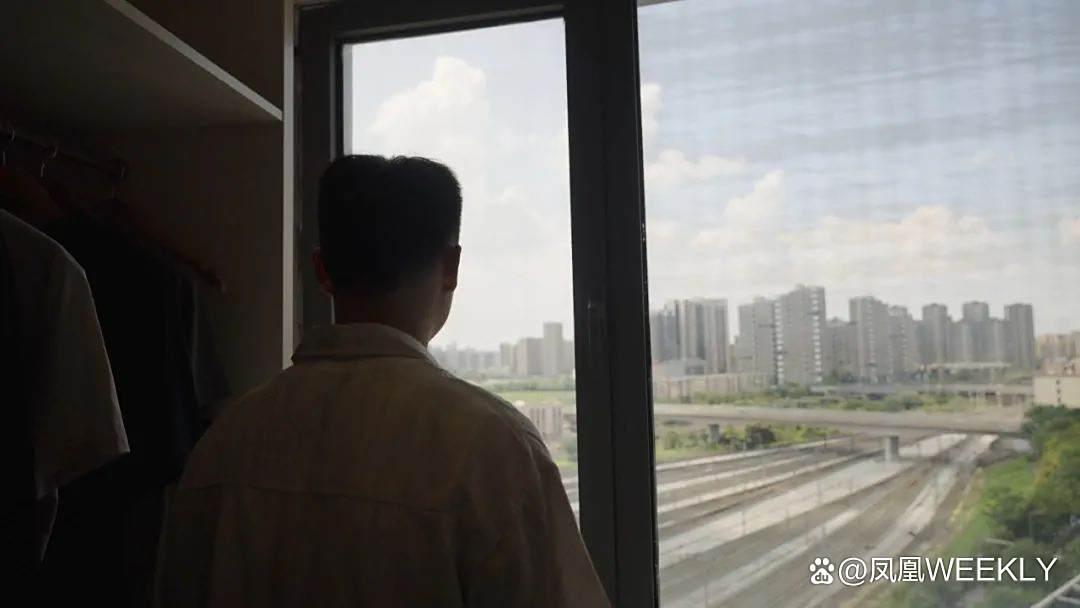
Ten years later, Zhang Mengfan is living “his own life”
“Oblivion may be the national condition of China. As long as the heat passes, the public will soon forget.” He found that the QQ group, which had hundreds of active people every day when the explosion first happened, had hardly anyone talking in the second year, and it almost became a “dead group”; in 2019, a netizen left a message under his Weibo, surprised that such a big accident had happened 4 years ago; in daily life, when the explosion was occasionally mentioned, he realized that many people didn’t know about it.
In order to fight against this collective oblivion, he has to repost the news of major fire accidents in China every time. When a movie about the fire alarm is released, he will spare no effort to promote it. Every year on August 12, he must also post on Weibo: he posted three Weibo posts to commemorate the first anniversary, and answered questions in the comment section for the second anniversary… The interaction in the comment section became less and less, and the number of words in his Weibo became less and less. In 2024, only the three words “Ninth Anniversary” were left.
He also retains some of the habits from the army—he likes to go to the supermarket, because when he was in the brigade, the first thing everyone did when they took a vacation was to go to the supermarket to sweep up instant noodles and snacks. He is always punctual and always appears ahead of the agreed time. That is the muscle memory of a firefighter: after receiving an order, no matter what he is doing, he must put on his combat uniform and get on the vehicle within one minute.
The happiest days of his life also stayed in the past. At that time, they handed in their mobile phones, and everyone found the simplest happiness under the most limited conditions: drawing squares on the ground and picking up stones to play chess; or when sweeping the fallen leaves, picking up a few leaves at random and playing “pulling roots.”
Every year on August 12, Zhang Mengfan tries to go back to Tianjin. The original big pit has long been filled in and built into a square. Yang Gang’s coffee beans withered in the autumn of that year, and a memorial plaque was erected in the original location. Even if he can’t return to Tianjin on that day, he will find an intersection and burn some paper for his comrades—villas, fire trucks, mobile phones, tablets, gold ingots, one set for each person.
The families are also using various methods to fight against oblivion.
When Zi Qinghai’s ashes were sent back to Zhoukou, his parents chose to bury him in the Martyrs Cemetery in Shangshui County, Zhoukou City. They thought that if they were buried in the ancestral graves in their hometown, no one would remember them after several generations. But if they entered the cemetery, someone would always go to pay their respects to him.
They also sent their child’s belongings to Tianjin and stored them in the memorial hall.
Zi Qinghai left very few photos. New recruits cannot go home for the first two years, but after the first year, the couple really missed their son too much, so they drove to Tianjin with their daughter. The family spent two days in Tianjin and took a group photo. They specially brought the photo back to their hometown and planned to print and enlarge it, but it was accidentally lost in the printing shop.
That was the last time they saw Zi Qinghai.
After losing their son, Guo Xianzheng dreamed of him twice. Once, he was in the army, and Zi Qinghai had developed a muscular body, supporting himself with his hands and hanging upside down on the horizontal bar with his feet. She patted him and said, my son is so great, and he smiled at her. She woke up from the dream.
Another time, she dreamed of her son’s photo, and he also smiled and suddenly disappeared.
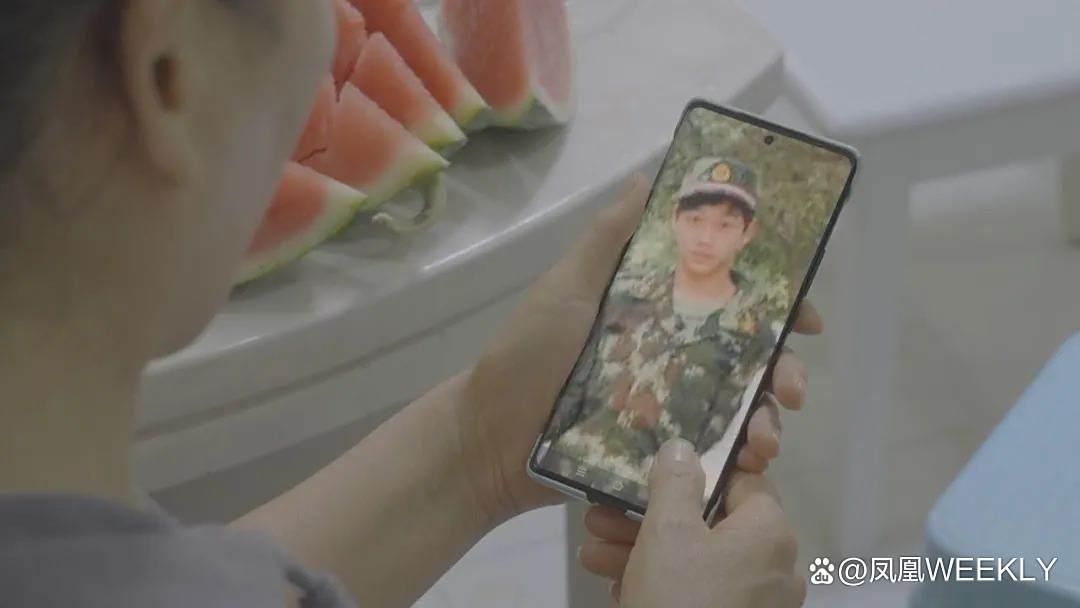
Guo Xianzheng looks at her son’s photos from before
Sometimes, when she misses her son, she will secretly turn on the computer to look at his photos, or secretly call his phone—even though she knows there will be no answer. She said that she just wanted to ask him, “Qinghai, why don’t you let me dream of you? I still want to see you.”
Zhang Mengfan also dreams of his comrades less and less, and some memories even become blurred with the passage of time. He knows that oblivion is human nature, but at least for now, he can still say the 8 names engraved in his bones in one breath, they are “Instructor Li Hongxi, Captain Liang Shilei, Platoon Leader Tang Ziyi, Liu Cheng, Cai Jiayuan, Yang Gang, Cheng Yuan, Zi Qinghai.”
Discover more from 自由档案馆
Subscribe to get the latest posts sent to your email.