Preface:
A reader suddenly sent an old article written in January 2012. Looking back, I realized that I was really serious about doing news back then.
That interview was indeed a sample worth summarizing. I obtained a large amount of on-site evidence during the undercover investigation, and even got dozens of public expense receipts for eating and drinking from the director of the Grain Bureau’s office.
The most interesting thing was that I was waiting at the hotel counter, watching local officials sign the bill after their public expense eating and drinking. When I saw the official handwrite on the white slip “County Government, County Chief Cui inspected the people’s livelihood project, Director Li arranged the accompaniment, Director Zhang participated”, I almost burst out laughing during the undercover investigation.
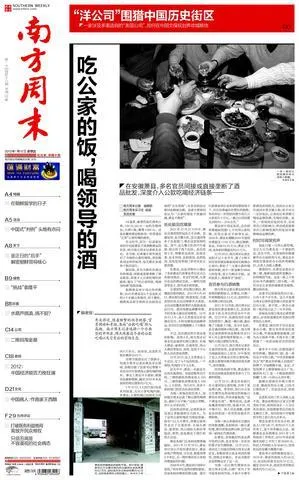
Editor’s Note: As the end of the year approaches, with the frequent inspections by leaders, the reshuffling of officials, and assessments, “public expense eating and drinking” is gradually reaching a climax in various places. Southern Weekend reporters chose a non-typical central county to observe the public expense eating and drinking in this county and the officialdom ecology behind it.
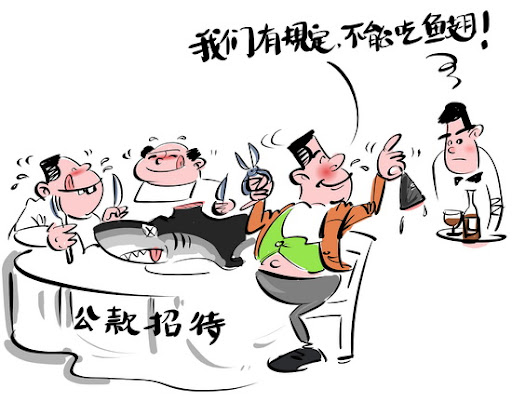
14 dishes, the most expensive being braised rooster, 120 yuan; two packs of Su Yan cigarettes at 60 yuan each; 5 bottles of white wine; the meal cost 1298 yuan. This is a normal and “normal” public expense eating and drinking bill from the Xiao County Grain Bureau in Anhui Province.
At the end of the year, because a reader reflected the information about Xiao County cadres monopolizing liquor products in a letter, it attracted Southern Weekend reporters to interview. In the local area, the reporter unsurprisingly witnessed the local public expense eating and drinking craze. Similar banquets like the Grain Bureau were held in various restaurants in the county town every day.
According to reports, many local officials, through various channels, indirectly or directly monopolized the wholesale of liquor products, deeply involved in the public expense eating and drinking economic chain, and gave rise to the strange phenomenon of “eating public food and drinking the leaders’ wine”.
According to the data released by the Xiao County Audit Bureau, in 2010, Xiao County’s only 5 county-level government agencies and 3 townships’ official receptions spent as much as 9.53 million yuan on catering, cigarettes, alcohol, food, and calligraphy and paintings. And the county has as many as 63 county-level agencies and townships.
Although the local area had issued a ban on alcohol, during the Southern Weekend reporter’s interview in Xiao County, he witnessed the county party secretary and dozens of other officials drinking alcohol at noon and eating and drinking at public expense. In fact, Xiao County is not rich. According to the latest data of the county, as of the end of 2010, the relevant debts of the county government were about 700 million yuan.
On January 10, “People’s Daily” published a series of reports focusing on the issue of public expense eating and drinking. In Xiao County, public expense eating and drinking has been solidified into the “cultural tradition” of officialdom, and officials and the public alike turn a blind eye to it. The main leaders of the county party committee also believe that: “Public expense eating and drinking is a universal problem, Xiao County is not typical”.
Eating and drinking can be seen everywhere
On the afternoon of December 21, 2011, the private rooms of the Xiao County Transportation Hotel were almost full. Several county-level departments, including the County Construction Bureau, the County Traffic Police Brigade, and the County Transportation Bureau, were all eating at this hotel. Among them, the lunch banquet of the County Traffic Police Brigade occupied two private rooms. For the next three days, the County Political Consultative Conference, the County Political and Legal Committee, the County Water Conservancy Bureau, the County Investment Promotion Bureau, the County Drug Administration Bureau, and the County Agricultural Development Bureau successively spent public money here.
In Xiao County, the County Procurement Center confirmed several designated official reception hotels for administrative institutions. Officials eat and drink, mostly in these hotels. They usually sign the bill and leave after eating, and settle the accounts monthly or at the end of the year.
The Transportation Hotel and the Century Holiday Hotel are both designated reception hotels. On May 30, 2011, the relevant departments of Xiao County found that the Transportation Hotel had four major hidden dangers or violations, including the lack of an automatic sprinkler fire extinguishing system and an automatic alarm system. The hotel elevator also frequently broke down, and guests were often trapped in the elevator. On the morning of December 28, a meeting of the County People’s Congress Standing Committee was held in the hotel, but the elevator also stopped working due to a malfunction, and the officials had to climb the stairs to the 6th-floor meeting room.
However, the business of these hotels was not affected. For four consecutive days, Southern Weekend reporters visited the Century Holiday Hotel, the Great Wall Hotel, the Yuxiang Restaurant, the Transportation Hotel, and the Fengshan Hotel in the county town and found that many public officials were consuming inside.
On December 28, after the morning meeting of the County People’s Congress Standing Committee, four private rooms were booked for dinner, and a group of leaders ate and drank until after 2 p.m.
That noon, a deputy county magistrate of Xiao County appeared at the Yuxiang Restaurant. The waiter of the restaurant introduced that the minimum consumption on the third floor was 150 yuan per person, and the minimum consumption on the second floor was 100 yuan per person, with no upper limit. That afternoon, officials from several government departments consumed at the restaurant.
The person in charge of a local restaurant, after learning that the Southern Weekend reporter was investigating the situation of public expense eating and drinking, felt very puzzled: “This is very normal, what is there to interview?”
Although he said so, the reporter’s visit still made the boss feel a lot of pressure. In order to prove that public expense eating and drinking was very common in the local area, he specially asked someone to drive and take the reporter to visit the Transportation Hotel, the Great Wall Hotel, the Yuxiang Restaurant, and the Fengshan International Hotel again. Sure enough, people dressed as cadres could be seen everywhere.
The official reception expenses of various departments in Xiao County generally exceeded the standard. On November 18, 2011, the Xiao County Audit Bureau publicly issued a notice showing that eight units, including the Xiao County Real Estate Administration Bureau, the Health Bureau, and the Grain Bureau, all had the problem of exceeding the standard for official reception expenses.
In September 2009, the Xiao County Audit Bureau found that “although some units have tight funds, the business reception expenses have not decreased. The business reception expenses of some administrative institutions are high and there is a general trend of growth. Some units spend tens of thousands or even hundreds of thousands of yuan on reception expenses in a year, generally accounting for about 8%-33% of the public expenditure.”
The Xiao County Audit Bureau also found that these departments with excessive reception expenses not only ate and drank at public expense, but also used public funds to buy calligraphy and paintings and other gifts. In 2010, Yonggu Town of Xiao County overspent 178,300 yuan on reception expenses, and spent 157,800 yuan on buying cigarettes, alcohol, food, and calligraphy and paintings; the Xiao County Health Bureau overspent about 210,000 yuan on business reception expenses.
On December 29, the Southern Weekend reporter saw a large pile of public expense reimbursement receipts in the office of Chen Feng, the director of the Xiao County Grain Bureau, which was only more than ten square meters and had six different kinds of flowers and plants. One of the invoices, with an amount of 8,600 yuan, showed the purchase of calligraphy and paintings. On these invoices, Chen Feng signed “approved for reimbursement”.
Officials participate in the sale of liquor
The data obtained by the Southern Weekend reporter from the Xiao County Investment Promotion Bureau shows that in Xiao County, the annual sales of liquor reached 150 million yuan, and the government’s official consumption accounted for a considerable proportion.
At the end of December 2011, the Southern Weekend reporter observed Xiao County for eight consecutive days and found that officials from multiple government agencies in the county drank alcohol at noon. On the afternoon of the 22nd, the County Construction Bureau brought a case of liquor into the VIP hall of the Transportation Hotel, and finally drank 3 bottles and returned 3 bottles. In the 201 private room, the County Transportation Bureau drank 4 bottles of liquor. The public expense eating and drinking receipts of the Xiao County Grain Bureau in May 2011, obtained by the Southern Weekend reporter, showed that drinking four or five bottles of liquor at a meal was common.
On December 28, the Southern Weekend reporter found at the Transportation Hotel that the county party committee leaders and other deputy-department-level officials and above participated in the public expense eating and drinking after the County People’s Congress Standing Committee meeting at noon. The main leaders of the county party committee had the smell of alcohol and looked drunk when they left the hotel.
Due to the considerable market profits, some officials in Xiao County also indirectly or directly participated in the sale of liquor.
On December 23, the Xiao County Agricultural Bank ate and drank at public expense at the Transportation Hotel and brought its own brand of liquor. When signing the bill, Cao Chuanliang, the director of the bank’s office, stored the two unfinished bottles of liquor at the hotel and complained to the boss, “This wine is garbage”. Cao Chuanliang said that this wine was allocated to the bank, and it didn’t taste good, but they had to drink it. The conversation revealed that the wine was sold by a relative of an official from the County Finance Bureau.
The boss of a local official reception designated hotel revealed that the County Investment Promotion Bureau usually brought its own brand of liquor for public expense eating and drinking because a deputy director of the bureau was an agent for the liquor.
In Xiao County, the best-selling mid-to-low-end liquor of a certain brand is sold by the wife of an official from the Water Conservancy Bureau. On December 23, the employee of the store confirmed to the undercover Southern Weekend reporter that the boss’s husband was a leader of the Water Conservancy Bureau and had been a township head. Many local officials also confirmed this.
A local liquor agent told the Southern Weekend reporter that in order to compete for the government reception market, the liquor manufacturers had to drive the liquor to the bureau’s offices, find key figures such as the office director or the director, and give the other party certain benefits, so that the bureau’s official consumption would only drink the brand’s liquor, and pay after drinking. In addition, some officials who received benefits would use their influence to encourage or directly require the banquets within their sphere of influence to drink the brand’s liquor as much as possible.
The cry of poverty can be heard at all times
Such public expense eating and drinking day after day would make people think that Xiao County is a wealthy county, but in fact, it is not. Today, when various places are building luxurious office buildings, the office buildings of the county and township party committees and governments in Xiao County are simple and old, and the income of civil servants is meager.
At dusk, on the second floor of the Xiao County Party Committee office building, some special smells can be smelled from the toilets. This is a three-story building built in the 1980s, and the walls in some officials’ offices are even damaged, revealing the bricks.
The office of the County Party Secretary Wu Baoliang is only more than ten square meters. This is almost the smallest office of the County Party Secretary that the Southern Weekend reporter has seen. In the room, a desk and a sofa occupy most of the space.
Wu Baoliang smiled and suggested to the Southern Weekend reporter that they should report on the old and simple office conditions of the Xiao County government agencies.
In Xiao County, it is not only the county party committee office building that is old. The outer walls of the county Discipline Inspection Commission office building, which is hundreds of meters away, are peeling and mottled. Because there is not enough office space, some activity board rooms have to be built on the third floor for office use.
A half-hour drive along the national highway will take you to Guankiao Town. In front of the town government, there is a bumpy dirt road. The signs of “Communist Party of China Guankiao Town Committee” and “Xiao County Guankiao Town People’s Government” are blurred. Upon closer inspection, it was found that small advertisements had been pasted on the signs. The gate of the town government is a rusty iron gate, which is propped open with a small stone.
Deputy Mayor Hu Sen told the Southern Weekend reporter that the town government’s office building can already be considered a dangerous building. But there is no way, the finances are too difficult.
The income of the staff of the county-level agencies is not high either. Cao Maosong, the director of the office of the Xiao County Housing Management Bureau, introduced that only the director of the bureau is a civil servant, and the others rely on the unit to collect and pay their own wages. He currently only gets a salary of more than nine hundred yuan per month.
Relevant officials from the Xiao County Party Committee introduced that Xiao County has a population of 1.4 million, and about 500,000 people work outside the county, making it a major labor export county. According to the government work report of Xiao County Mayor Han Weili in January 2011, the average salary of urban employees in the county in 2010 was 25,000 yuan, and the per capita net income of farmers was only 4,840 yuan. The economic situation in Anhui is probably in the middle.
The data from the Xiao County Audit Bureau also shows that in 2010, Xiao County’s fiscal revenue was about 460 million yuan, while the actual fiscal expenditure was about 2.1 billion yuan. As of the end of 2010, the government’s relevant debts were about 720 million yuan.
Eating and drinking “makes sense”
The reality of the serious overspending of official reception expenses, County Party Secretary Wu Baoliang claimed that he had already noticed. The Southern Weekend reporter found on the local government’s official website that various bureaus in the county have successively issued normative documents and frequently held meetings to prohibit excessive eating and drinking at public expense.
In September 2010, Xiao County issued regulations to standardize official reception work, requiring that official receptions in the county should, in principle, implement work meals according to standards, and encourage buffets; for township official receptions, meals should be taken in the township government canteen to reduce reception expenses; drinking alcohol during working hours is strictly prohibited.
Of course, the ban has always remained on paper. The Xiao County Audit Bureau found that the business reception expenses of the Xiao County Housing Management Bureau in 2010 overspent about 320,000 yuan.
An official from the Xiao County Housing Management Bureau told the Southern Weekend reporter that the bureau once undertook the construction of the county’s affordable housing, and the task was too heavy and the time was too tight, and the director even cried in a hurry. In the process of land acquisition and demolition, in order to get the cooperation of the public security, urban management, and relevant townships, they had to invite them to eat and drink. In addition, in the construction of affordable housing, the inspections of the People’s Congress, the Political Consultative Conference, and the inspection teams of relevant departments from the province and the city were very frequent, and they always had to be entertained when they came.
On the afternoon of December 21, 2011, after a local official finished eating and drinking at public expense, he wrote on the front desk of the restaurant when signing the bill: The Municipal Discipline Inspection Commission came to guide, Director Yang arranged, Director Zhang accompanied.
County Party Secretary Wu Baoliang told the Southern Weekend reporter that as the County Party Secretary, he deeply felt this reality about the inspection teams, “I have to receive four inspection teams at most in one day.” Wu Baoliang said that the mountains of documents and the sea of meetings have not decreased, but the inspection teams are getting more and more.
Investment promotion has also become an important reason for public expense eating and drinking. Wu Baoliang said that township investment promotion is eating and drinking investment promotion. Hu Sen, the then deputy mayor of Guankiao Town, told the Southern Weekend reporter that if investors come to inspect and the reception is not good, the other party will think that the local government is not enthusiastic and is unwilling to invest.
During the interview, from the County Party Secretary to the township cadres, none of them admitted that eating and drinking was rampant among officials in Xiao County. But the evidence obtained by the Southern Weekend reporter shows that a large amount of official reception expenses was consumed by internal officials in Xiao County through mutual banquets.
On April 11, 2011, Chen Feng, the director of the Xiao County Grain Bureau, entertained several colleagues from the Xiao County officialdom at the Yiyuan Restaurant. During the banquet, a dish called “Rooster with Soft-shelled Turtle” was served, and the price of the dish was as high as 760 yuan.
From December 21 to 24, the reporter witnessed the scene of several officials signing bills for public expense consumption at the Transportation Hotel. At about 8 p.m. on December 22, an official wrote on the bill: “County Government, County Chief Cui inspected the people’s livelihood project, Director Li arranged the accompaniment, Director Zhang participated”. The reporter’s investigation confirmed that “County Chief Cui” was Cui Hongguang, the deputy county magistrate of Xiao County.
At the end of the year and the beginning of the year, the personnel adjustments in the Xiao County officialdom are frequent, and those who are promoted and reused are inevitably invited or invited to banquets. On November 30, 2011, the county appointed the director of the County Earthquake Bureau and nearly 20 other officials; on December 23, Xiao County publicized the list of about 20 township officials who were promoted.
Eating and drinking has a reason, and even if you are poor, you have to find a way. Wang Zhiyong, the secretary of the Guankiao Town Party Committee, was found by the audit to have embezzled and misappropriated about 520,000 yuan in social support fees during his term of office. The Southern Weekend reporter learned through investigation that the Xiao County Housing Management Bureau, which overspent 320,000 yuan on reception expenses, was found to have overcharged registration fees of 16,000 yuan and underreported and underpaid business tax and surcharges of about 260,000 yuan during the same period.
The Xiao County Audit Bureau audited 5 county-level departments and 3 townships and found that in 2010, the “three public” expenditures accounted for the proportion of public expenditure of the unit increased from 28.5% in 2009 to 42.46%. The above-mentioned units spent 9.5321 million yuan on official reception expenses (catering, cigarettes, alcohol, food, and calligraphy and paintings) in 2010, an increase of 127.8% compared to the previous year’s 4.1827 million yuan.
On November 18, 2011, the Xiao County Audit Bureau issued an audit report on the economic responsibility performance of Wang Zhiyong, the secretary of the Guankiao Town Party Committee, during his term of office. Wang Zhiyong also overspent about 420,000 yuan on business reception expenses during his term of office, expanded the scope of expenditure by 100,000 yuan, and had irregular financial management and used funds as allocations of about 840,000 yuan. The report stated that “Comrade Wang Zhiyong should be held primarily responsible for the above-mentioned problems.”
On the afternoon of December 29, Xiao County Party Secretary Wu Baoliang responded to the Southern Weekend reporter that he had read the audit report on Wang Zhiyong about two weeks ago, and he was not angry. He planned to talk to Wang Zhiyong, but he has not had time so far.
Before leaving, Wu Baoliang advised the Southern Weekend reporter to abandon the original reporting idea, “Public expense eating and drinking is a universal problem, Xiao County is not typical, and it is not representative”.
(Reprinted from Southern Weekend, published on January 12, 2012)
Discover more from 自由档案馆
Subscribe to get the latest posts sent to your email.