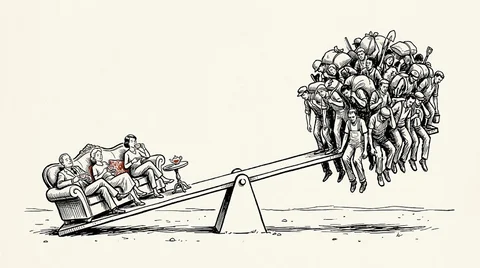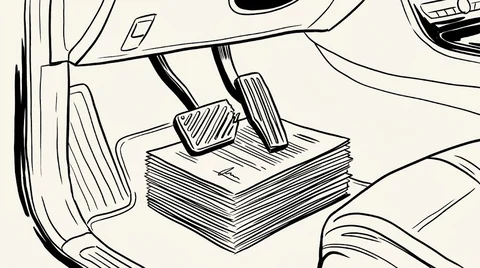


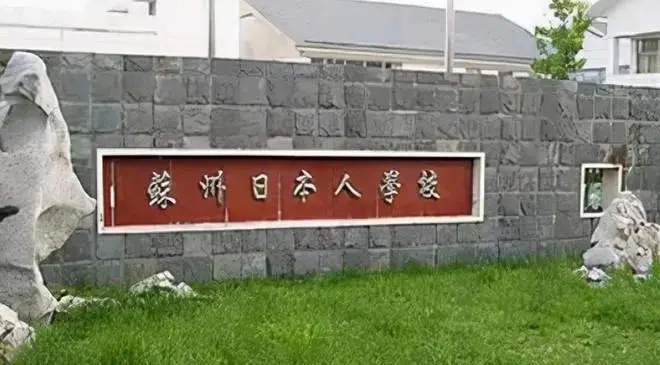
This is a passage I wrote in "Resisting False Hatred with Real People". Looking at the readers' comments, many people don't like it, mainly for two reasons: one is that they don't like this conclusion, feeling that I don't respect history; the other is that they don't like my method of calculation, feeling that I am frivolous. In short, it makes people uncomfortable.
So, I'm going to elaborate: why is anti-Japanese sentiment too far away from us? How exactly did I calculate it? And why do I insist on this method of calculation?

First, let's talk about closeness and distance.
The Japanese invasion of China is too far away from me. Not to mention me, my parents weren't even born, and besides, the Japanese didn't invade Sichuan where we live. If you ask if I have any special experiences in my growing up and daily life, the answer is really no.
So, if I were to talk about hatred, the Japanese invasion of China wouldn't even rank in the top 100 in my mind. This statement is likely to trigger another wave of emotional reactions. Don't worry, let me explain slowly.
As mentioned in the previous article, I value personal experience and believe that the emotions of personal experience are the truest. So, rather than saying I'm ranking, it's more accurate to say I'm seeking truth.
For example, I posted a video the other day of a food delivery worker whose electric scooter was confiscated. If I were that food delivery worker, my hatred for the city management would definitely be number one, far surpassing my hatred for Japan. I believe most of you readers feel the same way, which is normal human nature. I have no intention of inciting revenge; I'm just talking about emotions.
So, let's calculate. It's been 80 years since the Japanese invasion of China. Is it difficult to pick out 100 things that I hate more? Having said that, even if you still don't agree, isn't it less difficult to understand?
I'll list a few at random.
For example, the Great Famine mentioned earlier, that was my parents' personal experience, and many people in our village starved to death. Later, I read books, and some of the stories in them, frankly, were worse than the devils.
Then there's the family planning policy. My parents were fined for having me, and my second sibling was also born secretly. There are too many cases around me, and when you zoom out to China, there are countless examples. I still remember the Zhenping case, which is infuriating, and it only happened 12 years ago.
Then there are the left-behind children, tens of millions of families forced to separate for a living. When I used to do news, we did a special report on children leaving Beijing from other places. We filmed it at the train station, with parents and children saying goodbye, filled with reluctance, and it brought tears to my eyes (that report was also taken down).
And then there's the career I love. I spent at least 5 years finally entering the news industry, and then I worked for nearly twenty years. The industry was almost destroyed. If I say I don't hate it, I'm definitely not human.
These are all major events, and there are also specific personal experiences: being taken to the police station in Dongguan for not carrying a temporary residence permit; my child couldn't go to school one year because of Beijing's policies; being trapped at home and unable to go out two years ago... and so on.
What I've said above happened not long ago, the furthest being over 60 years ago, and the rest are basically within the last twenty or even one or two years; either my personal experience, or the experience of those around me, or news events known to all; so, putting these things ahead of anti-Japanese sentiment is very reasonable, right? It also conforms to human nature.
Next, let's talk about overall assessment.
What I mean is, if you have to treat Japan as a whole, there's not only hatred, but also love, so that needs to be calculated as well.
Let's take Japan as an example. I've been to the Yushukan Museum (part of the Yasukuni Shrine). As soon as you enter, there's a Zero fighter plane and an exhibition of elementary school students' theme paintings. The Yushukan has nearly twenty halls, basically defending the war and praising those who sacrificed for the country, which is the set of rhetoric I extremely hate, using collectivism to instigate individual sacrifice. But what I can't accept the most is the painting exhibition that poisons children's minds at the entrance. It's hard to imagine that Japan, as a modern country, still has such things, but this is also a part of Japan.
There are also good things. For example, we took our child from Sapporo airport, and our luggage fell on the bus. The next day, we took the same bus to look for it. The bus driver drove us to the lost and found, and after successfully finding our luggage, another staff member drove us to a place nearby where it was convenient to take a bus, and they were all very friendly and polite (although I couldn't understand them). There are many such small details, which is why, after returning from Japan, the child no longer says "Japanese devils"—you can't call that polite and enthusiastic old man a "devil".
Plus, I also quite like Japanese movies, which are simply the best in Asia, and Japanese running shoes and clothes, etc... Adding all these things together, if you have to make an overall evaluation (I don't agree with it, but many people are like this), do you hate Japan more or love Japan more?
At this point, let me ask again: when it comes to hatred, where would anti-Japanese sentiment rank in your mind?
Different people definitely have different answers. For example, some people may have victims of the Japanese invasion of China within three generations, and some people have had a smooth family life for eighty years without suffering any hardship... But I think that the family situations and life experiences of most people should be similar to mine, right? Anti-Japanese sentiment shouldn't rank too high, right?
Finally, let me explain why I insist on using this method of calculation?
Some people may feel that my method of calculation is itself a desecration. How can I calculate like a businessman? Time, space, closeness, distance, various parameters, the abacus beads clinking, in their eyes, there are things in this world that are inherently inviolable and sacred and unquestionable.
I'm sorry, I'm just that vulgar. In my opinion, nothing is so sacred that it cannot be questioned and discussed; you can question God, okay? I go to church and still complain, if there is a God, where was he during the Great Famine? Although the people in the church are very loving, it doesn't stop me from raising questions. There are also some people who are fierce to me and want me not to question. How is that possible? I dare to say: since the existence of mankind, all words spoken in the name of the sacred, their purpose is basically to make you stop thinking and shut up.
Ranking is not disrespecting history, nor is it denying history. Should I be indignant about Qin Shi Huang's burning of books and burying of scholars? No need, right? It's too far away. And, there's so much history that you can't read it all, unless you only read textbooks and not other history books, then how can you say that I don't respect history? So, people are always ranking, aren't they? Human memory is limited, and it's not big data artificial intelligence, the more information you eat, the better, or you'll go crazy.
This is not frivolous, this is honest, honestly facing yourself and accepting yourself. As mentioned before, human emotions are the source of happiness, joy, and even dignity, and you cannot belittle yourself. Your own pain is the most felt, and the pain of those around you is the most touching. I don't believe that anyone is different from me. Although "the infinite distance, countless people, are all related to me", but I just can't feel the same way with everyone—or you'll go crazy.
I'm not encouraging people to be completely selfish and deny the existence of noble people and noble things. Asking myself, when it comes to public spirit and moral courage (I think this is true patriotism), I should be able to rank in the top 1% of the Chinese people—what I mean is, there are still 14 million people ahead of me. I'm not particularly noble, but I'm far from being despicable. It's not low to take me as the standard. If the standard is too high, it will make people very excited, and they will be exhausted. In a society, if most people can avoid being excited and agitated, and can stick to the bottom line for a lifetime, isn't that good?
So, why do some people always want to make the ranking of anti-Japanese sentiment so high? I would say, it's shameful to boost rankings.