Why would Guangzhou, a city known for its openness and inclusiveness, suddenly lose its mind?
On December 8th, something ridiculous happened in Guangzhou.
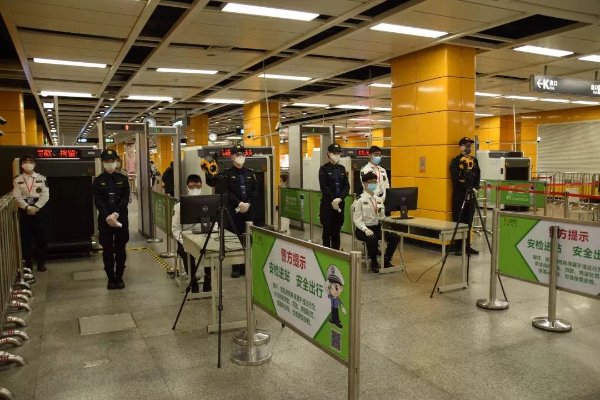
That day, Guangzhou Metro suddenly announced a new security check regulation: “People pass through the gate, objects pass through the machine.” There was no prior notice, no solicitation of opinions, it just came out of the blue. You’d think you were taking the subway? No, you were going through customs. Full-body scans with metal detectors, package inspections, treating every passenger as a suspect.
What was the result? The next day, Monday morning rush hour, long lines formed outside the subway stations. People waited in the cold wind, complaining. How long did this farce last? About ten hours. By Monday evening, everything was back to normal, as if nothing had happened.
Do you think this was just an ordinary decision-making error? Wrong. This precisely exposed the essence of a planned economy. What is a planned economy? It’s using one person’s plan to replace everyone’s choices.
Think about it, everyone taking the subway has their own plans. Some need to catch a flight, some have clients to meet, some have classes to attend, everyone has different time needs. But now? A simple security check order has driven everyone onto the same path, everyone must abide by the same rules, and everyone must sacrifice their time for some vague “safety”.
It’s like you opened a restaurant and business was great. Suddenly one day, the government comes to tell you: “For food safety, from today on, you have to test every dish three times, and customers will have to wait three hours to eat.” Are you running a restaurant or a hospital?
This is the common problem of a planned economy, it always thinks it understands your needs better than you do. It will say: “For your safety, for your health, for your future.” But it never asks if you’re willing.
What’s even more ridiculous? This self-righteous regulation didn’t even last ten hours. Why? Because it violated the most basic economic principle, scarcity. Everyone’s time is limited, you can’t pursue a so-called “perfect safety” and make everyone pay an infinite price.
This story isn’t over yet, the Guangzhou government departments seem to have suddenly contracted a “management hunger syndrome”:
Guess what tricks they came up with again? Restricting electric vehicles to only 15 kilometers per hour. Yes, you heard it right, 15 kilometers per hour. This isn’t riding a bike? It’s practically strolling.
What’s interesting is, how did the drafter of this regulation, Secretary Huang of the Guangzhou Electric Bicycle Industry Association, put it? He said: “This isn’t Guangzhou’s first creation, other places are doing the same.” Well, what logic is this? If others jump into a well, you jump too? Bloodletting therapy was once popular in history, should hospitals use this to treat illnesses now?
What’s even more brilliant is, he said: “For the safety of riders, our initial law enforcement will be humane, giving the lowest fines.” Wait, did I misunderstand? You first create an inhumane regulation, and then say that law enforcement will be a little more humane? Isn’t this admitting that the regulation itself has a problem?
They also said they would “suggest that Meituan adjust delivery times”. Do you see the problem? An industry association, why should it interfere with how a company operates? It’s like you opened a restaurant, and the neighborhood office comes to tell you: “From today on, your dishes must be steamed for two hours before serving to customers, for food safety.”
Let’s do the math: Previously, riders delivered 50 orders a day, earning 8,000 yuan a month, after the 15-kilometer speed limit, they can deliver a maximum of 20 orders a day, earning 3,000 yuan a month, where did the 30 orders lost go? Disappeared. Who will compensate for the 5,000 yuan less earned? No one cares.
You think it’s over? No, this is just the first domino:
Riders’ income decreased by 80%, massive unemployment; Takeout deliveries can’t be delivered, restaurant business decreases; Restaurants close down, employees lose their jobs; Electric vehicle factories have no one buying cars, workers lose their jobs; Platform companies’ revenue plummets, stock prices plummet.
A series of disastrous consequences will occur.
Like a butterfly effect, a seemingly simple speed limit can trigger a series of economic shocks. Why? Because the market economy is an organic whole, if you pull a thread, the whole cloth will move.
What is the real problem behind this policy?
Why can these policies, which are so absurd, still be implemented? Because the decision-makers don’t have to pay for the consequences.
Think about it, if an entrepreneur makes a wrong decision, what will happen?
The company loses money, he has to pay. The product is not good, customers will be lost. The service is poor, competitors will overtake.
But what about government departments?
If the policy fails, they don’t have to pay. The public is harmed, they are not responsible. Companies go bankrupt, they still get promoted.
It’s like someone playing mahjong, winning or losing is other people’s money, do you think he will be careful? Of course not. This is why they can casually say “suggest that Meituan adjust delivery times”, anyway, the cost is not borne by them.
What’s even more ridiculous? They say this is for “safety”. I ask you, who cares more about the safety of riders?
Is it the riders themselves, the people who run on the streets every day, or the “Guangzhou Dads” sitting in the office?
It’s like someone saying: “For your health, you can only eat boiled vegetables every day.” Not to mention who has the right to decide, the logic itself is ridiculous. Safety is important, but:
Should we build all buildings into air raid shelters for safety?
Should we ban everyone from driving on the road for safety?
Should we make everyone live in bungalows for safety?
In the final analysis, this is not protecting safety? This is using “safety” as an excuse to implement control.
Just like the sudden subway security check, on the surface it’s for safety, but in reality it’s demonstrating power: “See, if I say you have to be checked, you have to be checked, if I tell you to wait, you have to wait.”
Remember a most basic principle – the first lesson in economics tells us: “There’s no free lunch in the world.” Any policy has a cost, the question is:
Should this cost be paid?
Who should pay this cost?
Is it worth paying this cost?
What consequences will these policies bring? If implemented, the consequences will be serious.
Do you know how a city declines? It’s by killing its vitality bit by bit.
Let’s talk about the takeout industry first. Why is there takeout?
Because this is the result of market choices:
White-collar workers in office buildings don’t have time to eat out, restaurants want to sell more takeout to increase revenue, riders want to run more orders to earn more money.
Everyone gets what they need, that’s how this industry came to be. Now it’s good, the speed limit of 15 kilometers, what does this mean?
I’ll do the math for you:
A meal that could be delivered in 30 minutes now takes 90 minutes
The food is cold, the dishes are stale
Is this still called takeout? This is called waiting!
What do you think consumers will choose?
Either bring their own food, or endure hunger, or go to the cafeteria.
And then?
Takeout orders are down, riders are unemployed!
Restaurant business is bad, they close down!
Electric vehicles can’t be sold, factories go bankrupt!
New industries are gone, the city is regressing!
Some people say: “Then switch to cars to deliver takeout!”
This is even more ridiculous: the cost directly increases several times, traffic jams are more serious, and it pollutes the environment.
This is not solving the problem, this is creating new problems.
Do you know what’s most terrifying? This kind of policy will make the whole society regress. We used to say that the city has progressed because:
The division of labor is more detailed, the efficiency is higher, there are more choices.
But what are these policies doing now? They are pushing society towards self-sufficiency, even forcing everyone to cook their own meals.
What’s most ironic? Now the country is emphasizing: to expand openness, to develop new industries, to stimulate economic vitality
What is Guangzhou doing? Teaching the people of the whole country how to kill a sunrise industry.
Why is this worth pondering? Because it exposes a bigger problem – are some of our government departments serving or controlling?
Have you noticed a detail? Every time they introduce this kind of policy, they like to say “for your own good”:
For your safety, so you need security checks!
For your safety, so you need a speed limit!
For your safety, so you need control!
But have you thought about it:
What riders want is income, not the “safety” you decide for them!
What consumers want is convenience, not the “standards” you decide for them!
What businesses want is development, not the “rules” you decide for them!
What’s this like? It’s like a “dad” always thinks he understands your needs better than you: You want to eat spicy food? No, it’s bad for your stomach; You want to stay up late? No, it affects your health; You want to start a business? No, the risk is too high.
What’s even more critical is that these decisions are often made on a whim.
I ask you, how is a city’s business environment destroyed? It’s destroyed bit by bit by “good intentions”.
Remember a most basic principle:
What is the core of a market economy? It’s the right to choose.
What is the government’s responsibility? It’s to maintain the rules, not to replace choices.
Where does development come from? From the spontaneous order of the market, not from administrative mandates.
Guangzhou, as the forefront of reform and opening up, should understand even more: if you control too much, you will die too quickly; if you restrict too much, you will lose too much, if the rules are too strict, you will become too rigid.
Finally, I’ll give those who like control a sentence:
Open up the market, and the government can play a better role
Reduce intervention, and the economy can truly come alive
Believe in choices, and the city can always maintain its vitality
Discover more from 自由档案馆
Subscribe to get the latest posts sent to your email.