Around 11 p.m. on December 4, a sudden ground collapse occurred at the construction site of the Shenzhen-Jiangmen Railway’s 5th section in Zhoushi Road, Hangcheng Subdistrict, Bao’an District, resulting in 13 on-site workers missing. After waiting for 70 hours, as of the time of publication, the families have not yet received further information about their missing relatives.
Reporter: Qin Si
Intern Reporter: Wei Zhaoyang
Collapse and Evacuation
The road closure began around 4 p.m. Li Xin’s grocery store is next to Zhoushi Road, an 8-lane main road that runs through the southwest corner of Bao’an District, Shenzhen. The area is surrounded by several industrial zones and a large school, and usually has a high traffic volume, often congested during rush hour. On the afternoon of December 4, Li Xin noticed traffic police directing detours. By around 4 p.m., only one lane for motor vehicles and one lane for non-motor vehicles were allowed to pass southbound. Li Xin heard from people passing by the closed road that “there was a slight collapse in the high-speed rail construction” and “the road surface had some cracks.”
At 9 p.m., all motor vehicle and non-motor vehicle lanes on Zhoushi Road were closed, and people leaving work had to detour home. The owner of a hardware store on the side of the road, Zhuang Hui, told this magazine that around 9 p.m., he received a notice from the street staff asking him to close his shop early and go home, but without explaining the reason. Around 11 p.m., the notice turned into “forced evacuation.” At that time, Li Xin’s store had not yet closed, and the street office and police came to the store, “without saying what exactly happened, just saying there was danger ahead and a forced evacuation was required.” Li Xin, whose home was also nearby, had to go to a hotel in Hezhou Village, two kilometers away, with her family.
Around 11 p.m., Wang Rui, who lived in the Baozhou Industrial Zone dormitory, heard a loud speaker downstairs, “Everyone take your belongings and gather downstairs.” “It was very loud.” Wang Rui said she was “dazed with sleep” and initially ignored it, just feeling annoyed, thinking it was the school behind her broadcasting a notice to the students. It wasn’t until she heard the sound of doors opening and footsteps downstairs in the neighboring dormitory that Wang Rui realized something was wrong. She didn’t even change her pajamas and followed downstairs. As soon as she got to the first floor, she heard “the outside collapsing with a loud bang, like thunder.” In the dark of night, Wang Rui vaguely saw the direction of the gate, which was next to Zhoushi Road, and a tree had fallen down.
People who ran out were asked to stay away from the collapse site. In front of Wang Rui was a middle-aged male worker, who was pulling a manager, saying “my brother fell down, I can’t reach him.” He kept calling his brother’s phone. The gate was blocked by the collapse, and they could only break the wall to get out. “It took about half an hour to break the wall, but it wasn’t completely flattened, you had to lift your feet to get out, and you couldn’t even ride an electric bike.” While waiting for the wall to be broken, Wang Rui ran home to change clothes, “I only took my ID card, I didn’t even have time to take the charger, my hands were shaking when I took things, I was scared.”
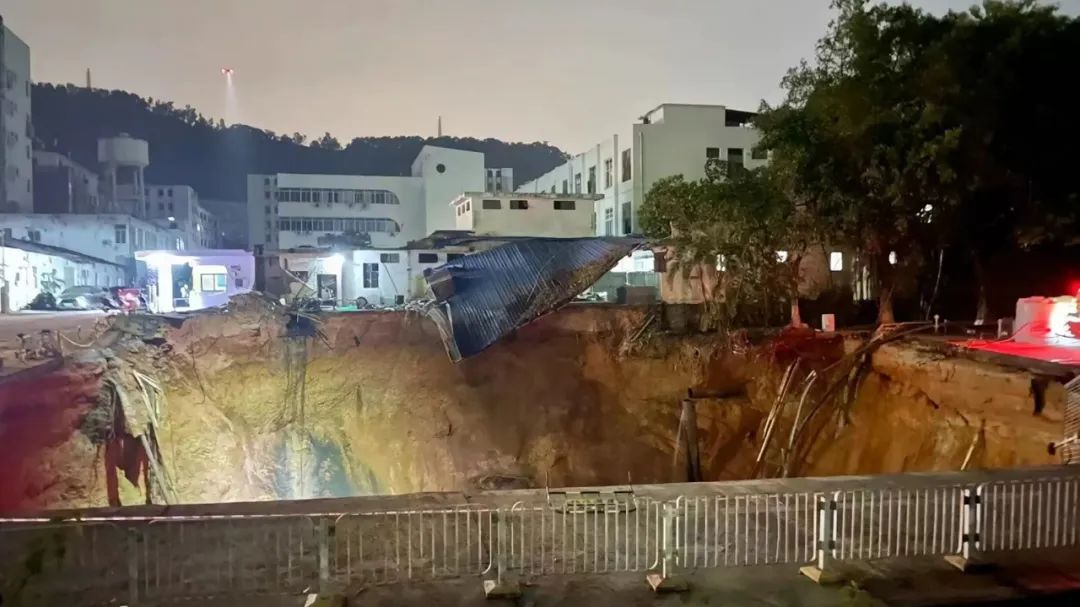
Around 11 p.m. on December 4, 2024, Shenzhen, Guangdong, a ground collapse occurred at the construction site of the Shenzhen-Jiangmen Railway’s 5th section in Zhoushi Road, Hangcheng Subdistrict, Bao’an District.
In the early morning of December 5, the Emergency Management Bureau of Bao’an District, Shenzhen, issued a situation report stating that around 11 p.m. on December 4, a sudden ground collapse occurred at the construction site of the Shenzhen-Jiangmen Railway’s 5th section in Zhoushi Road, Hangcheng Subdistrict, and according to reports from the construction unit, 13 on-site workers were missing. According to the on-site pictures released by CCTV News, the width of the pit at the collapse site spanned 7 lanes of Zhoushi Road, extending to the buildings within the Baozhou Industrial Zone, with a depth of tens of meters, exposing brick-red soil, and the pit was filled with a mixture of water and soil.
The Shenzhen Fire Department reported that at 11:24 p.m. on December 4, 2024, after receiving the report, the Shenzhen Fire Rescue Detachment Command Center successively dispatched 59 fire trucks and 219 fire rescue personnel to the collapse site for disposal. On the evening of December 5, Guangdong Province established a provincial government investigation team for the major collapse accident of the Shenzhen-Jiangmen Railway. According to the Shenzhen Special Zone Daily, as of December 6, the fire rescue team had gathered 48 vehicles and 198 personnel, as well as more than 10 types of rescue equipment, including detection, lighting, and leak plugging, and had organized 4 rescue teams in the core area of the collapse, and the rescue and disposal work is underway.
The situation of the collapsed road section that night
The collapse point was only 100 meters away from the stores of Li Xin and Zhuang Hui, who evacuated on the 4th. On the 5th during the day, the impact of the collapse on the surrounding residents continued. Chen Fang, the owner of a pharmacy 200 meters away from the collapse site, received a notice from her child’s elementary school teacher in the group chat in the morning, “The whole school will be closed on Thursday and Friday, and elementary school students and junior and senior high school students who go to school today will not return to school.” Around 12 noon, a street office vehicle passed by her store, and the loudspeaker played an emergency evacuation notice. Chen Fang and her family simply packed enough clothes for two days and walked out of the house with a large number of residents who were being evacuated, “There were a lot of people, like the Spring Festival travel rush.” Everyone walked in the same direction, walking 2 kilometers before leaving the blocked road section. Chen Fang told this magazine that most of the people living in this area are migrant workers from outside Guangdong who came to Shenzhen to do small businesses, so the main destination for evacuation was to find a hotel to stay.
Complex Geology and High-Difficulty Construction
Chen Fang’s store has been open on Zhoushi Road for seven or eight years, and her family lives upstairs in the store. She remembers that the construction next to the store started more than a year ago, and she heard that it was for building a railway. But the construction was mainly underground, and she usually couldn’t hear the construction sounds. “In the last month or two, it’s possible that the underground construction has reached our section. I sit in the store and can feel the ground shaking every day, once or twice, always during the day. One vibration is a ‘dong’ sound, like a gunshot, suddenly coming, not continuous.”
The construction site where the collapse occurred belongs to the 5th section of the Shenzhen-Jiangmen Railway. The Shenzhen-Jiangmen Railway is a high-speed railway from Shenzhen City to Jiangmen City in Guangdong Province. The main line of the project is about 116km long. It is part of the national “eight vertical and eight horizontal” planned coastal high-speed railway. The construction period is 5 and a half years. The preliminary section of the project, the Pearl River Estuary Tunnel, started construction on July 2, 2020, and officially started construction on October 9, 2022, and is expected to be operational in 2028. The Shenzhen-Jiangmen Railway crosses 5 cities, connecting Shenzhen, Dongguan, Guangzhou, Zhongshan, and Jiangmen in Guangdong. After the completion of this project, Shenzhen and Jiangmen can be reached within 1 hour, and the time from Shenzhen and Hong Kong to the less economically developed western Guangdong will be reduced by half.
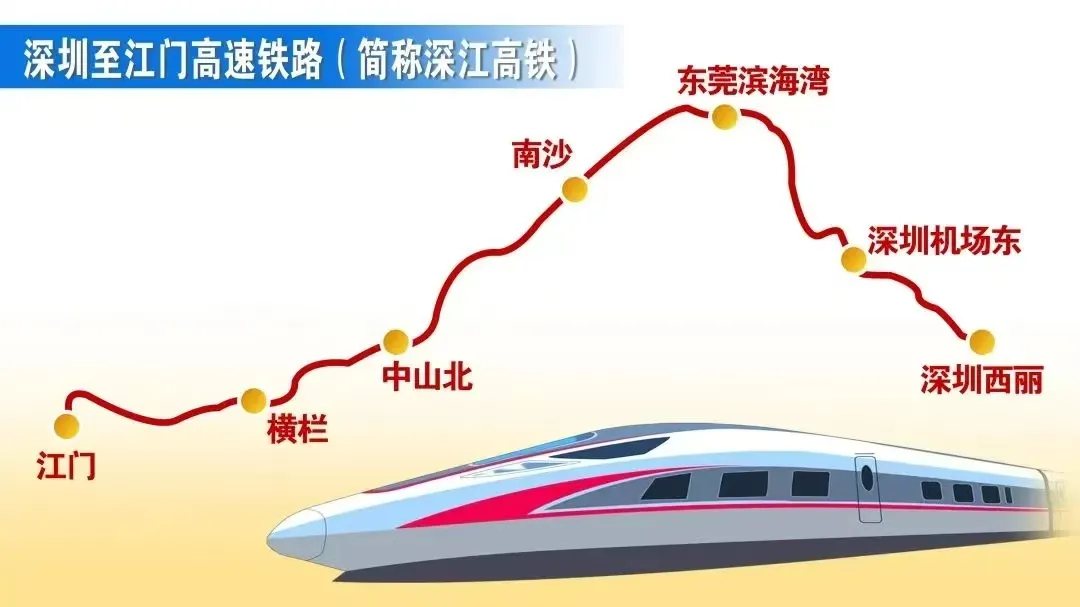
Shenzhen-Jiangmen Railway route map (Source: China Railway)
The 5th section project of the Shenzhen-Jiangmen Railway is the Shenzhen Airport East to Shenzhen North connection line, undertaken by China Railway Fourth Bureau, with a total length of 20.06 kilometers, and is a “one road, two tunnels, two bridges” structure. According to previous reports in the Shenzhen Special Zone Daily, this section of the project has the characteristics of a wide range of national environmental protection areas, difficult demolition and coordination, and high construction difficulty. The collapse point is located in the Shenguan Tunnel (connection line). The person in charge of the Shenzhen-Jiangmen Railway of China Railway Fourth Bureau once introduced to the media that the Shenguan Tunnel (connection line) has a total length of 7324.878 meters, and is a tunnel constructed by a combination of drilling and blasting methods and shield tunneling methods, in which the construction of a large-diameter shield tunnel with a composite formation and soil pressure mud-water dual-mode densely passing through various buildings is the first case in the country.
Lin Bin, a geotechnical engineering expert who has long studied railway and high-speed rail engineering technology, told this magazine that the large-scale collapse at the Shenzhen-Jiangmen Railway construction site may be related to the erosion of groundwater. Lin Binyu mentioned that Shenzhen’s geological conditions are special, with widespread red clay and many fractured and broken zones, which are “unfavorable geology” in engineering, and are a challenge for railway construction in the area. “Red clay is a special type of soil, and groundwater is prone to leakage. The construction of railway tunnels in the area causes disturbance to the strata, and the groundwater seeps, and the original balance is broken.” Lin Binyu told this magazine, “Groundwater seepage produces erosion in the strata, leading to the formation of large voids underground. If there is a lot of groundwater around and the dynamic water pressure is high, it is easy for the underground to be hollowed out more and more, and the ground will collapse to a certain extent. If there is a layer of high-water-content quicksand underground, it may also be hollowed out under construction disturbance. In areas with concentrated rainfall in the south, such as Guangdong, the cause of the collapse is often related to the action of groundwater.”
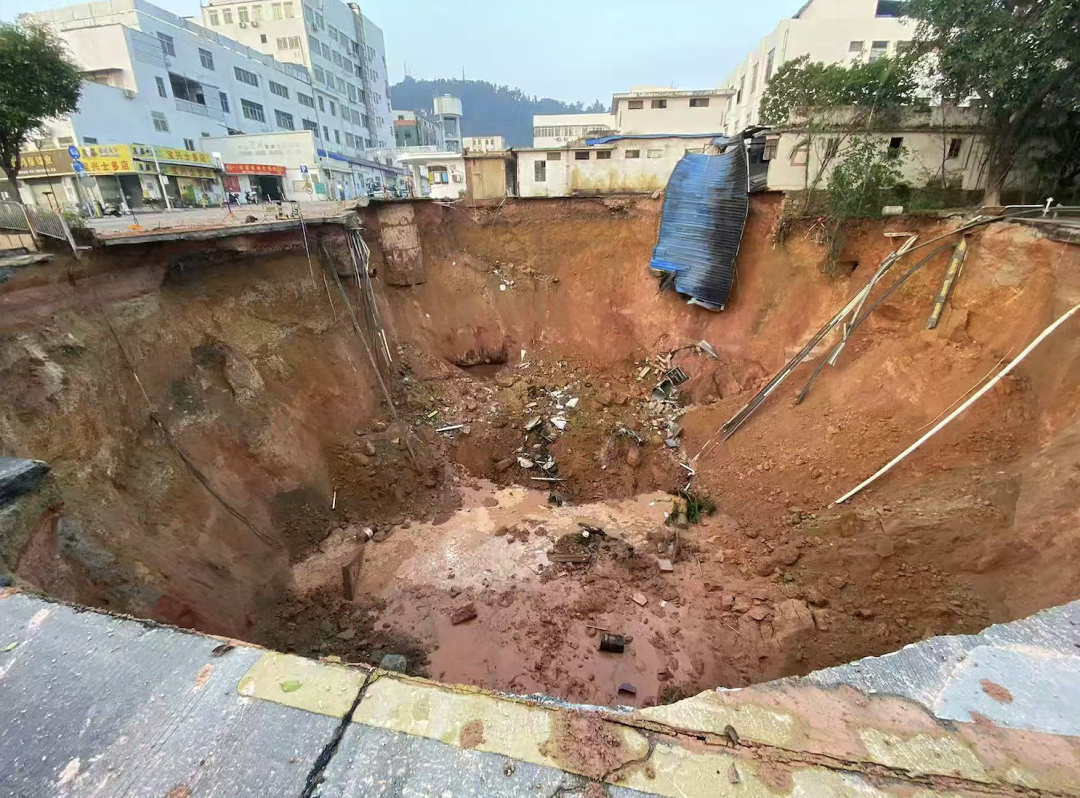
Collapse accident site map
A paper titled “Analysis of the Characteristics and Causes of Ground Collapse Disasters in Shenzhen City” published in the 2022 “Geological Science and Technology Bulletin” and co-authored by staff of the Shenzhen Geological Bureau, mentioned that Shenzhen City attaches great importance to the prevention and control of urban ground collapse, and has established a special ground collapse prevention and control agency since 2013, so it has complete records of ground collapse accident data. From 2016 to 2020, Shenzhen experienced a total of 1,430 ground collapse accidents, resulting in 7 deaths and property losses of about 238.225 million yuan. The article points out that ground collapse disasters in Shenzhen are in a continuous growth stage, the vast majority of which are small-scale collapses, and the vast majority occur in the rainy season, and the main collapse sites are municipal roads and sidewalks; the causes of collapse mainly include pipe network damage, damaged culverts and rivers, improper construction, and rainwater erosion. Pipe network damage and improper construction are the main causes of ground collapse.
Lin Binyu said that before railway construction begins, geological surveys will be conducted, but the accuracy of existing survey technology is difficult to fully cover the situation of groundwater. “For example, two boreholes are drilled to conduct surveys according to a ratio, and a small area between the two boreholes may not be surveyed. Sometimes, when problems are found during construction, additional drilling is needed to supplement the survey. In addition, groundwater is hidden and invisible, and we now have simplified links in the calculation method for groundwater. The actual conditions encountered in engineering may not be predictable through calculation.”
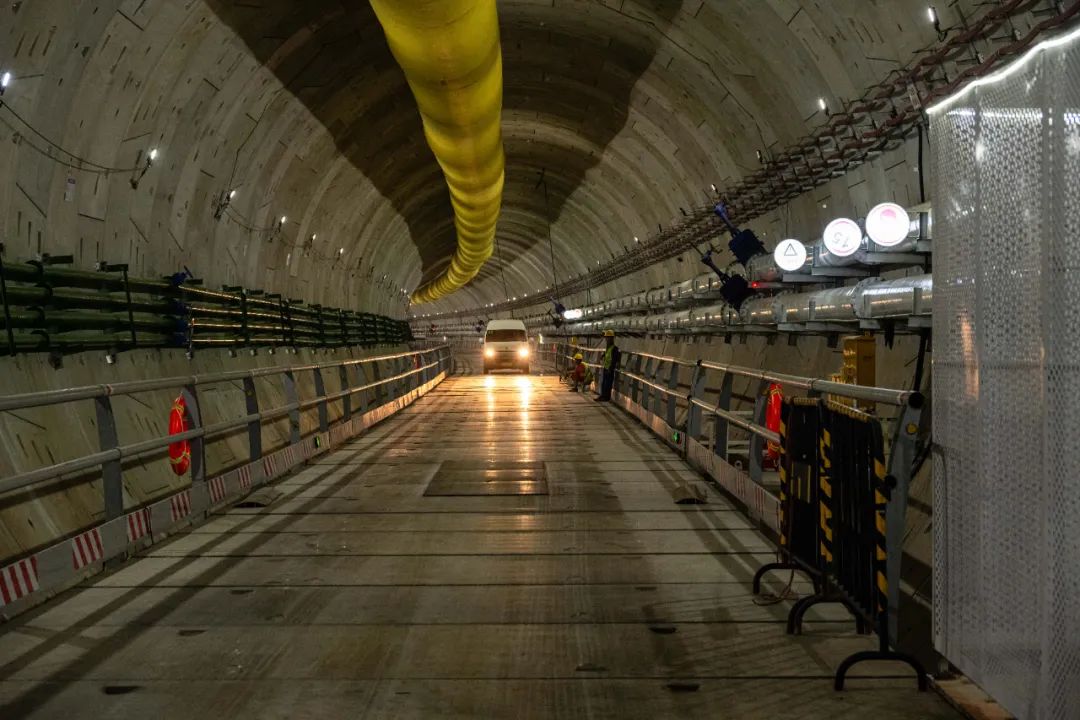
March 22, 2023, Dongguan, Guangdong, Shenzhen-Jiangmen Railway project (Shaxi section). (Photo | Visual China)
A worker who performed water pumping operations in the Shenguan Tunnel connection line this year in April or May told this magazine that there were about 10 workers in the underground tunnel at that time, using excavators to dig tunnels diagonally into the mountains, which were thirty or forty meters deep. They were building structures and waterproofing while digging. He and two or three other workers were responsible for pumping water, draining the mud and water to the sedimentation tank in the tunnel. Although the soil in the tunnel would seep water, it was a normal amount.
Another worker who was operating an excavator underground before the tunnel collapse told this magazine that he started working at this construction site this year. The work is a 12-hour shift system, with day and night shifts, and there are about three hours of work in each shift. On December 4, he observed that the tunnel showed signs of falling debris, “soil blocks falling, quicksand, and completely broken,” at 1 p.m. “At that time, we normally detonated explosives for one or two meters, and the rock formation inside was not right, it was obviously looser, and the large soil blocks that fell could be scattered with a light tap. Later, a hole appeared directly above the tunnel roof, and water flowed down, and mud and soil debris fell at the same time. I have been doing tunnel construction for more than ten years and have never encountered this situation.” The worker told this magazine that the safety supervisor next to him went to inform the project department at the tunnel entrance, and then they received a stop-work notice and withdrew, but some construction and management personnel remained on the scene to rescue. “I have been working here for almost a year, and the geological conditions were relatively good before, which was a relatively hard rock formation. This period of time has obviously felt worse and worse, and the soil layer is getting looser. A month ago, we changed an excavation plan.”
A geotechnical engineer engaged in settlement analysis told this magazine that the collapse of tunnel construction often has premonitions of rock and soil displacement, such as road cracks, or workers encountering large-scale soil debris falling in the tunnel. Before the incident, the construction site had already stopped work and closed the road, which may have been a premonition, and the construction personnel tried to eliminate the danger through grouting and other methods. “We should have left some time to observe the changes in the terrain and measure the points with total stations and other instruments, and the people on the ground should evacuate the dangerous area in time. But sometimes the construction period is tight, and there may be no way.”
70 hours of missing contact
After the collapse, this magazine contacted the families of several missing persons. According to the families, among the 13 missing people, some were construction workers on the construction site, and the rest included technical personnel and project managers from the construction company. As of the time of publication, the missing time of the 13 people has exceeded 70 hours.
Li Ziyue’s younger brother, Li Zicheng, is a technical staff member of China Railway Fourth Bureau, 23 years old, and has just joined the company for more than a year. Regarding the news of his brother’s disappearance, Li Ziyue “didn’t believe it at first, then didn’t dare to believe it, and now can’t accept it, and is devastated.” Li Ziyue told this magazine that her father received a phone call at 9 a.m. on December 5. “He said your son is missing, you should buy a high-speed rail ticket and come over now. That’s all he said, and he didn’t say anything else. I also called the police, I thought it was a scam.” It wasn’t until after the police verified it that Li Ziyue’s family packed their things and took the high-speed rail from Henan to the south. At first, Li Ziyue still had some hope for her brother’s situation, “Could it be that he was kidnapped by bad people, or could it be that something happened on the construction site and he didn’t dare to tell his family?” It wasn’t until she saw the news on social media on the high-speed rail that she realized that this disappearance was “a matter of life and death.”
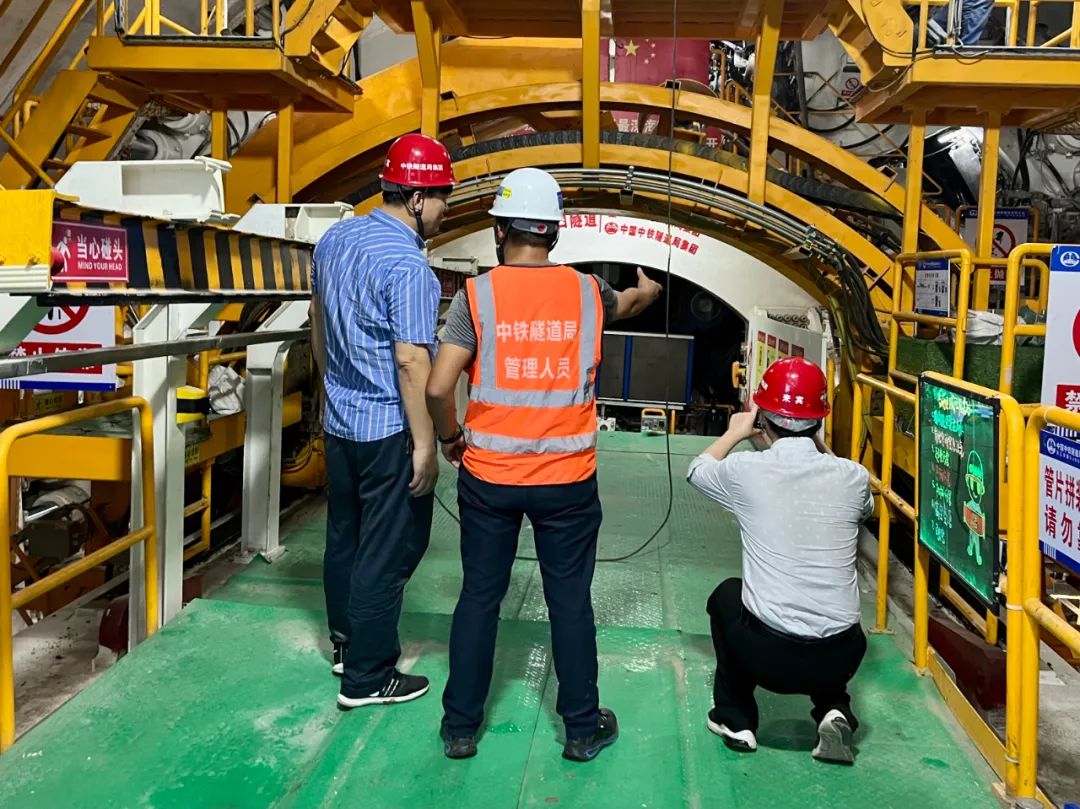
Guangzhou, the construction of the Pearl River Estuary Tunnel of the Shenzhen-Jiangmen Railway is proceeding in an orderly manner, and the construction personnel are working hard on site. (Photo | Visual China)
Li Ziyue’s deepest impression of her brother’s job is that he was busy. “(In 2023) He joined the company in July, and when he went home for the Chinese New Year, he only rested for one day in between, and he didn’t rest on weekends either, and he didn’t get off work before 9 p.m.” Li Zicheng transferred to work on the Shenzhen-Jiangmen Railway half a year ago, and since then his work has become even busier. “He works until 10 p.m. every day.” According to Li Ziyue’s understanding, her brother lives in the company dormitory, usually at the project department in the morning, and goes to the construction site in the afternoon, and is picked up and dropped off by the company. He has been on a three-point-one-line schedule for more than a year, with a monthly salary of about 10,000 yuan. The last time she saw her brother was this July when she held a full moon party for her child, and her brother specially took a leave of absence to visit. On that occasion, Li Ziyue noticed her brother’s fatigue, “He would take off his glasses and keep rubbing the middle of his eyes. My brother is a very fair-skinned person, and he was tanned black.”
In Li Ziyue’s eyes, her brother has always been excellent. Before graduation, Li Zicheng had already obtained a job at China Railway Fourth Bureau. “During the induction training, my brother was an outstanding employee.” In Li Ziyue’s view, her brother has been able to endure hardship, is rational, and has strong adaptability since he was a child. Li’s parents came from a rural area in Henan, and they earned money by working in a clothing factory outside to support their three children. They attach great importance to their children’s education, and there are few college students in the village, so when Li Zicheng was admitted to a key university with a science and engineering specialty in Henan, the whole family was very happy. “He originally wanted to study computer science, but was transferred to mining engineering. He thought it was particularly good, and he said that this major ranked first in the school.” In college, Li Zicheng was also very frugal, and he spent most of his energy on studying. “He only wore two sets of clothes a season, and his living expenses were 1,000 yuan a month, while other students spent 2,000 yuan.”
Li Ziyue remembers that the family approved of this job at the time. “At that time, we felt that state-owned enterprises provided better security and were safer, and we were considering that he was on the railway and didn’t need to go down to the mine.” The family was not completely without worries. “Every time my mother called him, the last sentence was to remind him to be careful and not to have any accidents. He always said that it was relatively safe.”
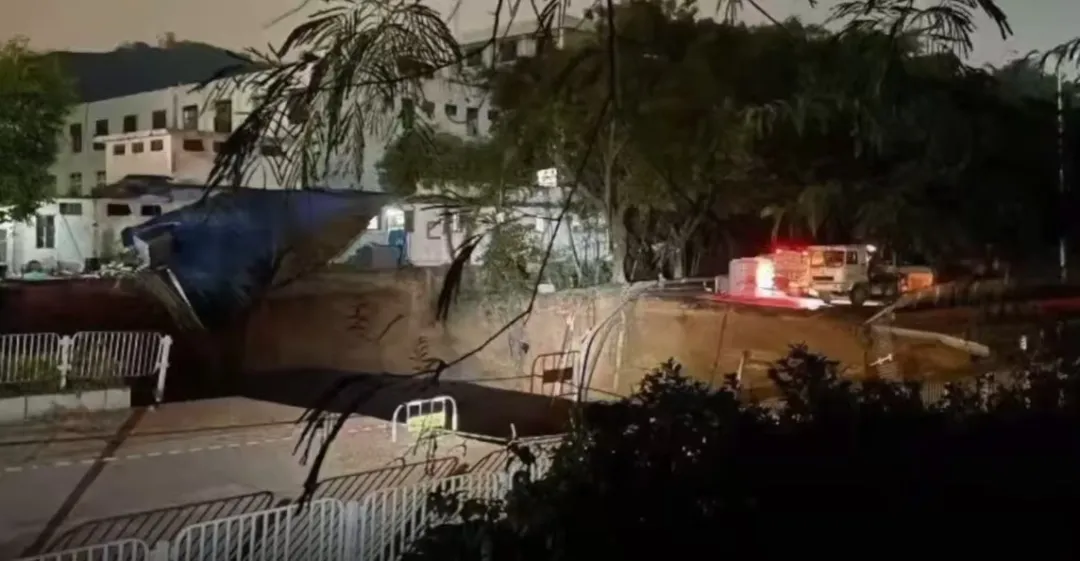
The on-site map of the collapsed road section
Among the employees of China Railway Fourth Bureau who were missing with Li Zicheng, there were several young technical personnel of his age, and several project managers and directors in their forties, including 37-year-old Zhu Xiaohui. Zhu Xiaohui’s friend told this magazine that Zhu Xiaohui grew up in rural Jiangxi, and worked his way up from a grassroots technical staff member to the director of the engineering technology service center. “He is a very powerful senior engineer.” This magazine found multiple reports on Zhu Xiaohui’s honorary commendations on the official WeChat account of China Railway Fourth Bureau. These reports show that Zhu Xiaohui started working in 2009 and has participated in several high-difficulty national key engineering projects, including super-large bridges and tunnels and high-speed railway projects. In project management, Zhu Xiaohui led the technical team to invent new tooling processes, “which greatly improved the on-site construction production efficiency and construction operation safety.”
In the friend’s impression, when Zhu Xiaohui was a project manager in the past few years, “the pace was very fast, and the pressure was also great, and there were few opportunities to go back home to rest and spend time with his two daughters. He was stationed at the project construction site, and generally could only go home for the Chinese New Year. Engineering people basically have no concept of weekends, and the office is home.” In the past two or three years, Zhu Xiaohui was promoted to director, and his friend felt that Zhu Xiaohui’s business trips had increased after his promotion, “averaging 200 days of business trips a year. He often goes to various places to be an expert and review construction plans.” The friend remembers that Zhu Xiaohui was not in Shenzhen the last time they met, “This time he should have come to this project temporarily.” This magazine learned from the family of another missing person that in addition to Zhu Xiaohui, there was also a 38-year-old project manager who was also transferred from another construction site an hour’s drive away to the 5th section of the Shenzhen-Jiangmen Railway on the night of the collapse, and the reason for the transfer was “emergency rescue.”
When Li Ziyue spoke to this magazine, she had been sitting in a hotel in Shenzhen for two days, waiting for the progress of the rescue. Because she had been crying and couldn’t eat, she could no longer breastfeed her 5-month-old child. The child couldn’t get used to formula milk and kept crying. Her missing brother once told her that he wanted to “lay a foundation” for this nephew who was still an infant. “He said to me with certainty, ‘Sister, I want to make a career in Shenzhen, and I want to lay a foundation for my nephew, so that his future will be easier, and he will have a place to live in Shenzhen.'”
Zhang Feng, a worker from Henan, is also on the list of missing persons. His sister, Zhang Qiao, also set off for Shenzhen with her sister-in-law on the morning of the 5th. Throughout the day on the high-speed rail, she was worried and frantically refreshing the new news about the rescue on the Internet, “I just want to know if anyone has been rescued so far, my heart hurts so much, I don’t know if there is any possibility of survival.” Zhang Qiao said that her brother is the pillar of the family and has two children. On the high-speed rail, Zhang Qiao never told her sister-in-law about her brother’s disappearance, but only said that he was injured. Zhang Qiao’s brother is 36 years old and works everywhere, “without a fixed construction site.” Zhang Qiao and her sister-in-law don’t know exactly what Zhang Feng was doing at the collapsed construction site. “A surviving worker said that he went to the toilet, and the collapse happened as soon as he turned around.” This worker told Zhang Qiao that they were working at this construction site for the first day.
(At the request of the interviewees, all the characters in the text are pseudonyms)
Discover more from 自由档案馆
Subscribe to get the latest posts sent to your email.