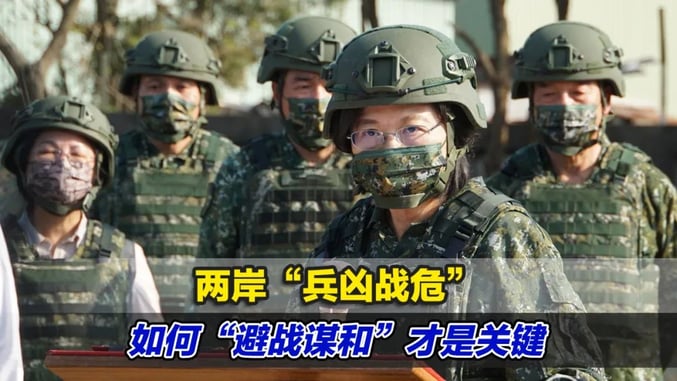
As the US election approaches, heavyweight figures and think tanks in the US have spoken out, calling for the protection of Taiwan. Mike Pence, the former US Vice President under Trump, said that Taiwan is a barrier against China, and that Taiwan’s fall could trigger a nuclear arms race, so Taiwan must not fall.
Famous American scholars and former senior officials of the Department of Defense have published articles pointing out that “Taiwan is today’s West Berlin”, and that China’s unification of Taiwan is the strongest event to promote nuclear proliferation in Asia, and the United States cannot afford to lose Taiwan.
There are also some important think tanks and scholars who have expressed that the United States should protect Taiwan.
The reason why Pence, who has been silent for a long time, has spoken out publicly seems to be directed at Trump’s Taiwan policy. Trump recently said in an exclusive interview with Bloomberg News: “Taiwan is 9,500 miles away. It’s only 68 miles from China.” This statement. “In an exclusive interview with Bloomberg Businessweek, he said that Taiwan has taken away all of America’s chip business, and Taiwan should pay the United States for its defense.
Bloomberg News pointed out in its report that Trump believes that defending a small island on the other side of the earth is practically difficult. Pence fiercely criticized Trump’s remarks as a typical representation of isolationism, reflecting a dangerous and narrow understanding of America’s role in the world and ignorance of the far-reaching consequences of America’s disengagement from the world.
Pence and Ed Feulner, the founder of the American conservative think tank Heritage Foundation (AEI), wrote an article in the Washington Post titled “We Cannot Give in to Isolationists. Taiwan Must Not Fall”, citing a top-secret document from MacArthur in 1950, warning people that if China is allowed to dominate Taiwan, America’s strategic interests will be seriously harmed, “which will be the most serious disaster”.
Pence and Feulner said that for more than 70 years, the United States has followed the warning of General MacArthur, and supporting Taiwan has been the cornerstone of the United States’ strategy in the Indo-Pacific region for decades. They spent some space explaining that Taiwan is a barrier against China and anti-communism, and believe that if the United States abandons Taiwan, the United States’ security guarantees will be regarded as empty promises, which will endanger the security and prosperity of the United States and the free world.
The two people in the article are worried that a “new and disturbing isolationism” is emerging within the Republican Party, advocating that the United States abandon Taiwan and other allies. They call on the American people not to give in to isolationists and must not let Taiwan fall.
It is puzzling why Pence and Feulner believe that “Taiwan’s fall could trigger a nuclear arms race”? The two spent more space elaborating on this point of view, and the author noticed that the two did not provide any evidence to explain it, but rather some speculation.
Professor Ericson of the US Naval War College and Gabriel Collins, a research fellow at the Baker Institute for Public Policy at Rice University and a former China analyst at the Department of Defense, recently released a research report “Taiwan’s Annexation: The United States and Its Allies Cannot Retreat from This Failure” (hereinafter referred to as “Retreat”) also said that this will intensify the nuclear competition among the three major powers of China, the United States, and Russia, and India, Pakistan, as well as Japan, South Korea, Iran, Saudi Arabia, and Israel may also be forced to develop or increase their nuclear capabilities. But they did not specify why this would happen.
It is worth noting that recently this view has been rampant in the US political circles and think tanks, with strong words and alarming remarks, which should be deliberately intended to cause panic among the US and Western allies and jointly deal with China’s unification.
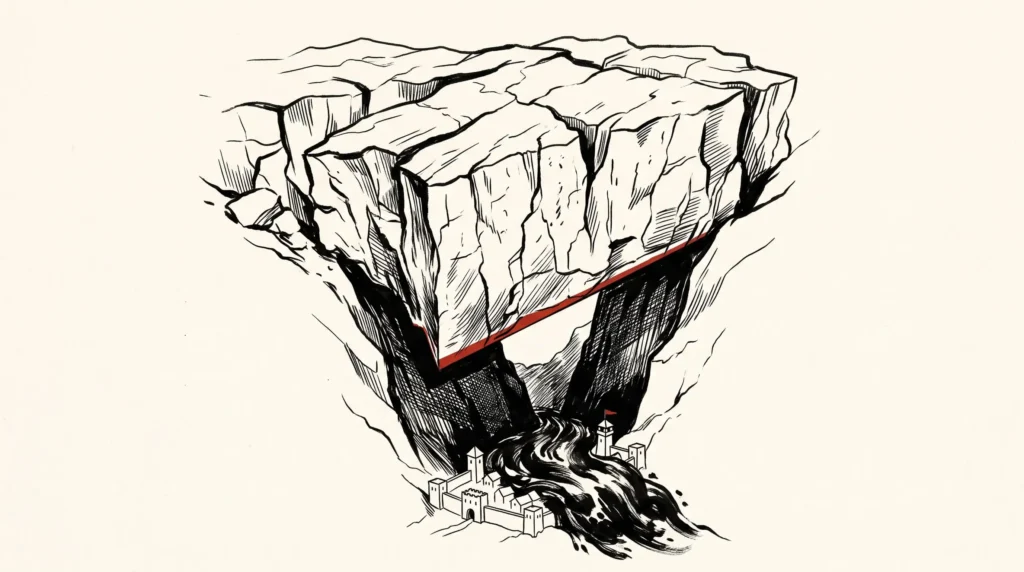
“Retreat” compares Taiwan to West Berlin back then, and thus concludes that this Taiwan Strait conflict concerns the key interests of the United States and its allies, the post-World War II international order, and the peace, prosperity, and freedom it supports.
The article warns that China’s successful annexation of Taiwan will bring devastating consequences to the United States, and US policymakers must urgently take deterrence actions.
This view has gained widespread support from American think tanks.
Brian, an assistant professor at the US Naval War College, praised “Retreat” for appropriately comparing Taiwan to West Berlin. He said that the Taiwan issue has become a symbol of US-China relations: “The future of the island of Taiwan will be seen as a weathervane, revealing which side, Beijing or Washington, is more successful in adhering to, maintaining, and expanding its vision of international political operations.” He pointed out that if China takes over Taiwan, the biggest impact will be the destruction of the international order that the United States has built and led since 1945. He said that if the United States intervenes but still fails to maintain Taiwan’s political autonomy – which could lead to a serious loss of credibility, confidence, and prestige for Washington in maintaining the existing international order, “especially after Russia expanded its aggression against Ukraine in 2022.”
Brian also worries that this may lead many countries to choose to adopt more pro-China policies and refuse to accept the norms and values traditionally supported by the United States, Western Europe, Canada, Australia, and other countries, including freedom of navigation and the protection of human rights.
Ruan Yi, a senior researcher at the East-West Center in Hawaii, said that if China can successfully “forcibly annex” Taiwan, whether China defeats the United States in the battle or the United States refuses to intervene, this will mark the end of the United States’ strategic advantage in Asia. This will deal a heavy blow to the United States’ long-term plan to promote democratization globally.
“Is Taiwan worth the United States sending troops?”
“Retreat” cited Biden’s four public statements that the United States will send troops to defend Taiwan if Beijing uses force to attack Taiwan. But it also regretfully stated that the White House later clarified that the US policy towards Taiwan has not changed and there is no plan to abandon the “strategic ambiguity” policy.
Collins, the first author of “Retreat”, believes that Taiwan is more worth defending for the United States than Ukraine and the Middle East. He asked the Taiwanese people to learn the martial spirit of Israel. He said that in the Middle East, the United States has basically openly stated that it is willing to use military force to protect about 20% of the world’s oil supply transported from the Strait of Hormuz and the Gulf region, but Taiwan accounts for about 90% of the world’s advanced semiconductor production.
However, the article believes that the American public has not reached a consensus on whether to send troops to protect Taiwan. It cited a poll by the Washington think tank “Defense Priorities”, in which only 30% of the more than 1,000 Americans surveyed last month said that the United States should defend Taiwan and prevent China’s invasion, considering the possible costs; 44% of the respondents said they strongly agreed (19%) or somewhat agreed (25%) that avoiding war with China is more important than Taiwan’s political autonomy; 66% of the respondents believe that the United States should require Taiwan to increase investment in containing China’s capabilities as a prerequisite for the United States’ commitment to defend Taiwan.
US national security experts believe that although Taiwan is of extraordinary value to the United States, it is worrying that Taiwan and the United States are currently both psychologically and in terms of collective morale unprepared, and have not yet reached a social consensus of uncompromising and fighting to the death against China’s attack on Taiwan.
Brian believes that the psychological preparation of the American people is far from being emphasized enough: “The American people are simply not prepared (nor have they been told to prepare) to face a major power war, a conflict that will mobilize the resources of the republic, the intensity and duration of which may be unseen for generations, and may require huge sacrifices of manpower and financial resources.”
Brian believes that the psychological cognition of the Taiwanese people is very important, and the fundamental identity dispute must be resolved – that is, who they are and how they are related to the political entity of China (not necessarily the People’s Republic of China). In his view, the Taiwanese people need to reach a certain minimum level of unity and social cohesion on the question of “Who are we?” or “Who are we definitely not?”
He again proposed that Taiwan should comprehensively adopt a “porcupine” strategy, using asymmetric means to counter China’s advantages. He also proposed to form some kind of civilian army, increase strategic reserves of food, fuel, and water, and prepare backup systems for cyber and physical attacks against critical infrastructure, and so on.
Collins asked the Taiwanese people to learn the martial spirit of Israel.
In a recent article “Taiwan Fallacy” published in “Foreign Affairs”, Professor Jonathan Kaverly of the US Naval War College said that Taiwan’s role in containing China is limited, and the cost of the United States protecting Taiwan is too high and not worth it.
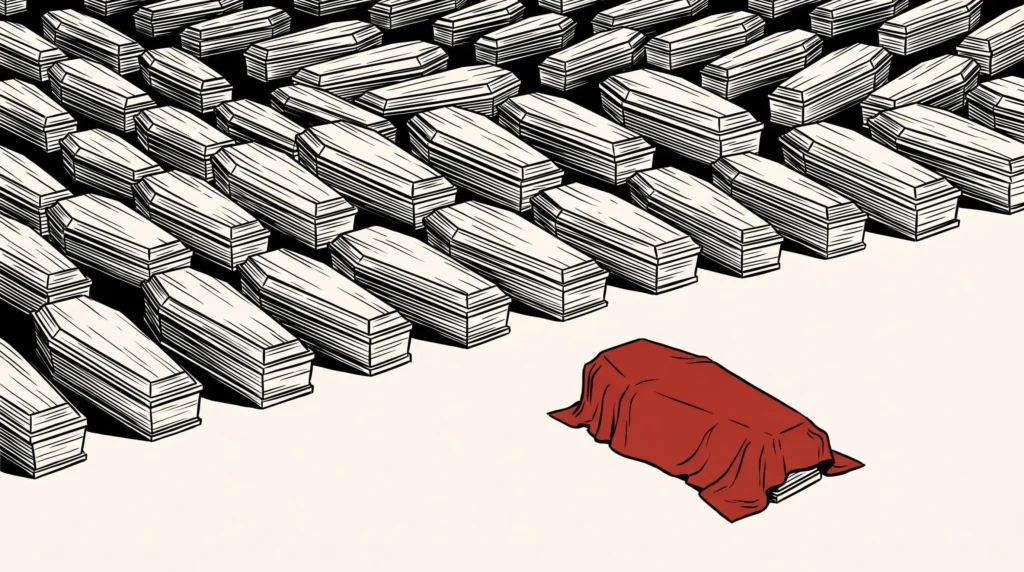
The Washington think tank Center for Strategic and International Studies (CSIS) found after conducting 24 war games that the US Navy would lose 2 aircraft carriers and 10 to 20 large surface warships in the Taiwan Strait war, and about 3,200 US troops would die within three weeks of the start of the war, which is equivalent to half of the casualties of the US military in the Iraq and Afghanistan campaigns in the past 20 years.
Alas, the elite class in the United States is becoming more and more anxious about the unification of the two sides of the Taiwan Strait.
Discover more from 自由档案馆
Subscribe to get the latest posts sent to your email.