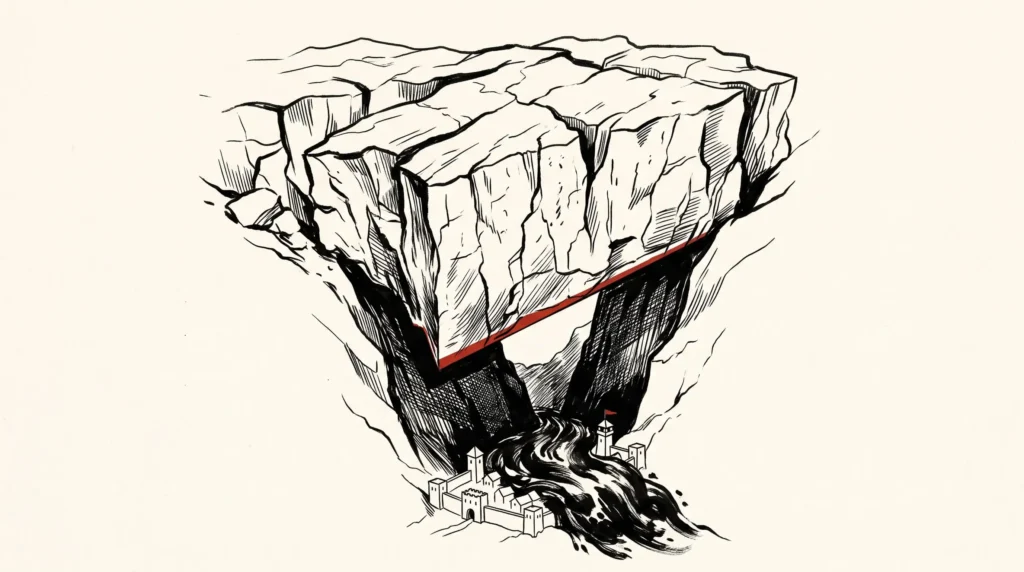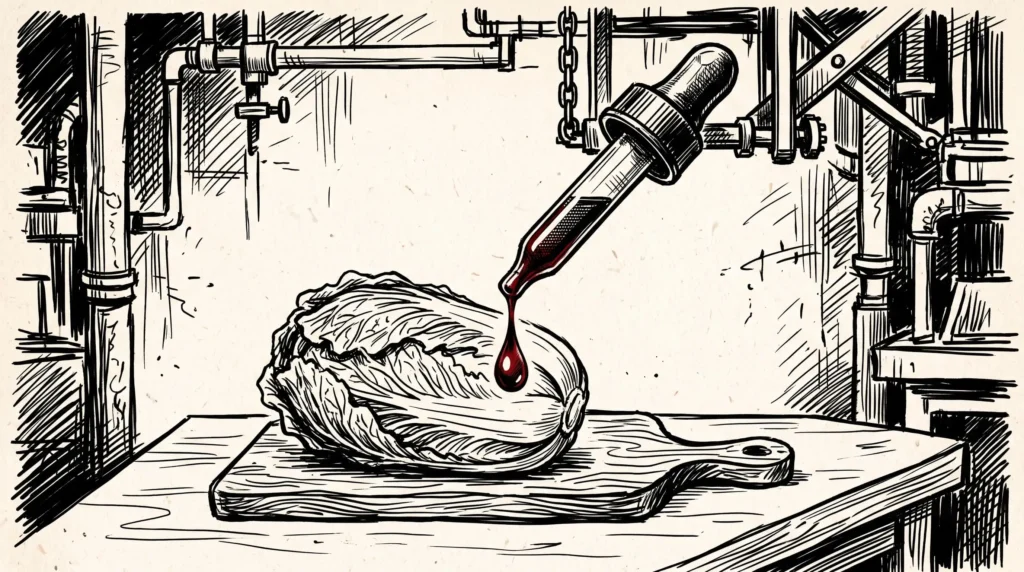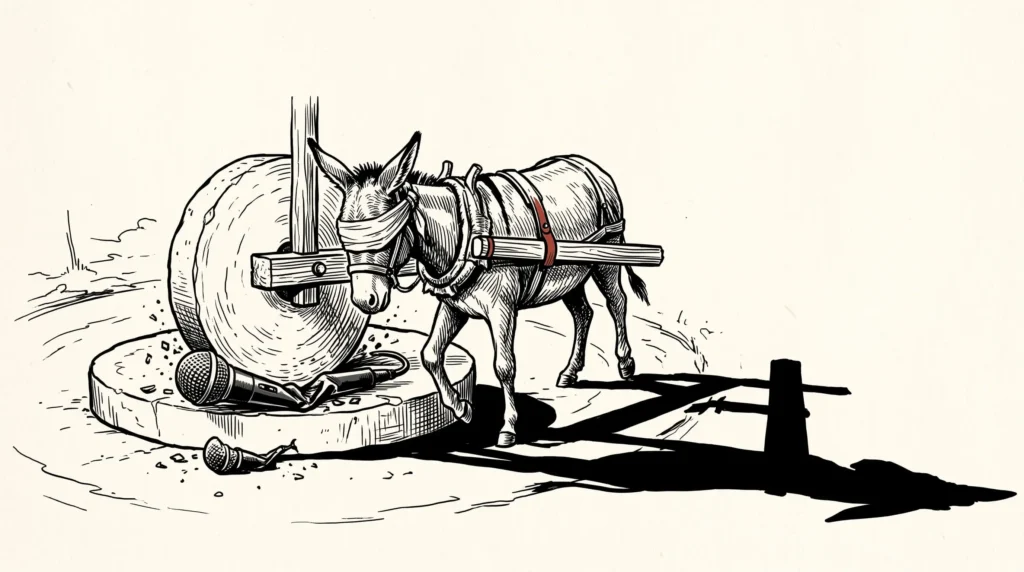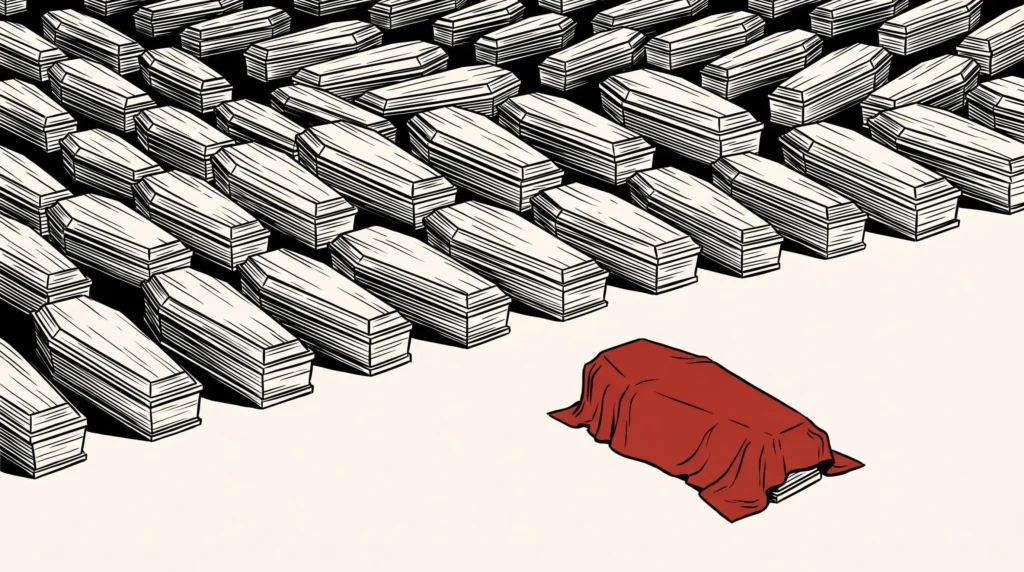
The mixing of oil tanks in COFCO’s tank car transportation has frightened the people of the whole country. CCTV.com’s comments angrily criticized the “grass-roots team that wants to take the lives of consumers”, which is worthy of great praise!
Food safety is so casual that it’s an understatement to call it a “grass-roots team”. This makes one wonder, how did COFCO, such a legitimate policy-oriented central enterprise, raise such a “grass-roots team”?
The Past and Present
The birth of COFCO is the product of the reform of the central grain reserve system. Its origins can be traced back to the grain purchase and sales system of the planned economy era. This set of “antiques” from the planned economy era has nominally been used until the 1980s. The irreversible trend of marketization that followed made this extremely outdated system unsustainable.
In 1990, the central grain reserve system was established and was the responsibility of the newly established State Grain Reserve Bureau. The central grain reserve system is actually a scaled-down version of the grain purchase and sales system of the planned economy era – from the huge system of grain production, supply, and marketing in the whole country, it was reduced to a local policy function of macro-control and grain strategic reserves.
However, this scaled-down version of the planned economy system’s legacy is still very unsettling. The losses, empty accounts, high consumption, and difficulty in holding people accountable caused by the separation of government and enterprises have led to a series of problems. Many jokes have emerged, such as “a fire in winter” and “the Prime Minister’s inspection found an empty warehouse”. Jokes cannot be taken seriously, but the problems are definitely very serious. It was so serious that it faced another major reform surgery of separating government and enterprises after only ten years of operation.
In 1999, the State Grain Reserve Bureau was split into two, separating government and enterprises. The administrative functions of macro-control and industry guidance were assigned to the newly established State Grain Bureau, and the functions of central grain reserve transfer, replacement, warehousing management, and import and export were handed over to the newly established COFCO Corporation.
The policy-oriented central enterprise COFCO was born. Unlike the business-oriented central enterprises, the policy-oriented central enterprises mainly complete policy tasks and do not have the profit indicators of “making the enterprise bigger and stronger”. COFCO is mainly assessed on business indicators such as the grain storage rate and the completion of replacement, and the business assessment only requires maintaining the bottom line of preserving the value of the central grain reserve. For this reason, there are also policy subsidies and various policy preferences.
In other words, COFCO’s initial business model was very simple, relying on policy subsidies and various policy preferences, responsible for the circulation of reserve grain of “buying raw grain and selling raw grain”. The scope of business does not involve market businesses such as grain processing and retail. Its enterprise attribute is only given to improve the efficiency of policy implementation.
According to the original intention of the reform, COFCO does not need to become bigger and stronger. It is enough to have enough strategic reserve grain, and there is no need to become bigger and stronger. It can even be said that it cannot become bigger and stronger. The golden signboard of “the world’s granary” is too special, and the policy empowerment is too high. It is risky to go to the market to make money, both for oneself and for others.
However, as the saying goes, “holding a sharp weapon, one must have a killing heart”. Under the temptation of the extremely high policy empowerment and the convenience of operation, who can remain unmoved?
Going to the Sea to Compete for Food
In 2008, the person in charge of COFCO published an article in “Seeking Truth” titled “Enhancing Macro-Control Ability and Giving Play to the Role of ‘Three Safeguards'”. The article pointed out: “If the central grain reserve is limited to the reserve link and maintains the status quo of ‘buying raw grain and selling raw grain’, the result will either be used or controlled by other market entities, or it will be marginalized, and the effect of serving the national grain macro-control will be greatly reduced”.
This high-profile article became the “programmatic document” for COFCO to expand its market business scope. Translated into popular expression, it means that if COFCO does not go to the sea to compete with other market entities for profits, it will not be able to handle grain macro-control.
After careful consideration, it is not difficult to find the problems. The administrative functions of grain macro-control are clearly attributed to the State Grain Bureau, and COFCO’s policy positioning is only the market port of the executive level. What kind of methods and effects the grain macro-control policy adopts is not what COFCO should worry about. Although COFCO’s high-profile statement has the suspicion of overstepping its authority, but the competent administrative department has not made a statement, and COFCO’s industrial chain extends downstream without obstruction.
Therefore, COFCO, waving the banner of policy, entered the market, triggering a lasting controversy.
The processing and sales of grain is not an empty blue ocean. There are business-oriented central enterprises such as COFCO Group, local state-owned enterprises and private enterprises, and foreign enterprises, which are crowded. However, who can stop this policy-oriented central enterprise from going to the sea to compete for food?
COFCO’s “going to the sea” has the upstream advantage of policy advantages.
COFCO not only has replacement indicators every year, but also has replacement subsidies to support it. According to the “Regulations on the Management of Central Grain Reserves”, the state provides a fixed-amount subsidy for the replacement expenses of the central grain reserves managed by COFCO, which is 2 cents per catty of grain. The price difference existing during the replacement is digested by COFCO by seizing the opportunity, and the losses are borne by itself, and the surplus is the operating profit.
The subsidies, which were originally intended to support the replacement and preservation of value, have become the starting point advantage for COFCO to extend the industrial chain. The price of grain is one or eight cents per catty, and the subsidy of two cents per catty is almost equivalent to the net profit margin of grain processing enterprises. The competitive pressure of other market entities can be imagined.
This is not all. The golden signboard of “the world’s granary” also has higher policy empowerment. Insiders have pointed out that COFCO’s various directly affiliated warehouses nominally focus on grain preservation and circulation, and do not produce terminal consumer goods, thus avoiding external direct supervision by departments such as industry and commerce, taxation, and health. Under this system, the supervision of directly affiliated warehouses only comes from the internal supervision of the superior company and the State Grain Bureau.
Due to the unfair competition and regulatory loopholes in COFCO’s going to the sea and the reduction of dimensionality, the voices calling for the separation of COFCO’s policy-oriented business and business-oriented business are rising one after another in the industry. For example, Bai Meiqing, the president of the China Grain Industry Association, proposed many years ago: under the existing regulatory system, if COFCO does not completely separate its business-oriented business and policy-oriented business, a series of drawbacks are inevitable.
However, these professional warnings did not stop COFCO from taking the shortcut from “the world’s granary” to “the world’s grain merchant”. A large number of directly affiliated warehouses that should not have carried out business-oriented business either changed their appearance or openly and blatantly engaged in the buying and selling of grain processing and sales. COFCO’s business quickly expanded, and grain processing enterprises were all over the country.
However, this policy-oriented central enterprise obviously did not prepare for the large-scale expansion of the industrial chain. The expansion and the expansion of losses are almost synchronized.
Again, it’s bad and loves to play
In 2015, the National Audit Office issued the “Audit Results of the Financial Revenue and Expenditure of China Grain Reserve Management Corporation (COFCO) in 2013”. Due to poor internal management and decision-making errors, COFCO lost more than 800 million yuan, and more than 400 million yuan of funds were facing the risk of loss.
The rapidly expanding rice and flour processing industrial chain is the hardest hit area for losses. From 2008 to 2013, COFCO Corporation successively directly invested and approved the establishment of 40 rice and flour processing enterprises under its subsidiaries, and the operating conditions were generally poor. As of the end of 2013, only 19 were still in production and operation (3 of which were insolvent), and the remaining 21 were shut down, leased to the outside world, or idle.
As a special policy-oriented central enterprise, neither the main body nor the branches of COFCO are listed, and there is no public financial information disclosure. It is impossible to know how much was lost during the period from 2008 to 2013. However, the industry has a lot of criticism about COFCO’s expansion while losing money.
Many industry insiders have proposed that COFCO’s profits belong to itself, and the losses are covered by the treasury, which is a significant unfair competition. In response, COFCO said that the losses are not covered by the treasury and must be borne by itself. Without evidence, it is impossible to draw a conclusion. However, this “bad and loves to play” “making the enterprise bigger and stronger” is indeed difficult to explain with the operating logic of a normal market entity.
Even more embarrassing is that the large-scale expansion of the business scope has not improved the operating level of COFCO’s policy-oriented business. The problems of “the world’s granary” are numerous, and big news breaks out from time to time.
A mess
While COFCO is “making the enterprise bigger and stronger” in the market, the problems of policy-oriented businesses such as reserve grain storage and replacement are emerging one after another.
From 2010 to 2013, 5 units under COFCO, including the Zhuozhou Direct Affiliated Warehouse and the Jixian Direct Affiliated Warehouse, were not well supervised in the grain purchase and sales cooperation with 4 grain enterprises. The grain stored in the above-mentioned enterprises was stolen or mortgaged, resulting in a loss risk of 126 million yuan in grain purchase funds, of which 4.8063 million yuan was lost in 2013.
In 2013, Heilongjiang COFCO Rice Industry Co., Ltd., a subsidiary of COFCO, stored commercial grain in a simple warehouse, resulting in quality problems with the grain, causing a loss of 7.0391 million yuan.
As of May 2014, 3 units under COFCO, including the Datong Direct Affiliated Warehouse and the Jiexiu Direct Affiliated Warehouse, made decision-making errors or poor management, and 2 enterprises that cooperated with them to carry out grain purchase and sales business owed a total of 128 million yuan in grain purchase funds.
In 2015, Tan Xianhua, the person in charge of the Qiaoxi Grain Depot in Qiaocheng District, Bozhou City, Anhui Province, embezzled more than 9,000 tons of national reserve grain. After the case, many departments in Bozhou City also took the method of “emergency replenishment” to try to “handle it on the spot”. After the case was reported by CCTV, it caused a sensation.
On a day in August 2019, more than 400 tons of grain disappeared from the Ningxiang Direct Affiliated Warehouse of the Central Grain Reserve. This time, it was not the work of internal ghosts, but 4 unemployed people who pulled 81 cars of fake grain to the grain depot in 6 days, and easily defrauded 400 tons of grain funds. This amount of money is insignificant in COFCO’s loss record, and the loss is not large, but it is extremely insulting.
The above cases are all from public audit reports and media reports, which are varied and fully demonstrate the nature of the grass-roots team.
However, compared with the “Qiao Jianjun case” of COFCO’s branch, they are not even a small dish.
Qiao Jianjun served as the director of the Zhoukou Direct Affiliated Warehouse of COFCO in 1998, and was an old member of the COFCO Henan Branch when it was established in 1999. In 2008, the employees of the Dengfeng City Grain Bureau jointly wrote a letter of complaint to the central government, and the problem of the revolving grain in the COFCO Tuotuo City procurement process was exposed. The so-called “revolving grain” means that the transaction only exists on the books when storing grain, and the old grain has never left the warehouse. This is a trick to defraud the funds for storing grain.
Seeing that the paper could not contain the fire, Qiao Jianjun began to transfer assets, divorce and immigrate, and other preparations for fleeing. In the following two years, Qiao Jianjun purchased properties in the United States with a total value of 28 million US dollars, equivalent to about 180 million yuan. These included two residences in Seattle, neighbors with Bill Gates.
However, the actions of the main culprit to prepare for fleeing did not stop the criminal gang of COFCO Henan Branch from continuing to make money.
In 2009 and 2010, according to the accounts, COFCO Henan Branch should have purchased more than 80% of the grain in the province from farmers, but the actual purchase volume was less than 50%. It is estimated that at that time, at least one-sixth of the grain stored in Henan was “revolving grain”.
It was not until Qiao Jianjun fled in November 2011, and Li Changxuan, the general manager of COFCO Henan Branch, was “double-regulated” by the Central Commission for Discipline Inspection in December, that this shocking case came to an end. Qiao Jianjun became the No. 3 figure on the “Top 100 Red Notice” list, and it is shocking that a grassroots grain depot director can have such “honor”.
Doing legitimate business, Qiao Jianjun and his team are a grass-roots team, but when it comes to defrauding policy funds, these people are professionals, and they can definitely be called bold and careful, and not panic in the face of things.
We cannot deny the whole of COFCO because of the major case in Henan, but it is undeniable that COFCO’s expansion of business in the market “making the enterprise bigger and stronger” has not helped to “strengthen the effect of macro-control”. What should be taken is taken, and what should not be taken is not let go, and it’s a mess.
In recent years, there have been fewer negative news in Chinese society, and COFCO is no exception. Even because of the magical legend of “fighting against the four major international grain merchants and bringing them to losses”, the image has suddenly become tall, and the public opinion image has turned from negative to positive.
Until this incident broke out, CCTV’s comments once again issued a powerful question of “grass-roots team”. It is impossible not to feel that, as the policy-oriented central enterprise, eating policy dividends, holding the “exemption gold medal” to go to the sea to make money and make the enterprise bigger and stronger, what exactly does “the world’s granary” protect? Is it the policy goal of food security, or the bottom line of food safety?
The jokes like “fighting against the four major grain merchants and bringing them to losses” should not be spread anymore. If they are spread internationally, they will become an international joke. A grass-roots team, who doesn’t even know how they lost money, besides infighting, who else can they fight?
Discover more from 自由档案馆
Subscribe to get the latest posts sent to your email.