Free medical care has always been a hot topic in medical reform and even the entire social discussion. Currently, it is difficult to implement universal free medical care for all citizens or free medical care for specific low-income groups. However, by examining the history of modern Beijing, free medical care did exist in a certain form for a period of time.
1. Establishment of Free Medical Care
Before the end of the Qing Dynasty, Beijingers generally went to doctors’ homes or clinics for medical treatment. Wealthy families could also invite doctors to their homes. The Imperial Medical Bureau established by the Qing court was quite large, but it mainly served the royal family and high-ranking officials, and ordinary people could hardly access it. For the vast majority of ordinary people, the government did not have specialized official medical institutions, and the charitable medical care carried out by some social charitable organizations was mostly aimed at the widowed, orphaned, and lonely, and most of them were temporary.
At the end of the Qing Dynasty, the government faced internal and external troubles and began to implement the “New Deal” reform. At that time, the promoters of the New Deal believed that “the foundation of the country lies in strengthening the people, and strengthening the people lies in prioritizing medicine.” Traditional Chinese medicine, because of its drawbacks that cannot be popularized, should learn from the West and establish modern hospitals to combine Chinese and Western medicine, “each with its own strengths and sharing real benefits.” In August 1906, the Qing court established the Inner City Official Hospital, located in Qianliang Hutong, Dongcheng; because the establishment of the Inner City Official Hospital “achieved remarkable results,” in June 1908, the Ministry of Civil Affairs also requested to establish the Outer City Official Hospital in Liangjiayuan, outside Xuanwumen. This is the earliest modern official hospital in Beijing. When the Inner and Outer City Official Hospitals were first established, they were directly under the Ministry of Civil Affairs. In 1910, they were transferred to the Beijing Local Police Agency, the Inner and Outer City Police Headquarters, respectively. In January 1913, they were taken over by the merged Beijing Police Department.
The Inner and Outer City Official Hospitals pioneered free medical care in official hospitals in China. Their biggest feature was that they no longer exclusively served the royal aristocracy, but served ordinary people, and focused more on the vast poor. After being transferred to the Inner and Outer City Police Headquarters in 1910, the first article of the “Regulations of the Inner and Outer City Official Hospitals” jointly formulated by the two headquarters stipulated: “This hospital was established at the request of the Ministry of Civil Affairs and is purely official in nature. All those who come to the hospital for treatment are not charged, but those who are hospitalized for treatment must pay for their own meals.” This means that the Inner and Outer City Official Hospitals were government-run, and the public enjoyed free treatment when they came to the hospital for medical treatment.
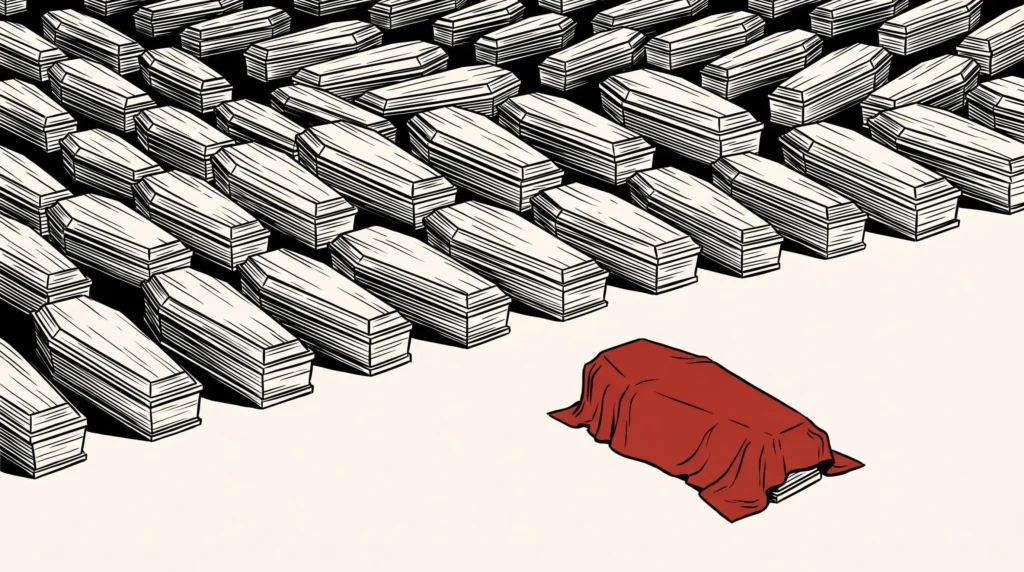
All ordinary people, including women and children, could go to the Inner and Outer City Official Hospitals for free medical treatment. In addition to outpatient services, the official hospitals also admitted inpatients. According to regulations, the patients themselves were responsible for the cost of meals, but in special circumstances, the police agency also bore part of the patients’ meal expenses. Those who died in the hospital were verified by the police department and the attending physician, and then handed over to their relatives for burial; if there were no relatives to claim the burial, the hospital reported to the police department and issued coffins to be sent to the outer city cemetery for burial, and marked them for identification. This is similar to the traditional charitable organizations’ provision of coffins to poor people who could not afford burial.
Funding was the most important foundation for the operation of the Inner and Outer City Official Hospitals. Because they were government-run and charitable in nature, their required funds and medicines were all borne by the government. Various Chinese and Western medical materials purchased from home and abroad were also exempt from tax after passing through the customs checkpoints of various provinces. According to regulations, the funds for the Inner and Outer City Official Hospitals were requested monthly from the Beijing Police Department and allocated by the Ministry of Internal Affairs. At the end of the month, the budget and final accounts were reported, and a detailed list was reported to the Beijing Police Department and submitted to the Ministry of Internal Affairs. In the first few years of the Republic of China, the monthly budget for the Inner and Outer City Official Hospitals was 2,000 yuan each, and 24,000 yuan per year for each hospital. In fact, with the increase in the number of patients and the rise in prices, the original budget was not enough. In 1917, the actual annual expenses of the Inner City Official Hospital increased to 30,974 yuan, and the expenses of the Outer City Official Hospital increased to 29,960 yuan. By 1922, the expenses required by the Inner and Outer City Official Hospitals had increased again. In January alone, the Ministry of Finance issued 2,935 yuan in cash and exchange vouchers to the Inner and Outer City Official Hospitals.
2. The Effect of Implementing Free Medical Care
The Inner and Outer City Official Hospitals achieved good results from the very beginning. According to statistics, in the first five months of the Inner City Official Hospital’s opening in 1906, the number of patients reached 30,000 to 40,000. Xu Shichang said: “According to public opinion, it is generally believed that the supervisors and others are cautious in choosing prescriptions, use excellent medicine, serve the people, and do not get involved in official affairs, so the number of patients increases, and the number of people helped increases, and those who receive treatment are clear in their diagnosis, and recover quickly, and some even publish thank-you letters. This is the real situation of the hospital’s gradual effectiveness.” The number of patients continued to increase. By 1907, the number of patients in the Inner City Official Hospital had reached 30,700 in the three months of autumn alone. It was precisely because the treatment effect of the Inner City Official Hospital was obvious that “the number of patients treated each quarter exceeded tens of thousands,” and “all the merchants and people in the inner city can enjoy the benefits of diagnosis and treatment, and are all happy and encouraged.” However, the vast outer city was far from the inner city, and those infected with diseases were not convenient to go to the Inner City Official Hospital for treatment. Especially when the seasons changed in spring and summer, the number of patients in the outer city was particularly high. Therefore, in 1908, the Ministry of Civil Affairs also requested to open the Outer City Official Hospital.
After the Outer City Official Hospital was opened, the two official hospitals, one inside and one outside, jointly played a role in saving the people. In June 1908, the number of patients in the Inner and Outer City Official Hospitals each quarter was in the tens of thousands. In 1909, the total number of patients reached 288,467, while the total population of Beijing’s inner and outer cities that year was less than 800,000, which shows the high proportion of people who went to the hospital for treatment. Therefore, the people at that time believed that the establishment of the Inner and Outer City Official Hospitals “was of great benefit to hygiene, and everyone praised it.”
After the Republic of China, due to the establishment of multiple public and private hospitals, the number of patients was dispersed. The number of patients in the Inner and Outer City Official Hospitals decreased slightly compared to the end of the Qing Dynasty, but in order to meet the needs of the people, the Inner and Outer City Official Hospitals opened various types of medical services. Taking the statistics of patients in May 1918 as an example: 4,217 in internal medicine, 2,794 in surgery, 2,182 in gynecology, 2,141 in pediatrics, 569 in ophthalmology, 275 in otology, 115 in throat, and 97 in venereal diseases, totaling 12,390. Based on this, it is estimated that there were still about 100,000 people who went to the hospital for treatment throughout the year, which is roughly the same as the proportion of the poor population in Beijing. Because free medical care was implemented, the poor benefited the most from it, so the newspapers at that time commented that “the poor have been quite pleased for several years.”
In the later period of the Beiyang government, financial difficulties affected the operation of many government agencies. However, the authorities attached great importance to free medical care. The Inner and Outer City Official Hospitals were less affected by the situation before their merger in August 1927, and the number of patients remained stable. For example, on March 3, 1927, the Inner and Outer City Official Hospitals treated 595 patients with Chinese and Western medicine, and on March 30, they treated 586 patients.
3. The Development of Free Medical Care
In 1914, the Beijing Municipal Public Office was established. “In view of the increasing number of poor people in the city, and the difficulty of medical treatment when they are sick, and the public hospitals still need to be expanded,” it prepared to establish Renmin Hospital in Xiangchang in 1916, but it was suspended in May 1917 due to some issues. In order to meet the needs of medical treatment and improve the conditions of medical treatment, the Beijing Police Department requested to temporarily borrow the address of Renmin Hospital to expand the Outer City Official Hospital and the Western Medicine Clinic, and all medicines were still “not charged, to help the poor and the sick.” Therefore, the Outer City Official Hospital gradually moved from Liangjiayuan outside Xuanwumen to this place. Because the Inner and Outer City Official Hospitals implemented free medical care, “those who seek medical treatment due to illness are all treated in the hospital.” In August 1927, the Beijing Police Department was forced to merge the Inner City Official Hospital into the Outer City in order to save expenses, but considering that there were many poor people inside and outside the city, “it is extremely inconvenient to lose this place for diagnosis and treatment,” and soon, with the help of the Municipal Public Office, it reopened at the old site of the Inner City Official Hospital.
In June 1928, the Beiping Special Municipal Government was established, with 8 functional sub-bureaus under its jurisdiction. The Beijing Police Department was changed to the Public Security Bureau, and most of the original health administrative functions were assigned to the Health Bureau. The Health Bureau went through several changes. After the establishment of the Health Department in 1933, the Inner and Outer City Official Hospitals were reorganized into the Municipal Hospital, which was handled at the old site of the Outer City Official Hospital in Xiangchang, and six clinics and a prostitute inspection office were set up in the east, west, south, north, and inner city. In the eight months after the Municipal Hospital was opened, the outpatient volume could reach two to three hundred people per day. If all the clinics were included, it would be more than 500 people. From July 1935 to June 1936, the Municipal Hospital and various clinics treated a total of 158,211 outpatients and 234 inpatients.
After being changed to the Municipal Hospital, the policy of “not charging” of the Inner and Outer City Official Hospitals was not continued. Starting from May 1934, all people, whether they went to the Municipal Hospital or various clinics for diagnosis and treatment or hospitalization, should “pay various fees,” but “the extremely poor can be exempted from paying part or all of the fees.” On January 1, 1940, various charging policies were revised to subsidize the hospital, such as charging a registration fee of 1 jiao for the first visit, 5 fen for the follow-up visit, 1 yuan for special registration, and 1 yuan for monthly diagnosis; surgery fees were 1 yuan to 10 yuan each time; X-ray fluoroscopy was 2 yuan per person per time, and treatment was 5 yuan to 10 yuan per person per time. After that, all registration, diagnosis, and medicine fees continued to rise. Before January 1949, the registration fees for the first visit, follow-up visit, and special diagnosis had increased to 0.6 yuan, 0.4 yuan, and 8 yuan, respectively, and the Health Bureau was preparing to increase them to 5 yuan, 4 yuan, and 15 yuan, respectively. For the poor and sick patients, the medicine and surgery fees were still halved or free. After being changed to the Municipal Hospital, the universal free medical care was not continued, and various diagnosis and treatment and medicine fees continued to increase, but the free medical care for the poor continued until the end of the Republic of China. It should be noted that the poor must have a certificate from the official office where they were located to prove that they were poor in order to enjoy free medical care in the Municipal Hospital. After the founding of New China, the hospital was renamed several times (Workers, Peasants and Soldiers Hospital, Wanming Hospital, etc.), and is now known as Beijing Xuanwu Traditional Chinese Medicine Hospital.
The free medical care in modern times was a “benevolent policy” implemented by the government at that time to cope with the crisis and strengthen the country and the people. It had a strong charitable relief nature. Its establishment was not only to imitate Western medical policies and promote the development of the modern medical industry, but also the government’s policy implementation of “providing relief and benefiting the poor” based on maintaining political and social stability. Its purpose still cannot be separated from ideological education and social control. However, the free medical care for the poor in modern Beijing continued until the end of the Republic of China, which played a positive role in helping the poor in Beijing.
References: [1] Beijing Police Department. Beijing Police Affairs Overview Chart. Publishing address unknown, 1917. [2] Beijing Municipal Public Office. Beijing Municipal Overview. Beijing: Jinghua Publishing House, 1919. [3] Cai Xun. Beijing Police History Chronicle. Beijing: Beijing Minshe, 1944. [4] Yang Miren, Lu Gong, Beijing Bamboo Branch Words in the Qing Dynasty: Thirteen Kinds. Beijing: Beijing Ancient Books Publishing House, 1982. [5] Wu Tingxie, Beijing Zhi Gao • Civil Affairs Zhi. Beijing: Beijing Yanshan Publishing House, 1990. [6] Tian Tao, Guo Chengwei, compiled. Beijing Urban Management Regulations in the Late Qing Dynasty (1906-1910). Beijing: Beijing Yanshan Publishing House, 1996. [7] Wang Kangjiu, Beijing Health Chronicle from Ancient Times to 1948 • Supplement. Beijing: Beijing Science and Technology Publishing House, 1996 [8] Wang Kangjiu, Beijing Health Chronicle from Ancient Times to 1948, Beijing: Beijing Science and Technology Publishing House, 1994. [9] Xie Yanggu. One Hundred Years of Beijing Traditional Chinese Medicine. Chemical Industry Press, 2001.
(The author is an associate researcher at the Institute of History, Tianjin Academy of Social Sciences, and holds a Ph.D. in History)
Discover more from 自由档案馆
Subscribe to get the latest posts sent to your email.