“The first instance court determined that the wild game eaten by police officer Xia and the Maotai wine he drank were accepted as a banquet from me, which was beyond my expectation. However, I also thank the judge for determining that the police officer’s acceptance of a banquet from the investigation target during the performance of official duties was suspected of violating discipline, and will be transferred to the relevant departments for handling according to law.”
On the evening of May 28, the reporter learned from the person involved that the first instance judgment of the “restaurant owner sues police officer for eating wild game without paying” case, which has attracted much attention, was announced on that day: The court determined that the wild game eaten by police officer Xia and the Maotai wine he drank were banquets for civil servants by the restaurant owner involved, and this fee should not be borne by the police officer, so all the plaintiff’s claims of the restaurant owner were rejected.
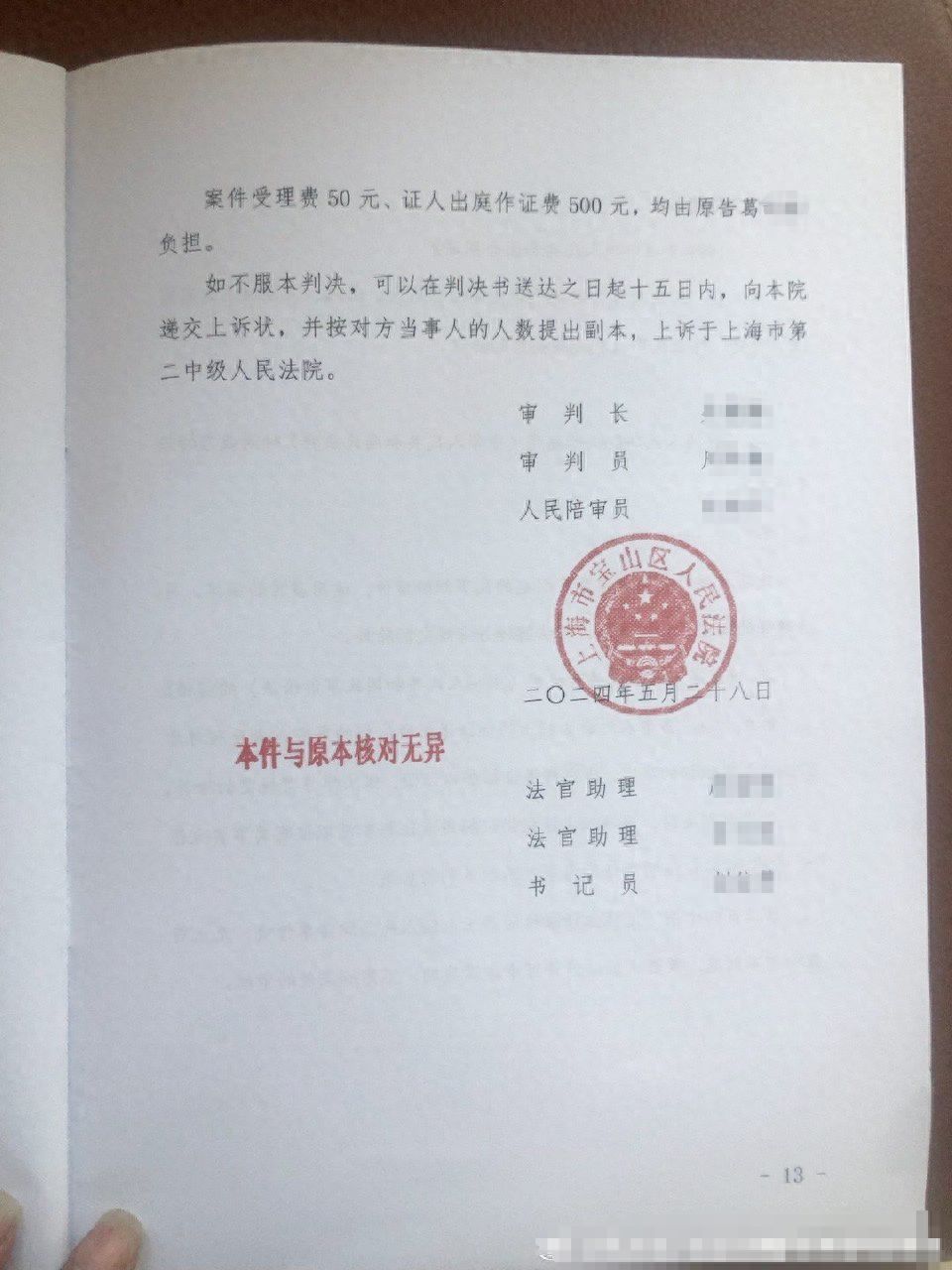
Photo provided by the interviewee Accused of illegally selling precious and endangered wild animals
The restaurant owner was sentenced to four and a half months of detention
Mr. Ge is from Jiangsu. Before the incident, he opened a wild game restaurant in Minhang District, Shanghai.
He introduced that on the afternoon of May 25, 2017, police officers Xia and others from the Yangpu Branch of the Shanghai Public Security Bureau took away several cobras from his restaurant and booked a private room for the next day under the name of “Mr. Wu”. On the second night, Xia and his party of four went to the store and, through his partner Tan, called him to the scene under the name of “making friends”.
“When I arrived, Xia and others, as well as Tan and others, were already seated and chatting in the private room, and there were dishes on the table. Xia showed me his police officer’s certificate, and Tan asked me to be polite to Xia and others. After discussing with Tan, I arranged Maotai wine, salt and pepper king snakes and other high-end dishes for Xia and others.”
Photo provided by the interviewee
Mr. Ge said that during the meal, he ate dishes and toasted each other with Xia and others. Xia said that the sale of cobras could be a big or small matter, and it would be fine to pay a fine of 30,000 yuan. He said that he could not afford the money, and the snakes were legally farmed. Xia was annoyed, so he left the table and went back to the dormitory, and was then arrested in the dormitory.
On May 27, 2017, Mr. Ge was criminally detained for suspected illegal sale of precious and endangered wild animals, and was arrested on June 30 of the same year.
Soon, the Shanghai Railway Transportation Procuratorate alleged that on May 25, 2017, the public security organs found three cobras to be sold in the wild game restaurant operated by Ge (Mr. Ge). After identification, the three cobras involved were Zhoushan cobras, which are species listed in Appendix II of the “Convention on International Trade in Endangered Species of Wild Fauna and Flora”.
On September 22, 2017, the Shanghai Railway Transportation Court sentenced Mr. Ge to four months and fifteen days of detention for the crime of illegally selling precious and endangered wild animals, and fined him 1,000 yuan.
After the first instance judgment, Mr. Ge appealed to the Shanghai Third Intermediate Court on the grounds that “the cobras involved were not included in the national key protected animal list, and he purchased the goods from a breeding farm in Chongqing, and the breeding farm had complete procedures, so it did not constitute the crime of illegally selling precious and endangered wild animals”.
The Shanghai Third Intermediate Court held that, according to the Supreme People’s Court’s “Interpretation on Several Issues Concerning the Specific Application of Laws in Criminal Cases of Destroying Wild Animal Resources” and relevant provisions of the Criminal Law, “precious and endangered wild animals” include wild animals listed in Appendix I and Appendix II of the “Convention” and the above-mentioned species that are artificially bred.
On April 24, 2018, the Shanghai Third Intermediate Court ruled: The appeal was rejected, and the original judgment was upheld. After being released, the restaurant owner sued the police officer
Demanding the other party to pay a meal fee of 5,688 yuan
Mr. Ge said that on the night of the incident, Xia and others consumed a total of 5,688 yuan, but Xia only paid 300 yuan for the purchase of cigarettes, and the meal fee has not been paid. After being released, he sued Xia to the Baoshan District Court of Shanghai, demanding that the other party pay a meal fee of 5,688 yuan.

Mr. Ge once reflected this matter online in his real name
During the trial of the case, Xia said that he was a police officer of the Yangpu District of Shanghai, and what Mr. Ge said was untrue. He went to Mr. Ge’s restaurant for investigation.
During the court investigation, the relevant police station told the court that Xia was a police officer of the station, and the meal at the plaintiff’s place that day was a criminal investigation.
The court review held that this case did not fall within the scope of acceptance of civil litigation. On August 18, 2022, the Baoshan District Court of Shanghai ruled: The lawsuit of Mr. Ge was rejected.
After Mr. Ge appealed, the Shanghai Second Intermediate Court held that Mr. Ge sued on the basis of a catering service contract, and the first instance’s direct rejection of the lawsuit was not sufficient.
On April 28, 2023, the Shanghai Second Intermediate Court ruled: The first instance ruling made by the Baoshan District Court of Shanghai was revoked, and the Baoshan District Court was instructed to hear the case. The police officer said that he had paid a meal fee of 350 yuan that night
The wild game and Maotai wine were added by the boss himself
During the trial of the case, Mr. Ge requested the court to order Xia to pay a meal fee of 5,688 yuan, pay the lawyer’s travel expenses of more than 5,300 yuan, and pay the witness’s appearance fee of more than 1,200 yuan.
Xia argued that he did not agree with all of Mr. Ge’s claims. The reasons are as follows: In those years, according to the work arrangement, several of them went to Mr. Ge’s restaurant to arrest Mr. Ge, but Mr. Ge was not in the store, so he booked a private room for the next day.
On the evening of May 26, 2017, several of them went to Mr. Ge’s restaurant again, but Mr. Ge still did not arrive. They ordered chicken soup, beef, vegetables, fruit juice and other dishes, and waited in the private room with Tan, the partner of the restaurant, for Mr. Ge.
Xia said that after Mr. Ge arrived, without their confirmation, he added salt and pepper king snake and other dishes and Maotai wine, which was not within the scope of his catering service contract with the restaurant. Mr. Ge, knowing that several of them came to the store to investigate the illegal sale of snakes, took the initiative to invite civil servants to a banquet, intending to reduce or even evade punishment. When he stated that he would handle it according to law, Mr. Ge left on the pretext. The accompanying police officers and special security personnel then arrested Mr. Ge.
Xia said that after arresting Mr. Ge that night, he asked to pay for the dishes he ordered. Tan asked the waiter to calculate the price and quoted 350 yuan, which he paid on the spot. He believed that Mr. Ge invited civil servants to a banquet for illegal purposes, and this behavior should not be protected by law. The court determined that the wild game eaten by the police officer and the Maotai wine he drank
Were banquets by the boss and did not bear this fee
The facts determined by the Baoshan District Court of Shanghai are as follows: In May 2017, the Yangpu Branch of the Shanghai Public Security Bureau, in handling the case of Li’s illegal acquisition of precious and endangered wild animals, also investigated the crime of Mr. Ge’s suspected illegal sale of precious and endangered wild animals.
On the afternoon of May 25, 2017, police officers Xia and four others went to the restaurant operated by Mr. Ge and found three cobras for sale and seized them. At that time, neither Mr. Ge nor his partner Tan were in the store. Xia contacted Mr. Ge and Tan by phone through the waiter, but neither of them arrived. Xia left after booking a private room for dinner the next day.
On the evening of May 26, 2017, Xia and his party of four arrived at the store, and Tan and others were also in the private room, but Mr. Ge did not arrive. Xia and others ordered beef, chicken soup, fruit juice and other dishes, and asked Tan to call and urge Mr. Ge to arrive. After Mr. Ge arrived, Xia showed Mr. Ge his police officer’s certificate and explained his intentions. Mr. Ge brought a bottle of Maotai wine and added high-end dishes such as salt and pepper king snake. Mr. Ge, Tan and Xia and others had a meal together, and Mr. Ge, Xia and others drank alcohol. During the period, Xia asked Mr. Ge to go to the police station to make a record, and Mr. Ge left on the pretext, and was then arrested in the dormitory.
That night, Xia asked to pay the bill, and Tan, the partner of the restaurant, asked the waiter to calculate the meal fee. The waiter calculated the meal fee of 350 yuan according to the dishes ordered by Xia, and did not include the high-end dishes and Maotai wine added by Mr. Ge, which Xia paid. Afterwards, Mr. Ge was taken to the police station for processing.
The Baoshan District Court held that on the night of the incident, Xia showed his police officer’s certificate and explained his intentions. Mr. Ge knew that Xia and others came to investigate the sale of snakes, but he discussed with Tan to arrange high-end wine and dishes and eat together. After being told that he still had to go to the police station to accept processing, he left on the pretext. It can be seen that Mr. Ge’s initiative to arrange high-end wine and dishes to invite civil servants to a banquet in order to evade or reduce punishment is obvious. Mr. Ge’s claim that Xia treated him to dinner and asked him to order dishes lacks evidence to support it, and the court does not accept it.
Secondly, from the statements of the participants, Mr. Ge clearly stated in other judicial materials that the catering behavior involved in this case was a banquet for civil servants; the partner Tan also believed that Mr. Ge added wine and dishes in order to evade punishment and invite civil servants to a banquet.
In summary, Mr. Ge’s initiative to add wine and dishes was his personal reason to invite civil servants to a banquet for the illegal purpose of evading or reducing punishment, which does not belong to the content of the catering service contract between Xia and the restaurant. The resulting fee claims should not be supported. The relevant civil servants accepted the banquet of the investigation target during the performance of official duties, which is suspected of violating discipline. The court will transfer the clues to the relevant departments for handling according to law.
On the afternoon of May 28, the Baoshan District Court of Shanghai made a first instance judgment: all the plaintiff’s claims of Mr. Ge were rejected.
On the evening of May 28, Mr. Ge told reporters that the court’s determination that Xia accepted the banquet was beyond his expectation. However, he also thanked the judge for determining that Xia’s acceptance of the banquet was a violation of discipline, which gave him a breakthrough basis for the seven-year criminal appeal. In the next step, he will go to the Shanghai Procuratorate to apply for procuratorial supervision, so that the relevant court can hold a hearing and order a retrial of Xia’s criminal case of eating wild game and drinking Maotai wine.
Mr. Ge said that as early as 2003, Shanghai had canceled the approval of wild game business licenses. After the incident, he consulted the Shanghai Municipal Greening and Urban Appearance Administration Bureau whether the Zhoushan cobra was a “precious and endangered wild animal”. The other party said that although the Zhoushan cobra was listed in the “Convention on International Trade in Endangered Species of Wild Fauna and Flora”, it was not within the approved scope because it was a species native to China.
Regarding the first instance judgment of the Baoshan District Court, Mr. Ge said that he was still considering whether to appeal.
Source: Huashang Daily Dafeng News
Discover more from 自由档案馆
Subscribe to get the latest posts sent to your email.