
1
Let me ask you a small question first:
If we search for the words “Ma Yun” on Baidu, setting the time frame from 1998 to 2005, how many search results would we get? Would it be 100 million, 10 million, or 1 million?
I’ve asked in several groups, and the general guess is that it should be in the millions or tens of millions. After all, the internet is a vast ocean of information. As a prominent entrepreneur of that era, Ma Yun must have left a lot of traces online.
But in reality, the total search results are as follows:

Using Baidu search, with the date range set to “May 22, 1998 to May 22, 2005”, the information containing Ma Yun totals 1 entry (data from May 22, 2024).
And this single piece of information is also false. Clicking on it reveals that the article’s publication date is actually 2021, which does not belong to the specified time period above; it was just inexplicably searched out.

In other words, if we want to understand the experiences, reports, people’s discussions, his speeches, the company’s history, and so on, about Ma Yun during that period, the amount of effective original information we can get is zero.
You might think, is this a problem with Baidu? If we switch to Bing or Google, will we be able to find it?
I’ve tested it, and the effective information found by these two websites is not much different from Baidu, slightly more than Baidu, but only a few. Most of them are also invalid information with time discrepancies, but for some technical reason, they were incorrectly captured.
You might also think, is it because Ma Yun is a relatively controversial person, and due to some indescribable reasons, his information cannot be found?
But in reality, it’s not just Ma Yun’s situation; if we search for Ma Huateng, Lei Jun, Ren Zhengfei, or even Luo Yonghao and Furong Sister, who were very popular at that time, or Jay Chou and Li Yuchun, who were once popular across the internet, the results are all the same. For example, the search results for Lei Jun are as follows:
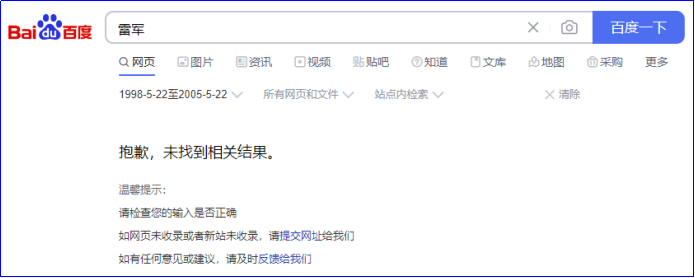
After testing different websites, different names, and different time periods, I discovered a shocking phenomenon:
Almost all Chinese websites that were once popular in that era, such as NetEase, Sohu, campus BBS, Xici Hutong, Kedi Cat’s Eye, Tianya Forum, Xiaonei.com (Renren.com), Sina Blog, Baidu Tieba, and a large number of personal websites, have had their information before a certain year completely disappear, and even most websites have had all their information disappear. The only exception is Sina.com, where some information from more than a decade ago can still be found, but it’s also a very small number of entries; more than 99.9999% of the content has disappeared.
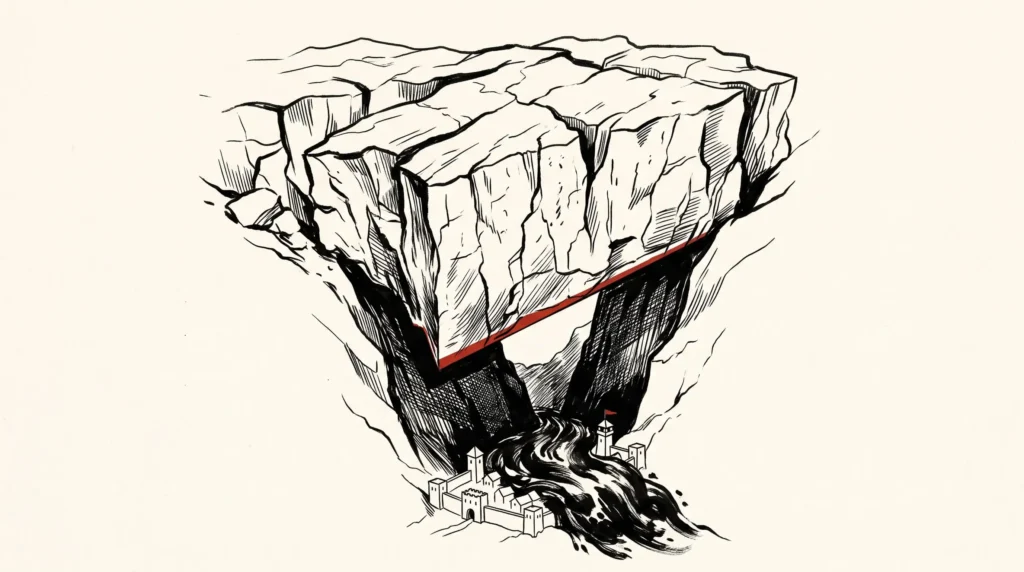
Everyone hasn’t realized a serious problem: The Chinese internet is rapidly collapsing, and the content of the Chinese internet before the advent of the mobile internet has almost completely disappeared.
We originally thought that the internet had a memory, but we didn’t expect that this memory is like the memory of a goldfish.
2
The reason I noticed this problem is because the theme of He Jiayan’s public account is to study successful people, so I need to often look for their information.
In the past two years, I’ve had a very obvious feeling: the original information that can be found online is decreasing at a cliff-like speed every year. Before, I could still see some original reports, but later they gradually disappeared; before, I could still find the protagonists’ speeches or articles they wrote, but later they gradually disappeared; before, I could still see many interviews or video discussions, but later they gradually disappeared.
It seems like there is a monster that devours web pages, and it is swallowing everything on the Chinese internet, from the past to the present, along the timeline of history, first in small bites, then in big bites, swallowing everything on the Chinese internet in units of five or ten years.
When we come to our senses, we will find that everything on the Chinese internet that existed before the mobile internet, whether it was portal websites, institutional official websites, personal web pages, or campus BBS, public forums, or Sina Blog, Baidu Tieba, or files, photos, music, videos, etc., has disappeared.
I remember more than a decade ago, I once put some photos and articles into a compressed package and stored them on a certain BBS. A few years later, I found that the entire BBS was gone. I used a hotmail email account, which contained many precious emails, but later they were all gone. I also wrote on Renren.com and MySpace, but later they were all gone.
We once thought the internet could preserve everything, but the result is that nothing could be preserved.
This reminds me of the “two-dimensional foil” mentioned in Liu Cixin’s “The Three-Body Problem.” The Singer civilization discovered the existence of intelligent life in the solar system, and out of the instinct to eliminate advanced civilizations in the universe, they threw a two-dimensional foil at the solar system. As a result, the entire solar system collapsed from three dimensions to two dimensions at the speed of light, transforming into a picture resembling Van Gogh’s “Starry Night.” All life, all traces of civilization, have since ceased to exist.
On the internet, we are already in the process of being devoured by a two-dimensional foil. This two-dimensional foil can be called the “time two-dimensional foil,” and it devours the dimension of time.
After the solar system was flattened by the two-dimensional foil of the Singer civilization, at least a “Starry Night” painting was left, but after the internet was devoured by the time two-dimensional foil, only a void was left.
3
Why does this happen? I guess there are mainly two reasons:
The first is economic reasons.
The existence of a website requires servers, bandwidth, server rooms, personnel maintenance, and many miscellaneous regulatory and maintenance costs, all of which are costs. If it has strategic value (e.g., it needs to show the company’s desired information), or has short-term traffic value (e.g., still has a relatively large number of people visiting from time to time), and the company also has money in its account, then there will be motivation to maintain it.
But if the company goes the wrong way in business and runs out of money, the entire website will die directly. For example, Renren.com is a typical example.
Even if the company still has money, from an operational perspective, if a webpage is not clicked by many people throughout the year, it becomes a burden for the company, and the most economically rational method is to shut it down directly. The large-scale loss of early content from Sohu and NetEase, and the collective demise of BBS represented by Tianya Forum, are all for this reason.
The second is regulatory reasons.
Overall, the regulation of internet information is a process from none to some, from lenient to strict, and from strict to stricter. Content that could legally exist before no longer meets regulatory requirements; or content that could exist in a gray area before is later defined as black. This content will be directly cut off.
There are also some that, with the changes of the times, the polarization of public opinion is becoming more and more extreme. Content that was “just ordinary” before appears very sharp and sensitive in the later public opinion environment. Although it is not illegal, it may intensify conflicts and create chaos, and the regulatory authorities may also require it to be dealt with.
In addition to official departments, angry netizens also often act as public opinion regulators. They will dig up a sentence someone unintentionally said more than a decade ago, and relentlessly pursue it, causing the person to suffer “social death.”
But the most important impact of regulation is not the handling by regulatory departments or the attacks by angry netizens, but that they will cause companies and individuals to “self-censor.”
Because no one knows which piece of content on the website, which sentence someone once said, will bring disaster to the person involved many years later. The best way is to directly remove all these potential “time bombs,” that is, shut down the website or delete all the content.
Of course, in addition to the above two reasons, there will be many other reasons.
For example, shortly after the disintegration of Yugoslavia, all the webpage content under the international domain name “yu” (the abbreviation of the Yugoslavian country name Yugoslavia) disappeared. Another example is that with the strengthening of copyright protection, music and movie websites that were once available for download everywhere have disappeared. There are also some institutions and individuals who, purely for their own reasons, do not want to display information to the outside world, and shut down their official websites or personal homepages, etc.
But these reasons are secondary and local. The systematic and large-scale disappearance of the entire internet content is mainly due to economic laws and self-censorship.
In essence, internet content, like life, is also governed by the theory of evolution. Its only standard for existence is: to attract as much attention as possible at the lowest possible cost.
When a piece of content can attract enough attention among the vast amount of content on the internet, and the cost of maintaining this content (including economic costs, regulatory costs, and the cost of resisting regulation) is lower than other methods, this content is likely to survive on the internet. It’s just that it may change its presentation method, such as from text to images, from still images to animated images, from animated images to videos, and in the future, it may change from two-dimensional videos to three-dimensional holographic videos, etc. The platform that carries this content will also change, from portal websites to BBS, to personal blogs, to Weibo and WeChat, to Douyin video accounts, and to a platform we may not know in the future.
When a piece of content can no longer attract enough attention, or the cost of maintaining this content is higher than other methods, this content will disappear from the internet. The collective demise of the traditional internet, with computers as the browsing end and web pages as the carrier, is just an inevitable result of this “information competition for evolution.”
The secret of biological evolution is “survival of the fittest,” while the secret of the evolution of internet content is “information competition, attention selection, survival of the fittest.” Due to network effects, this competition is a thousand times more intense and a thousand times more cruel than in the natural world. The traditional internet is not a single-species extinction, but a holistic extinction of almost all content.
Every generation of the new internet rises, the old internet will inevitably collapse. The time two-dimensional foil is the inevitable fate of all websites and all content.
4
If the future civilization is the civilization of the internet. Our generation will be without history. Because the internet has not left our traces.
“Without history,” is this important?
Of course, it is very important.
I once tried everything to write an article about Shao Yibo, trying to find the original video of Shao Yibo participating in the “Boshitang” program in 2007, and his wife Bao Jiaxin using the online name “Wen Ai Mommy” posting on the Baobaoshu community for several years. In the end, I still couldn’t find it, and I could only deeply regret it.
Although the article “Hongchen Has Forgotten Shao Yibo” is still very popular, with more than 700,000 people reading it and more than 20,000 people forwarding it in just one week, I am very sure that I must have missed some very important information. If they could have been presented in that article, the quality of the article would have been better.
But I can’t find it, so I can only present the article in an imperfect way.
You might think: this is only useful for researchers and writers like He Jiayan, I don’t write such articles, and it doesn’t matter to me if the internet information is gone.
Really?
If we can no longer see all of Ma Yun’s speeches, no longer see all of Ren Zhengfei’s articles represented by “My Father and Mother” and “The River of Spring Water Flows East,” and no longer see all of Duan Yongping’s posts on Xueqiu, would you feel a little sorry?
Well, you say you don’t feel sorry.
Then if we can no longer search for Huang Zheng’s public account, can’t see Zhang Yiming’s Weibo, and can’t access Wang Xing’s Fanfou, would you feel a little regret?
Well, you say you don’t feel regret either.
Then if one day, Zhihu disappears like Tianya Forum, Douban disappears like Renren.com, and Bilibili is as deserted as Sina Blog, would you feel a little heartbroken?
If one day, all the Weibo posts of your favorite Weibo blogger only show “The author has set to only display Weibo within half a year, this Weibo is no longer visible,” your often-read public accounts only show “This account has been blocked, the content cannot be viewed,” and you search for certain information on Douyin or Xiaohongshu, and the results show “The author has cleared all content”…
Even, Weibo, public accounts, Douyin, Xiaohongshu, just like the BBS, Tieba, space, and blogs that once existed, all disappear…
Would you feel sad for even a minute?
As a generation of the traditional internet, the post-70s and post-80s cannot find our history. Because they have all disappeared.
The new generation may still be able to look at Moments, but Moments also has more and more “visible for three days,” and is becoming more and more silent.
The only ones still enthusiastically posting are only marketing information.
In the future, even this marketing information will eventually disappear.
5
If something is very important to us, and it is disappearing, is there any way for us to save it?
Someone has made such an attempt. There is a website in the United States called “Internet Archive,” which translates to “Internet Archive” in Chinese, and it has preserved many original web pages. But I’ve tried it, and the original Chinese web pages are preserved very little, and the usage is very cumbersome, and the search function is very primitive and inefficient, almost the same as not being preserved.
From a technical point of view, it shouldn’t be difficult to preserve all the web pages from the beginning of the internet in China to the rise of the mobile internet, which is about a decade, and the cost is not high. After all, compared to the current video era, those graphic web pages of the original internet take up almost negligible space.
The question is, who will do this, and what is the motivation?
Commercial institutions won’t do it. Because there is no commercial interest.
The government may be able to build an archive that can preserve all web pages, like building a library or a museum. But why would the government spend money and effort to do this? Besides preserving history, there seems to be no other reason. Furthermore, even if the government does this, it has no meaning for ordinary netizens, because this archive will definitely require certain login permissions to prevent information from being misused.
Moreover, even if there is an institution willing to do this, it is too late now. After the rise of the mobile internet, the Chinese content of the traditional internet has almost completely disappeared. Roughly estimated, more than 99% should be gone.
In a sense, He Jiayan’s series of articles about successful people has also made a little contribution to preserving the history of these successful people. If I hadn’t written about them, a lot of history would have been lost on the internet. But after all, this is not original information, but only second-hand information that I have integrated.
On the current Chinese internet, almost all the major events that happened in the first decade of this century, and all the celebrities who have left deep marks, the information that can still be found is almost all second-hand information edited by self-media, or even information that has been passed through many hands and has long been unrecognizable.
The original reports about them are gone, the original videos are gone, the original speeches are gone, the original eyewitness accounts of netizens are gone, the original comments are gone…
In a few more years, this second-hand information and N-hand information will also disappear. Just as those events never happened and those people never existed.
We are already powerless and can only accept reality.
In the future internet era, looking back at the first twenty years of the 21st century will be twenty years without historical records.
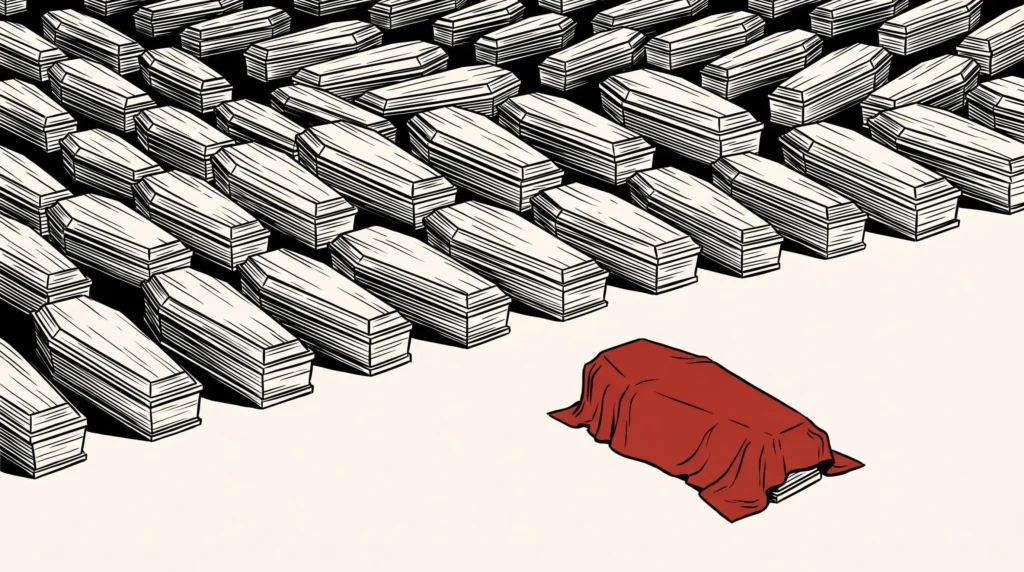
We are a generation that has disappeared in the internet era.
If you can still see some old information from the Chinese internet now, it is just the last afterglow of the setting sun.
If you understand their transience, you may sigh like Faust before his death:
You are so beautiful, please stay for a moment.
But that afterglow will soon be swallowed by the time two-dimensional foil, along with your sigh, and fall into the void.
In “The Three-Body Problem,” Cheng Xin and Ai AA were fortunate enough to be able to board the only curvature drive ship and escape the solar system that is being two-dimensionalized.
And we, don’t even have a curvature drive ship.
Nowhere to escape.
Almost all the content you see now and the content you create, along with this article and this platform, will eventually be submerged in the void.
—end—
PS: Follow He Jiayan, and look at the articles about successful people from this public account before, and maybe you can still see a lot of information that has disappeared elsewhere. I will continue to work hard and continue to write good stories about successful people, and strive to retain a little more light in the afterglow of the setting sun.
Discover more from 自由档案馆
Subscribe to get the latest posts sent to your email.