On the afternoon of April 12th, after I finished teaching my graduate students and went home, some colleagues in criminal defense contacted me and wanted to visit. I originally wanted to invite them to my humble home for dinner and drinks, but because my elderly parents and children were at home, it was not convenient to disturb them, so we arranged to meet at the entrance of the tea restaurant downstairs in the community after dinner. Among the criminal defense lawyers, some came from Shanghai and Jiangsu, and some rushed from Beijing; some had met before, and some had been admired for a long time. I didn’t expect that this chat would last until late at night. Gatherings of criminal defense lawyers often turn into complaints about case experiences, especially about the most thorny and helpless cases involving organized crime and crimes of duty. Du Jiaqian said that private entrepreneurs becoming victims is because the entire society has been accelerating its blackening in recent years, including the bureaucratic class. I believe that the reason for the blackening is the reverse incentive generated within the system: doing the right thing does not get rewarded, while doing evil not only does not get punished, but instead benefits from it. There are countless examples.
For example, the initial intention of the campaign to eliminate organized crime and evil was to consolidate grassroots political power and implement anti-corruption to the last mile, but in practice, it turned into plundering private entrepreneurs to complete political indicators and make up for local fiscal deficits, which completely changed its flavor. The result of doing so is that those involved in organized crime are not held accountable, those who are wronged have no way to appeal, property owners are in a state of panic, and the entire society is in internal consumption. Another example is the education and rectification of the political and legal队伍 (team), where the internal investigations of the judicial departments are all cases of acquittal, non-prosecution, and withdrawal of lawsuits, and they do not investigate cases of heavy sentences and wrongful convictions at all. The entire orientation is still heavy-handed, so who would dare to take responsibility in the future? Assembly-line operations have no responsibility, and those who dare to correct errors against all odds face the greatest risk. Yesterday, I heard that the Yingtan case ended its first trial hastily with the participation of legal aid lawyers, and the lawyer Zhang Qingfang, who was entrusted by the family, had no chance to intervene at all. Qingfang is considered a senior, five years older than me, four levels higher than me. When he graduated with a doctorate and started practicing law, I was just studying for my doctorate. I have known him for twenty years, but we don’t have much interaction, after all, we are not the same advisor. But I admire what he does, daring to openly challenge the authority of the supervisory committee and publicizing various illegal evidence collection and inaction by the law and procuratorate in such cases. The Yingtan case is just a microcosm of countless supervisory committee cases, and the problems also exist universally, but correction is as difficult as ascending to the heavens. In the end, what we see is the legal aid lawyers occupying the magpie’s nest in a grand manner, and the trial is just a formality.
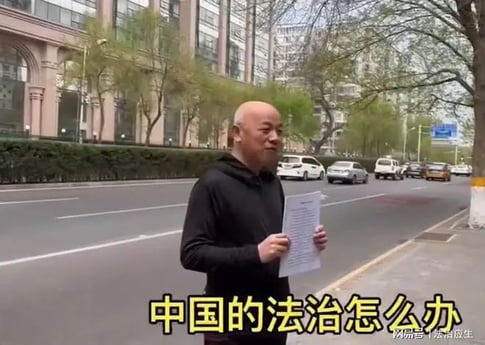
I have handled many cases of crimes of duty, and I started handling them more than a decade ago in the anti-corruption stage of the procuratorate. At that time, there were still cases of innocence, such as the corruption case of a former vice president of a court in Northeast China, which ended with an acquittal. But after the establishment of the supervisory committee, innocence became too difficult. It’s not that the cases I handle are all cases of corrupt officials; on the contrary, they are almost all the clear streams within the system. It’s not difficult for corrupt officials to plead guilty and accept punishment. My cases are all cases where the defendants do not plead guilty and request a not-guilty defense. And the first sentence I say when I meet them is, you must tell me the truth truthfully, and if there is a single lie, I will not defend you. Several cases last year had astonishing similarities, almost all of which were the supervisory committee threatening close relatives to coerce confessions. It’s not that close relatives cannot be arrested, but it’s wrong to use various methods of threat, inducement, and deception. For example, in the case of a senior executive of a directly affiliated department of the People’s Bank of China, he did not admit to accepting bribes, and no evidence could be found. The supervisory committee investigators deceived him by saying that his wife was detained and his son was criminally detained, but in fact, it was all false. As a result, someone asked him to buy zodiac gold and silver coins, and the payment was also regarded as a bribe. Who would bribe in the way of depositing tens of thousands of yuan into his personal salary card every year? For example, in the case of a former deputy general manager of Everbright Bank, a loan agreement signed in black and white that had not yet expired was regarded as a bribe, and close relatives were threatened. Secrets were hidden in the same record, but they were never disclosed. The case has been going on for more than three years and has not yet been tried. Another example is the bribery case of someone from the Jilin Provincial Banking and Insurance Regulatory Bureau, where the personal property under the name of his brother-in-law, including his own bank loans and borrowings, was regarded as bribe money. Have they completely disregarded facts and logic in order to get money? His wife went to accuse, and she was also arrested as a co-recipient of bribes, but the brother-in-law “bribed” his brother-in-law, how could even his sister not know!?
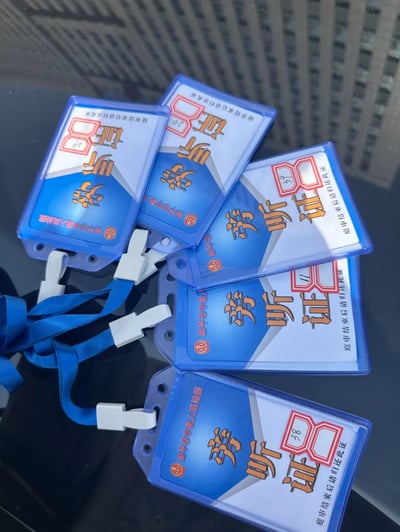
In the chat downstairs in my building last night, a lawyer said that officials and corrupt officials now face the same risks. Officials are being targeted and will be forced to make false confessions, and they will be sentenced regardless of whether they plead guilty. Corrupt officials are caught, plead guilty and return their ill-gotten gains, and they can be sentenced lightly and may even be able to retain some of their property on the basis of confiscation. The supervisory committee’s handling of cases has become a matter of probability. Who would be willing to be an official? Like Wang from Changzhi, Shanxi, whose total property with his wife was only a few hundred thousand yuan, and his daughter couldn’t even afford the down payment on a house, they could actually regard the difference in the price of a second-hand car he bought from a friend ten years ago as a bribe. What can resist the blackening of the investigators? In the “largest underworld” case I handled in Yunnan, the defendant asked me several times, I do business in a regular way, I never participate in fights, I have never done anything bad, and I donate to education every year, helping the elderly and children, how did I become a member of the underworld? Those investigators who used torture during the investigation, used various means to torment us, and pocketed the spoils during the search, those prosecutors who exaggerated and fabricated facts and evidence to file a lawsuit, and those who spoke nonsense in court, aren’t they even more black? The family members of the defendant in the Jiujiang case also asked me, we lent them money in real money, they didn’t pay back the debt, and even bullied others, they had money but didn’t pay it back, how did we creditors become evil forces, and they didn’t have to pay back the money, and now even the principal has been confiscated by the investigating unit as a “criminal tool”, this has never been the case since ancient times! Who is black and who is evil?
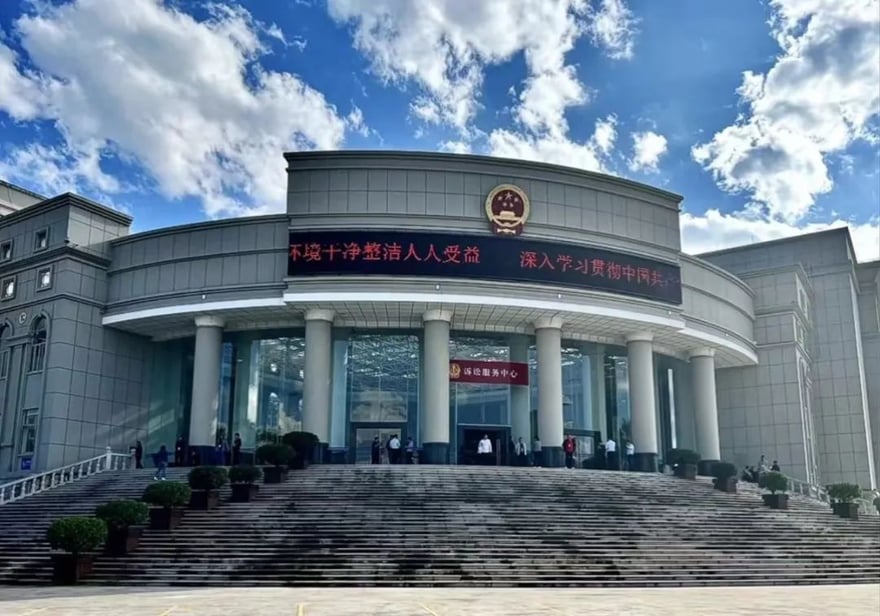
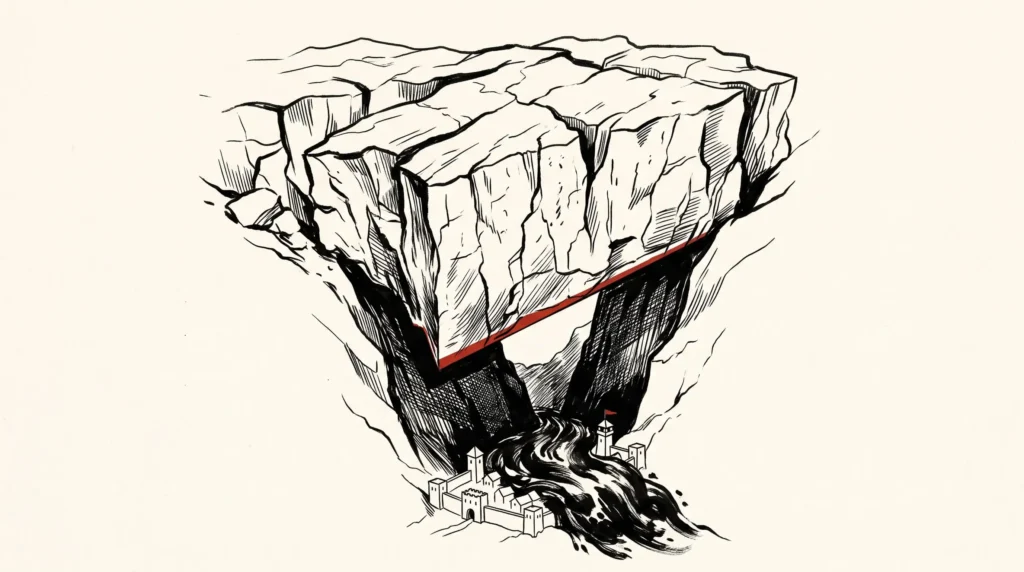
In the night talk last night, I remember that I had a conclusion at the end. The regression of the rule of law in recent years has destroyed some of the values that constitute the moral foundation of traditional society. Those who do good deeds have not received positive incentives, and those who do bad deeds have not only failed to receive the punishment they deserve but have been rewarded. Social resources are constantly consumed internally in the contradictions at the grassroots level – petitions and accusations – procedural empty runs, which will drag down the economy in the long run, leading to the decline of people’s livelihood. And the economic downturn has also intensified a kind of profit-seeking law enforcement and judicial practices, further destroying the foundation of fairness and justice. Injustice to one person is actually injustice to all. Fairness and justice are the last line of defense for society. Once this line of defense is breached, the blackening of the entire society will only further intensify. We are now at this dangerous point. Under a precarious nest, there are no intact eggs, and no one is safe.
Discover more from 自由档案馆
Subscribe to get the latest posts sent to your email.