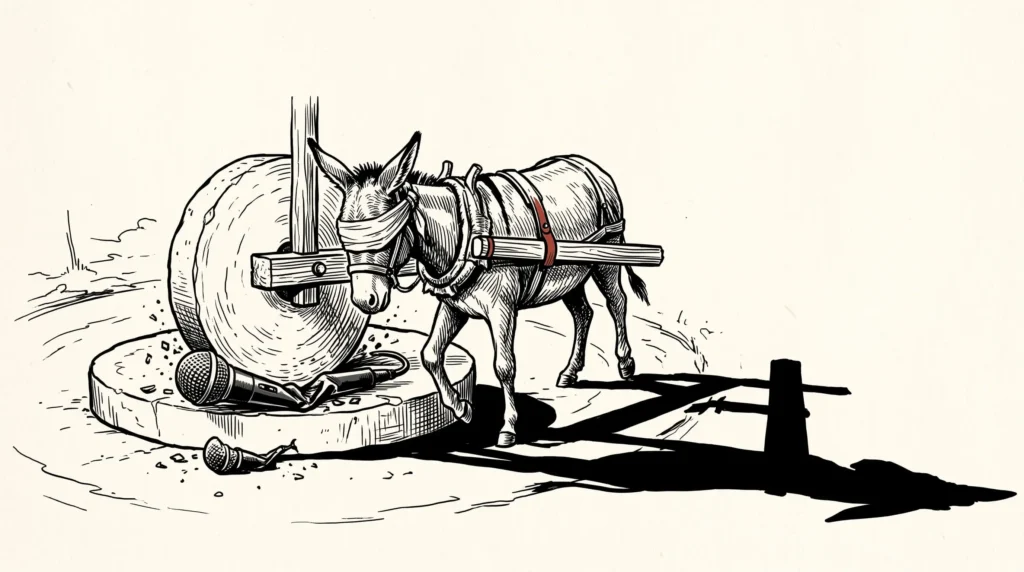
“Mr. Prime Minister, I heard that Germany has legalized marijuana. Does that mean we have to smoke marijuana if we study in Germany?”

This kind of question, which occurred at the exchange between German Chancellor Scholz and students from Tongji University, is very representative and worth discussing. (The picture above is a scene illustration, not the questioner)
First of all, from a logical perspective, this is of course a stupid question. Germany and other countries legalizing marijuana is not a mandatory promotion, and there is no requirement to smoke marijuana.
So Chancellor Scholz’s answer also reiterated this common sense:
“Well, yes, Germany has indeed legalized marijuana. But the purpose of legalization is actually to better manage and control, and to reduce illegal transactions and abuse. As for studying abroad, of course there is no requirement to smoke marijuana!”
Scholz also said that he is almost 66 years old and has never smoked marijuana, nor does he encourage anyone to smoke it.
Just like tobacco and alcohol are legal in China, and are absolutely rampant, but there is no law that requires international students to smoke or drink alcohol. This is a very simple principle.
Then, while analyzing the stupidity of this student’s question, it is also necessary to affirm that he has raised a serious question that deserves attention.
Whether or not marijuana is legalized is both a legal difference and a social and cultural difference between China and Germany.
Countries such as Germany, the United States, and Canada have legalized the act of smoking marijuana. This is based on the fact that marijuana is virtually impossible to ban in the local area. They hope to restrict and manage marijuana through legalization and inclusion in public supervision. The cultural root behind this is that the public accepts the government’s ability and responsibility is limited, and does not require the government to promise an “absolutely clean and perfect society.” It also warns the government against excessive interference in citizens’ lives by pursuing “zero marijuana.”
China’s regulations that smoking and selling marijuana are illegal are based on a determination and goal to do everything possible to combat drugs and infinitely compress the survival space for drug use and drug trafficking. The cultural root behind this is that Chinese society has suffered from the ravages of opium and other drugs in modern history, leaving an indelible historical memory. On the other hand, the Chinese public is also generally more willing to cede rights such as freedom and privacy in order to combat drug crimes, and the government’s formulation of strict anti-drug regulations has a solid public opinion base.
Therefore, we Chinese can of course oppose the legalization of marijuana based on our own experiences and values, but we don’t need to feel that the practices of other countries that allow the legalization of marijuana are stupid and evil, and that they are being kidnapped by interest groups. At least, German Chancellor Scholz is unlikely to be less knowledgeable or less capable than the student who asked the question at Tongji.
Finally, there is the issue of communication methods in public places. Due to the lack of relevant education, many Chinese students are actually not very good at asking questions, even the students from China’s top universities are not much better.
In the context of speeches and exchanges, the most common problem is to treat the opportunity to ask questions as an opportunity to express one’s own views, standing up and saying a lot of their own (different) ideas, without any intention of communicating and exchanging with the guest speakers to reach a consensus. Of course, it doesn’t mean that one cannot express opposition to the guest speakers. The key is the way of expressing opposition. It should be based on facts and logic to point out the mistakes of the guests, and then ask the speakers to supplement the arguments or re-prove them, so that there is an opportunity to clarify the facts and the truth.
Another common problem is to take “attack” as the goal when asking questions, which is also the mistake made by the student who asked the question at Tongji University this time.
In short, this student’s “question” was actually to express opposition to the legalization of marijuana in Germany, and did not intend to listen to Germany’s considerations in formulating relevant laws, nor did he intend to explore how to better manage the harm of marijuana, but was purely to show the superiority of “our country manages marijuana very strictly and well.”
Perhaps, this is a kind of confidence of contemporary young people that I cannot understand.
For such students, it is recommended not to go abroad to study.
Discover more from 自由档案馆
Subscribe to get the latest posts sent to your email.