On the morning of March 13, 2014, after the closing of the Second Session of the 12th National People’s Congress, Premier Li Keqiang of the State Council met with Chinese and foreign journalists and answered their questions in the Golden Hall on the third floor of the Great Hall of the People. As the “coda” of the two sessions, the Premier’s press conference has become one of the most important expectations of all sectors for the two sessions’ agenda and is a major event not to be missed. NetEase News will sort out the past and present of the Premier’s press conference.
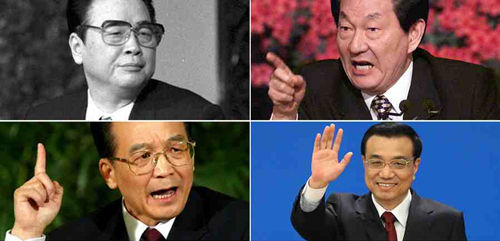
Four Premiers Answer Journalists’ Questions
The Premier’s press conference was normalized in 1993
In 1988, Li Peng participated in the press conference after the end of the two sessions for the first time as Premier.
The only absent Premier’s press conference in 1992
The head of the Chinese government held a press conference starting from Zhou Enlai, but it was stipulated from the system in 1987. 1988 was the first National People’s Congress after the establishment of the NPC News Bureau, and it was also the year of the change of term. CCTV began to broadcast the press conference after the end of the two sessions. On the afternoon of April 13 of that year, after the closing of the conference, at the invitation of Zeng Tao, the spokesperson of the press conference of the First Session of the Seventh National People’s Congress, Li Peng, the newly elected Premier of the State Council, and Vice Premiers Yao Yilin, Tian Jiyun, and Wu Xueqian attended a press conference attended by more than 400 Chinese and foreign journalists in the Great Hall of the People.
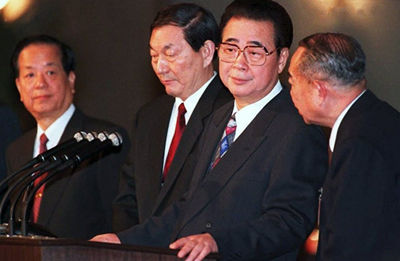
At this press conference, Li Peng answered questions from journalists, including the resignation of Ding Guangen, Minister of Railways, the so-called “suppression and repression” of intellectuals, and the so-called “disagreements between the General Secretary and the Premier on reform.” In response to a question from an American “Time” magazine reporter about his so-called “special relationship” with Zhou Enlai, Li Peng frankly introduced his background to everyone and made a clarification.
However, the data shows that at that time, the Premier still participated in the press conference after the two sessions as a state leader.
Until April 9, 1991, Li Peng, the then Premier of the State Council, participated in the press conference after the end of the two sessions for the first time as Premier. From then on, the specifications and level of the press conference reached a peak.
From March 20 to April 3, 1992, the Fifth Session of the Seventh National People’s Congress was held. During this period, Deng Xiaoping’s southern tour had actually become the focus of attention of the representatives of the two sessions and Chinese and foreign media, but the southern tour and Deng Xiaoping’s speech had not yet been officially announced. This year, the Premier’s press conference was not held, becoming the only one absent since the beginning of this practice.
After that, starting from 1993, the Premier’s press conference after the closing of the two sessions was normalized and institutionalized. And the media attending the meeting ranged from 600 to 800.
Comparing the Premier’s press conferences over the years, it is found that the number of people asking questions in a Premier’s press conference usually does not exceed 20; the time is generally between one and a half hours and two and a half hours. The special case is the Premier Wen Jiabao’s press conference in 2012, which lasted nearly 3 hours.
Nearly half of the questions at the press conference are given to foreign media
Each year’s Premier’s press conference is held in the name of the NPC spokesperson, inviting the Premier and journalists.
Foreign media participating in the two sessions’ reports can almost all get at least one invitation to the Premier’s press conference. This invitation with a white background and gold lettering needs to be used together with the two sessions’ interview certificate before entering the Golden Hall of the Great Hall of the People after strict security checks.
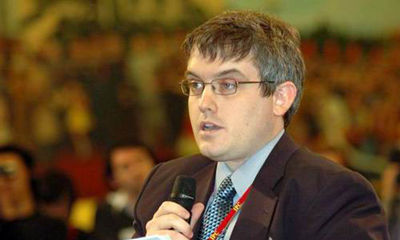
Taking 2007 as an example, among the 750 invitations issued to journalists at the conference, 200 were for journalists from Hong Kong, Macao and Taiwan, 200 for mainland journalists, and 350 for foreign journalists.
An official from the News Bureau of the National People’s Congress, one of the organizers of the Premier’s press conference, introduced that the original intention of setting up the Premier’s press conference was to provide an interview opportunity for foreign media, allowing them to learn more about China’s domestic and foreign policies. Therefore, when issuing invitations, more attention will be paid to foreign media and media from Hong Kong, Macao and Taiwan. Under the premise of limited space, it is difficult to meet the interview needs of every domestic media.
An official from the News Bureau of the National People’s Congress said that the original intention of setting up the Premier’s press conference was to provide an interview opportunity for foreign media, allowing them to learn more about China. Therefore, not only will more attention be paid to foreign media and media from Hong Kong, Macao and Taiwan when issuing invitations to the press conference, but also the opportunity to ask questions will be tilted towards foreign media and media from Hong Kong, Macao and Taiwan. For example, at Premier Zhu Rongji’s press conference in 1999, foreign media got 5 out of 8 opportunities to ask questions, and in the 10 Premier’s press conferences during Wen Jiabao’s two terms, 6 to 7 foreign media got the opportunity to ask questions every year. Among the foreign media, American media got the most opportunities to ask questions, with a total of 28 times, while British media got 17 times. Japanese media almost have a relatively fixed opportunity to ask questions every year, and they have got 11 opportunities to ask questions in 16 years.
Li Keqiang’s press conference and Zhu Rongji’s first press conference both gave the first opportunity to ask questions to foreign media. And at each press conference, after Hong Kong journalists get the opportunity to ask questions, they are more concerned about “how to support the development of Hong Kong”, and Taiwan journalists will also ask “how to strengthen cross-strait cooperation”.
How to become 1/13 from hundreds of journalists and get the opportunity to ask questions makes every journalist rack their brains. After Zhu Rongji “appointed” Wu Xiaoli, a Phoenix Satellite TV reporter in red, to ask questions in 1998, female journalists will dress up carefully every year at the Premier’s press conference, from professional white-collar outfits to gorgeous princess outfits, from scarves to lipsticks, every detail is refined.
Foreign media journalists focus on sensitive issues such as Tibet and human rights
Economic issues are the focus of every Premier’s press conference
At each year’s press conference, China’s economic development trend, RMB exchange rate, Tibet issue, Taiwan issue, Sino-US relations, Sino-Japanese relations, human rights issues, Hong Kong issues, and the Premier’s self-evaluation are all the issues that journalists are most concerned about.
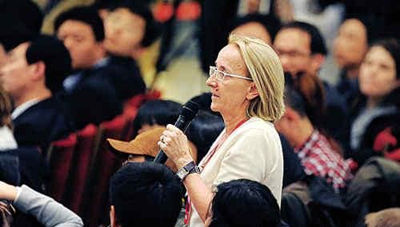
For example, in 2008, on the eve of the Olympic Games, there were particularly many questions about the Tibet issue. Among the 13 media that got the opportunity to ask questions, reporters from CNN and other 5 media mentioned the Tibet issue. Reuters also asked a question about human rights that year. In 2012, Agence France-Presse directly raised the issue of Tibetan self-immolation. The questions from the central media are also more pertinent to sensitive issues. In 2013, China Daily’s question involved the reform of the re-education through labor system.
Reviewing the Premier’s press conferences over the years, the “click rate” of “China’s economy” is like a steadily rising diagonal line: Premier Li Peng answered 124 questions at the press conferences, with economic issues accounting for 16%, a total of 20; Premier Zhu Rongji’s 5 press conferences answered 73 questions, with economic issues accounting for 28%, a total of 21; Premier Wen Jiabao’s 9 press conferences answered 135 questions, with economic issues totaling 38. After the outbreak of the global financial crisis, the three Premier’s press conferences from 2009 to 2011 saw a sharp increase in questions about “China’s economy”, reaching 6 each year, accounting for “half of the total questions”. The focus of journalists’ attention has also expanded from old issues such as GDP growth to new issues such as the influence and sustainability of China’s economy.
In addition to economic issues, major events that have occurred at home and abroad in the past 20 years, such as the Asian financial crisis, China’s accession to the WTO, SARS, and the Olympics, have never been absent from the Premier’s press conference.
Wen Jiabao, on behalf of the Chinese government, made the first statement on the “Wang Lijun incident”
The Premier’s press conference has released many important news
At the Premier’s press conference, the most famous is Premier Wen Jiabao’s last Premier’s press conference in 2012. This press conference was the longest press conference in 16 years, lasting 3 hours. At this longest press conference in history, Wen Jiabao, on behalf of the Chinese government, made the first statement on the “Wang Lijun incident”. Wen Jiabao directly answered: “I can tell you that the Central Committee attaches great importance to it and immediately instructed the relevant departments to conduct a special investigation. The investigation has made progress, and we will base ourselves on facts and the law, and handle it strictly in accordance with the law. The results of the investigation and handling will definitely give the people an answer and stand the test of law and history.” Regarding the Central Committee’s attitude towards Chongqing, Wen Jiabao stated that “the current Chongqing Municipal Party Committee and Municipal Government must reflect and seriously learn lessons from the Wang Lijun incident.” Such a statement, at a time when Bo Xilai had not yet been officially announced to be involved in the case, was interpreted by the outside world as releasing a certain special political signal.
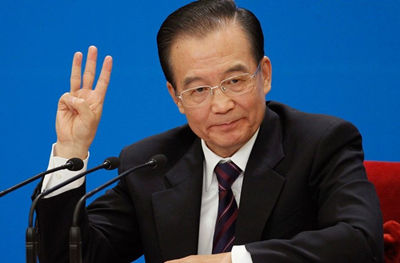
The reform of the re-education through labor system was another important news revealed by Premier Li Keqiang at the press conference last year. He stated when talking about the issue: “The reform plan of the re-education through labor system in China is being studied and formulated by the relevant departments, and it is expected to be released within the year.” Half a year later, the decision to abolish the re-education through labor system at the Third Plenary Session of the 18th CPC Central Committee became a reality.
Zhu Rongji responded to the title of “Economic Tsar”
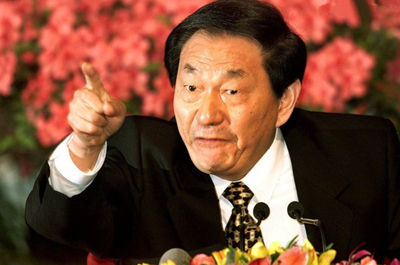
Personalized answers to journalists’ questions, the Premier shows the true color of “ordinary people”
Li Keqiang, Wen Jiabao, and Zhu Rongji will be asked some personalized questions when they first appear.
For example, Li Keqiang was asked “what is your personal feeling from the grassroots to the highest level of your political career”. Li Keqiang said: “In my personal experience, in reading, doing things, and cultural edification, I have realized a truth, which is to walk the great path, put the people first, and benefit the world. These nine words are not the original words from any classics, but my own experience. I firmly believe that one must be upright and do things fairly in order to benefit the country and the people.”
Wen Jiabao was also asked how to evaluate his own work style. Wen Jiabao replied: “After I became Premier, I always silently recited two lines of poetry by Lin Zexu: ‘If it benefits the country, I will die without hesitation, how can I avoid it because of good or bad fortune.’ This is my attitude towards future work.”
Zhu Rongji was also asked: “People call you ‘Economic Tsar’, what are your thoughts on this?” Zhu Rongji said frankly: “I am not happy.” He said: “No matter whether there is a minefield or an abyss in front of me, I will go forward, go forward without hesitation, do my best, and die after I have done my best. Although I am very afraid of disappointing the people’s expectations, I am very confident.”
In addition, some personalized words at the press conferences of the three Premiers have become the focus of media attention.
In 2003, after Wen Jiabao answered the last question, he said, “I’m really sorry, if you don’t eat lunch, we can continue to communicate.” This detail is often mentioned by the media.
In 1998, Zhu Rongji asked Wu Xiaoli, a Phoenix Satellite TV reporter in red, to ask questions. After that, female journalists at the Premier’s press conferences will dress up carefully, striving to be “eye-catching” to get the opportunity to ask questions.
Source: Beijing News, Jinghua Times, China News Weekly
Discover more from 自由档案馆
Subscribe to get the latest posts sent to your email.