While most young people are still flocking to big cities, Li Ke left Shanghai and returned to her hometown of Linquan, but unexpectedly found herself trapped in a three-wheeled motorcycle.
In December, before the cold wave reached Linquan, the daytime temperature was 20 degrees Celsius, and it would drop to around 5 degrees Celsius at night. Li Ke, 24, didn’t have time to change out of her faded red cotton coat and drove the tricycle to the waste recycling station to reverse.
She looked a bit bloated and clumsy, and so did the tricycle.
“Right, faster, you’re so slow.””
Her mother shouted, and her father was busy sorting the waste, not having time to pay attention to the mother and daughter.
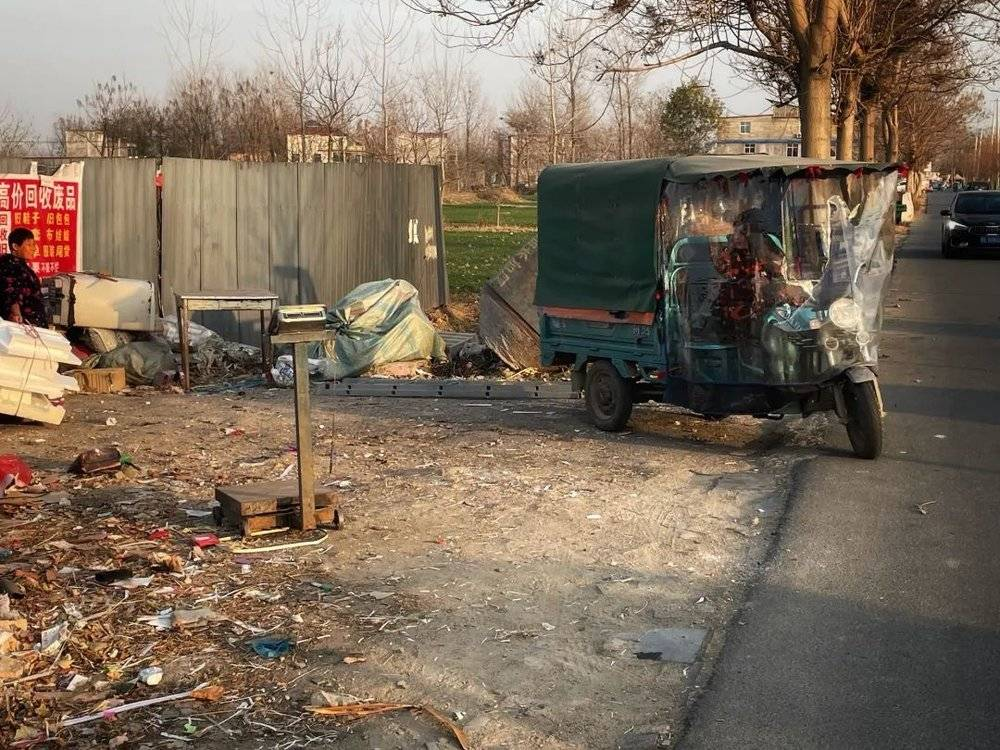
Li Ke reversing, Photo source: Reporter of Times Weekly, Fu Yibo
Five minutes passed before she finally backed the car into the unloading area, which was dozens of meters wide. Her parents skillfully unloaded the cardboard, foam, and sheet metal from the car and weighed them.
It takes about two or three hours to collect a carload of waste, which can bring in more than 100 yuan for Li Ke’s family—in Linquan, this is considered a good business.
In June of this year, Li Ke quit her job and left Shanghai, returning to Linquan. At first, she wanted to do something she liked, but the town was not Shanghai, and there were few choices, so she had to follow her parents to collect waste. Soon, she realized that the waste station was not as good as the Shanghai customer service company she had left.
In Linquan, there are countless beginnings to stories like Li Ke’s.
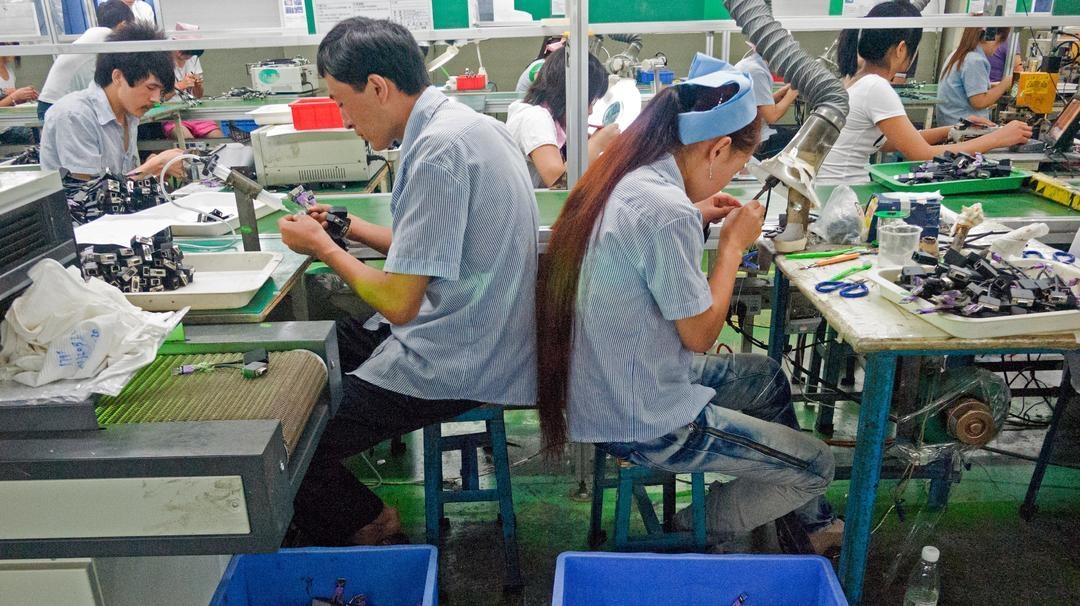
Since the 1980s, going out to work seemed to have become a life imprint for the people of Linquan. At that time, the assembly line workers of a joint venture electronics company in Shenzhen, because they earned more for more work, had an income three times that of workers in state-owned enterprises, which was the most fashionable thing in the job market at the time.
As the first and second generations of migrant workers built up the cities of the Pearl River Delta and the Yangtze River Delta, they naturally became the masters of the cities, owning houses and cars, and living a decent life. But in recent years, the opportunities provided by cities to migrant workers have become fewer and fewer.
Since 2021, the population of Linquan County, Anhui Province, the county with the largest population in China, with a registered population of 2.3 million, has seen a population return. There are young people and migrant workers who are working outside, as well as those who are preparing to return home to enjoy their old age.
Contrary to the population return, Linquan has closed 50 kindergartens this year due to a decline in the birth rate; those who returned to the county town found in despair that their hometown was not a promised land either.
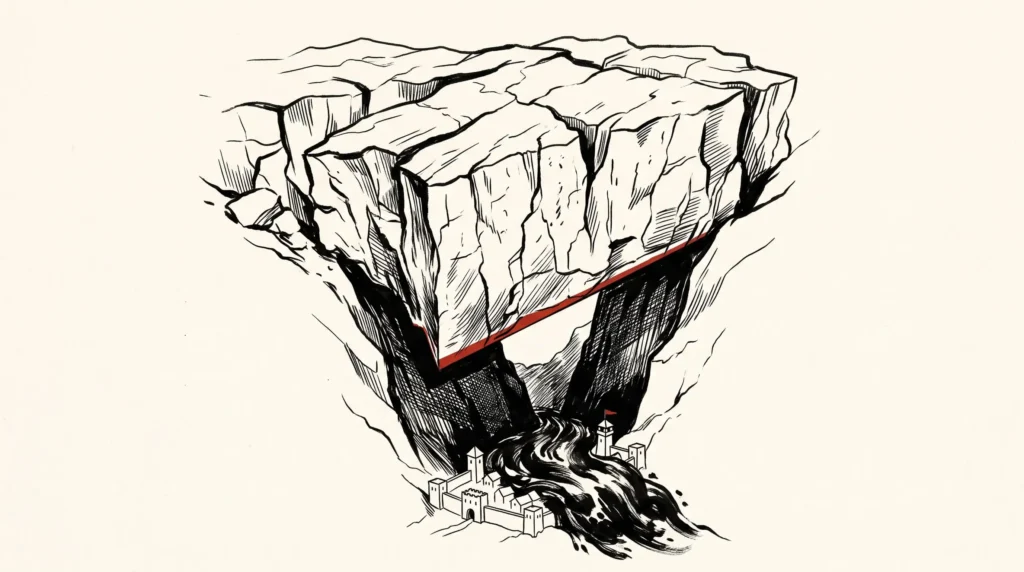
The city and the countryside each shot an arrow into the hearts of the people of Linquan, and then began to pull.
1. The Distant Place That Cannot Be Reached
Going out, coming back, going out again, coming back again—many people in Linquan use these simple words to define their lives.
Li Ke plans to set off again after the Lantern Festival next year, possibly returning to Shanghai, or possibly going to Dongguan. In short, she wants to get rid of the tricycle that she was scolded with.
The town where she lives is called Changguan Town, located on the side of National Highway 220 in the southern part of Linquan County, and is famous for its acrobatics. Because it has developed quite well, it has stood out from the 23 towns in Linquan County along with Yangqiao Town, Jiangzhai Town, and Tongcheng Town, and is known as the “Four Little Dragons of Linquan”.
The name “Four Little Dragons” is already a thing of the 1960s.
But the “Four Little Dragons” still support the development of Linquan, and each has its own strengths. Changguan does acrobatics and cultural tourism, Yangqiao has an industrial park, Jiangzhai farms, and Tongcheng is known for its leather and pig farming.
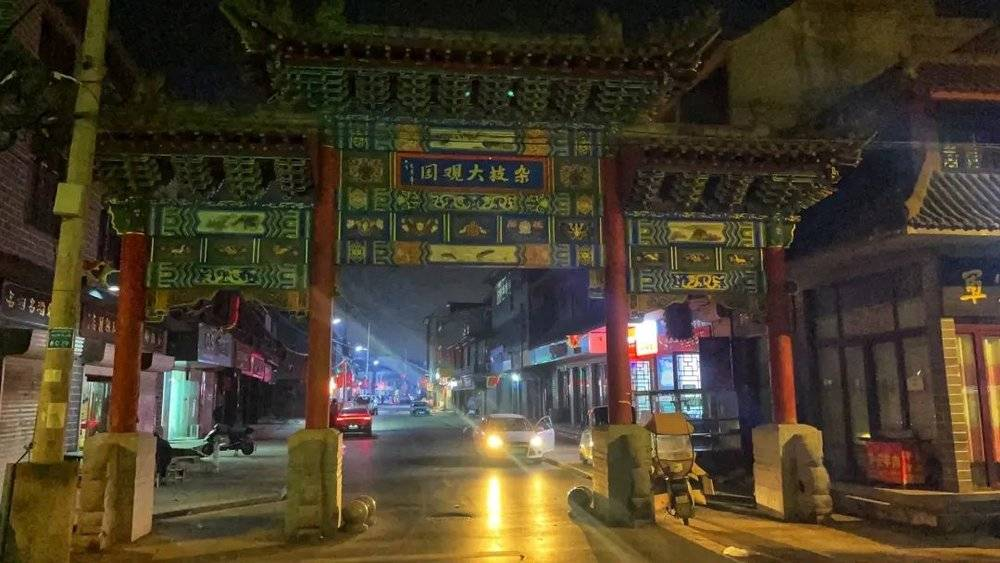
Changguan Town archway at night, Photo source: Reporter of Times Weekly, Fu Yibo
In order to live up to the name, Changguan Town changed its appearance a few years ago. First, a huge imitation ancient archway was erected at the entrance of the town, and next to the archway was a lottery station, with a banner that read: This station won a big lottery of 18 million, and a scratch card of 250,000. This number constantly teases the nerves of the locals.
Passing through the archway is an ancient street about 1 kilometer long. Li Ke said that when it’s busy, it’s like Shanghai’s Chenghuang Temple.
After the residential area, Changguan Town reveals its true face, which is the same as other towns in Linquan.
The brick and stone pavement disappears, followed by a dirt road, surrounded by fields, fish ponds, and scattered bags of pesticides and fertilizers, and even an oil mill that city people haven’t seen for a long time. The old couplets on the door of the abandoned flat house have faded: Happy life, safe and wealthy.
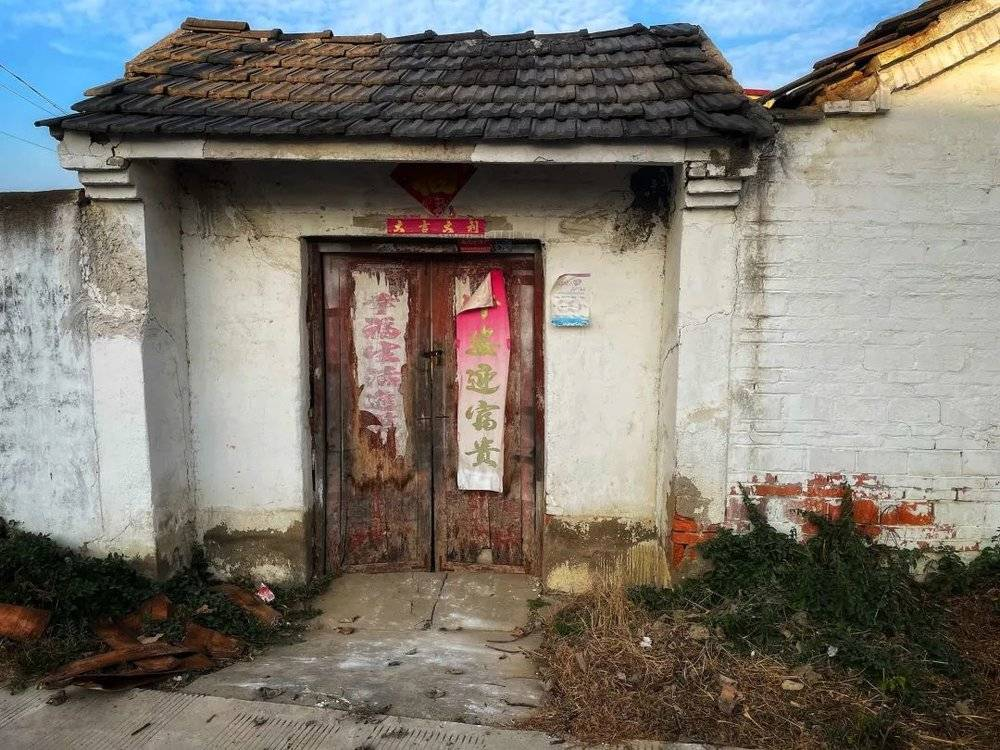
Old houses in Changguan Town, Photo source: Reporter of Times Weekly, Fu Yibo
Recruitment notices are also posted on the walls of the factory area, with salaries: 3500~4000 yuan/month, modern industry can accurately capture the labor force of every rural area.
Li Ke has lived here for 19 years. When she had just become a qualified labor force, she was attracted by the nearest town.
As the eldest child in the family, she is not easy to stay at home either.
Her grades were average, and she failed the college entrance examination. In the eyes of the locals, her future was already set—to support her husband and teach her children, and to pay for her younger brother’s tuition.
So she came from home to the town, working as a pieceworker in a clothing factory, with a salary of no more than 2,000 yuan; then she went to the county, but like the town, the salary was low and the hours were long.
When her peers went to places further away from the town, Li Ke finally persuaded her parents to let her go, at the cost of sending half of her salary back each month. Li Ke didn’t care about this, she left to seek opportunities to change her fate, rather than being trapped on land that was not cultivated.
Most of this generation of migrant workers believe that migration is a path to pursue a better life. And they are younger and better educated than the previous generation. More importantly, the people in the town believe that those who go out are “elites”, and are more motivated than those who stay.
In the spring of 2017, when Li Ke entered Shanghai, her identity as the eldest daughter in Linquan disappeared, and she was called a “floating population” here.
In the few years that Li Ke left, the Internet surged forward.
Online shopping, takeaway, and express delivery suddenly filled the lives of city people—the population flow in Linquan was faster than before. According to official sources, out of a registered population of 2.8 million, 800,000 to 1 million people went out to work at the peak, and Linquan also became the county with the largest number of labor exports in the country.
The people of Linquan who went out appeared all over the country, Wenzhou Jiangnan Leather Factory, Guangdong’s electronics factories, and clothing factories. In addition, many people have also found their place in the industrial parks and takeaway industries in Jiangsu, Zhejiang, and Shanghai.
But they also have the reality in front of them. Migrant workers who are drifting in the city are like passengers in second class, their household registration, their children’s education, and their medical care are separated by a transparent door. They are just passengers in big cities.
Li Ke didn’t think so much. She said she was very lucky. She found a customer service job at an e-commerce company in Zhangjiang as soon as she arrived in Shanghai, with a starting salary of 7,000 yuan, including accommodation and commission. She sat on the other side of the network cable for 6 years, and the phone she used changed from vivo to Apple.
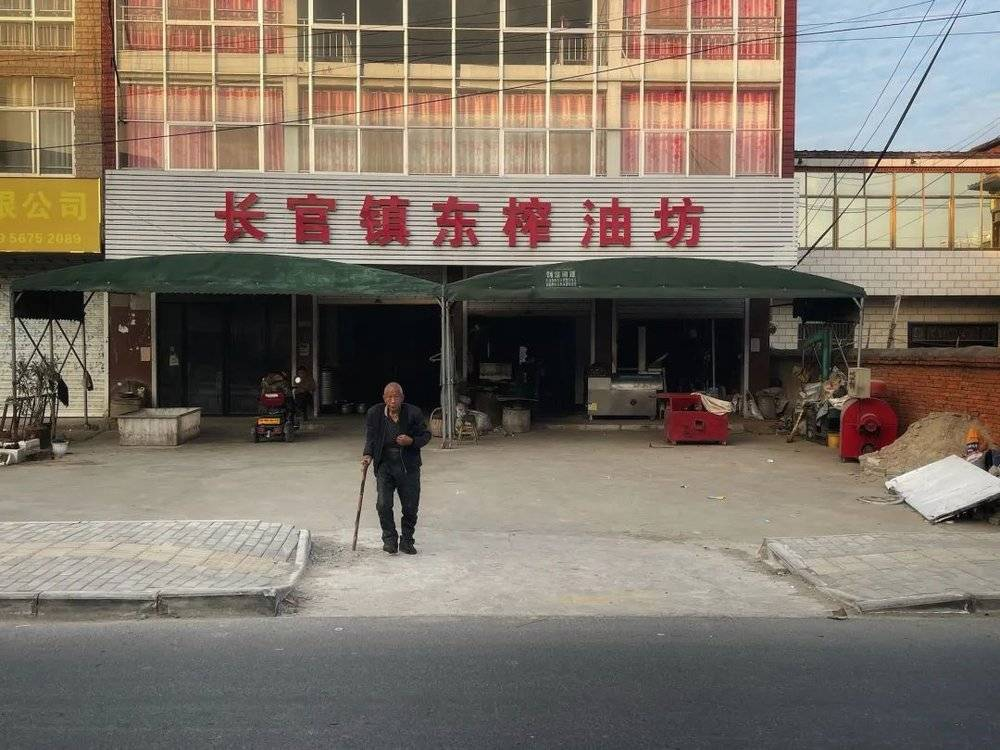
Oil mill in Changguan Town, Photo source: Reporter of Times Weekly, Fu Yibo
Life in Shanghai is completely different from that in the county. Collecting waste is about cardboard, plastic, and copper wire, a few jiao and a few yuan per jin; in Shanghai, everything is numbers: orders, amounts, rebates, the faster you type on the keyboard, the higher your income.
When the body is trapped on this side of the network cable, the soul begins to look for things that cannot be quantified. She likes to meet with a few female classmates from the same hometown from time to time, in order to speak a few words of her hometown dialect, to relieve the loneliness and floating feeling of being alone.
These young people in big cities will also easily disappear. Li Ke said that although she is 700 miles away from home, the mysterious power brought by her hometown’s habits is indestructible, and will inevitably involve these floating people. For example, if you are not married at 25, there must be a problem. Many “Li Kes” who are drifting in big cities are pulled back to solve the problem by this force.
However, 6 years have changed Linquan: the high-speed rail has been opened, the factories have become more numerous, and there are also Carrefour and the Wanda Plaza that is about to open. Her parents use this change as a bait to coax her to go home quickly; on the other hand, in 2022, the business of the company where Li Ke worked became sluggish, and the boss cut everyone’s commission.
She took the bait.
In June 2023, Li Ke took the high-speed rail from Shanghai Hongqiao Station. Unexpectedly, what awaited her was a tricycle. She said that the county town, like the city, makes people confused.
2. The County Town That Cannot Be Stayed
Confusion is not a commonality, but in Linquan, it seems to be contagious and spreading.
Xu Di left home at a young age, worked in aquaculture in Dalian, and also worked as an apprentice in a barbershop. After 14 years of traveling outside, at the beginning of this year, which was his thirtieth year, he returned to Linquan and started a hot and sour noodle business on the street next to the Carrefour on Jiefang Road, with an annual rent of 30,000 yuan.
This is the place with the largest flow of people and the strongest business atmosphere in the town. According to the big city’s statement, this is Linquan’s central business district, the CBD. But Xu Di still felt that opening a store was too hasty, so hasty that he began to feel confused in less than a year.
After being away from home for many years, Xu Di’s perception of the county town has long been weakened. Although it is said that one day in a big city is like one year in the county, in the wave of urbanization, the county town has undergone earth-shaking changes, and the time required is much shorter than that in the city. This change is not only in appearance, but the values of the warm countryside, which was originally a spiritual homeland, are also becoming more and more similar, and it is difficult for the so-called rural love stories to appear again. There is almost only one standard in people’s eyes—money.
Xu Di recalled that when he returned to his hometown at the beginning of the year, as soon as he got off the high-speed rail station, Yangqiao Town, which was desolate in his childhood, had now become an industrial park, and farmland was replaced by factory buildings. Around Jiefang Road and Yuyuan Road in the center of the county town, there were various snack shops, some of which were even open 24 hours. The Linquan Development Zone in the north includes industries such as auto parts factories, food factories, and clothing factories.
Life in the county is no longer as boring as before, with bars, KTVs, and cinemas. The affordable Mixue Bingcheng and Heytea are less than a hundred meters apart. In short, whether it is in the county or in the towns, everything looks very prosperous.
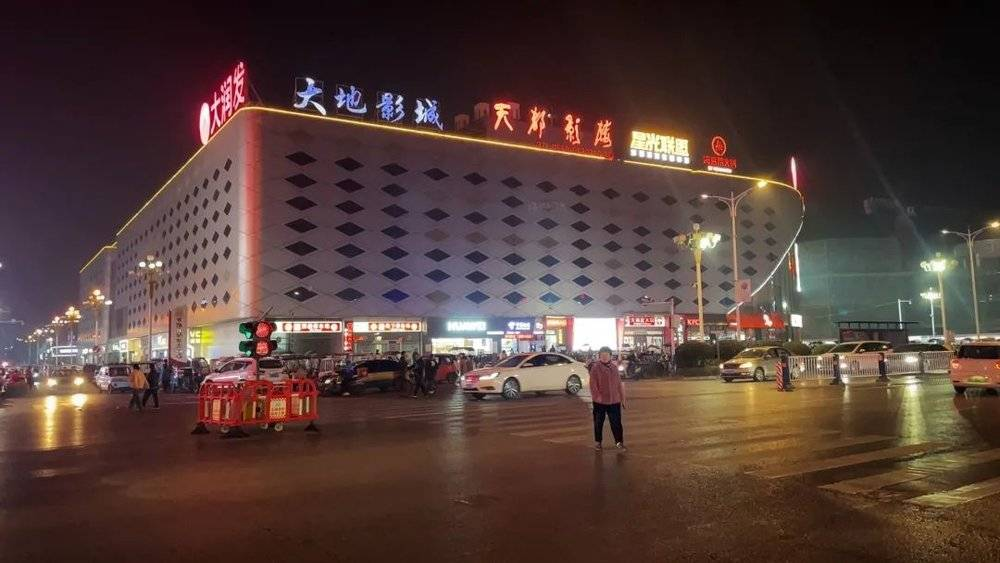
Carrefour in the center of the county town, Photo source: Reporter of Times Weekly, Fu Yibo
The measure of a prosperous life cannot be separated from money—that’s what Xu Di doesn’t have for the time being.
His bills also feel this way: the first month, the average daily turnover was 700 yuan; the second month: 500 yuan. Now it has fallen to about 300~400 yuan per day. After deducting the cost, he feels that it is better to work.
In recent years, there have been many people returning to their hometowns, and he is just one of many entrepreneurs.
Data shows the recent entrepreneurial boom in Linquan. In 2014, there were only more than 30,000 registered individual industrial and commercial households in Linquan County, but since 2019, this number has tripled, and most of the newly added industrial and commercial households are concentrated in the catering industry, which has a low starting point and cost.
But in 2023, the heat began to decline. According to the brief analysis of the economic operation of the county from January to October 2023 released by the Linquan County government, the investment in the tertiary industry in Linquan County decreased by 21.0%—the service industry, mainly catering, has quietly shrunk.
Zhang Ming, the owner of a milk tea shop on Jiefang Road, said that the turnover rate of shops on the street is very high, and it takes about half a year to change a round.
“People in the county love novelty. The business of new stores is still okay in the first few months, but as long as the taste of everyone changes at a certain moment, the business will immediately become cold”. After staying on Jiefang Road for a long time, Zhang Ming’s “lord” consciousness began to appear, and he used “those people” to describe those entrepreneurs who had just returned to their hometowns from other places.
“Those people, nine out of ten will ‘die’.” Catering looks like a store, but there are no fewer tricks inside than in other industries. He also said that the final destination of those people is nothing more than two, either staying in the county to do distribution, or buying a mobile catering car and mingling in the back street of Jiefang Road; or returning to the city where they originally worked.
Xu Di had just settled his wife and daughter in the county town, and didn’t want to make the next decision hastily, although he knew that it was difficult to mix in the county: the income was low and the consumption was high.
In Linquan, the house price is 5,000~6,000 yuan/square meter; the internet cafe table fee starts from 7 yuan/hour; billiards and chess rooms also cost 28 yuan/hour. Based on the monthly income of 3,000~4,000 yuan in Linquan County, Xu Di doesn’t understand where people’s money comes from?
3. Poverty and Wealth
In the history of human evolution, there are not many “inflection points” that mark a major change in lifestyle. For example, the first industrial revolution triggered by the appearance of the spinning machine in 1765—this is an inflection point.
In China, there are also inflection points: for example, on January 5, 2003, the State Council issued a comprehensive document—”Notice of the General Office of the State Council on Doing a Good Job in the Management and Service of Farmers Entering the City to Work and Find Employment”.
Not long after, slogans speaking for migrant workers appeared on the brick walls of the vast countryside: Go out to work, return home to seek development; labor goes out, wealth is brought back. After that, the large-scale population flow and integration in China began, and Linquan County was one of them.
In fact, the trend of population flowing to the Pearl River Delta and the Yangtze River Delta appeared after the reform and opening up. The people of Linquan flocked to the factories, and then settled in those coastal cities. Their income flowed little by little to their hometowns, which did not move, and finally turned into self-built houses in their hometowns. The appearance of the vast countryside began to change at that moment, and then it became faster and faster.
About 100 meters from Li Ke’s waste recycling station, in a clothing factory near a flower shop, you can see Zhou Sheng, who is in his 50s.
At the beginning of the reform and opening up, he heard that the income in the south was high, so he went to Guangzhou to do clothing wholesale, earned his first pot of gold, and then moved to Wenzhou and Yiwu. After accumulating resources, he saw the cheap labor in Linquan, so he set up a factory in his hometown.
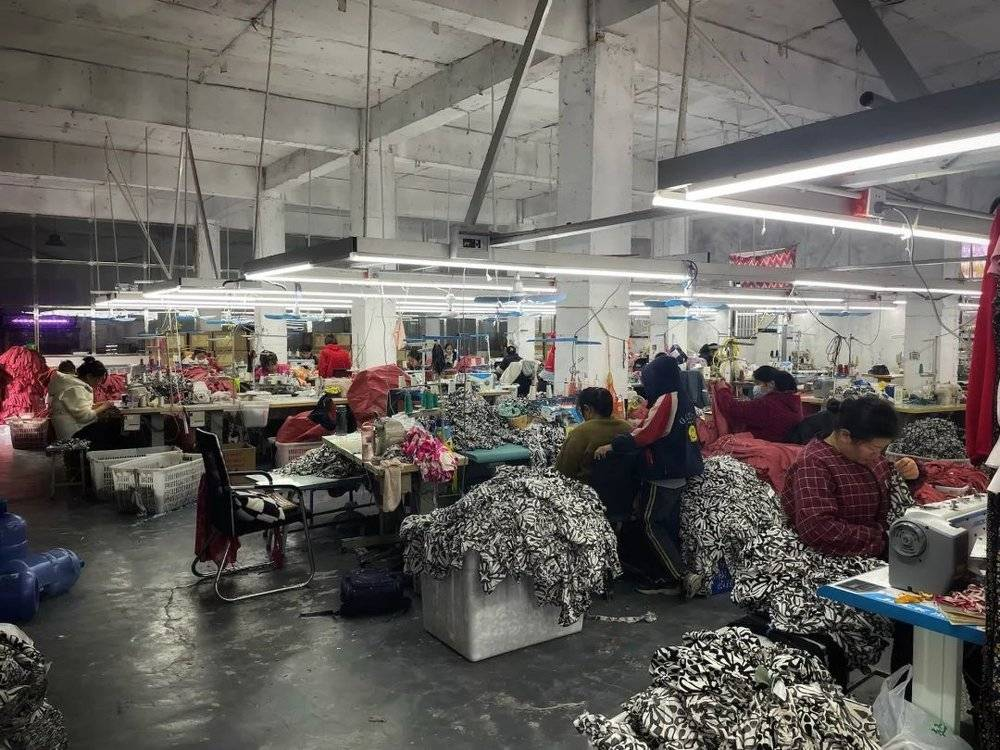
The factory is busy, Photo source: Reporter of Times Weekly, Fu Yibo
The factory looks like it has 300 square meters, and more than 40 female workers are not crowded inside, and they can process 20,000 to 30,000 pieces of clothing per month.
In the office, there are several stacks of orders that have not yet been issued on the tea table, including big brands from Shanghai, and the number of orders shows 11,760 pieces. Calculated at a processing price of 4~5 yuan per piece, the profit of this order is more than 40,000 yuan.
Zhou Sheng said that this order volume is not much. He remembers that at the peak of 2021~2022, there were 100,000 pieces of orders in a quarter, and his factory couldn’t digest them, so he could only outsource them and earn some price difference.
For Zhou Sheng, he only needs to keep some profit after deducting the average salary of 5,000~6,000 yuan for female workers. His children are already working in the government agencies in the county, and the house he bought is the best Country Garden in the county.
When mentioning the poverty of Linquan, Zhou Sheng was noncommittal.
“Everyone has their own destiny”.
The same words also appeared in the mouth of a village cadre in Wangying Village. He said, “Those who went out in the early years have all made a fortune. It’s not easy to mix now, but it’s better than staying at home.”
In addition to those who went out to make money and returned home, there are also some who caught up with a good era, and are the demolition households in everyone’s mouth.
That was in 2014, under the leadership of the then county party secretary: bringing back the high-speed rail station, building roads, and attracting investment. In just a few years, the situation of Linquan’s dirt roads on sunny days and “cement roads” on rainy days was completely changed, and a major transformation was completed from semi-closed to everywhere accessible, from no railway to entering the high-speed rail era, and from processing workshops to factory enterprises.
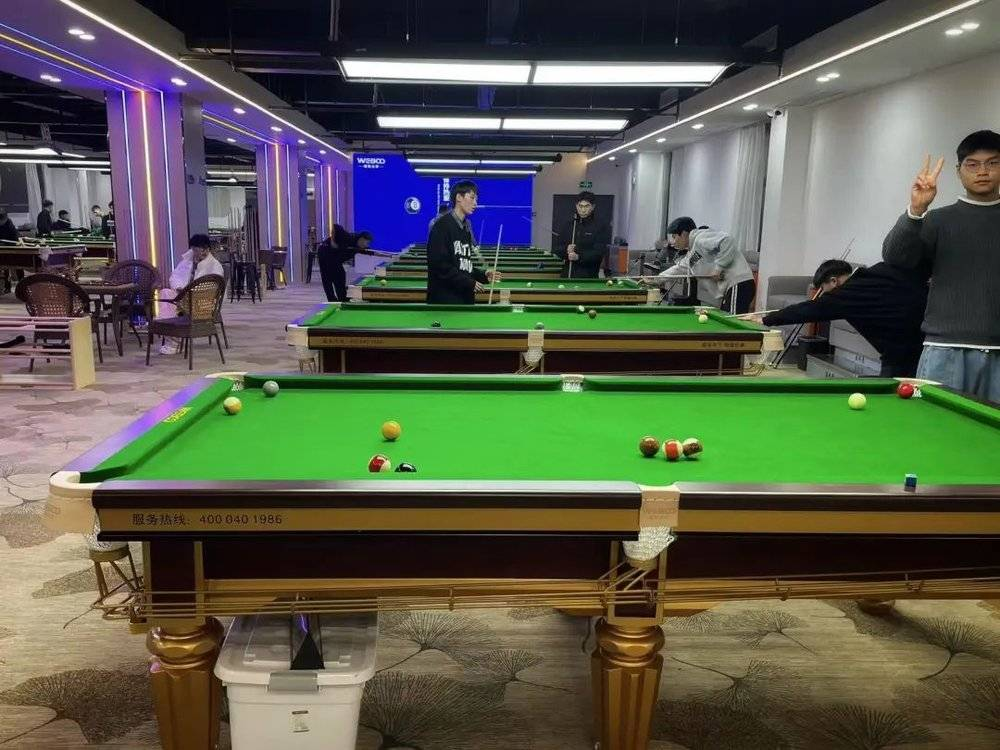
Billiards room in Linquan County, Photo source: Reporter of Times Weekly, Fu Yibo
Behind the large-scale infrastructure construction, the lucky local residents received a lot of demolition funds and became the nouveau riche in the eyes of others.
But the lucky ones are a minority, and ordinary people have ordinary lives.
In the past two years, the agriculture and aquaculture industries in Linquan have been affected to varying degrees. Farmers in the village said that in 2022, vegetables could reach 7~8 cents/jin, but this year it has dropped to 3 cents/jin, but the price of fertilizer has increased by 3 cents per bag.
The swine fever that began to spread in September this year also caused huge losses to pig farmers in the town…
As county town people, they seem to have not too many choices—the needs of the city determine their future. More importantly, when the people in the county decided to copy the urban lifestyle, they found that it was incompatible with the ecology of the county town.
Poverty and wealth are like a wall in Linquan. The rich are the face, and the poor are the inside—the places where Li Ke and Xu Di live have become a vivid explanation.
4. Difficult Self-Help
Economic development is too fast, and the development of people’s souls may not be able to keep up.
For a long time, Linquan was forgotten. Although it belongs to Anhui, the county borders Henan on three sides, and cross-provincial marriages have occurred in many families in Linquan. Because it borders Xincai County, Henan, Linquan was also once a major disaster area for poppy cultivation, and was listed as a key area for national rectification. Until now, the propaganda paper prohibiting the planting of poppies is still posted on the walls deep in Yangqiao Town.
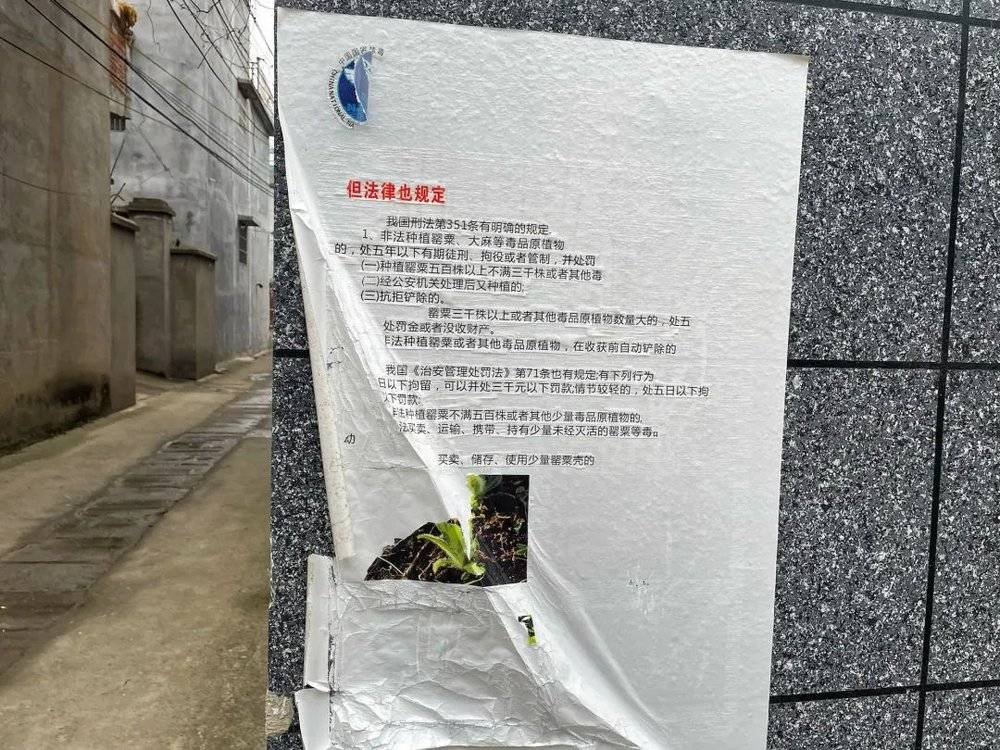
Propaganda leaflets posted in Yangqiao Town, Photo source: Reporter of Times Weekly, Fu Yibo
Until 2019, the economy of Linquan County had a substantial change. In that year, the GDP of Linquan County was 36.97 billion yuan, but in 2018, the GDP of Linquan was only 21.11 billion yuan. The main contribution came from the tertiary industry. In 2018, the output value of the tertiary industry was 8.24 billion yuan, and in 2019, it rose to 19.94 billion yuan, an increase of 11.7 billion yuan.
This may be related to the opening of the high-speed rail that year. In that year, the number of individual industrial and commercial households registered in Linquan tripled, which was the period when Zhang Ming said that “those people” flocked back to Linquan.
The high-speed rail has changed the industrial structure of Linquan. Although it has attracted the people of Linquan who are drifting outside to go home, it has also made it easier for the people of Linquan to go out.
Taking the data of this year as an example, as of October 2023, the investment in the primary industry, which is mainly agriculture, decreased by 20.8%; but the investment in the secondary industry, which is mainly industry, increased by 140.3%; the investment in the tertiary industry decreased by 21.0%.
The population advantage has gradually supported the industrial development of Linquan.
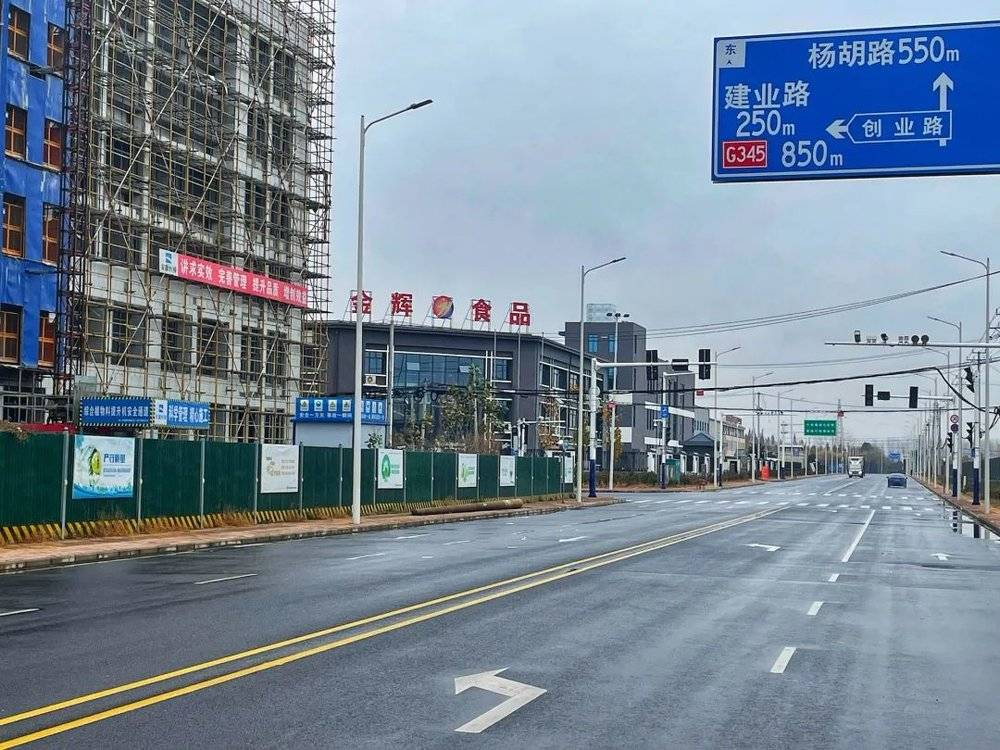
Street scene of Yangqiao Industrial Zone, Photo source: Reporter of Times Weekly, Fu Yibo
But behind this, there are few people in their 90s like Xu Di and Li Ke. Taking Xu Di’s village as an example, the total population of the village is about 300 people, and there are only 3 people in their 90s who stayed in the village. And the clothing factories, slaughterhouses, and electronics factories scattered in the county town and towns cannot cover the job opportunities needed by most local people—going out is still a must-have option for most people.
Lu Ming, Executive Dean of the China Development Research Institute of Shanghai Jiao Tong University, divides China’s counties into four categories in “The Strong City Era”: counties around large cities, professional function counties, security counties, and population outflow counties. According to his survey statistics, there are 1,870 population outflow counties in China like Linquan. Due to different interview methods and times, the data in Long Ying’s team’s statistics is 1,506 (2010-2020).
Lu Ming mentioned in his book that for counties with a large outflow of population, adjustments need to be made in the governance concept. On the one hand, agricultural modernization and large-scale operation mode adjustments should be carried out. In short, counties need to be self-sufficient and find their own way.
However, for population outflow counties, a series of development problems behind them are almost similar—bound by traditional industrial structure and layout, unreasonable allocation of financial resources, blind construction and development plans, backward infrastructure construction and public service provision, and squeezed local cultural resources.
Today’s Linquan County is like a person holding their knees with both hands, watching those unresolved knots—like more than 1,000 other counties, all struggling on the road.
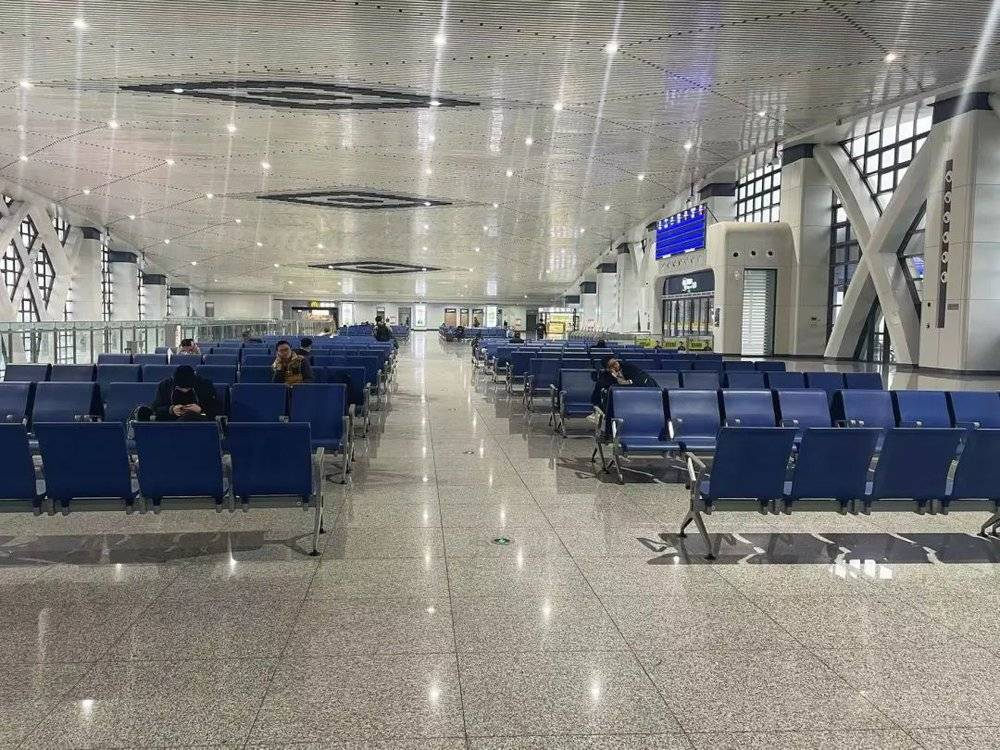
A scene of Linquan high-speed railway station on December 11, Source: Reporter Fu Yibo of Times Weekly
On the afternoon of December 11, the local temperature dropped by more than ten degrees, and the number of people on the commercial street was halved. In the high-speed railway station, there were few passengers.
Around 10 p.m., Xu Di closed the shop door. He, as usual, looked at the income on his phone, less than 200 yuan. He is looking forward to the first Spring Festival after returning home. People in the county all say that when the New Year comes, Linquan County and towns are full of people, and business will be good then.
Xu Di thought that the shop would be full of people then, and that was the business he wanted.
He may have forgotten that in 365 days, the Spring Festival is as short as a yawn.
(Xu Di, Li Ke, Zhang Ming, and Zhou Sheng in the text are all pseudonyms.)
This article is from the WeChat public account: Mammoth Studio (ID: MENGMASHENDU), Author: Fu Yibo, Editor: Li Guang
Discover more from 自由档案馆
Subscribe to get the latest posts sent to your email.