This article is from a reader’s submission, with content compiled from the Sohu account “Ji Zhou“. The original was published on the WeChat public account “Ji Zhou Studio” and was later deleted by the author.

As night falls, the neon lights of dozens of stalls illuminate the entire embankment along the Jiaomen Waterway in Nansha District, Guangzhou. Lemon tea, fried noodles, grilled squid, walking along the two-kilometer LED sign, it’s easy to spot Liang Jiandong in the smoke rising from the barbecue grills.
With his hair styled with wax, a silver wristwatch, a shirt paired with dress pants and leather shoes, and a shiny LV belt buckle at his waist, this is his standard attire as a real estate agent. More eye-catching than his attire is the red sign behind him—the down-and-out agent’s tea stall. Initially, Liang Jiandong used this name to attract customers and grab attention. Now, he feels that “down-and-out agent” describes him perfectly.
In the past year, his sales performance was zero, and the commissions owed to him also disappeared due to the developer’s financial crisis. With mortgage, car loan, and overdue credit card bills staring him in the face, he recently decided to leave the real estate industry and rely on street vending for a living.
In September of this year, Guangzhou implemented the policy of “recognizing houses but not loans”, taking the lead in relaxing purchase restrictions among first-tier cities. Some areas show signs of recovery, but most homebuyers are still waiting and seeing. In the cold winter of the real estate market, as the largest group of practitioners, real estate agents like Liang Jiandong set up stalls, promoting hand-made lemon tea with the sales pitch of selling houses, seemingly catching up with a new trend.
Photos, text, and video | Lü Meng
Editing | Sha Zihan
Editor | Tao Ruogu
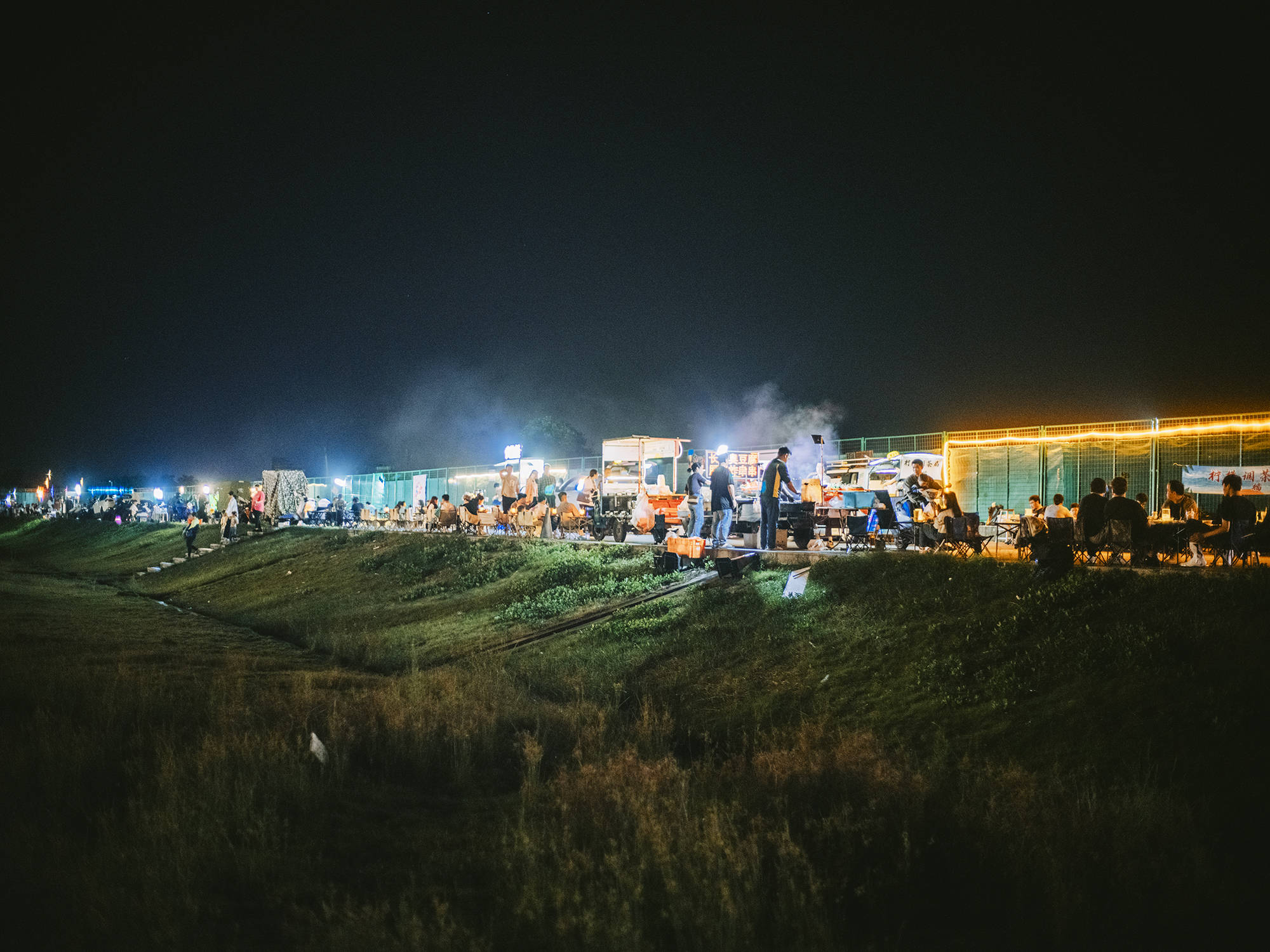 Night market street on the embankment road.
Classic Cantonese songs emanate from the speakers, residents stroll along the street, and choose their favorite snacks to sit down. Liang Jiandong’s stall is in the best position in the middle, cutting lemons, crushing ice, and adding tea, his movements are skillful. Upon learning that a customer is a Vanke homeowner, Liang Jiandong strikes up a conversation—”This community was launched in 2019, it was very popular at the time, we sold more than 30 houses here.” He knows the specific locations of the buildings, the structure of the community’s housing units, and the surrounding facilities in the entire Nansha district too well. After 7 years as an agent, these are all basic skills.
There are no chairs in the agent company’s hall, and more than 100 employees cover one ear and hold a phone to connect with clients. Amidst the noise, Liang Jiandong has to make more than 400 calls every day to promote properties. During peak times, he connects with 6 clients simultaneously, and if he doesn’t have time to show the property, he just assigns it to someone else. The boss of a factory in Panyu District wanted to buy an apartment for rental investment, and after seeing the house once, he bought it the next day. At 600,000 yuan a set, the boss bought 5 sets in one go, and Liang Jiandong earned a 100,000 yuan commission.
Although he didn’t see the Liang Jiandong of 2019, it’s not difficult to see from the pride of recalling this experience that he was full of expectations for the future at that time. After the establishment of the Guangzhou Nansha Free Trade Pilot Zone, policies to build “Nansha Guangdong-Hong Kong-Macao Comprehensive Cooperation Demonstration Zone” were successively launched, and investment customers poured in.
Liang Jiandong didn’t calculate his specific monthly income, but branded suits were a must, high-end shirts had to be bought when new products came out, and eating out cost no less than a few thousand yuan a week. He bought a car and borrowed money, and bought an 800,000 yuan house in his hometown. “It was crazy at that time, I spent money lavishly.” Liang Jiandong’s performance had been good, he became a supervisor in 2019, and if his team members had orders, he would get a commission, and he was also constantly attracting clients, “I thought the loan would be paid off soon.”
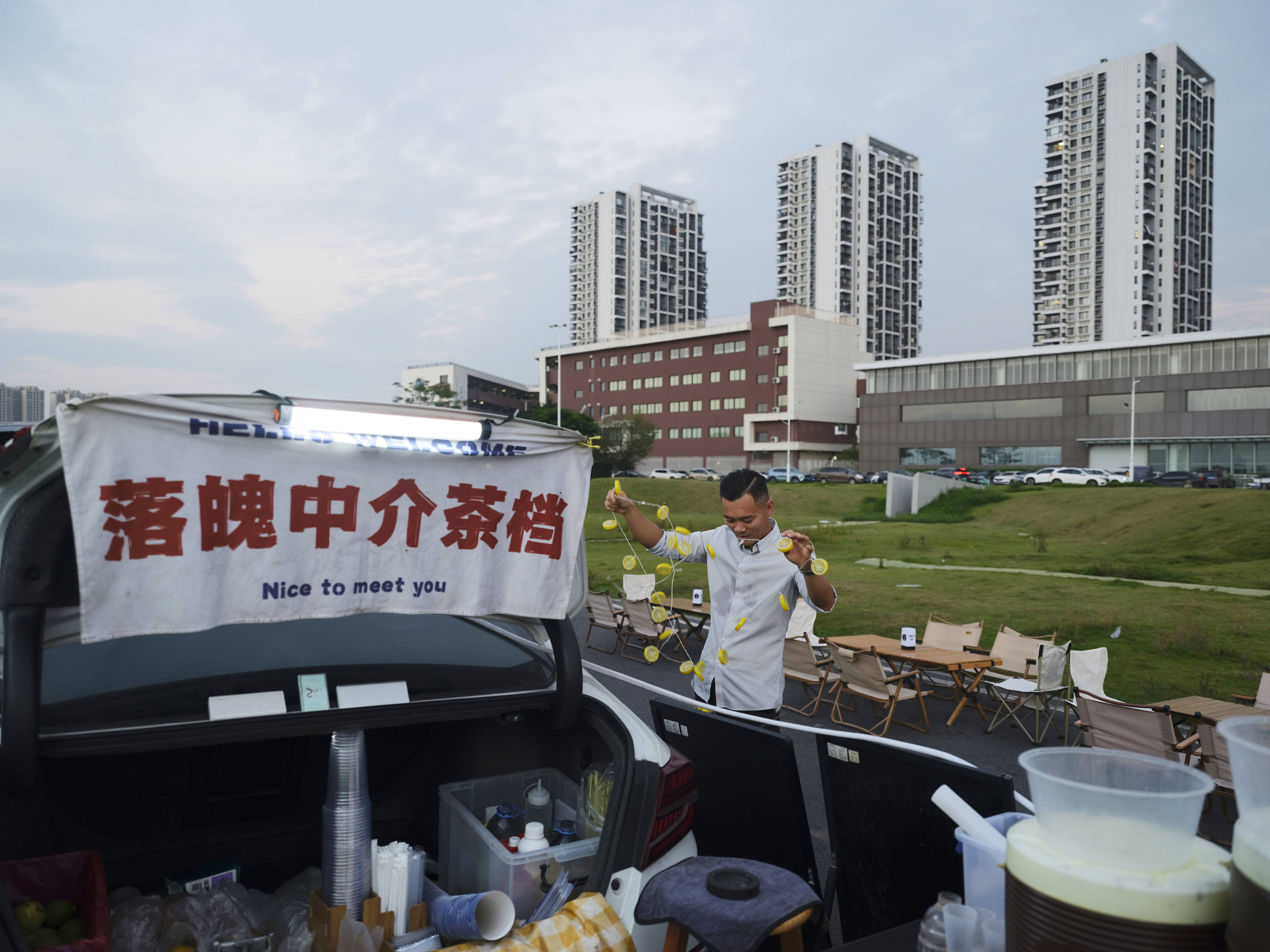 On the evening of October 23, 2023, Liang Jiandong was preparing to set up a stall on the streets of Nansha District, Guangzhou.
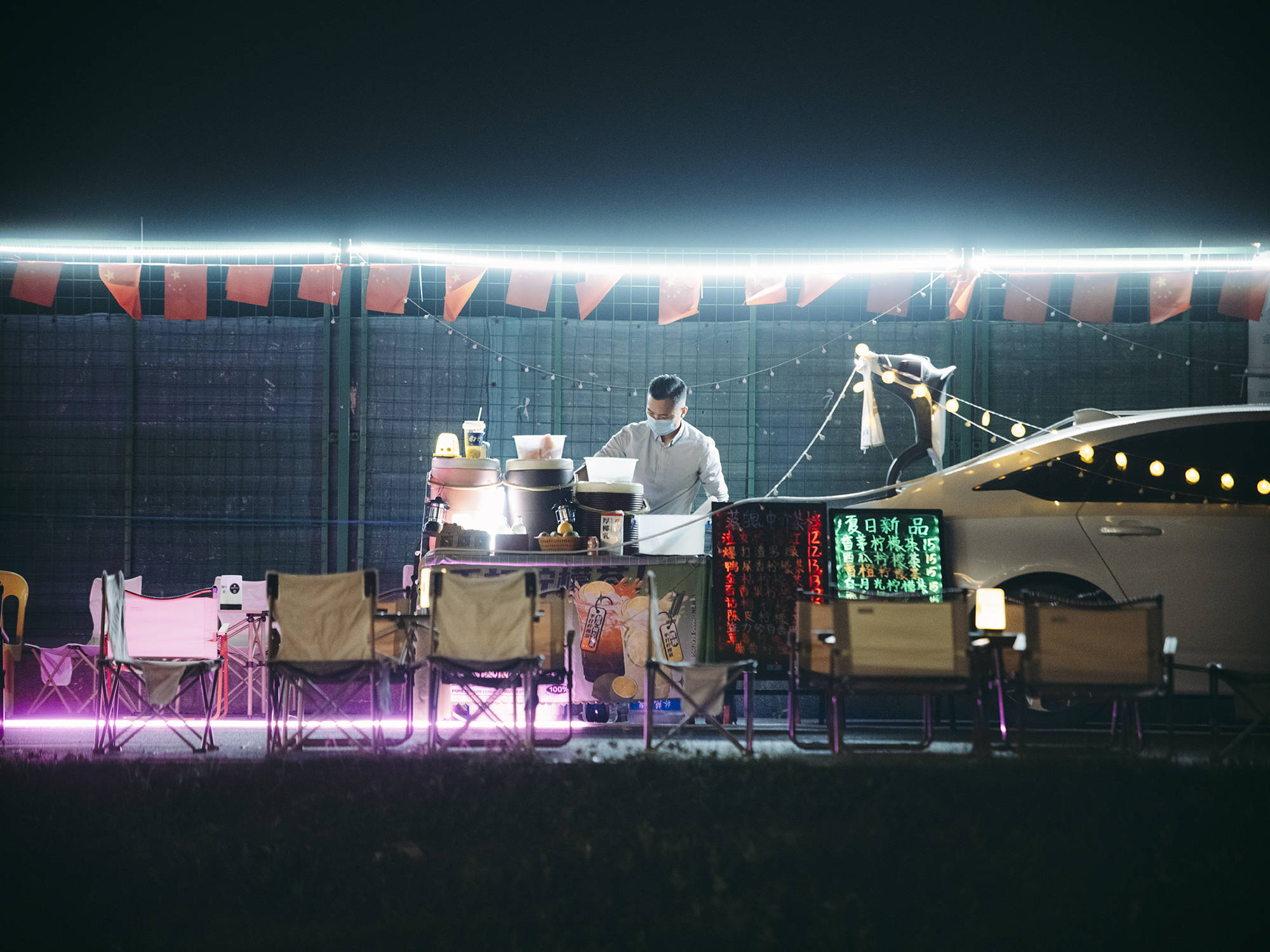 The stall sells hand-made lemon tea.
 Not long after setting up the stall, many customers sat down.
This sense of pride is now meaningless. The salary of an agent depends entirely on performance. When the market is good, many employees choose a zero base salary—the commission is high, and for each deal, they can get 60% or even 70%. Liang Jiandong entered the industry in 2017, and after working for a year, he also chose the zero base salary income model.
In 2021, Guangzhou canceled the preferential policies for home purchases for talents, and the home purchase policies tightened. The Nansha real estate market began to decline, coupled with the impact of the pandemic, and the transaction volume decreased significantly. Many agent companies went bankrupt, Liang Jiandong couldn’t get business, and even the most basic income became a problem. He started canvassing, copying the car owner’s reserved phone number for moving cars. He almost walked through the parking lots and high-end communities around large enterprises in Nansha District, as these areas had high salaries and were easier to find potential clients. He made calls non-stop after returning home. Although there were people who looked at the houses, he didn’t make a single deal in half a year.
 After doing the hand-made lemon tea business, Liang Jiandong was unwilling to give up the agent business. He went to the company in the morning, took clients to see houses, and set up a stall at night.
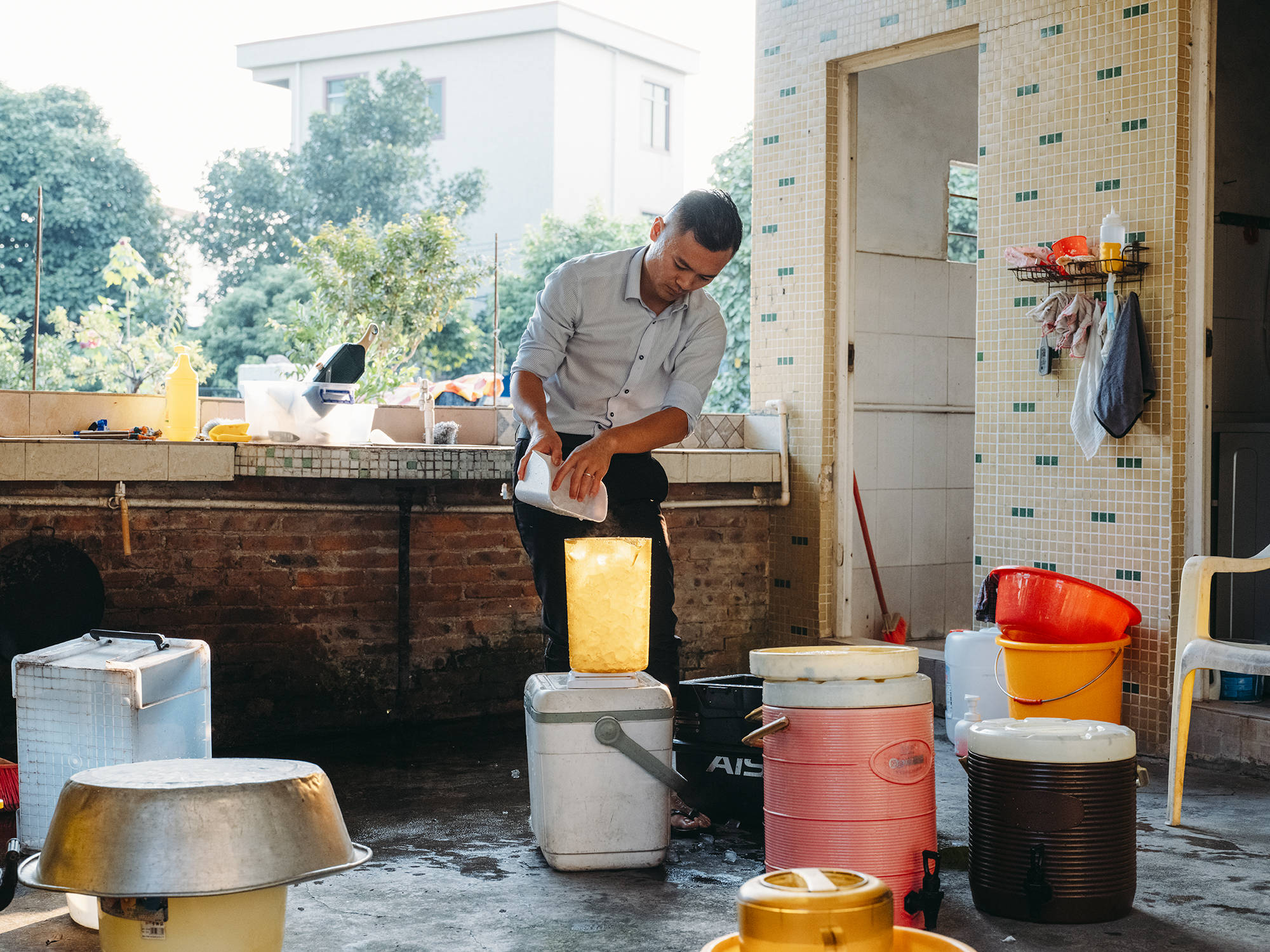 At 3 p.m., it’s usually the time for him to brew tea, put in ice cubes, and prepare for the stall.
Like many of his peers, Liang Jiandong developed the habit of spending in advance during the good times. The commission cannot be received in time, the developer has to wait to verify the order before issuing it to the intermediary, and after deducting the commission, it is transferred to the agent company, and finally to the broker. This cycle usually takes half a year or even longer.
Liang Jiandong is 27 years old this year. He came to Guangzhou after graduating from junior high school and worked in a hair salon in Panyu. His cousin from the same hometown sold houses in an agent company. Hearing him say that he easily earned more than 100,000 yuan a year, Liang Jiandong also switched careers and mainly sold new properties in Nansha District. When he first joined the company, he squatted at the subway entrance for 6 days, and then he and his colleagues closed a deal on a house, and the commission was divided among more than 10 people, with each person getting seven hundred yuan. The real estate market was good, and he was confident, so he used his credit card for spending, and also underestimated the risk of not receiving the commission.
After there were no orders, the pressure of living expenses and loan repayment came crashing down. Colleagues switched careers one after another, driving Didi, delivering takeout, and doing all sorts of things. Last July, Liang Jiandong started selling lemon tea at a stall. At first, he didn’t give up selling houses, printed property brochures and put them on the table, and also hung promotional posters behind the stall. The effect was not obvious, and the brochures were thrown all over the ground.
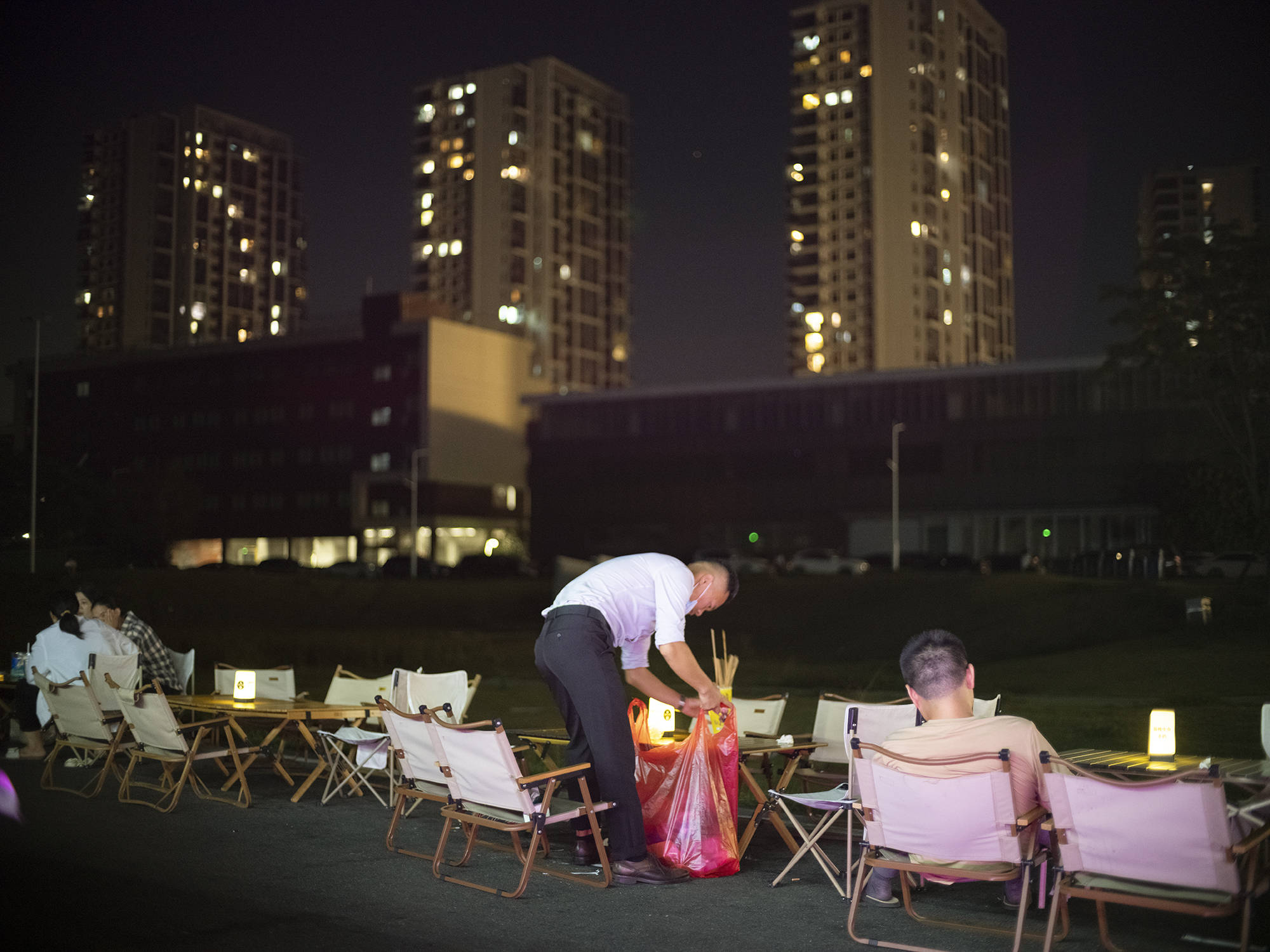 Liang Jiandong cleans up the trash on the table after the customers leave.
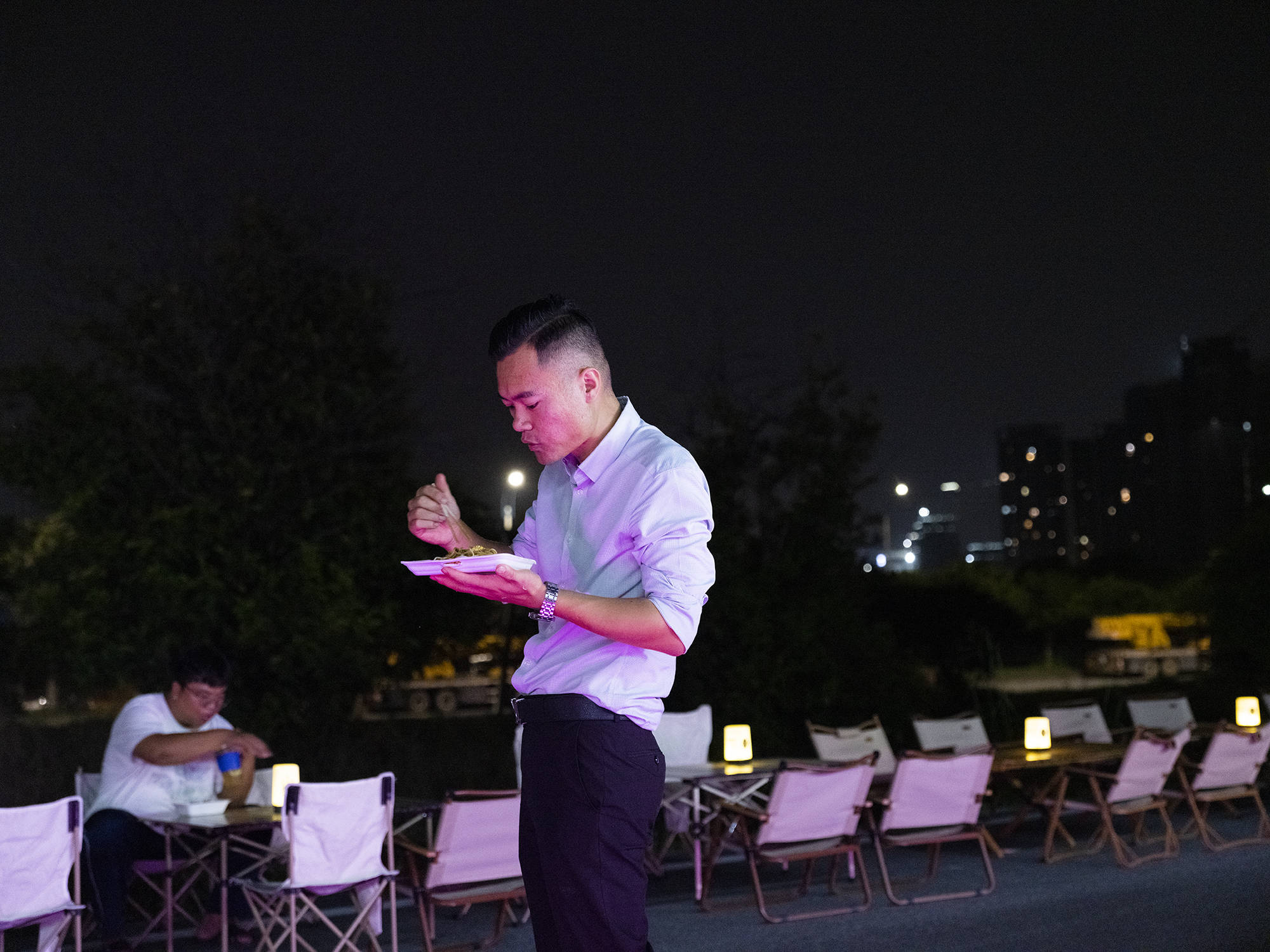 When he’s not busy, Liang Jiandong stands on the side of the road and eats dinner.
 In the early hours of the morning, the flow of customers in the night market gradually decreases, and it’s time to pack up and go home.
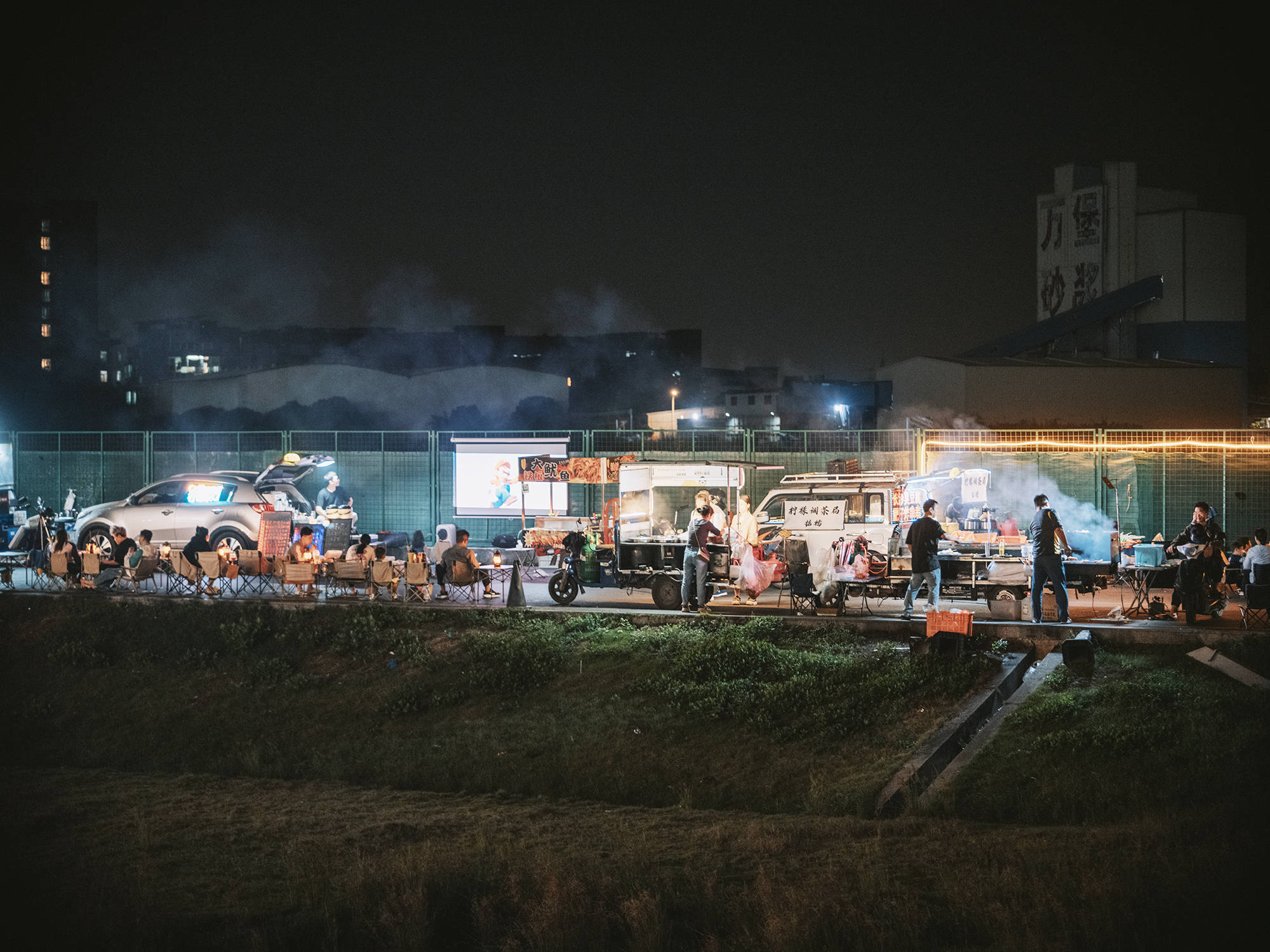 Night market street in Nansha District, Guangzhou.
There are more than just Liang Jiandong selling properties at stalls on the embankment road. Last year, there were 7 or 8 of his colleagues who started setting up stalls on the sales street where he was located. Hand-made lemon tea is the new trend this year. Liang Jiandong goes to the company every morning, goes home to brew tea in the afternoon, and comes back from the stall, sometimes not sleeping until 4 a.m.
The immediate return rate of setting up a stall is high, and he can earn more than 2,000 yuan a day, which also makes Liang Jiandong put less and less energy into the real estate market. When the market is not good, he needs to keep an eye on property information every day, and provide timely feedback to customers about price reduction news. Many agents have switched to online short videos to attract customers. Liang Jiandong hasn’t expanded new customers much, and he hasn’t closed a single deal. After getting married and having children, after deducting the daily expenses of the family, the money left from the stall is not enough to repay the loan. Recently, he plans to make Luosifen (snail rice noodles) and set up another stall during the day.
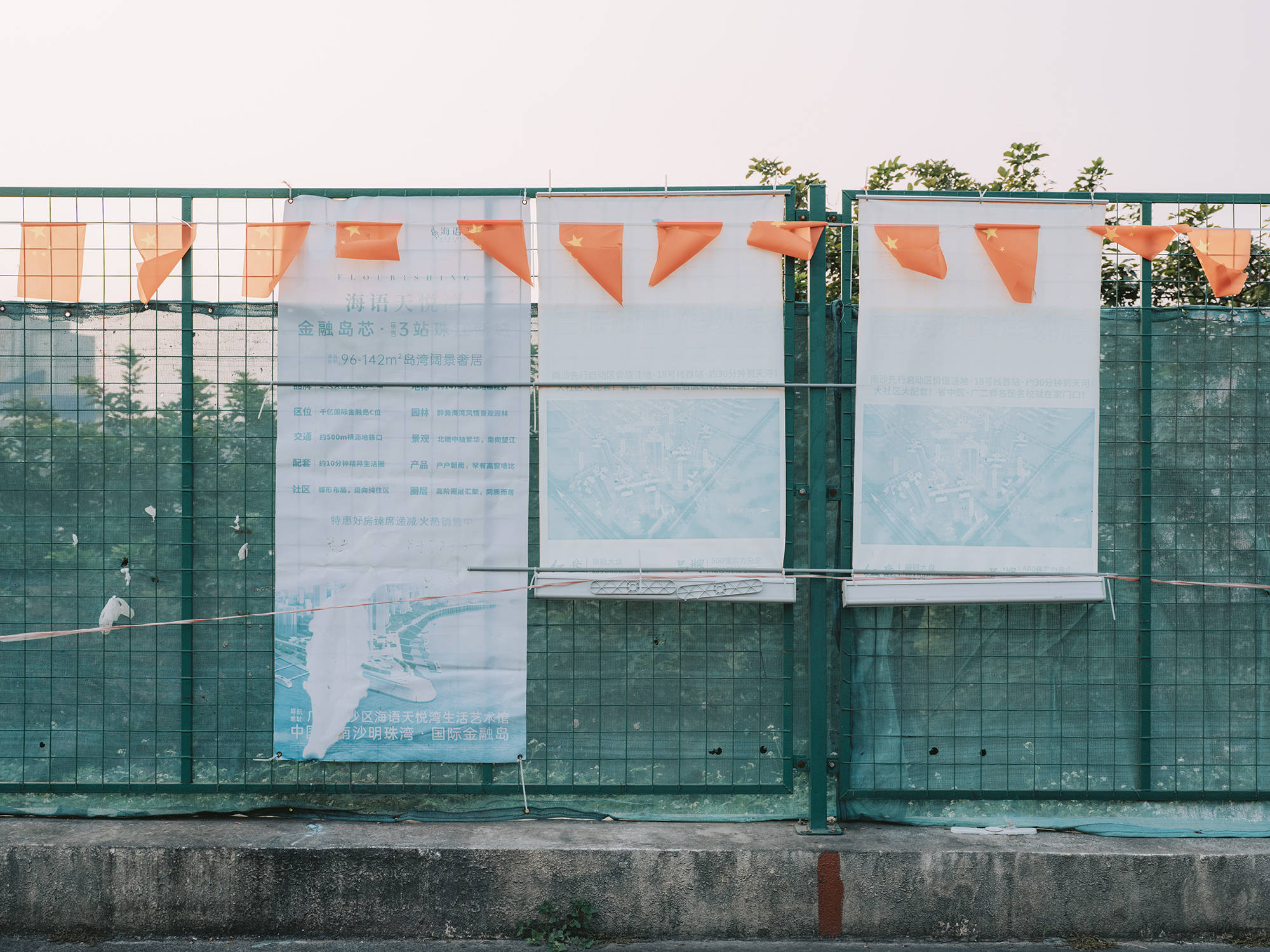 On the guardrail behind Liang Jiandong’s stall, the property promotion posters have faded.
The agent friends around him also have no jobs, and Liang Jiandong asked them all to come. He was the first agent to set up a stall on the embankment road. 25-year-old A Gui set up his stall next to Liang Jiandong’s hand-made lemon tea, selling fried rice noodles and barbecue. They are childhood friends who grew up together in the same village, and they both entered the agent industry at the age of 20. Now they have become the “down-and-out brothers” on the embankment road.
Before setting up a stall, A Gui was the sales supervisor of a real estate company in Foshan, selling apartments and shops, and was also the sales champion for many years. He followed the company’s slogan every day, “No distractions! Must achieve results!” Friday to Sunday was the peak period for making appointments with clients. The company put a big drum, and whenever someone took a client to see a house or made a deal, they would go there to beat the drum, and the whole building could hear it. A Gui was the one who beat the most.
During the company’s anniversary celebration, the boss brought a bag of money and gave bonuses to employees with good performance. A Gui’s share was the largest, and he received more than 50,000 yuan. When giving out money, the boss would encourage consumption, and even ordered suits for him, matching colors in person, and telling him that only by spending money can he know how to make money.
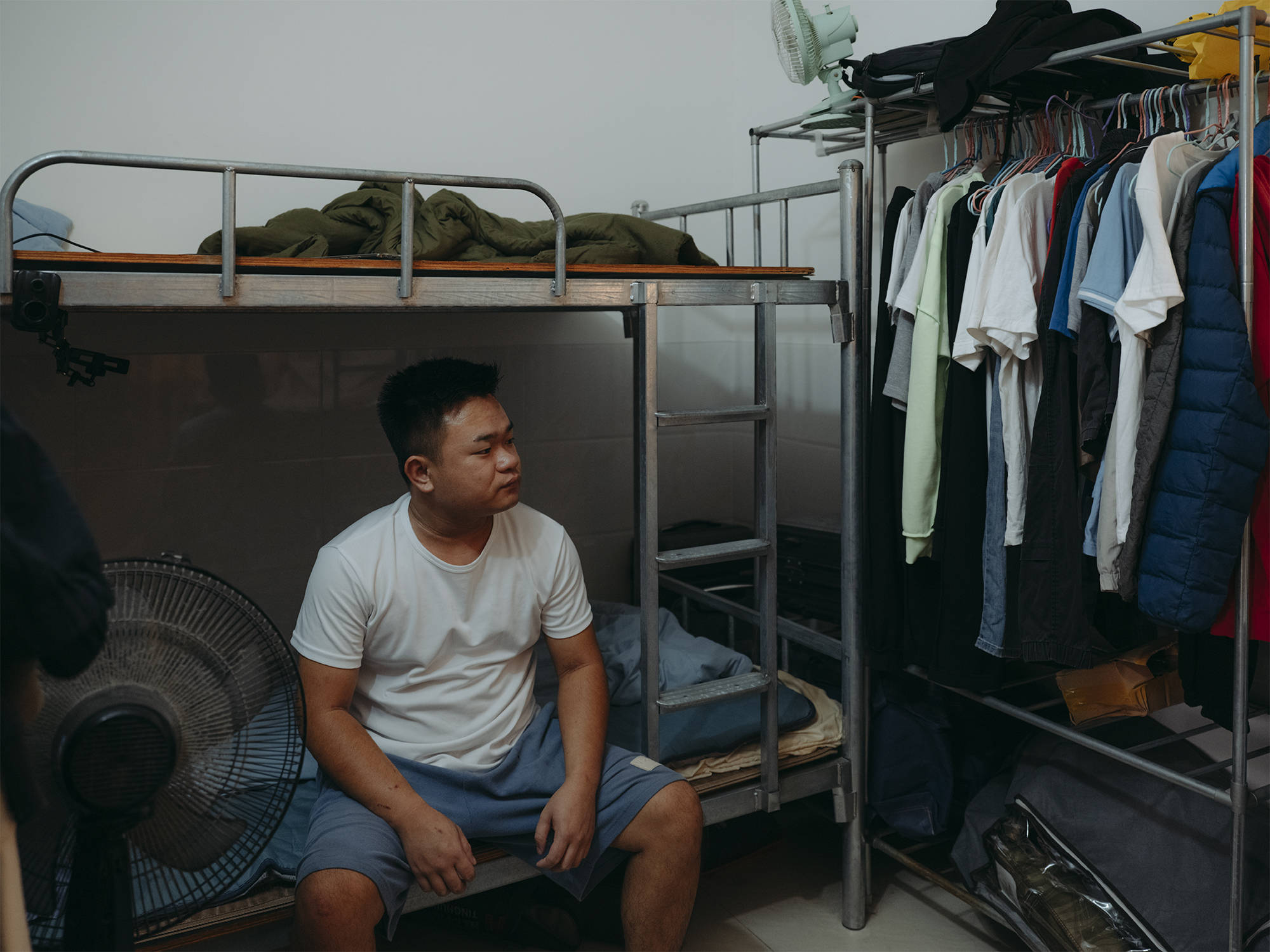 After preparing the ingredients for the stall, A Gui rests in the rented room.
In 2020, A Gui was 22 years old. After his classmates graduated, their salaries were generally around 5,000 yuan, but he already had more than 10 salespersons under him, and he earned more than 30,000 yuan a month. A Gui took his employees to eat at the Canton Tower revolving restaurant in Guangzhou, and also bought a car, with a down payment of 60,000 yuan and a loan of more than 120,000 yuan, with a monthly payment of 2,500 yuan. “I got a little carried away when I had some money,” A Gui said.
The decline in transaction volume was clearly felt at the end of 2021. Many clients were in other places, and they couldn’t cross cities during the pandemic. There were fewer house viewings, and there were no orders for half a year, so he could only receive a base salary of more than 2,000 yuan. A Gui sold his LV belt, Tissot watch, and tablet computer. The credit card collection calls kept coming, sometimes directly to his hometown village committee, and the whole village knew that he was in debt.
In addition to the debt collection calls, there were also old clients who came to hold him accountable. A retired aunt from Foshan wanted to buy an apartment, and A Gui took her to see the house seven or eight times, picking her up and dropping her off, just to make the deal successful. The aunt hesitated, worried about being deceived. A Gui followed the industry’s usual practice, first played the emotional card and recognized her as his godmother, chatted with her on WeChat every day, and finally asked her to come out and see the house. Last year, the aunt called and said that the house was unfinished and couldn’t be delivered, and she was tricked by him.
A Gui felt guilty, but the developer went bankrupt, the intermediary ran away, and he also had 80,000 yuan in commission that he didn’t know who to ask for. Suddenly, he had nothing. He didn’t dare to go back to his hometown. He had no orders, and he just went to work and clocked out every day, and he had no passion for doing things—from a glorious supervisor to selling his belongings, the psychological gap was too great. He would watch videos at home every night—the boss who drove a Porsche, whose shop closed down, and then started from scratch by selling crayfish. He watched similar videos dozens of times a day to comfort himself.
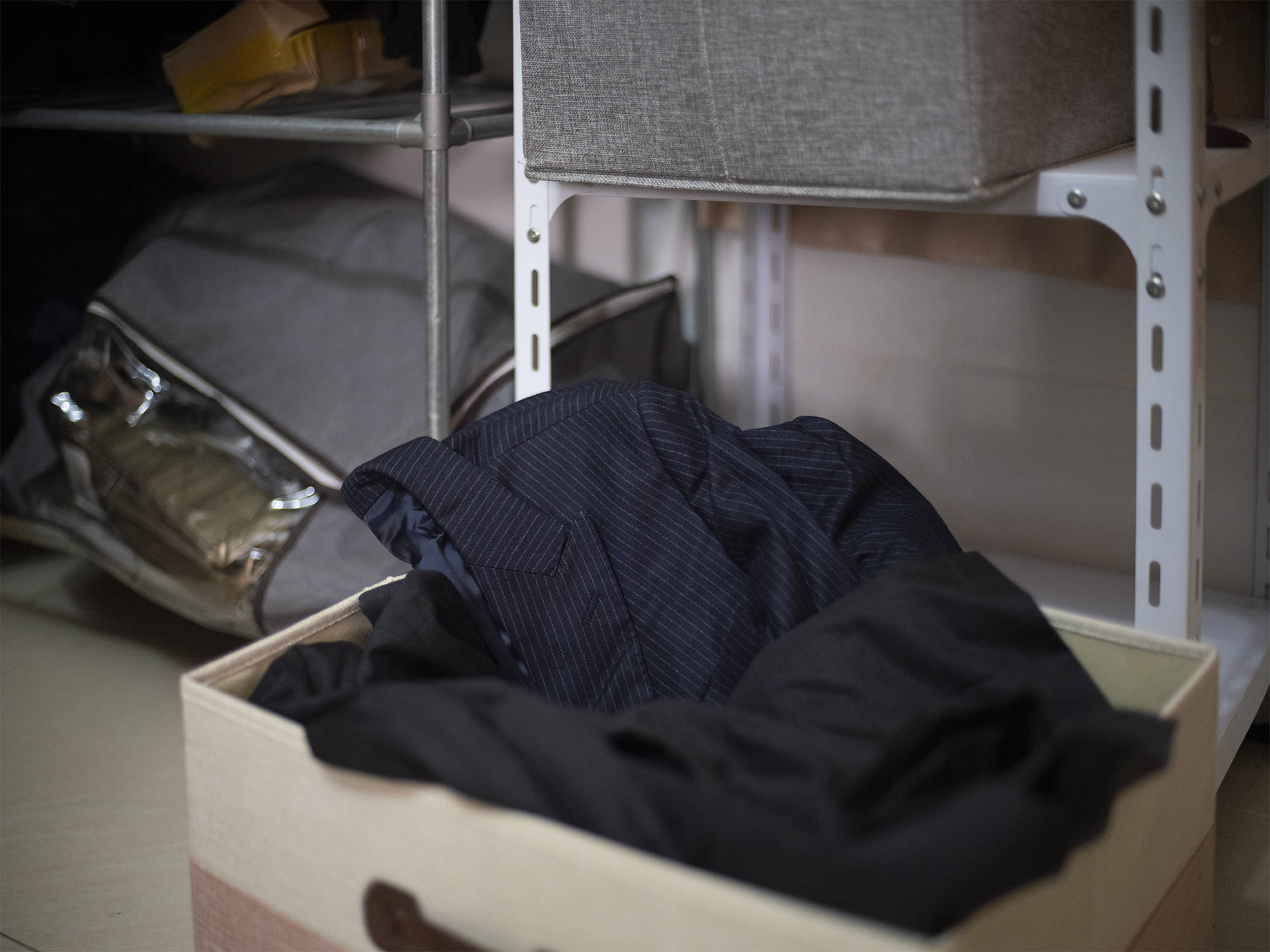 Suits piled in a box.
To pay off his debts, he bought an electric scooter and worked part-time as a delivery person for 2 months. He earned 4,000 yuan in the first month. The delivery location was near the company, and because of face, A Gui would always take a detour.
In February of this year, he also sold the last remaining Honda Accord, and he still had a 100,000 yuan debt, which he paid in installments. It was also at that time that A Gui quit hundreds of sales groups and completely bid farewell to the agent industry. He sold lemon tea in Foshan for half a month, but the customer flow was not large, so he came to Nansha to find Liang Jiandong, and set up a barbecue and fried rice noodle stall next to him.
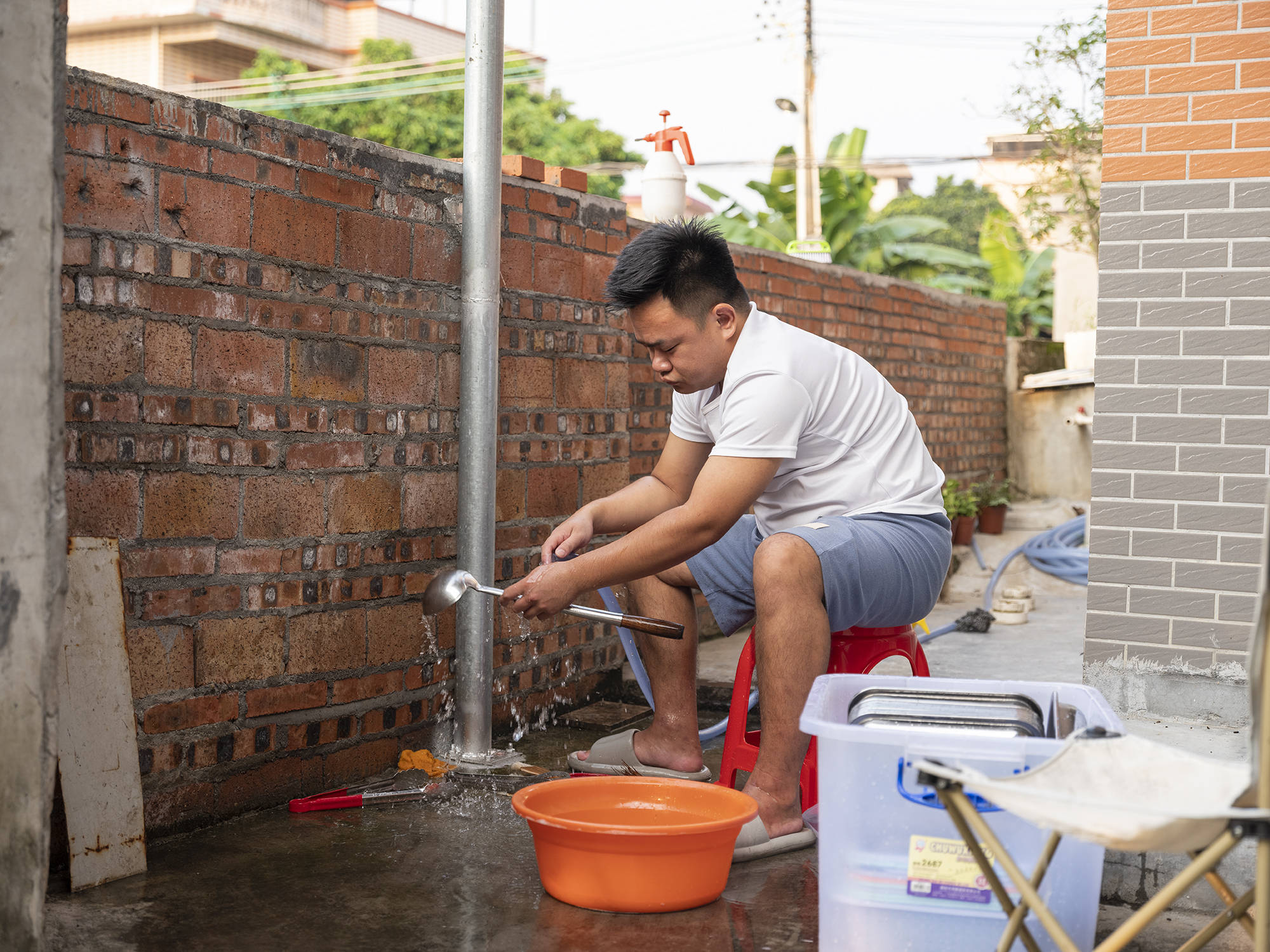 Before setting up the stall, A Gui washes the kitchen utensils.
 Frying rice noodles for customers.
Initially, customers’ comments on A Gui’s fried noodles were “really unpalatable”. He didn’t know how much seasoning to put in, or how to fry them, and he learned it online. He gets up early every day to buy vegetables, and after returning home, he washes the vegetables and skewers the skewers. When frying noodles, his clothes get stained with oil spots, and there are also many scars on his arms from being burned by oil.
The clothes are bought casually from Taobao, costing a few dozen yuan. In the past, even if he bought fakes, A Gui would buy brand-name clothes, “Now it’s really different, I’ve put down my face, and the monthly living expenses are around 2,000 yuan. Before, I took my colleagues to the Canton Tower, and it cost more than 2,000 yuan for one trip.” Now, his daily income is five or six hundred, and there are more and more barbecue stalls in the night market, and the competition is fierce, but A Gui feels that he has cash in hand every day, no matter how much, at least it’s stable.
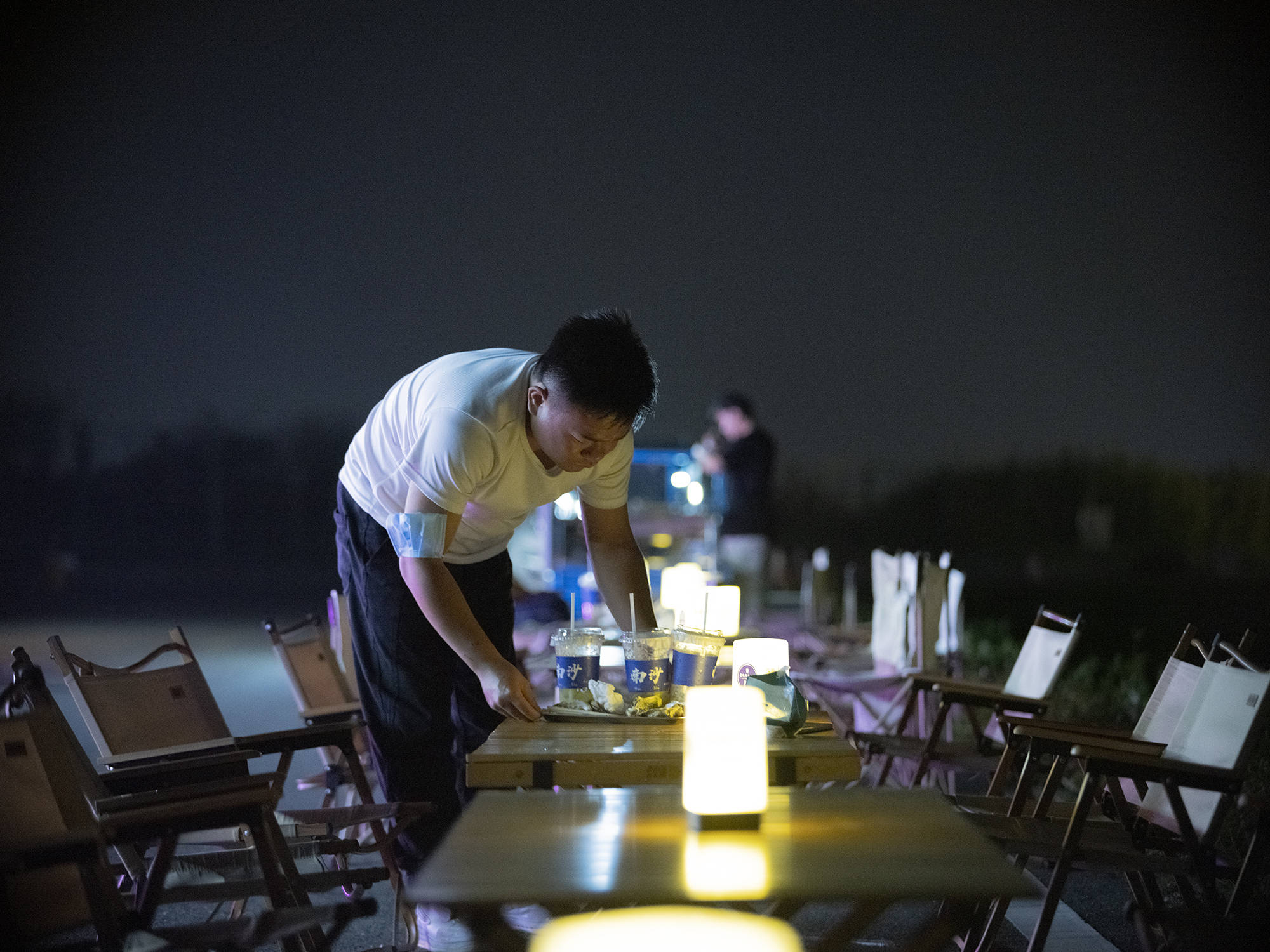 A Gui cleans up the stall.
At the night market, A Gui and Liang Jiandong work together to attract business. When customers come to eat fried noodles, A Gui will recommend that they have a glass of lemon tea. If A Gui doesn’t have time to clean up the table, Liang Jiandong will help him, leaving space for the next wave of customers. In early October, A Wen also joined them, grilling oysters. Compared to other businesses, oysters can be taken out to grill after opening the shells and rinsing, saving the preparation time. After getting off work from the agent company every day, he can come directly to set up a stall.
 Residents strolling in the night market.
 When there is no business, A Gui sits on the side of the street and rests.
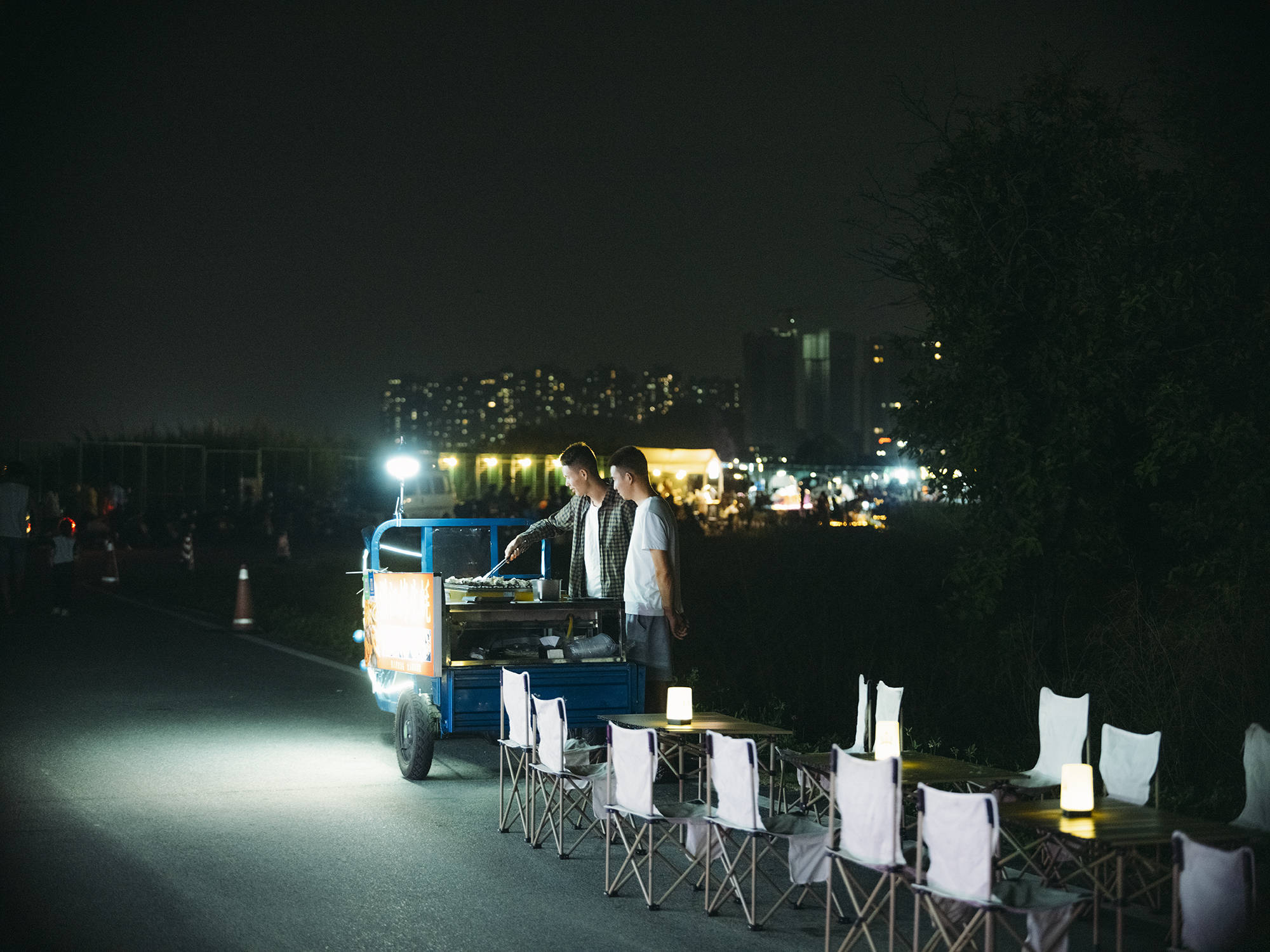 In early October, agent A Wen (left) also joined the stall.
27-year-old A Wen has a clear goal: to stay in the agent industry and continue to look for opportunities, and earn some living expenses by setting up a stall at night. Compared to other colleagues, he feels that he is still lucky. There was a short small spring at the beginning of the year. After the pandemic ended, some essential customers looked at houses and bought houses, and A Wen closed 5 deals in three months. But after May, he didn’t close a single deal, and his savings were quickly used up. To save expenses, A Wen moved out of the house in the city and moved into the urban village, and the rent was reduced by half. Fortunately, he has no loans, so the pressure is less.
“Doing real estate really tests your mentality.” In A Wen’s memory, the most difficult time was in 2021, when Guangzhou canceled the preferential policies for home purchases for talents. Previously, 6 clients had paid deposits, and he could have received a commission of more than 100,000 yuan, but after the policy was introduced, the clients no longer had the qualifications to buy a house, and the deposits were all refunded. Public data shows that in 2022, the transaction volume of new residential properties in Nansha District was 6,346 units, only one-third of that in 2020.
A Wen also thought about changing careers, but he couldn’t let go of the accumulation of many years in the industry—without a degree, it seems that only in the agent industry can he have a relatively considerable income. “Without a high education, I can only work for five or six thousand yuan, and apart from rent, food, and gas, I don’t have any money,” A Wen said.
 During the day, A Wen uses a drone to take aerial photos of the properties and make short videos, trying to expand his customer base online.
 A Wen (right) goes to the sales office to learn about the latest price information.
The traditional methods of making calls and distributing flyers are not effective. A Wen summarized that most of the people who buy houses now are post-90s, who work late and don’t have time to view houses on weekdays, and will search for properties online.
But after they looked at a few properties, the replies were almost all “wait and see, it will still fall.” In A Wen’s view, the market conditions are not good, and even though many policies have been relaxed recently, customers are still taking a wait-and-see attitude, feeling that there may be new policies and that house prices will continue to fall, and they dare not make a move.
 A Wen records each income from the stall in a notebook.
 After midnight, A Wen and his friends, who haven’t had dinner yet, eat the oysters that weren’t sold that day as a midnight snack.
A Wen has set a plan for himself: when there are no clients, he has to take a drone to shoot three properties in the morning, and then go to see the prices of new properties in the afternoon. During the lunch break, he edits a video and posts it, and after seeing the properties in the afternoon, he goes back to the company and edits another video, and then sets up a stall to grill oysters at night.
He has been in Nansha for 5 years. During his work, he met his girlfriend who works in the sales department, and when it comes to marriage, he also wants to have a house. He has recently been looking at second-hand houses, but like his clients, A Wen is also waiting and seeing, not knowing what the future real estate market will be like, “Give myself a little more time to try, if I don’t do the agent business, it’s also quite difficult to buy a house.”
At the moment, what worries him, Liang Jiandong, and A Gui even more is the location of the stall. In recent days, due to the surrounding construction, one side of the embankment road was blocked by fences. The three stalls are next to each other, and they were originally in the middle of the entire night market, and residents from both sides of the embankment road and the opposite community could patronize them. Now the fences are installed next to them, and the stalls have suddenly become the farthest from the flow of customers.
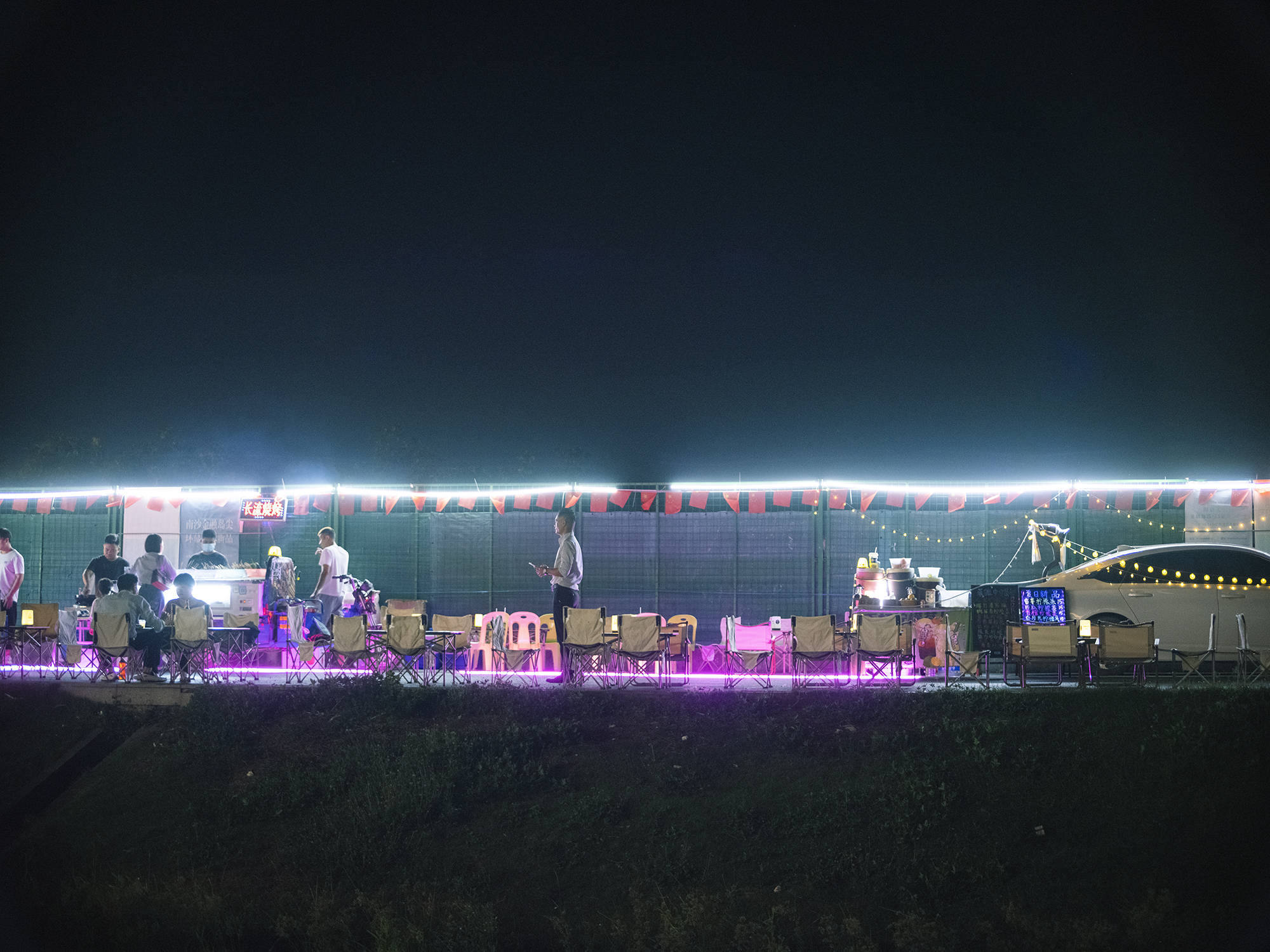 Liang Jiandong stands in front of the stall and looks into the distance.
Discover more from 自由档案馆
Subscribe to get the latest posts sent to your email.