Author: Zhao Hong, Professor at China University of Political Science and Law
Recently, many netizens have suddenly started discussing the health code, which disappeared nearly a year ago. Initially, an unconfirmed news report stated, “The health code that was taken offline in Guangdong has reappeared. The Tianfu Health Pass in Sichuan and the Yuekang Code in Guangdong region were relaunched around 5 p.m. on December 1st.”
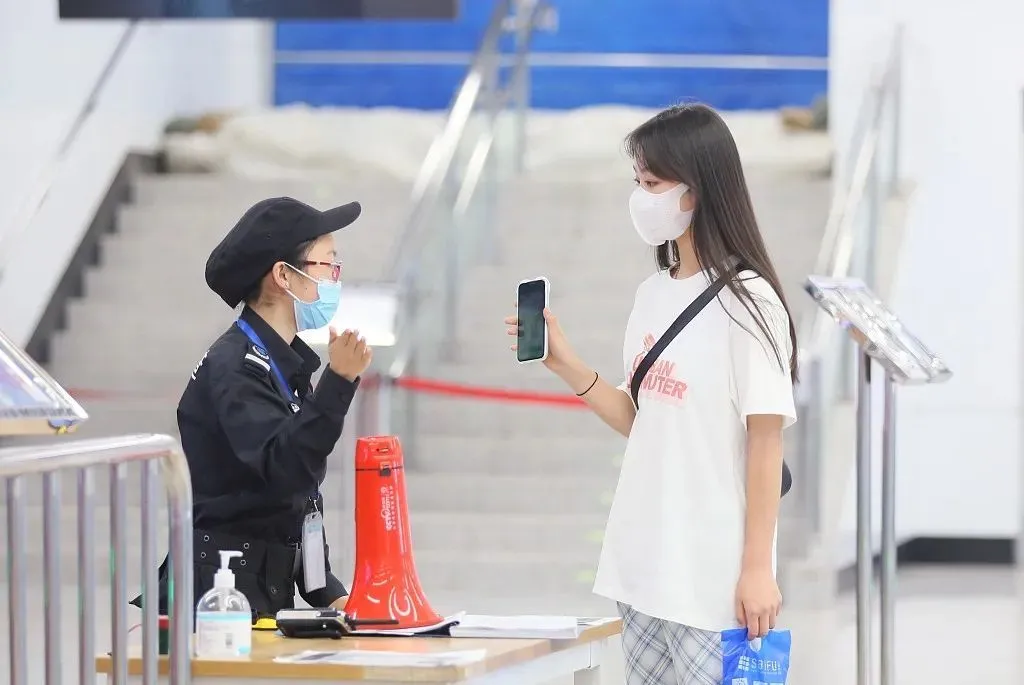
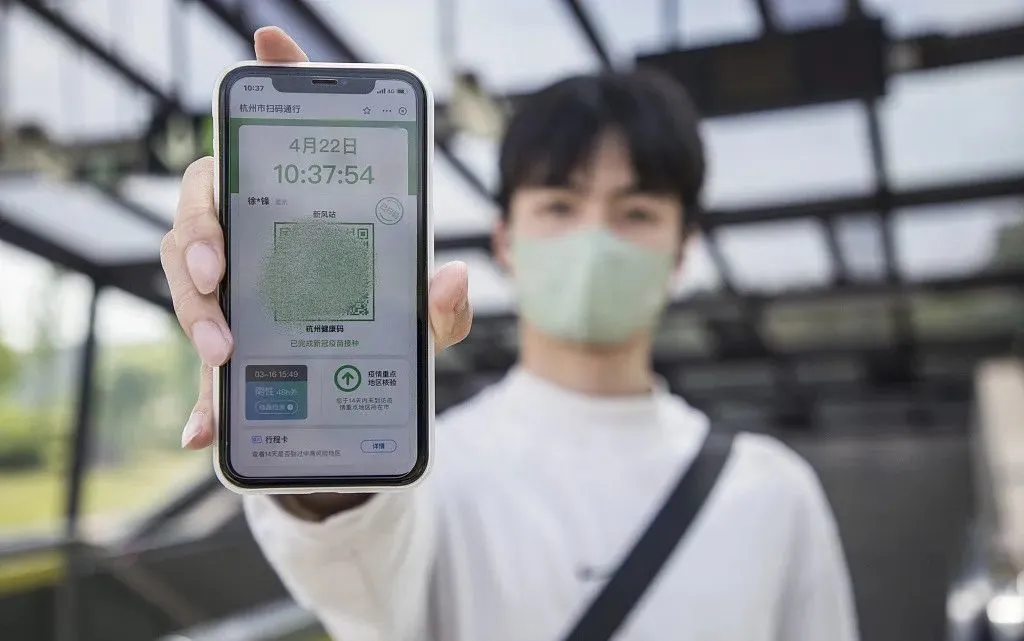
After seeing this news, many netizens began to check the health codes on their phones. According to preliminary statistics, only Hebei, Henan, and Chongqing are currently completely inaccessible, while other provinces still have WeChat, Alipay, or app terminals that can open the health code.
Given that we have entered the peak season for respiratory diseases in winter, many netizens speculate that the era of code-based management may be making a comeback.

The health code has never been completely taken offline
This worry is unsettling. In fact, although the pandemic has passed for nearly a year, the health codes in various places have never been completely taken offline.
After the adjustment of the epidemic prevention and control policy, what was explicitly required to be taken offline was only the itinerary code, which was added to the health code during the epidemic to locate people moving across regions at the city level.
On December 13, 2022, the Joint Prevention and Control Mechanism of the State Council required the official offline of the “Communication Itinerary Card” and explicitly ordered the deletion of all personal information attached to the itinerary code. The issue of the health code’s fate once became a hot topic of discussion.
Also on February 14, 2023, the official announcement of the Guangdong Yuekang Code stated that the Yuekang Code managed by the Guangdong Provincial Government Service Data Administration would close service entrances such as the elderly and child assistance check, health declaration, and epidemic prevention work platform starting from 11 a.m. on February 16, and would completely delete and destroy all data related to the services that were taken offline in accordance with relevant laws and regulations.
At that time, the news media thought that the closure of the Yuekang Code service was a signal of completely taking the health code offline, but a careful reading of the news would reveal that the Yuekang Code only closed service entrances such as the elderly and child assistance check, health declaration, and epidemic prevention work platform; the Guangdong Provincial Government Data Administration, which manages the Yuekang Code, has not yet announced the complete offline of the Yuekang Code.
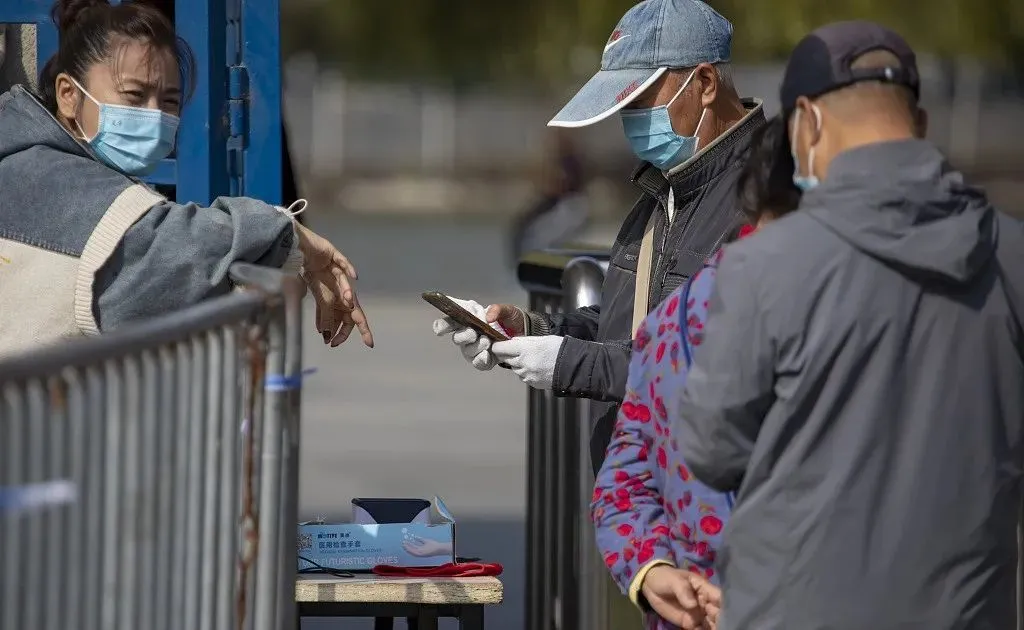
Before and after the closure of some services of the Yuekang Code, there was no more official information about the health code’s fate in various places. Therefore, it is not surprising that netizens in various places can find their health code pages again on their phones. The health code is actually still there, it’s just that it hasn’t been used for a long time, and the login information has expired.

Why is it necessary to worry about the “resurgence” of the health code?
Netizens’ worry about the “resurgence” of the health code is indeed due to being burdened by code-based management for too long.
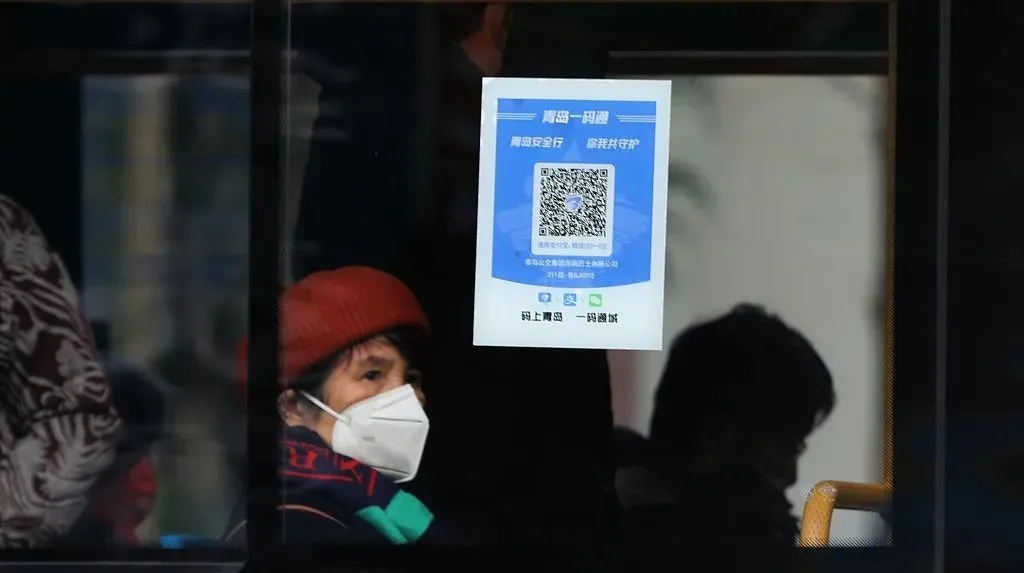
In the not-so-distant past three years, because of its high frequency of use, the health code has almost become a new type of identity marker that people use every day. It plays an important role in risk prevention and control, but it has also become a tool that restricts personal freedom in many cases. Moreover, because it was born in an emergency state, its characteristics in terms of personal information, such as indiscriminate all-member collection, real-time collection, and meticulousness, all hide the huge risk of personal privacy being leaked and abused.
In the epidemic prevention and control, cases such as Zhengzhou, Henan, forcibly assigning red codes to depositors to prevent them from protecting their rights, and Dandong, where citizens were prevented from going out to see a doctor because of a yellow health code, and even in a certain place, after only a few sporadic cases, red and yellow codes were assigned to all residents, all presented the legal problems of the health code in an extreme way.
In other words, the health code makes it easy for individuals to become the object of data monitoring and data manipulation. For this reason, when the national epidemic prevention policy underwent major adjustments and the health code was no longer necessary, the public generally called for the complete offline of the health code and the permanent deletion of the personal data attached to it.
However, there has always been another voice on the issue of its existence or abolition. A typical reason for believing that the health code still has a need to exist is that the vaccination information stored in it may provide a basis for doctors in the treatment of critically ill patients. However, with several rounds of infections passing, the effectiveness of such information has long been completely diminished.
The reasons why many local governments at that time hoped to keep the health code were also that they could restart it for effective prevention and control if the epidemic came again. However, this reason is also untenable.
After going through the experience of the past three years, if there is a recurrence of the epidemic or an outbreak of other large-scale infectious diseases in the future, local governments can collect data in a more refined and more compliant and legal way, without the need to respond to major public health emergencies in the same way as the health code, through indiscriminate all-member collection, real-time collection, and meticulous methods.
Some local governments also want to transform the health code, that is, after de-identification and anonymization, they will continue to retain the data information of the health code and use it for other purposes such as health care, transportation, culture and tourism.
In December 2022, some local governments tried to integrate the “Health Treasure” with the original public service applications, and citizens could voluntarily or autonomously authorize whether to expand the personal identity verification information of the Health Treasure to other pages. But there were few respondents, and there was no follow-up.
The important reason why people opposed the use of the health code for other purposes at that time was that the health code showed the characteristics of “long-term preservation and easy cross-platform copy and transfer certification” in information collection, and the existing desensitization treatment could not completely eliminate the risk of personal privacy being exposed and personal information being abused.
But now, when I open the health code applet during the epidemic, I suddenly find that it has been completely upgraded to another applet. But I have completely forgotten that I once authorized the transfer of information, and the new QR code that appears on the page is currently unknown for its specific purpose.
According to the provisions of the “Personal Information Protection Law”, “If the purpose, method, and type of personal information processing change, personal consent should be re-obtained”. Accordingly, if local governments use health code information for other purposes without the consent of the public, it is a violation of the law.
What is even more surprising is that in some local citizen applications, information such as personal health status, infection risk, and vaccination status can still be found, and the real-time query function is still available. After the epidemic, how the health code APP directly transformed into a new service application, what functions were closed during the process, and which functions are still available, have become a huge mystery for ordinary users.

Why is it necessary to completely destroy the personal information of the health code?
In fact, what is most feared is not only that the health treasure function is still available, but also whether the personal information attached to the health code is still intact after a year.
The “Personal Information Protection Law” stipulates that when “the processing purpose has been completed, cannot be completed, or is no longer necessary to achieve the processing purpose”, the personal information processor should actively delete the personal information, and if the personal information processor does not delete it, the individual has the right to request deletion.
Since the underlying personal data and derived user portraits that generate the health code are highly related to personal dignity, the most reliable way to deal with it after it has completed its predetermined function is still to completely delete and centrally destroy personal information.
As stipulated in the “Personal Information Protection Law”, deleting personal information by the information processor is not only its obligation, but also an important information right of the individual. This right to request the deletion of information is often called the “right to be forgotten” in the data age, and its purpose is to ensure that when the processing purpose of personal information has been completed or the processing purpose is no longer necessary, to avoid the high danger of personal information being improperly stored, which may lead to personal information being leaked, illegally traded, or even used for other purposes.
We often say that in the data age, God will forgive and forgive our mistakes, but the Internet will not. It will remember every cold and fever we had in the past few years, the public places we visited every day, and accurately depict personal images based on this information trajectory. Therefore, in order to avoid being trapped in historical memory and to resist the permanent imprint that information and digital technology have left on individuals, people should have the right to request the complete deletion of their information.
But now, looking back at this process, although the public’s voice was very high at that time, “preserving but not abolishing” has always been the general practice of local governments. Behind this practice, the huge temptation of personal information for government governance and control can be clearly seen, and the path dependence of local governments on the code-based governance methods they have become accustomed to over the past few years can also be seen.
But precisely because the personal information processor of the health code is a state organ, it becomes particularly difficult for the public to demand its complete offline and deletion of information; in contrast to the lack of motivation of governments at all levels in deleting information, is also the public’s lack of supervision.
At that time, many scholars also proposed that the central government should uniformly arrange the offline and deletion and destruction of data of the health code to avoid various places still going their own way after the end of the epidemic. This opinion has not been adopted and has not been implemented.
This time, the Tianfu Health Pass in Sichuan and the Yuekang Code in Guangdong region suddenly “reappeared”, although it seems to be a false alarm, but the fact that netizens can still check the health code page also reminds us that the health code has not been completely taken offline, some functions are still running silently, and more importantly, the personal information attached to it has not been completely destroyed.
In the data age, no one wants to live under the constant surveillance of others, nor does anyone want to become the object of data manipulation by others, including local government agencies. To avoid this danger, the complete offline of the health code should be put on the agenda again!
Discover more from 自由档案馆
Subscribe to get the latest posts sent to your email.