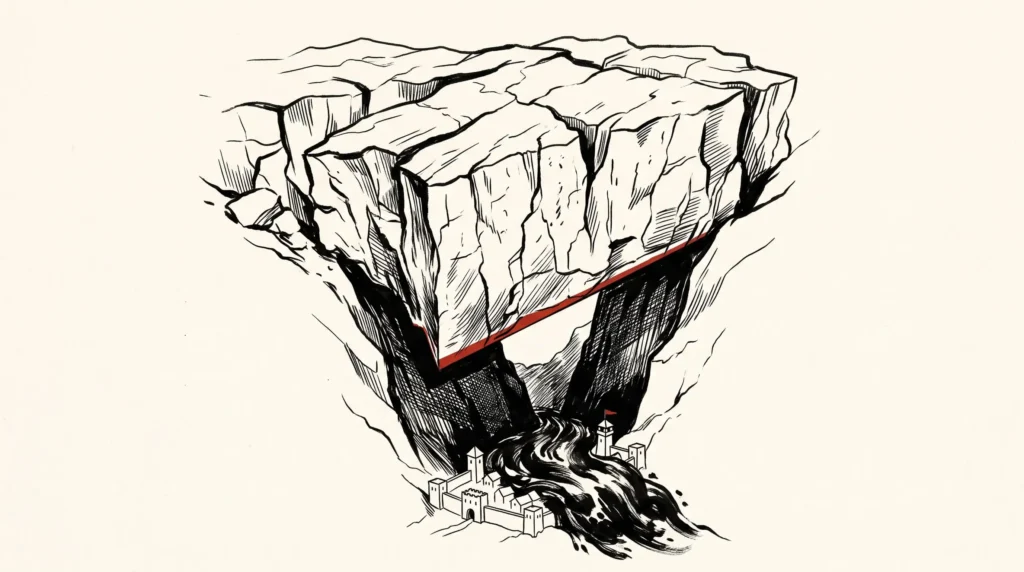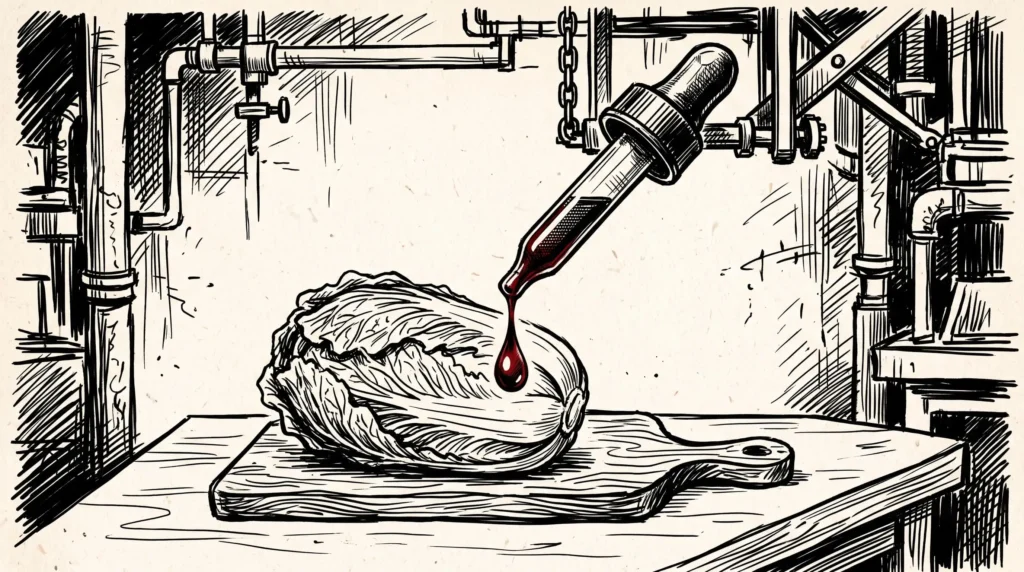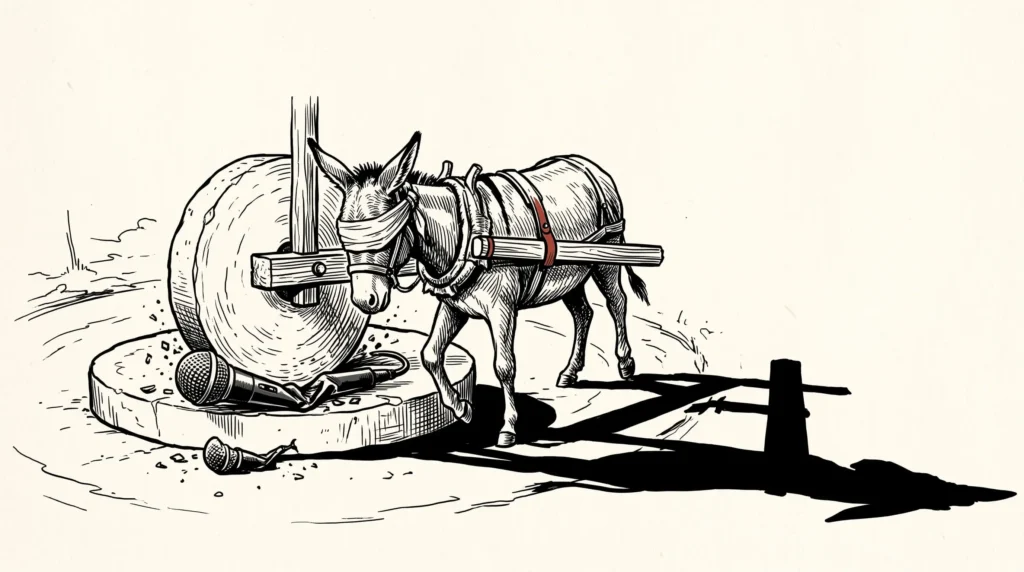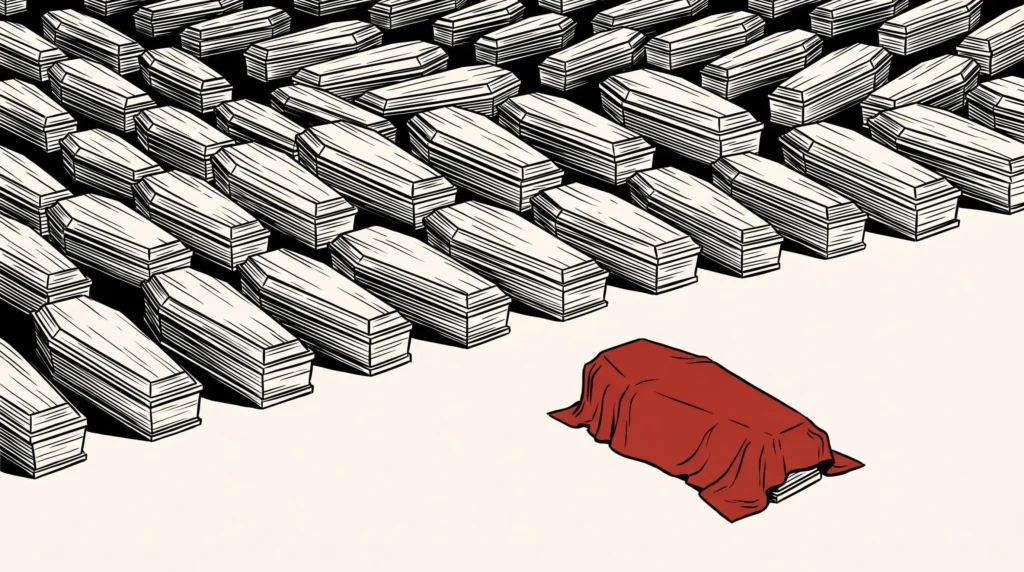
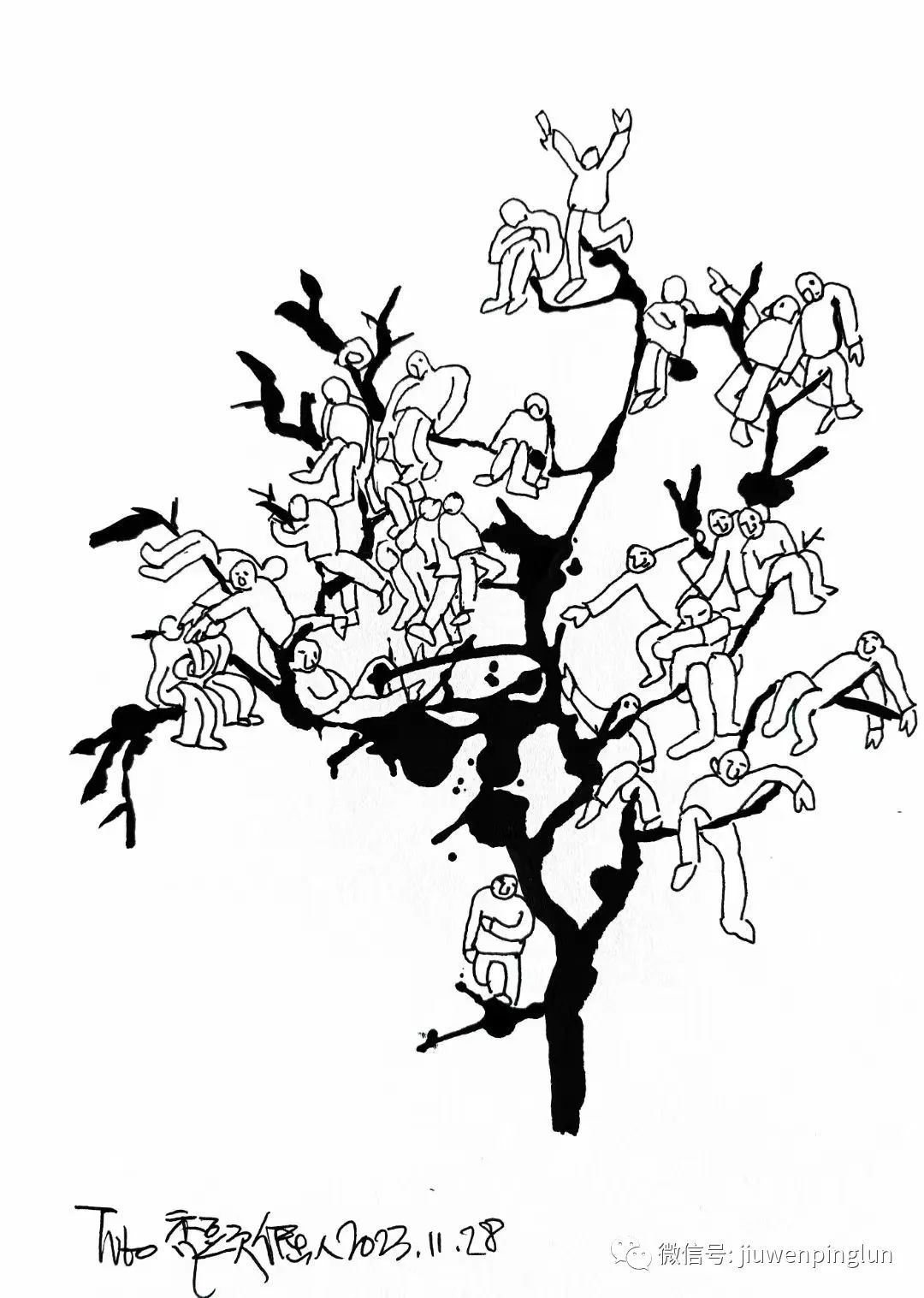
The image shows the work of artist Tuotou Juren.
The blood donation incident in Ali, Tibet, has come to an end. The discussion revolves around whether Mayday was lip-syncing. After the public opinion was mixed with emotions of anger, ridicule, injustice, and questioning, people are waiting for the investigation report from Ali. This report was promised to be issued by the Ali Propaganda Department and other departments on November 29, as evidenced by interviews with media reporters.
However, on December 6, Shangguan News and The Paper published a joint interview report, signed by six reporters, which broke the temporary calm on this matter and reignited the outburst of netizens’ emotions. This report does not conceal its urgent purpose of “setting the record straight.” Through five aspects of self-questioning and self-answering, it attempts to play the role of a ballast stone to stabilize the situation.
From a purely media business perspective, this is a piece that needs to be evaluated. Because its desire is too strong, its exclusivity is vigorous, and its shortcomings in craftsmanship are too obvious, the means are difficult to support the purpose, and it is also difficult to win over neutral readers, and because of the “abnormalities” that occurred during the dissemination of the report, its public relations function (if any) is greatly reduced.
Before unfolding this media criticism, it is worth emphasizing that even if the blood donation incident continues to this day, there are two points in public opinion that are very clear: first, no one denies the spirit of the local people in Ali saving lives and helping the injured, and they have a 100% positive attitude towards Ali; second, no one speaks ill of the rescued Ms. Yu, which is inevitably harsh, but at most it is ridicule.
What is the focus of public opinion on the blood donation incident, or what is the core of this public opinion? It is a kind of privilege imagination, and the questioning and unease based on it. In examining this public opinion, it should be noted that even if the public criticizes the possible existence of privilege, they are still restrained emotionally. It is not a torrent of condemnation, but a joking self-mockery and satire.
In connection with the joint interview report of Shanghai media, it is worth asking: who is afraid of the public opinion about the privilege imagination in this incident? So much so that the articles of Shangguan and The Paper are not earnestly verifying the report, not relying on cross-validation of reliable sources, but saying: the final decision has been made, we are giving you the truth, and there is no other choice.
From a stylistic point of view, the articles of Shangguan and The Paper do not conform to the norms of investigative reporting. It is said that it is “insincere” because it refuses to quote the existing interview information of other media (these information points constitute the cornerstone of the privilege imagination), and then specifically verifies it—this deliberate operation method erases controversial information points, purifies the text, and is conducive to shaping its story version.
The finished product of the articles of Shangguan and The Paper, closely following the dissemination point of “readers always forget,” under the guise of verification methods, in the seemingly clarifying lines, constructs a new narrative of the entire blood donation incident from the beginning. If there is a legitimate and upright expectation for the truth of the incident, then it is disappointing, because it is neither a standard investigative report nor an honest verification report.
By reading the finished product of Shangguan and The Paper, its content focuses on Tao and Yu’s relatives, colleagues, and department responses as a supplement. Careful readers will find that, compared with previous reports, some key information of Tao and Yu’s families (such as whether the aunt has retired) has undergone subtle changes. And the department’s response is very general, and there are also inconsistencies with previous reports.
The characters appearing in the articles of Shangguan and The Paper are: Mr. Tao, Ms. Yu, Mr. Tao’s parents (background introduction, no interview), Yu’s mother and father, an anonymous aunt (not interviewed), the aunt’s daughter-in-law (not interviewed), Dr. Weng Hao, the head of Ms. Yu’s mother’s company, Mr. Chen, the captain of the Shanghai Medical Aid to Tibet Work Team, and the Party Secretary of the Rizhao Hospital, Wang Qinghua.
In addition to the amount of information in the existing reports, the departments appearing in this article include: Ali Hospital (appearing as “staff”), Shanghai Municipal Health Commission (no title, no person), relevant departments (anonymous, used when introducing the identity of the aunt), Shanghai Municipal Government Office in Tibet (no person, no title), and local residents’ committees (also anonymous).
In the composition of characters + departments, one of the direct impressions of the text of Shangguan and The Paper is that it is evasive: where the residents’ committee is not mentioned, which “relevant department” is not specified, the incremental clues of Tao and Yu’s families asking for help, stop at the newly appeared daughter-in-law of the aunt, the problem is that she has not been interviewed, which is equivalent to giving up the opportunity to clarify the privilege imagination.
Based on the fear of departmental sources in the article, combined with the weakened use of newly appeared characters, it can be reasonably inferred that: the joint report of Shangguan and The Paper, although its intention is very high, but from the action level, it does not seem to be high, the media is obviously passive, the Shanghai Municipal Health Commission and the Tibet Office provided the statements, but the degree of cooperation is completely autonomous, which leads to the awkward feeling of the finished product.
The articles of Shangguan and The Paper, of course, give a story version of pure misunderstanding. Tao and Yu’s families did not ask the Shanghai Municipal Health Commission, the aunt is a “retired worker” with no power or influence, the huge sum of 1.2 million yuan was also borrowed by several leaders of Yu’s mother, and the blood donation of Ali civil servants was completely voluntary with love, there was no letter to mobilize the aid-Tibet doctors, and everything was imagined by netizens.
Whether netizens believe the script given by this article is temporarily put aside. What is also to be said here is the second impression of the articles of Shangguan and The Paper, which is to be painted and modified. The most significant point, or structural change, is to remove the Shanghai Municipal Health Commission from the incident, which is equivalent to removing this source of excitement from the privilege imagination of the blood donation incident.
However, in the previous round of concentrated reports, it can also be said that in the original reports, the expression of regular news media is: Shanghai officials said that after investigation, the health and health department received a letter from relevant departments, requesting the aid-Tibet doctors who were in Rizhao City, Tibet, to go to the hospital involved in the rescue. This matter does not involve actions caused by improper factors such as personal relationships.
In the articles of Shangguan and The Paper, the expression is: The Shanghai Municipal Health Commission stated that after verification, the online rumors that “the patient’s aunt contacted the Shanghai Health Commission, the Health Commission contacted the Ali department, and mobilized all civil servants in the Ali area to donate blood” are untrue, and no personnel from the Shanghai Municipal Health Commission know the patient and their family members or have received their requests.
(Is there a possibility here that the Shanghai Municipal Health Commission did not actually participate? The earliest statements of media such as the Beijing News on “health and health departments” and “aid-Tibet doctors” were actually obtained from the Tibet Office, and then the subject of the statement was changed when used in the report. But if this is the case, the earliest reporting reporters need to clarify to confirm.)
In the original report, the role of the aunt was recorded as follows: Mr. Tao said that with the help of his more than ten relatives and friends, the Shanghai Municipal Health Commission requested the aid-Tibet doctors who were in Rizhao City, Tibet, to go to the Ali area to participate in the rescue. “My aunt is one of the relatives who participated in the request for help, and she is not a public official.”
In the articles of Shangguan and The Paper, this path of seeking help has also changed, expressed as: The reporter further learned from relevant departments that “the aunt” is 60 years old this year and was a worker in a joint venture factory of a certain handicraft before retirement. After the incident, “the aunt” contacted her daughter-in-law, and the daughter-in-law then asked the unit leaders for help. During this period, many enthusiastic people relayed the information, and finally contacted the Shanghai Municipal People’s Government Office in Tibet.
The statement of the Shanghai Tibet Office is: “The Shanghai Medical Aid Team of the People’s Hospital of Rizhao City, Tibet, received a letter from the People’s Hospital of Ali, Tibet, requesting to select medical experts to go to Ali to carry out emergency support on the afternoon of October 15. After urgent discussion, the Shanghai Medical Aid Team, in the spirit of humanitarianism and saving lives and helping the injured, decided to select a medical expert to go to Ali to participate in the consultation of the patient. The Shanghai Municipal Government Office in Tibet stated that this matter does not involve actions caused by improper factors such as personal relationships.”
The Shanghai Municipal Health Commission has indeed borne the most and heaviest questioning of privilege imagination, but after the statement of the articles of Shangguan and The Paper, the Shanghai Municipal Health Commission said “this has nothing to do with me.” It only has a little bit of involvement, that is, Dr. Weng Hao, the aid-Tibet doctor, reported to the Shanghai Municipal Health Commission before rushing from Rizhao to Ali Hospital to participate in the consultation.
Compared with the initial report information and the story outline generated, in the story version provided by Shangguan and The Paper, the direction and mode of Tao and Yu’s families seeking help have changed, the Shanghai Tibet Office has been highlighted, and the Shanghai Municipal Health Commission has become an innocent victim in the storm. Accordingly, another cornerstone supporting the privilege imagination, the letter to mobilize the aid-Tibet doctors, has also changed.
In Dr. Weng Hao’s opinion, the “letter” of the medical institution is not an official letter from the government department, but a formal consultation form. In the response of the Shanghai Tibet Office, it is not easy for outsiders to confirm whether this letter is the one referred to by Dr. Weng Hao. A very simple way to clarify is to publish a photo of this “letter”, but Shangguan and The Paper did not do this.
Of course, putting aside everything, the simplest way to clarify the whole thing, shouldn’t it be that the mysterious aunt directly records a statement and frankly tells the truth? This is the most direct and effective means of clarification. Why is the aunt unwilling to help her nephew? Is it because she is really angry that her nephew and niece-in-law are bragging and involving the entire family and friends circle in the storm?
The two cornerstones of privilege imagination are the Shanghai Municipal Health Commission mobilizing aid-Tibet doctors and the Ali area mobilizing all civil servants to donate blood. To firmly rewrite the course of the incident and re-establish a story, the denial of the above two cornerstones requires substantial proof. The photos of the letters and the testimonies of the blood donors in Ali are the most direct evidence, but Shangguan and The Paper did not do it.
In fact, in addition to asking five aspects and reconstructing the narrative of the blood donation incident, the most powerful thing is to list a list according to the timeline, who did what on which day. Because, so far, if compared with the initial timeline, there are still some information points that Shangguan and The Paper cannot explain, which are not unimportant, but the clarification model of drawing a timeline has been denied.
In fact, on November 30, a Sina blogger, with “This is saving lives” as the main theme, arranged the blood donation incident according to the timeline. At that time, the motivation for this arrangement was quite worth pondering, because what it said, “Ali area re-examination, no violations of regulations and abuse of power were found,” is not true at all. Now, many of the expressions in it are even more worth pondering.
For example, it says: On October 14, Ali Hospital communicated with the family members according to the patient’s condition, and because of its own insufficient medical conditions, suggested that Mr. Tao contact the Shanghai Health Commission and notify the aid-Tibet doctors to come for medical support. On October 16, Mr. Tao contacted his friends and relatives, and his aunt contacted the Shanghai Health Commission. On October 16, the Shanghai Health Commission contacted Ali Hospital, and after receiving the medical request letter, sent aid-Tibet doctors to the hospital for treatment.
In the articles of Shangguan and The Paper, what happened on October 15 was that Ali Hospital issued a letter to the Rizhao Hospital requesting medical support. And so on, before the intervention of Shangguan and The Paper, the timeline of the blood donation incident was there (but may be with ulterior motives to be verified), and the key information was also there, completely ignoring these, and starting from scratch in constructing the story, the persuasiveness can only be doubtful.
To go a step further, according to the guidance of the articles of Shangguan and The Paper, if Tao and Yu’s families sought help from the Shanghai Tibet Office, and the Tibet Office specifically implemented the cross-regional mobilization of aid-Tibet doctors, it cannot change the outside world’s questioning based on the privilege imagination: can others also enjoy this green channel? The joint report provides a new department that carries the privilege imagination, but it also creates and suspends this question.
For more people, this question can be formally written and is still being voiced: Can the emergency medical rescue in the Shanghai aid-Tibet mechanism be equally open to all those in need?
In general, the Ali blood donation incident and the public opinion it has caused cannot be dealt with by using the idea of “debunking rumors.” Preliminary assessment of the effect of the joint report, in the face of core information and authoritative sources, it is a mouthpiece, not a powerful verifier. This also leads to its finished product being obviously weak and difficult to complete the task. The trouble that can be seen with the naked eye is that using an irregular media method to package a weak clarification, this idea and practice instead prevent clarification. I don’t know if you all agree with this?
【The picture is authorized by the artist Tuotou Juren】
Discover more from 自由档案馆
Subscribe to get the latest posts sent to your email.