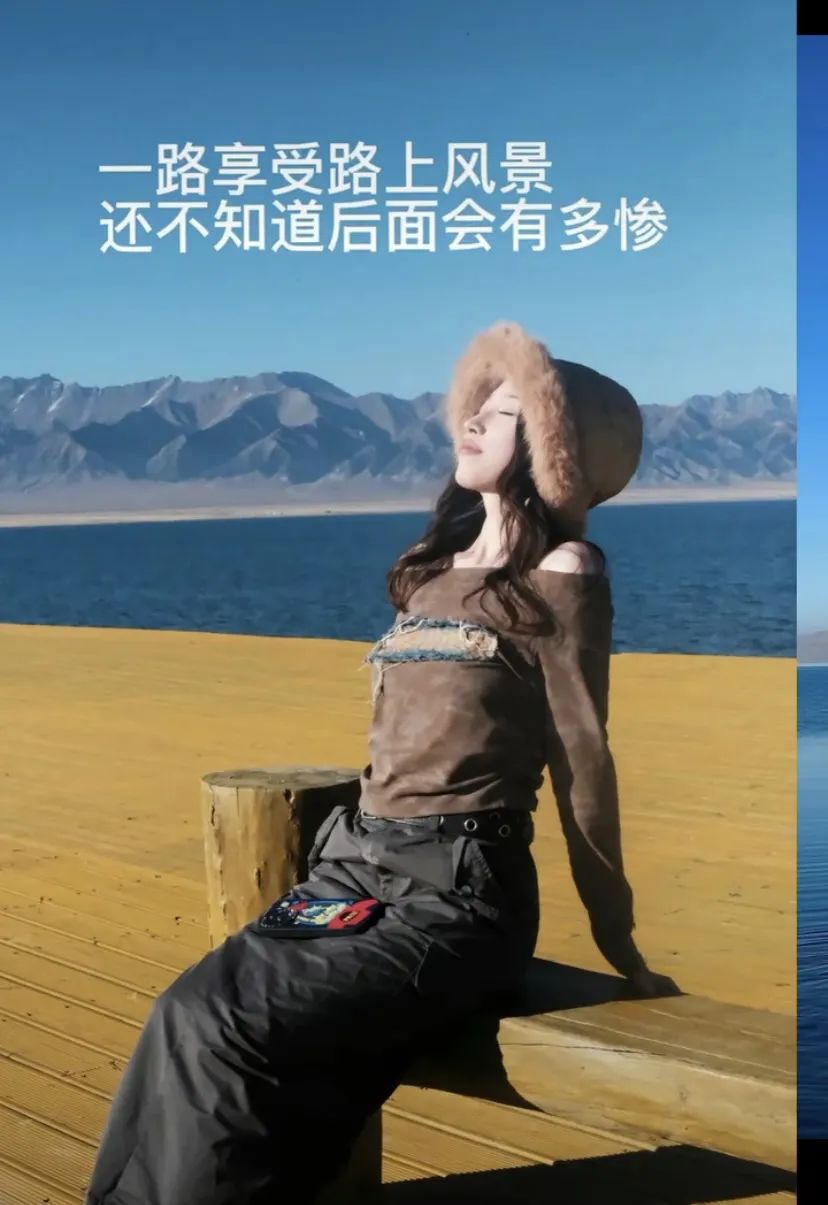
The video of a young lady from Shanghai flaunting her wealth after recovering from a car accident has caused the general public to reflect on four questions:
First, if I were seriously injured in a car accident while traveling outside of Shanghai, would the Shanghai Municipal Health Commission help me by sending a letter requesting full medical treatment?
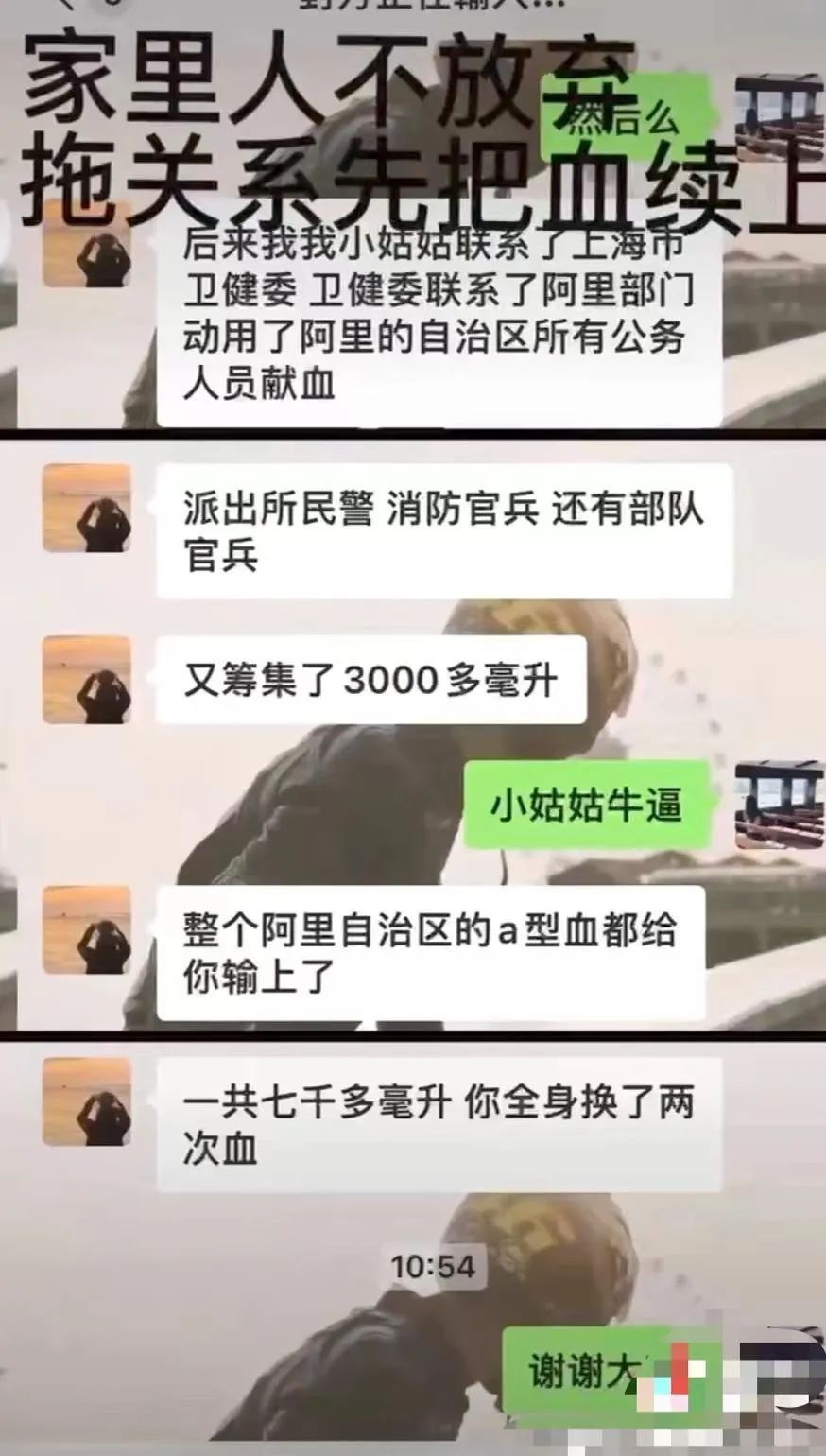
Second, if I urgently needed blood for resuscitation, would the hospital organize dozens of civil servants to donate blood to save me?
Third, if I were critically ill in Tibet, would my family have the ability to charter a Gulfstream private jet to send me to a major hospital in Chengdu for treatment?
Fourth, if I were injured and needed to be transported from the airport to the hospital for emergency treatment, would a police car clear the way for me?
I believe that the vast majority of people would answer these four questions with ‘impossible, absolutely impossible’.
This is completely understandable, because the situations mentioned above are far beyond everyone’s daily experience. Intuition tells us that these ‘privileges’ are only enjoyed by a very small number of wealthy and powerful families.
However, to be honest, the above four points are not that far-fetched. As long as there is the first driving force of the Shanghai Health Commission’s letter, the next few points will automatically happen in the special environment of Ali, Tibet.
The key is the first driving force of the Health Commission’s letter, which is indeed not something ordinary people can enjoy. However, because it follows a legitimate process, the energy level of the person who can do this does not need to be particularly high, roughly equivalent to the level of a cadre at the departmental level within the system or a senior executive of a listed company outside the system.
Let’s break down and restore this matter with basic common sense:
First, the place where this honeymooning girl had the car accident was very special, in the Ali region of Tibet.
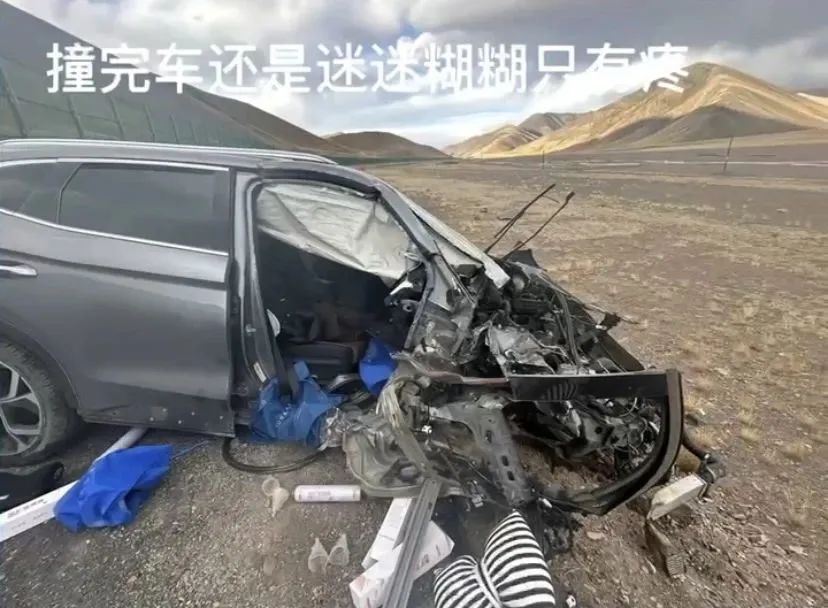
Ali, Tibet, is truly vast and sparsely populated, so sparsely populated that it is despairing. The total population of the Ali region is 123,000, equivalent to a community in Beijing’s Huilongguan, while its jurisdiction covers an area of 330,000 square kilometers, equivalent to 20 Beijings.
In such a remote and backward place, the level of medical treatment you can get after a car accident will not be much higher than that of the community health center in Huilongguan. If the injured person in the car accident is still in an extremely dangerous and complex situation like a ruptured liver, the local hospital can basically do only four words:
Seek help from above.
But the problem is, doctors in Lhasa and Chengdu also have their own patients who need treatment. Why should they fly over to help? This requires a reasonable reason.
Either there is a sudden major casualty situation such as an earthquake, fire, or chain car accident, which triggers an emergency response mechanism, or the superior competent department issues an official letter or a senior leader makes instructions to request support. A car accident with two or three people injured obviously does not belong to the situation that requires triggering the emergency response mechanism, so we can only find a way from the latter channel. I believe that the doctors in the local hospital in Ali communicated with the patient’s family like this:
You go find a way. If you can find a connection to get the Health Commission to send a letter or ask a senior leader to say hello, you can get experts from Lhasa or Chengdu to come over and perform the surgery.
Speculation on the communication between the hospital and the family
Therefore, the patient’s family asked someone in the family who had some influence to help them greet the Shanghai Health Commission. As for the Shanghai Municipal Health Commission, it is reasonable and in accordance with regulations for them to send a letter of request for Shanghai doctors supporting Tibet to go and treat Shanghai citizens who are critically ill outside of Shanghai. Now that someone is saying hello, they can also sell a favor, why not?
But in another scenario, if ordinary people come for help, it is also very reasonable for the Shanghai Health Commission not to send this letter:
So many Shanghai people get sick and injured outside of Shanghai every day. If we have to coordinate treatment for everyone by sending a letter, how can our Health Commission be so busy? You should let the hospital report the consultation report by itself. (Inner voice: If I send this letter for you, who will be responsible if something goes wrong? There is no regulation that I must do it)
Right? Even if we have never experienced it, we can fully imagine such an official reply and inner activity. In a society of human relationships, things that can be done but are not necessary are often the hardest hit areas of ‘saying hello’, and also the hardest hit areas of ‘privileges’ perceived by the public.
Then, speaking of the treatment of this car accident injured girl, with the support of the Shanghai doctors supporting Tibet, the next step is the problem of blood for the surgery. The blood bank’s blood supply is definitely not enough, so what to do?
Under normal circumstances, the hospital will throw this problem to the patient’s family to solve:
No matter what method you use, you go find a group of people to ‘mutual blood donation’, and then the surgery can be arranged. It’s useless no matter how much money you pay, and it’s useless even if you have donated blood ten times yourself.
Common rhetoric of hospitals requiring mutual blood donation
However, in this matter, due to the intervention of the Shanghai Health Commission, due to the intervention of the Shanghai doctors supporting Tibet, it suddenly has the political significance of ‘the people of the Tibetan area are grateful to the unit supporting Tibet’, which can be used as propaganda material and a political plus for Ali.
Therefore, the hospital has a strong subjective motivation to launch voluntary blood donation. Therefore, as we have seen, the hospital leaders launched it in their circle of friends and WeChat groups, and dozens of civil servants in the county actively responded and came to donate blood. A good deed of donating blood to save lives, and at the same time has the propaganda value at the political level, it is not surprising that civil servants are willing to respond.
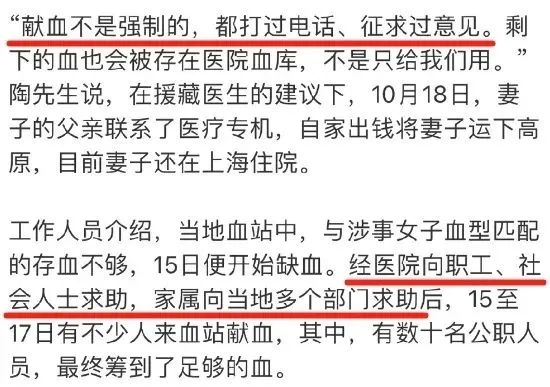
In most cities in China, the main groups of voluntary blood donation are migrant workers, college students, and medical staff. However, these few types of people are very few or even non-existent in the Ali region of Tibet. In the small county towns in remote areas, the highest proportion is civil servants.
Therefore, there is no need for any conspiracy theory about the fact that there are dozens of civil servants among the blood donors, it is purely because of the special environment of the Tibetan area.
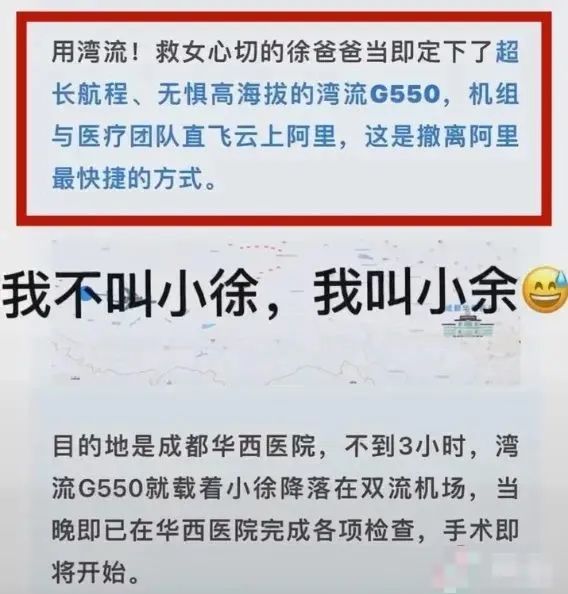
Speaking of the practice of renting a private jet to send the patient to Chengdu for treatment, this is nothing new.
On the one hand, from Ali to Chengdu, it is completely unfeasible to send the patient by ambulance on land. It takes a long time, and it is also easy to get stuck in traffic and get stuck to death. Critically ill patients can only be transported by plane. On the other hand, the cost of renting a medical charter is roughly in the range of 200,000 to 300,000 yuan, which is not an unaffordable price for a Shanghai family, for the scene of saving lives.
Then, the police car clearing the way belongs to the ‘additional service’ of the medical charter. Obviously, the hospitals in Ali and West China Hospital have docked in advance for referral surgery, and have reported to the air traffic control and traffic police to request protection. These are the routine operations of cross-regional emergency referral. I believe that everyone has seen the news of vehicles transporting transplanted organs and pregnant women in labor being cleared by traffic police.
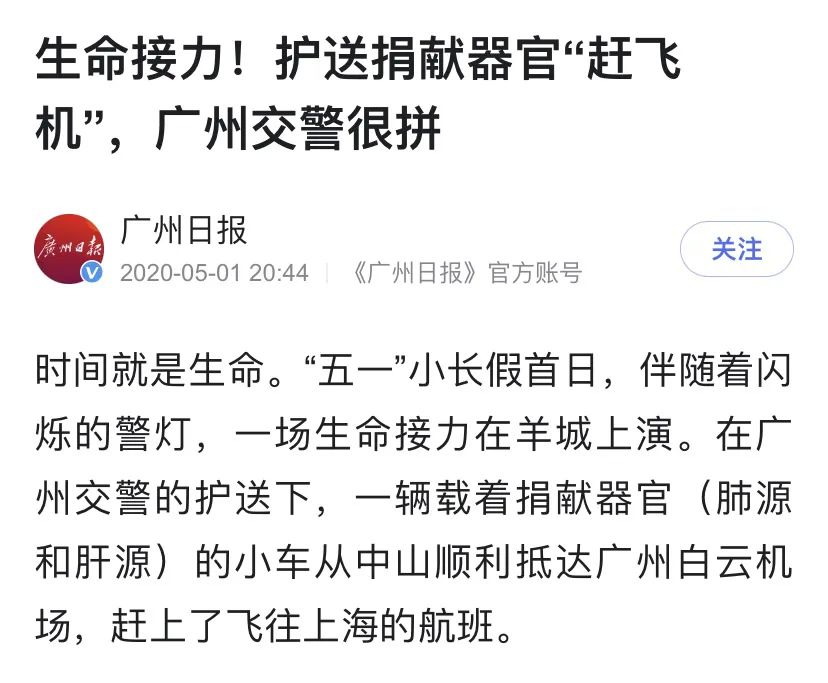
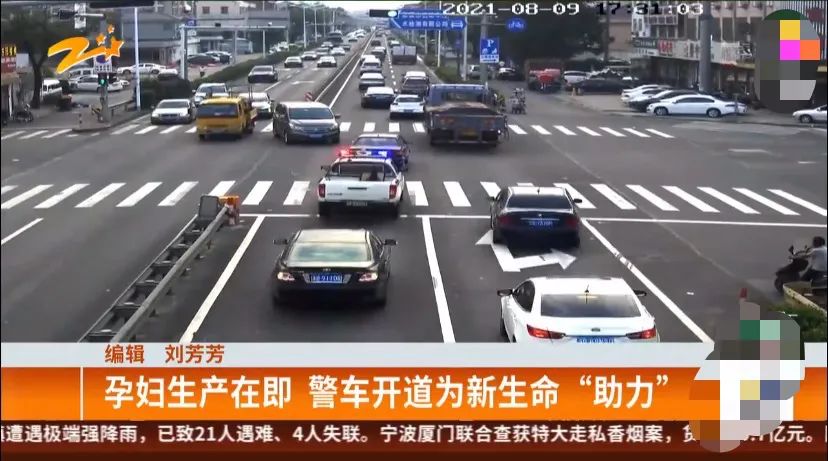
Traffic police clearing the way during cross-city emergency medical referrals is indeed a service that ordinary people also have the opportunity to enjoy, but I believe that no one hopes that they have the opportunity to enjoy it.
Then, the injured girl was rescued by West China Hospital and returned, and after she was out of danger, she posted this video to show off.
If you ask if their family has any influence, and if they have enjoyed ‘privileges’? That is indeed the case, mainly reflected in the Shanghai Health Commission’s letter.
If you ask if there is any violation of laws and regulations or corruption in this matter, it is estimated that there is not, at least it can be confirmed that there is not at the moment. As for whether someone will use interest exchange to ‘thank’ a certain leader of the Shanghai Health Commission in the future, that is not certain.
In fact, these were originally reasonable and normal basic rights of critically ill patients, but because of the long-term shortage of medical resources, ordinary people cannot fully enjoy them, and the official departments at all levels have no motivation to help ordinary patients fight for them. Therefore, when a family with some financial resources and some influence really does these things and shows them online, it will cause a strong backlash from public opinion.
The public’s appeal is actually very humble:
It’s okay for the privileged class to eat meat and for ordinary people to drink soup, please don’t deliberately smack your lips and let me hear it and feel annoyed.
Discover more from 自由档案馆
Subscribe to get the latest posts sent to your email.