I’ve been heartbroken again by the magical news from the workplace recently:
A 27-year-old female job seeker was rejected by the interviewer for being too old?!
The person involved is a young mother who had her baby a few months ago and planned to return to the workplace while the time gap wasn’t too long. However, after she confidently submitted her resume, it was like a stone sinking into the sea, with no news. She went to ask HR with questions and received the following reply:

Actually, I admire this HR. They dared to express age discrimination in the form of official recruitment, which is really a “smart cookie”.
The mother’s reply later was also brilliant, saying that she has a little one at home who is still breastfeeding, do you want it?
Forgive me for laughing unkindly. But after laughing, I felt very angry. What’s wrong with being 27?
Graduating with a master’s degree at 26, even if you have a baby right after graduation, you’re still 27 after giving birth, so I don’t know if this HR still sees suitable workers?
As an HR director in charge of “personnel power” in the company, and also a mother born in the 80s, I am extremely sensitive to age discrimination and gender discrimination in the workplace, and I demand myself to treat every job applicant fairly and justly every moment.
But after all, I am not a Pacific police officer. Facing the actions of my peers who are lowering the limit, I often feel powerless and can only be frequently and helplessly furious.
Then I can only wish that this company will never get bigger and stronger, and will never have the opportunity to harm more people.
The workplace’s unfriendly attitude towards female job seekers is an old topic.
During interviews, single women will be asked if they have a boyfriend, those with boyfriends will be asked when they plan to get married, those who are married will be asked when they plan to have children, and those who have children will be asked if they plan to have a second or third child.
Many companies like to pry into female job seekers, stripping away their privacy, but when it comes to male job seekers, they often don’t ask so many questions, which is very double-standard.
So what women have to face in the workplace is on the one hand, delayed retirement, and on the other hand, being considered too old at 27. Unmarried people are afraid that you will get married and take maternity leave, and married people are afraid that you will be distracted by your family and have no energy to work overtime…
Tell me, what should women do after this series of buffs are stacked up?
At this time, some people start to talk without feeling the pain, they say that it’s still your fault for not being good enough. The workplace is so competitive now, if you can’t compete with others, don’t complain.
Well, do you think a Peking University graduate student is competitive enough? Generally speaking, they should belong to the level of the competitive king, right?
They also became victims of workplace gender discrimination + age discrimination.
Su Lijie comes from a rural family in Henan. She was admitted to Peking University through her own efforts. She originally thought that with her educational background and intelligence, she would definitely be able to thrive in the talent market.
But because Su Lijie started school late, she was already 28 years old when she finished her master’s degree. After experiencing several job rejections, she found that in the bustling Beijing, there were many young people, and she was not that easy to find a job.
After much deliberation, she made a very difficult decision—to leave Beijing and return to her hometown of Nanyang. Logically speaking, such an outstanding educational background should be quite competitive in a small city?
But after a few months, Su Lijie still couldn’t find her ideal job.
A talented woman from Peking University returned to her small world from a first-tier city, which had already caused a sensation among her neighbors. Now she is idle at home without a career, which inevitably provokes some gossip. She often couldn’t sleep at night, and she didn’t know the taste of food, knowing that she really couldn’t stay idle anymore.
Finally, she saw an advertisement for a painter in the newspaper and decided to give it a try.

Actually, I admire Su Lijie very much. She doesn’t have any “privilege” despite holding a master’s degree from Peking University. She is even willing to be a painter, so what can’t she do?
But seeing that even a Peking University master couldn’t find a place in the workplace, I, as an HR, really feel sad. Isn’t this a waste of talent?
So today I not only want to talk about the phenomenon, but also want to provide some solutions from the perspective of human resources.
First, look at the essence through the phenomenon. Why do companies always like to limit women’s age?
The core reason ultimately cannot escape the social stereotypes of gender.
It is believed that women need and should bear more domestic responsibilities than men. Maternity leave has not yet been implemented for both men and women, and 27+ women are generally at the age of marriage and childbearing. Therefore, when companies want employees to devote more energy to the company, they directly default that men are “more useful” than women.
But men shouldn’t be secretly happy, because when you are “older” to a certain extent, you will also be shot with women.
A few days ago, an old classmate told me a sad story.
She recently went to a well-known social app company in the industry for an interview. During the interview, she found that the boss was born in the 90s, five years younger than her, and the employees sitting outside the boss’s office were almost all born in the 95s.
In fact, deep down, she doesn’t mind working for young people and working with young people at all. It’s a pity that young people look down on her, being polite on the surface, but expressing various aunt-like dislikes in their words.
The subtext: “What can you do when you come?”
It seems that in this internet world where the 95s and even the 00s are active, the first generation of the 90s are already in their 30s and are “old people” in the eyes of the younger generation.
When the 95s and 00s begin to compete for the right to speak with the first generation of the 90s, where can people over 30 stand?
I, who was born in the 80s, am trembling with fear, and I feel the same way!
This is another important reason why age discrimination exists in the workplace, because more and more young companies are newly established, and the company’s employees are all so young that they can squeeze out water. The supervisors are all born in the 90s. What’s the matter with hiring a subordinate who is a bit older than themselves?
The colored glasses of the younger generation looking at the older generation will indiscriminately scan “older youth”, regardless of gender.
There are countless similar examples.
In China’s internet companies, Youzan is not a big shot, but when it comes to “age discrimination”, Youzan CEO Bai Ya can be considered the leader.

Bai Ya publicly announced in the company that the recruitment of employees over 32 years old needs to be personally reviewed by him, and female employees over 32 years old should be carefully recommended.
He doesn’t even bother to pretend. In his case, discrimination is brought to the surface and has become a written regulation.
From a social perspective, “heroes emerging from youth” is highly praised in our culture. Early fame (now called idol training system), child prodigies (now called cattle babies) are evergreen hot topics in Chinese news reports. It always feels that if something is completed early in youth, it represents extraordinary ability and success.
It seems that the logic of many people is that if a person enters university at the age of 15, then he/she is very likely to win the Nobel Prize at the age of 30. On the contrary, in this fast-paced era, “late bloomers” are no longer favored. People who retook the college entrance examination for two years and entered university at the age of 20 will have a sense of superiority and even psychological contempt.
A 23-year-old and a 30-year-old job seeker, even if their expected salaries are exactly the same, and even if the latter has more work experience than the former, their scores in the eyes of HR are completely different.
Enrollment, recruitment, everywhere is filled with age discrimination, almost every job must specify age no more than xx years old—how much is this xx? The better one is 45, and the exaggerated one, I have even seen 30.
Secondly, if you are discriminated against in job hunting, don’t be depressed, first ask if the law agrees.
Is it legal for companies to make age requirements when recruiting?
Of course it’s illegal, dear!
Unless there are explicit provisions in laws and regulations, or the industry and position have special requirements. Otherwise, please refer to the provisions of China’s Labor Law: Workers have the right to equal employment and choose their occupation.
Although China’s Labor Law and other basic laws clearly state that enterprises enjoy the autonomy of employment, the premise must be exercised in accordance with the law.
Age discrimination in employment generally refers to the unequal treatment of job seekers or employees of different ages without legal permission.
If you encounter such a situation, the Labor Bureau welcomes you with open arms!
In New Zealand, if an HR asks you about your age and marital status during a job interview, that HR is not far from being fired. There are two mistakes: age discrimination and invasion of privacy.
Finally, as an “older woman” in the eyes of others, how can you avoid the “age pit” in the workplace?
From the current trend, the workplace discrimination encountered by “older women” will not disappear in a short period of time. If we cannot change the environment, we must come up with coping strategies.
Bravely take up the weapon of law.
On the issue of workplace discrimination against women, we still regretfully found loopholes that should not exist.
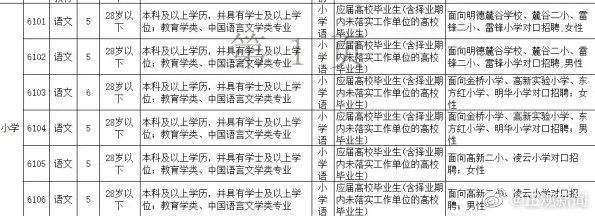
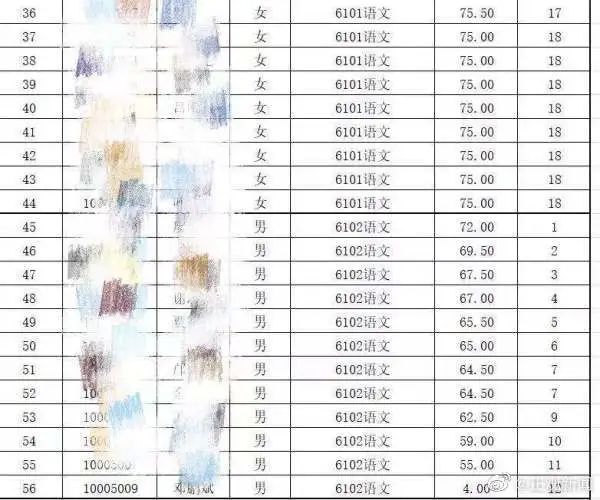
For example, in some areas, the recruitment of primary and secondary school teachers “selects men for admission”, which is euphemistically called that more male teachers in the campus can increase the “masculinity” of students, and then gives male candidates preferential treatment in lowering scores.
The bizarre news of “male teachers entering the interview with 4 points” in Changsha once shocked my whole family.
But female job seekers rarely seek help from labor departments or lawyers, and there are few direct lawsuits against gender and age discrimination. They gradually hide in family affairs or unreasonable marginal positions, and lose the opportunity to make great achievements in the workplace.
Whether the disadvantaged side has fairness is not entirely dependent on whether the dominant side has a conscience.
We also need you and me to awaken and interpret the common theme with actions, and to defend our rights with legal weapons and the unstoppable power of women.
Can disadvantaged groups compete with the environment?
This is a question that often makes us feel confused and frustrated.
But in fact, the world is indeed changing at a speed that we can hardly perceive, and someone has pushed it.
Women have gone through thousands of years from not having the right to receive education and go out to work to becoming independent individuals today.
The process is slow, but the result is amazing.
Yes, the important thing is that someone has pushed it, and thousands of ordinary people have pushed it forward without fear of difficulties.
Discover more from 自由档案馆
Subscribe to get the latest posts sent to your email.