


Text | Da He
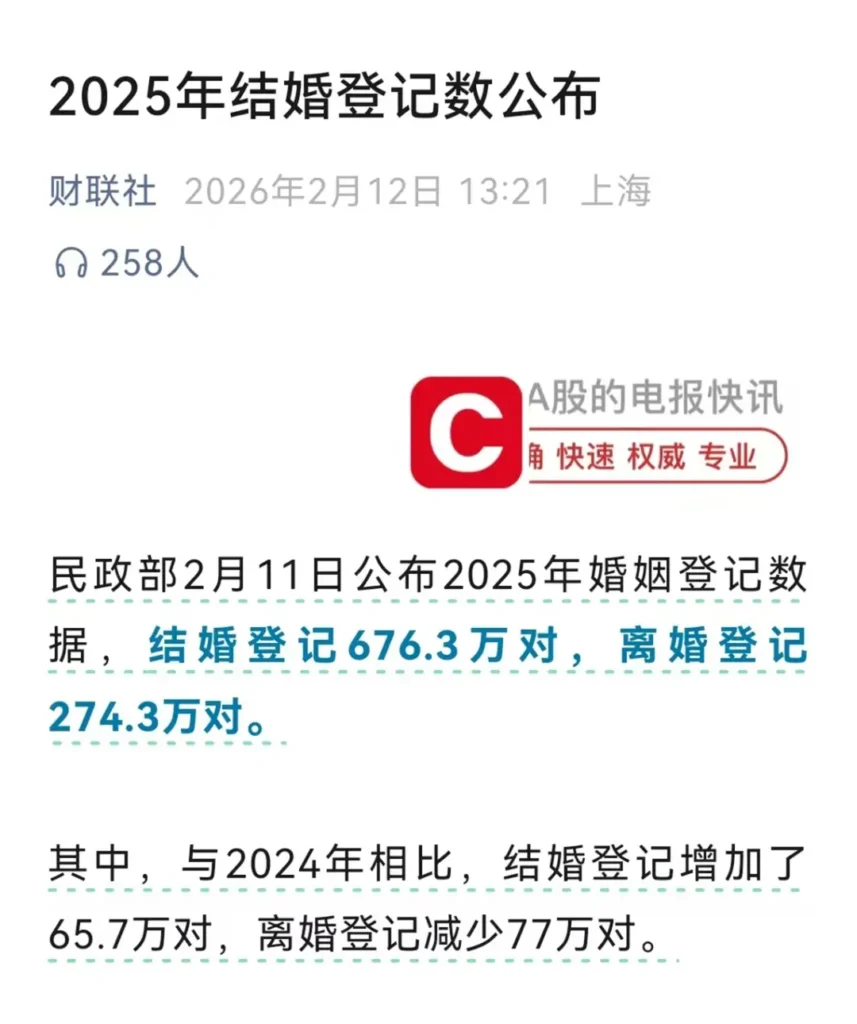
On February 12, an official media outlet published a report titled "2025 Marriage Registration Numbers Announced" which stated:
"The Ministry of Civil Affairs announced the marriage registration data for 2025 on February 11, with 6.763 million couples registering for marriage and 2.743 million couples registering for divorce.
Among them, compared to 2024, marriage registrations increased by 657,000 couples, and divorce registrations decreased by 770,000 couples."
Seeing such good news near the Spring Festival is truly inspiring, but after the excitement, I started to think about a question: what exactly happened last year that caused such a significant drop in divorce registration data?
We have analyzed the data on marriage registrations in our previous articles many times, mainly due to the efforts of registration policies, so I won't go into detail here.
But I really don't have any impression of any powerful policies regarding divorce.
So I went to the official website of the Ministry of Civil Affairs to check the data from previous years, and I was immediately amused after checking.
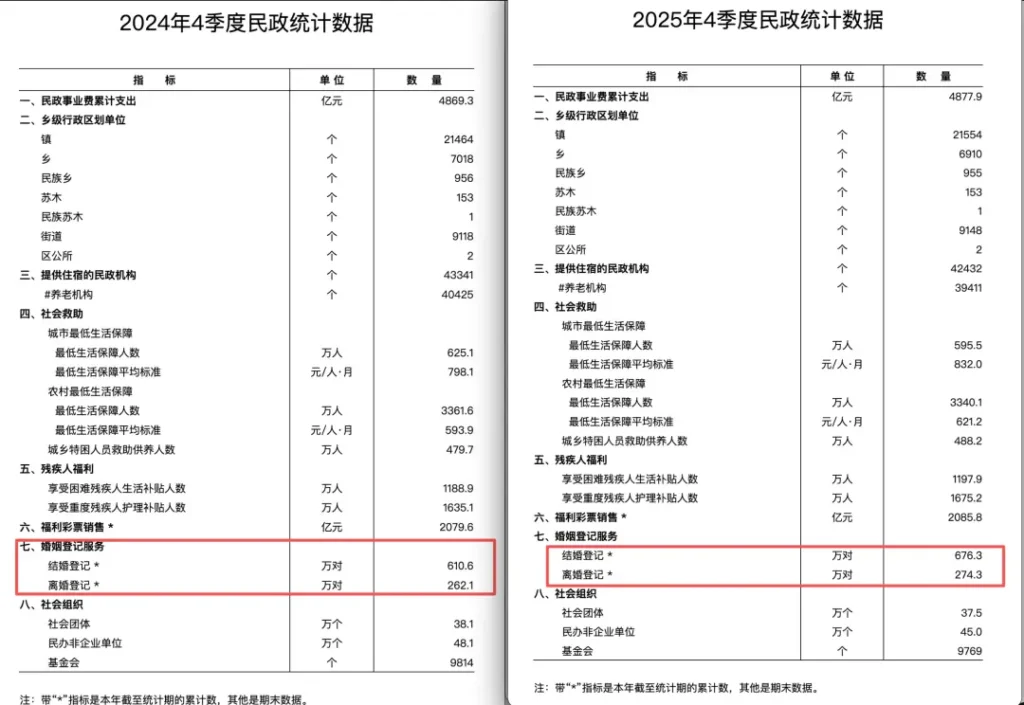
As shown in the figure, compared to 2024, the number of marriage registrations nationwide did increase by 657,000 couples, but the number of divorce registrations did not decrease by 770,000 couples, but rather increased by 122,000 couples.
Look how embarrassing this is, clearly a situation of double happiness and double win, but they had to make it a situation of one increase and one decrease. You could go and sit at the same table with a certain newspaper for the New Year's feast.
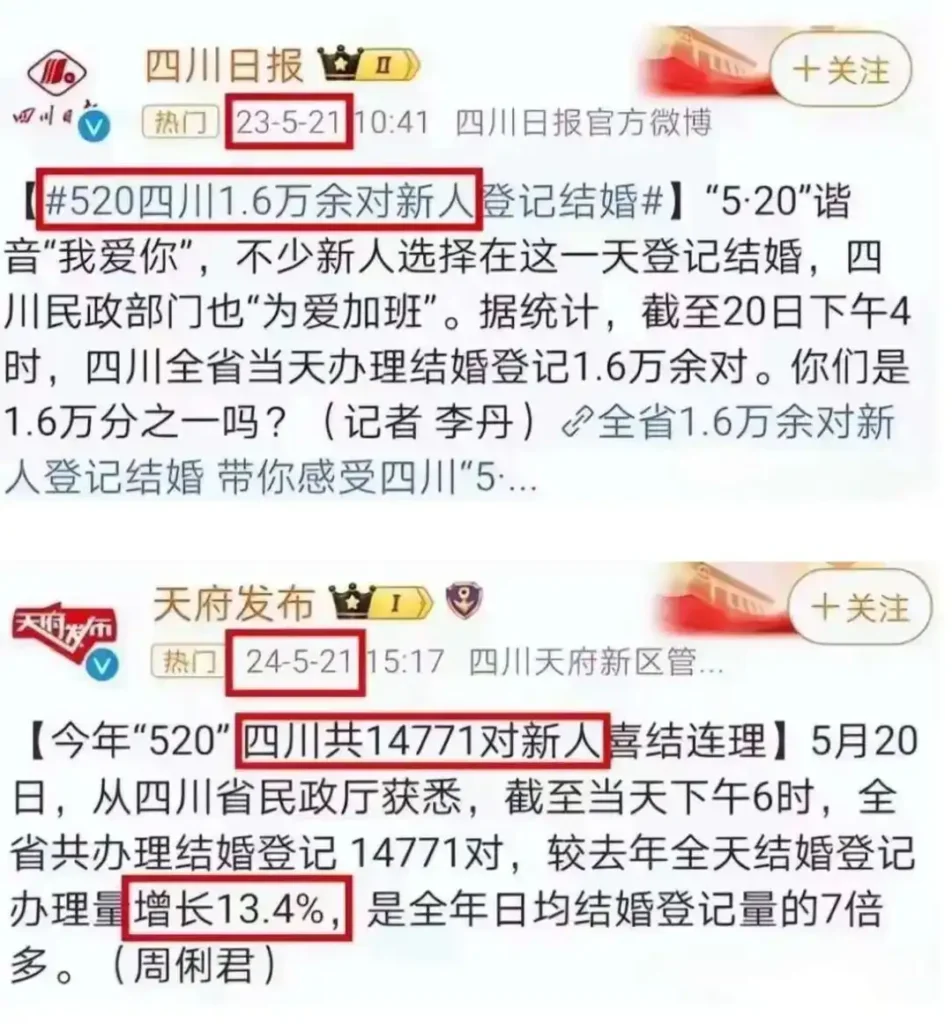
Why can this data error be so outrageous?
Actually, it's a very basic common sense.
That is, the quarterly statistics released by the Ministry of Civil Affairs are only the divorce registration data, and the real divorce data also needs to be added with the data of divorce through litigation.
For example, the "2024 Statistical Bulletin on the Development of Civil Affairs" released by the Ministry of Civil Affairs shows that in 2024, 3.513 million couples handled divorce procedures in accordance with the law, of which 891,000 couples were divorced by court judgment and mediation.
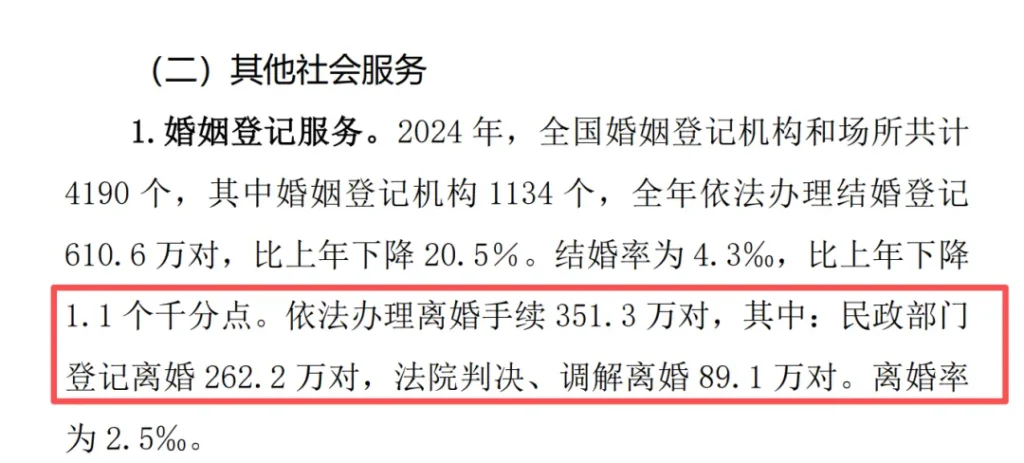
This solves the case, the decrease of 770,000 in divorce registrations was originally using the sword of the Qing Dynasty to cut the officials of the Ming Dynasty.
As the saying goes, the battle report will lie, but the front line will not.
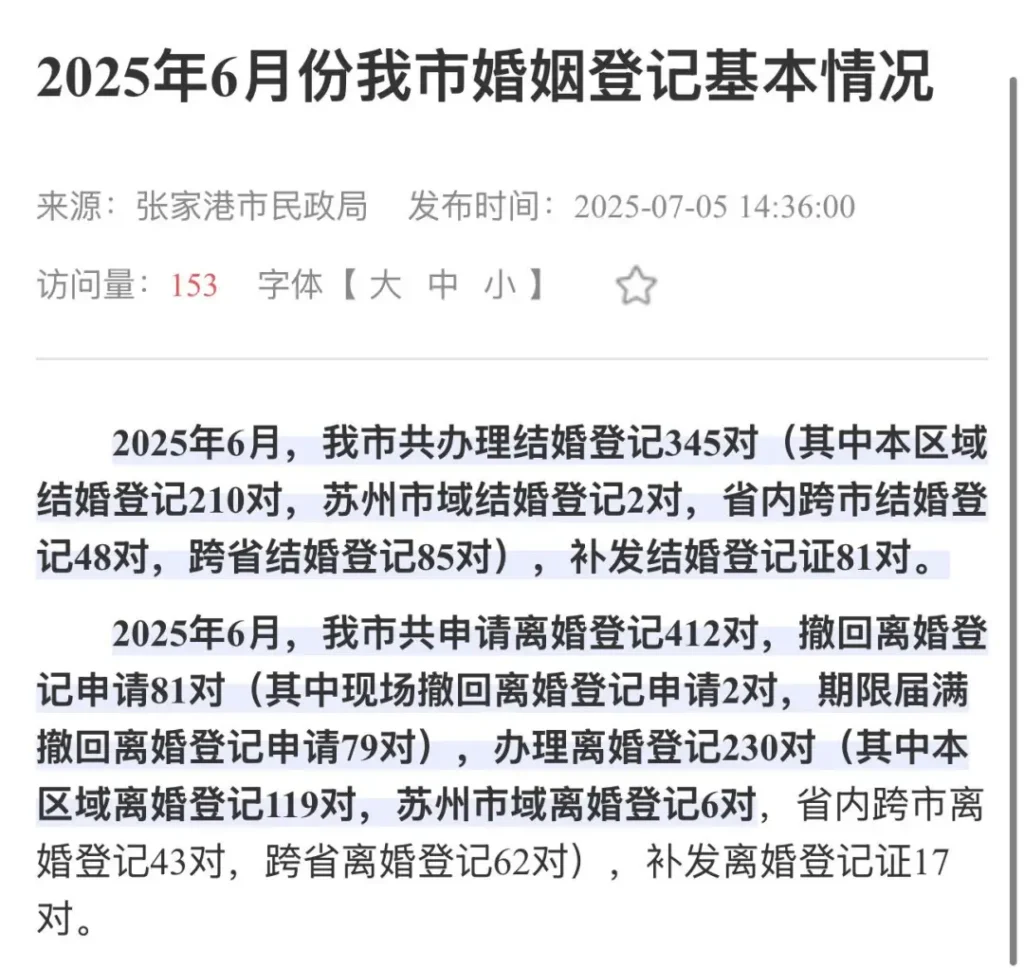
From the data, back in 1985, divorces only accounted for 5.5% of marriages, in 1995 it was only 11.3%, and it was only 20% in 2008.
The ratio of divorces to marriages in our country has been maintained at the level of 20% for about ten years, and 30% was only maintained for two years, 40% was also only two years, and it soared to 50% in 2019.
The three years from 2020 to 2022 were relatively special, especially in 2021 when the divorce cooling-off period policy was introduced, which pushed the divorce-to-marriage ratio back to 37%, but it rose again to 47% in 2023, and took another step up in 2024.
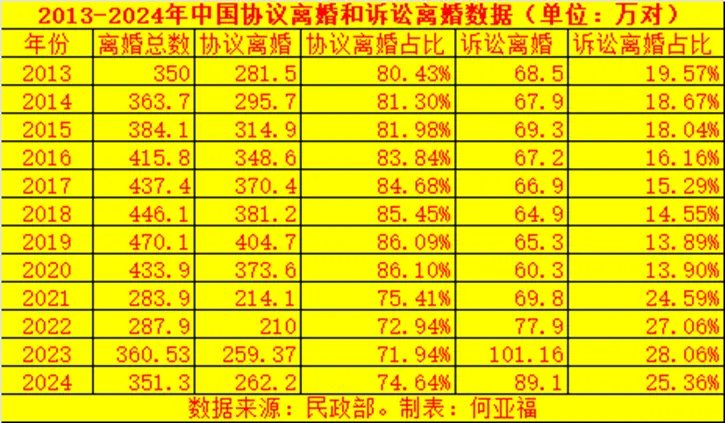
According to the data of 2024, the divorce-to-marriage ratio is 57.5%, which means that for every 100 couples who get married, 57.5 couples get divorced.
Although divorces and marriages are most likely not the same group of people, but if you look at it over a longer period of time,
For at least nearly half of the people, marriage may not be a particularly safe choice—
It's not to say that it will definitely fail, but there is indeed a relatively high possibility that they will eventually reach the point of divorce.
What will the future be like? I dare not think about it for the time being.
Based on the above observations, I wonder if you have a feeling that something quite awkward is happening around us:
On the one hand, the number of people who want to get married and dare to get married is visibly decreasing, and on the other hand, the number of people who get married and eventually go their separate ways is increasing.
What exactly is going on?
Let's first talk about why everyone is not in a hurry to get a marriage certificate.
The most direct point is that there are fewer young people themselves.
In our parents' generation, there were a lot of siblings in the family, and when they reached the age, there were a lot of young people waiting to get married.
But what about now?
According to the data from the seventh national census, the surviving population of the 80s, 90s, and 00s in China in 2020 were 214 million, 178 million, and 155 million respectively, showing an overall downward trend.
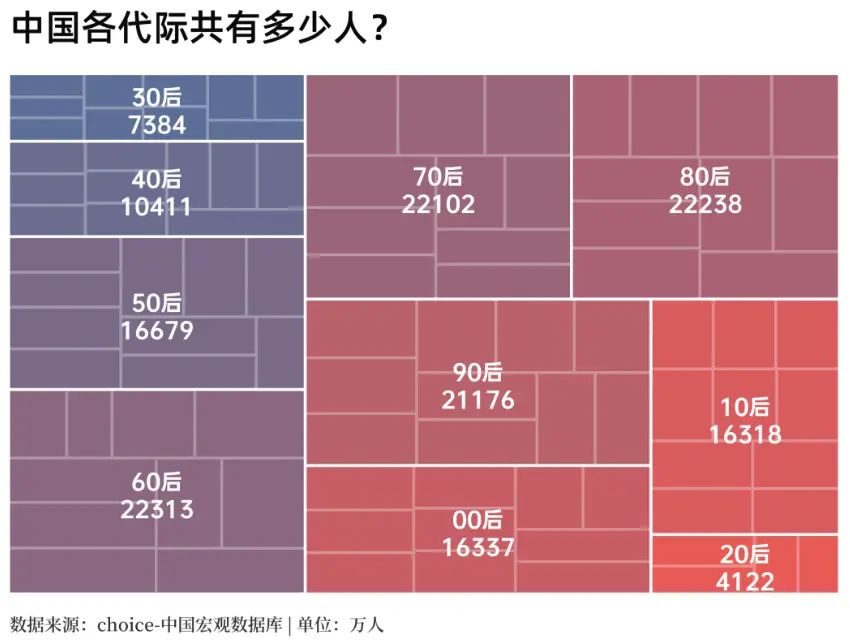
If there are fewer fish in the pond, there will naturally be fewer that are caught, this is a simple and crude logic.
Furthermore, everyone doesn't want to get "married young" so early.
More than a decade ago, it was normal for young women and men to get married at the age of twenty-four or twenty-five. Now, they are almost thirty and still single, and everyone around them is not surprised.
Especially in big cities, like Shanghai, the marriage registration data in Shanghai in 2024 shows that the average age of marriage for people in Shanghai is 34.9 years old, with men at 35.8 years old and women at 34 years old; the average age of first marriage in the city is 30.1 years old, with men at 30.8 years old and women at 29.5 years old.
It seems that everyone wants to stay in their own world a little longer. The marriage train, let it be late.
Of course, there are also some more realistic problems, like two big mountains pressing on young people: high housing prices and sky-high betrothal gifts.
Many young people who are working hard in big cities, looking at the unaffordable housing prices, let alone getting married, even the material for dreaming has to be considered.
In some rural areas, the betrothal gifts are so high that they are like "poverty alleviation", emptying the wallets of several generations of a family, and this marriage is really too heavy.
In addition, in today's society, the involution is severe, and the work pressure is overwhelming.
Many college graduates have difficulty even finding a stable job, and are in a state of "slow employment" and drifting.
With no money in their pockets and no confidence in their hearts, who still has the mind to think about those "major life events" like getting married and having children?
In the final analysis, the times have changed, and people's hearts have also changed.
Marriage is no longer a mandatory question in life, but more like an optional question.
Everyone is starting to feel that, instead of consuming themselves in a relationship that is just okay, it is better to live a wonderful life alone. Self-realization and personal happiness have become more important pursuits than "getting married".
Okay, then the question comes.
Since it's so difficult to get married now, everyone must have been very careful and selective before marriage, but why is the proportion of divorces still rising?
I have an observation, which may be a bit heartbreaking: Today's marriage is more and more like a transaction, or even a venture capital.
You see the Wang Po matchmaking that was very popular before, the male and female guests show their cars, houses, and annual salaries, like a commodity auction, all wanting to "cash out" themselves while they are young.
Since it's a transaction, then calculation is inevitable.
Some people package themselves to be dazzling, hiding their shortcomings, just to sell at a good price in the marriage market.
Those various "celebrity training classes" and "love master classes" on the market teach not how to love and manage relationships, but how to accurately "harvest" and "monetize".
But the problem is, a marriage that starts with the logic of transaction often has to end with the logic of transaction.
Many people think that they have paid the "down payment" (betrothal gifts, wedding), and got the "property certificate" (marriage certificate), and this deal is stable.
As a result, they find that the "property management fees" and "maintenance costs" after marriage are shockingly high.
When one party feels that this relationship is already "insolvent", and continuing it is a pure loss, then "stopping the loss in time" becomes the most rational choice.
Just like buying something, if you find that the goods don't match the description, who doesn't want to return the goods?
What's even more tragic is that the whole society seems to be tacitly approving or even encouraging this "transactional thinking".
Using marriage to stimulate consumption, using childbirth to boost domestic demand, marriage has become a certain tool.
Many people are swept along by the torrent of the times, mistaking the dividends of the past rapid economic development as their own ability, and playing the "three-piece set of middle-class death"—high-leverage buying houses, and crazy chicken babies.
They have overdrawn their income for the next few decades in advance, and once they lose their jobs or have their salaries cut, the pressure of mortgages and childcare can instantly crush a seemingly solid marriage.
What's even more absurd is that there are now some so-called "marriage experts" who, under the banner of the law, teach you how to transfer assets during a divorce and leave the other party with nothing.
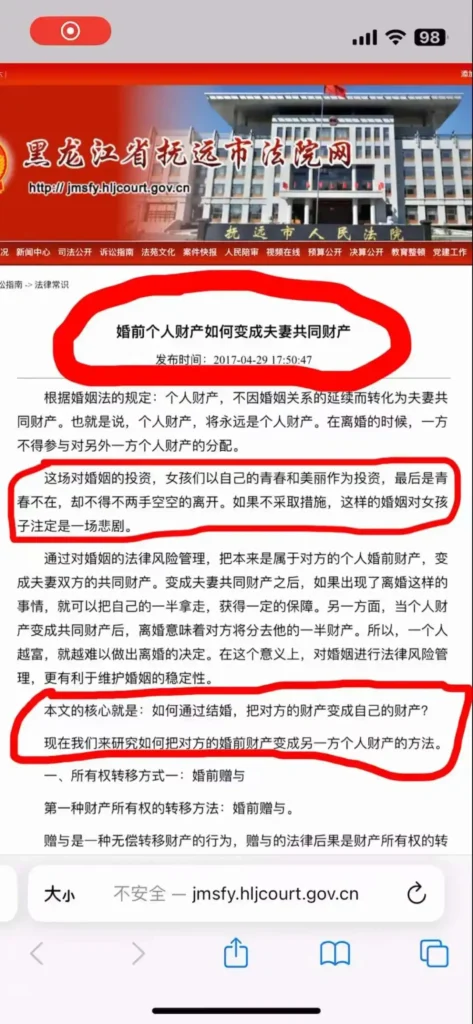
They have completely turned marriage into a cold "quantitative transaction", calculating every step to maximize their own interests.
The cost of marriage is getting higher and higher, the risk is getting bigger and bigger, but the return is getting more and more uncertain.
This "business", no matter how you look at it, is like a "bubble economy".
To be honest, marriage should have been a haven that can help us resist the storms of life, but now it is gradually becoming a risk itself, which makes me feel a little sad.
Whenever we talk about the low marriage rate, someone always blames the economy, or scolds young people for being selfish and irresponsible.
But in my opinion, these are all superficial.
People, in their bones, all seek advantages and avoid disadvantages.
It's just that the times are different, and our criteria for judging "advantages" and "disadvantages" have also changed.
I think that the fundamental reason for the sharp decline in the marriage rate is that this set of marriage systems that we have been using until now is gradually disintegrating.
It seems to be increasingly unsuited to the social environment of today.
The economic ups and downs in recent years, coupled with the Internet making all information transparent and naked, have accelerated this disintegration.
This is not a question of whether young people are obedient or not, it is the "rules of the game" itself that may need to be updated.
A game that is both liver-damaging and kryptonite, can it attract new players to join the game by simplifying the registration process?
If the marriage system itself does not make major changes, it is very likely to become "Peking Opera-ized"—that is to say, it will become an art that people in a small circle are still persisting in and loving, but in the eyes of the public, it has lost its appeal and competitiveness, and has become a kind of "intangible cultural heritage".
Of course, I'm not trying to be pessimistic by saying so much.
I just want to say that each of us is ultimately shaped by the times and the environment.
Many things in the world cannot be changed by the subjective will of a certain person or group of people, and the marriage rate and fertility rate are also the same.
We may not be able to change the world, but if we can try to understand those around us who make different choices from us, understand their helplessness, struggles, and considerations, perhaps, we have already made a small and precious contribution to this world.

The end of the full text, thank you for reading, since you have seen it here, if you think it is good, please like, forward, and watch.
-end-
Written at the end: I have built a star community, which has been operating for more than a year. Friends with similar views are welcome to join. Currently, it is 99 yuan a year, which is only a few cents a day. The price will be considered to be increased appropriately when there are more people.

I will share some of my insights and thoughts in the star community every day, and you can also ask me questions. Let's make progress together and enjoy the progress~
In addition, to prevent loss of contact, please follow Da He's backup account.