Today, we are going to discuss a rather sensitive topic within China: the food supply system exclusively for the CCP. Although everyone knows it exists, the media rarely dares to touch upon it because it involves the privileges of the highest power circles.
The Establishment of the Special Supply System and the “Three Farms”
The CCP’s food privilege system can be traced back to the Yan’an period, when a strict hierarchical system already existed. Leading cadres were divided into large, medium, and small kitchens based on their ranks. Although the regulations were strict at the time, due to the scarcity of materials, there wasn’t much emphasis on the food itself, making it difficult to be picky.
After the founding of the People’s Republic of China, the situation fundamentally changed. Shortly after the establishment of the People’s Republic of China, Mao Zedong visited the Soviet Union. The Soviet high-level officials specifically instructed him to pay special attention to food safety and not to be casual. After Mao Zedong returned to China, Soviet experts arrived in Beijing to assist in establishing a special food supply system for high-ranking CCP officials. After repeated site selections, Xiangshan, at the foot of the Fragrant Hills, was finally chosen, and the “Xiangshan Farm” was established, covering an area of six to seven hundred acres.
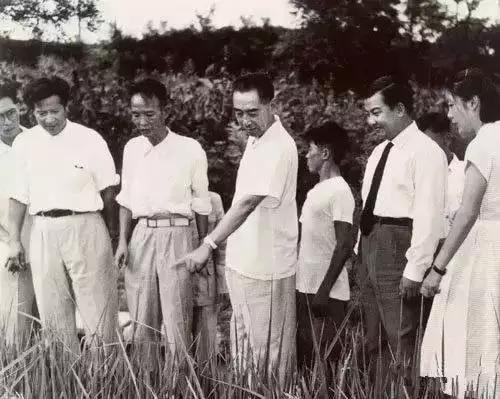
Initially, leaders like Zhu De, who came from peasant backgrounds, believed there was no need to establish such a large farm, feeling that one or two acres of land would suffice. However, Soviet experts insisted on using modern agricultural methods, planting wheat and vegetables, and raising pigs and fish on the farm, specifically for the supply of party and state leaders. Xiangshan Farm was under the jurisdiction of the Central Security Bureau, implementing military-style management, with deep walls, large courtyards, and barbed wire on the periphery, guarded by armed police. Outsiders mistakenly believed it was a confidential unit, but in reality, it was the “vegetable basket” for the highest level.
Subsequently, the scale was further expanded. Following Xiangshan Farm, Jushan Farm and Yuquanshan Farm were also established, forming the “three major farm bases” in Beijing. During the Mao Zedong era, cadres of the central state organs also had to go to these three farms every Saturday to participate in voluntary labor. The food produced by these farms had strict grade allocation: the highest grade was for Mao Zedong’s consumption, the second grade was for other leaders and the Zhongnanhai canteen, and the next grade was supplied to exclusive kindergartens for high-ranking cadres.
From Farm to Table: A Strict Isolation Wall
After the establishment of this system, a special supply closed loop was formed, completely isolated from ordinary people. Whether it was production, transportation, or supply, the special supply food had no intersection with the food circulating in the market. This also meant that things bought from the market could never enter the leaders’ tables. A memoir records that Mao’s guard refused to cook some vegetables bought from outside, on the grounds that the food must come from the special supply system.
Later, part of the management rights was transferred from the Central Security Bureau to the Beijing Municipal Government, and the “Second Commercial Bureau” was established, specifically responsible for the food production and distribution for party and state leaders. In addition to the three major farms serving a few top leaders, the “Supply Station No. 34” was also set up near North Chang Street, specifically providing vegetables, fruits, and non-staple foods for cadres at the deputy ministerial level and above.
Phoenix TV once revealed this Supply Station No. 34. Although the goods here were not free, the prices were only slightly lower than the market, but the key was “special” and “superior”. For example, imported chocolates and cakes that were extremely scarce in the market at the time, as well as high-quality fruits and vegetables produced by the three major farms, could be purchased here with a qualification certificate. In that era when Beijing citizens relied on coupons for supplies and materials were scarce, this place was well-supplied.
Extreme Privilege During the Great Famine
During the “Three Years of Great Famine” from 1959 to 1961, the role of the special supply system reached its peak. At that time, ordinary people were not able to eat their fill, and some even starved to death, while the special supply system was desperately trying to ensure the needs of power. Not only the three major farms, but also various ministries and commissions in Beijing and even state-owned enterprises and institutions (such as farms on the Yellow River) used their power to establish their own food bases, grow grain, raise pigs, and carry out internal distribution.
At that time, the Central Committee of the CCP also issued documents, implementing a special food distribution policy for high-ranking cadres and high-ranking intellectuals in Beijing. It stipulated that cadres at level seven and above would be supplied with one catty of meat per day and an additional 6 catties of eggs per month. This standard was extremely shocking, because the average meat consumption of ordinary citizens in Beijing at that time was only 1.7 catties per year, while the daily quota for high-ranking cadres was close to the total amount for ordinary people in a year. The primary function of this system was to ensure that the privileged class not only “could eat” but also “ate well” in an era of scarcity.
“Emperor-like” Customized Services
The second function of the special supply system was to meet the special needs of leaders, especially Mao Zedong. Although Mao Zedong came from a peasant background and did not have high requirements for living, he was very particular about food.
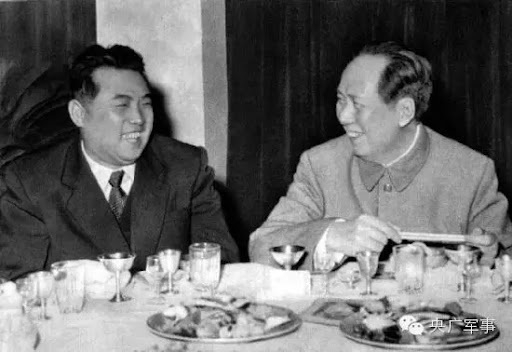
One piece of land in the three major farms was specifically for Mao Zedong’s service. One summer, Mao Zedong wanted to eat oranges, but they could not be produced due to seasonal and climatic reasons. After Mao Zedong lost his temper, the farm launched a “scientific and technological breakthrough”, specifically opening up land to plant off-season fruits and vegetables, including his favorite bitter gourd, small rapeseed, water bamboo, as well as seedless small watermelons and oranges specially supplied to him alone. This treatment was “Number One” that other leaders could not match.
In terms of chef selection, Hunan Province selected top Hunan cuisine chefs from across the province to be sent to Beijing for Mao Zedong to choose from at the beginning of the founding of the People’s Republic. Around 1955 and 1956, Mao’s kitchen had formed a system of chefs from Beijing Hotel taking turns. Because Mao Zedong’s work and rest were upside down, he often got up to eat in the middle of the night, and the chefs had to take sleeping pills to accompany him to sleep, to ensure that meals were served within 20 minutes of him waking up.
The ingredients were even more luxurious. Mao Zedong loved to eat Wuchang fish, which was not available in Beijing at the time, so the “Dongfanghong Fish Farm” in Hunan selected live fish every week and airfreighted them to Beijing. In an era when airplanes were extremely precious, air transport was used only to satisfy one person’s appetite. The small fish and shrimp in the Zhongnanhai Lake were also only for him to enjoy, and Zhu De, Zhou Enlai, and others dared not touch them.
On another occasion, Mao Zedong wanted to eat brown rice, and the Central Security Bureau immediately called Xiangshan Farm. Because there was no brown rice machine, the farm staff ground the grains on bricks and quickly ground half a catty of rice to Zhongnanhai, allowing him to eat this bowl of “remembering the bitterness and thinking of sweetness” rice within a few hours.
In terms of cigarettes, Mao Zedong originally smoked the Panda brand from Shanghai, and later, on the recommendation of He Long, he switched to cigars from the Shifang Cigarette Factory in Sichuan. The Shifang Cigarette Factory established the “132 Project Team” for this purpose, specifically allocating the best tobacco fields and technical backbones to specially make cigarettes for Mao Zedong (No. 2 formula) and He Long (No. 132 formula). There was once a case where Mao Zedong dropped a spark while smoking and burned through the tablecloth, and a phone call was made to the factory within half an hour to hold them accountable, and the factory was in a state of emergency to check the formula. Later, for safety reasons, the entire technical team was transferred to a closed small courtyard next to Zhongnanhai in Beijing, specifically producing special supply cigarettes, which was the predecessor of the later “Zhongnanhai” cigarettes.
After Deng Xiaoping came to power, the Shanghai Cigarette Factory continued to specially make Panda brand cigarettes for him. Production was carried out every two months, and the furnace had to be thoroughly cleaned during the production period, using special supply tobacco leaves. This was completely different from the Panda cigarettes sold at a high price in the market later.
Double Standards for Food Safety
The third aspect of the special supply system is absolute food safety. After the founding of the People’s Republic, fertilizers and pesticides (such as parathion and BHC) were widely used in civilian agriculture. However, in the special supply farms, the use of any chemical substances was strictly prohibited, and the fertilizer used was soybean meal after soybean oil extraction. This allowed the products of the special supply bases to easily obtain organic certification after the reform and opening up.
This led to a set of double standards: ordinary people faced food safety threats such as pesticide residues, fake alcohol, and stale mooncakes; while leading cadres enjoyed completely isolated, cost-unlimited special supply food—from special supply Maotai to special tea, and even peanut oil had the “Great Hall of the People Special” label.
Special Supply is a Tumor of the System
Why is it difficult to eradicate the food safety problem in China? Because this problem has never threatened the health of decision-makers.
A clear contrast is the treatment of smog in Beijing. In the past few years, the Environmental Protection Bureau had pessimistically predicted that smog would be difficult to solve in fifty years, but the results were evident within five years. The reason is simple: air cannot be “specially supplied”. The leaders of Zhongnanhai had to breathe the same dirty air as the people, and out of fear for their own health, they were determined to govern, even at the cost of closing factories and even sacrificing the heating of surrounding rural areas (confiscating coal).
This shows that the problem of special food supply in China is not essentially a food problem, but a systemic problem, a problem of unrestrained power. Under a system that lacks a popular election and a mechanism for conveying public opinion, the decision-making class can completely isolate themselves from the risks of ordinary people through the special supply system.
The special supply system is a tumor. As long as decision-makers cannot “breathe the same air and share the same destiny” with the people, as long as the pressure of public opinion cannot be transmitted to the highest power center, the safety issues on the tables of ordinary Chinese people will probably never be completely resolved.
Discover more from 自由档案馆
Subscribe to get the latest posts sent to your email.