01
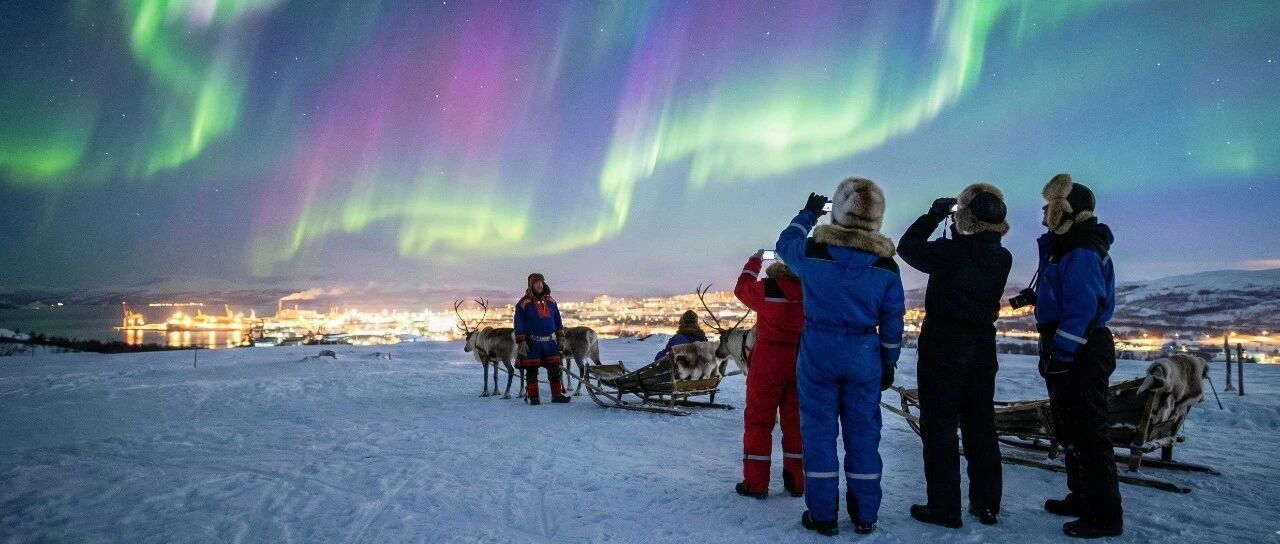
Recently, the news of Russia’s visa-free entry for Chinese citizens excited many friends around me.
After all, as early as September, after China’s visa-free entry for Russians, Putin promised reciprocal visa-free entry, which made many people wait for 3 months, and they once thought it was just an empty check.
Now that Russia’s visa-free entry for China has really arrived, it is obviously a great piece of good news for many Chinese tourists who are already tired of Southeast Asian islands and are also troubled by the cancellation of flights to Japan.
Ah Hao, a post-90s generation who runs foreign trade business in Guangdong, is the first batch of Chinese tourists to set foot in Moscow after the visa-free entry.
His imagination of Russia is entirely based on his global travel experience over the past decade: landing, inserting a card, taking a taxi, checking in – this should be a set of standard actions.
But reality gave him a slap in the face.
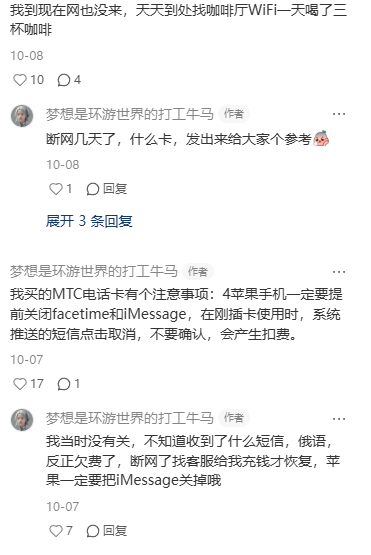
The moment Ah Hao landed at Sheremetyevo Airport, he habitually took out his phone to connect to the internet to report his safety. The roaming package he had bought in advance in China showed that it had been activated, but the signal bar always showed a worrying circle.
Ah Hao initially thought it was the airport’s shielding. He walked two kilometers with his luggage, still an isolated island, and then realized something was wrong, so he had to spend a lot of money on a black car.
After finally arriving at the hotel, Ah Hao finally connected to the hotel Wi-Fi and opened social media to search for solutions. As a result, a screen full of unlucky people like him popped up.
It turned out that this was not a technical fault at all, but an invisible new regulation for foreigners arriving in the country. For safety management, new foreign mobile phone cards entering Russia will have a 24-hour silent period after landing.
Later, when Ah Hao chatted with a friend who does business locally, he found that everyone was complaining.
The friend smiled wryly and told Ah Hao that this matter had long been criticized in the Moscow Chinese circle, “The so-called security defense prevents tourists who want to post on Moments in the Kremlin, but it can’t prevent drones.”
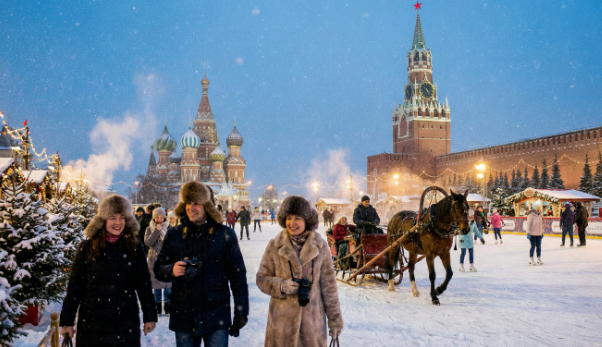
Another friend with strong execution, Lao Chen, from Beijing, has many years of experience in independent travel.
On December 1, after the implementation of Russia’s visa-free policy for China, he and his wife immediately bought a plane ticket to Moscow last week.
According to Lao Chen, the moment the ticket was issued was the real moment of dumbfoundedness. When he opened Ctrip, the Hilton and Marriott, which were anchored by the middle-class travel habits, were all gone. Sanctions took away international hotel brands, leaving only expensive local options. Ordinary homestays dared to ask for the price of a five-star hotel.
When he arrived in Moscow, the map navigation on Lao Chen’s phone also started to disco. Like Ah Hao, because of the special security defense mechanism, the GPS signal in the capital area was severely interfered with.
The positioning was erratic, and he was in Red Square, but the positioning was at the airport.
In the AI era, Lao Chen was forced to return to the primitive society, relying entirely on road signs and body language to find his way. Every step he took was a blind box.
What made him even more anxious was paying. WeChat and Alipay were completely out of order, and Visa and Master credit cards were also useless plastic.
In those days in Moscow, the most frequent action Lao Chen did was to feel his pocket, calculating his cash balance like an accountant, for fear that the stack of rubles would be spent and he would be unable to move in this digital desert.
When Lao Chen wanted to transfer to Murmansk to chase the aurora, the hotel and air tickets taught him a lesson again.
The price of a three-star hotel there easily exceeded four digits, and those with a little star rating started at 2,000 yuan. Flights within Russia were also ridiculously expensive. A one-way flight from Moscow to Murmansk, including luggage, cost more than 1,500 yuan.
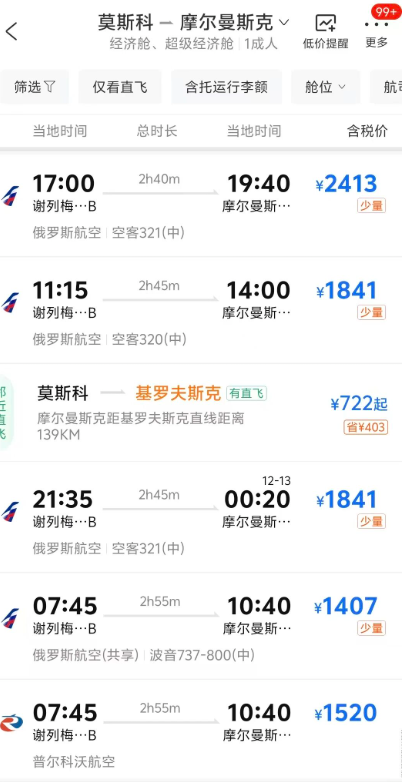
Lao Chen sighed to me, this is not a budget trip, it’s simply going to poverty alleviation. Russia is definitely the country with the highest difficulty for independent travel he has ever been to, without exception.
The experiences of Ah Hao and Lao Chen are not isolated cases.
You can search on social media and see a large number of complaints about the inconvenience of independent travel in Russia.
Some people were trapped for three days in the snowstorm of Teriberka because of road closures and missed their flights back to China, and some people burst into tears because of the language barrier and the failure of translation software.
Many Chinese tourists went there with the expectation of enjoying the benefits, but found that the benefits were really a bit hot.
02
Chinese tourists frequently stepped on landmines in Russia, but what really stung Chinese tourists was the completely unbalanced cost-effectiveness formula.
Lao Chen later realized that the wartime economy had long pushed up the hidden prices in Russia.
He told me directly that if anyone bought a ticket to Russia because of the low prices, it is recommended to refund the ticket immediately.
Because the price logic here has long been completely rewritten by sanctions.
And many Chinese people’s understanding of sanctions stays at the macro-economic level, thinking that it is a game between countries and has nothing to do with whether or not to travel and how much money to spend.
But from Ah Hao’s travel experience, it is not only related, but also greatly related.
After encountering setbacks in Moscow, he was not discouraged and went to Sochi again, which is the best ski resort in Russia and was also the venue for the Winter Olympics.
His experience there made him completely understand this distorted pricing system.
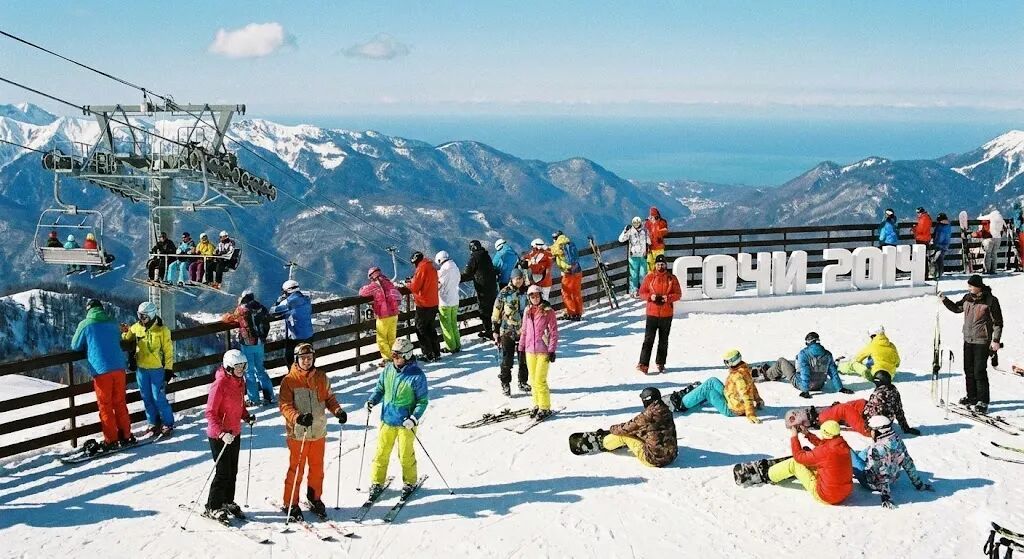
Ah Hao sent me a voice message while skiing in Sochi, with the sound of the wind whistling in the background, and his tone was full of helplessness.
He said, I originally thought that the ruble had depreciated, and I came with the exchange rate advantage, but I found that the better ski resort hotels here also cost several thousand yuan a night, which is more expensive than skiing in France.
This is precisely the internal cycle effect brought about by sanctions.
In the past, the rich people of Russia, the elite class who lived in Moscow and St. Petersburg, their winters belonged to the Alps, to Courchevel in France, to St. Moritz in Switzerland.
Now, the door to Europe is closed.
A huge amount of wealth cannot go out, and the demand for high-end consumption is forcibly retained in the country.
These Russian rich people who are used to drinking champagne and living in luxurious wooden houses can only flock to the few decent resorts in the country. Sochi is one of the most core winter reservoirs.
When the entire Russian upper class’s consumption power is poured into this one place, the price will naturally be pushed up to an unimaginable level.
This is called local inflation caused by demand spillover in economics.
Chinese tourists thought they were going to buy the bottom, but they ran headfirst into the high ground of internal competition where Russian rich people gathered. Ah Hao and Lao Chen were using RMB to compete with those rubles that had nowhere to spend.
Of course, in addition to the price, there is also a point that makes Chinese tourists even more uncomfortable, which is the decline in the maintenance of tourism facilities.
Ah Hao said that when he was queuing at the ski resort, he found that although the cable car there looked magnificent, its operating efficiency was extremely low and it often stopped for maintenance.
Later, he learned that this was also one of the pain points on the sanctions chain.
Many of the equipment in high-end ski resorts are imported from Europe. Now the supply of spare parts is cut off, and maintenance has become extremely difficult. Operators can only make up for the shortcomings by taking from one place to another, or by significantly raising prices to cover the extremely high maintenance costs.
Tourists pay a higher price than in Europe, but they enjoy aging infrastructure.
If the hardware shortcomings can be tolerated, then the “hardness” on the software side has become the last straw that broke the camel’s back.
That is the service attitude.
Chinese tourists are accustomed to the customer being God at home, accustomed to the over-the-top service of Haidilao, and even accustomed to the smiling service of Thailand.
When you go to Moscow and St. Petersburg, you will find that the waiters are even more cold than you.
Lao Chen said that when he ate in a restaurant and asked for an extra napkin, the waiter’s eyes looked at him as if he was asking for state secrets. There was no smile throughout the process, only mechanical movements and impatience.
Some people say that this is the national character of Russians, naturally aloof.
But from a business logic perspective, this is also a typical seller’s market mentality.
The current high-end tourism resources in Russia are extremely scarce, and there is no need to worry about customers. Hotels are always full, and restaurants are always queuing. They don’t need to please anyone.
When you don’t need to worry about attracting customers, the service quality will definitely decline.
This is like the state-owned supply and marketing cooperatives in China thirty years ago. They have the goods, and you can buy them or not.
Chinese tourists, as latecomers, as a group with language barriers, payment troubles, and needing extra care, naturally do not rank at the front of the local service industry’s chain of contempt.
03
For some Chinese tourists, this huge psychological gap in traveling to Russia, to some extent, stems from a wrong comparison.
The reason why many people flocked to Russia this winter is because another option has become blurred.
Japan.
Recently, a large number of flights to Tokyo and Hokkaido have been canceled, forcing the middle class who originally planned to go to Hokkaido to ski in powder snow and soak in hot springs in Hakone to find a new outlet.
At this time, visa-free Russia appeared, and everyone completed a commercial replacement in their subconscious.
If we can’t go to Hokkaido, then go to Siberia and Kamchatka.
Anyway, they all have snow, they all have king crab, and the flight distance is similar, which seems to be a perfect backup.
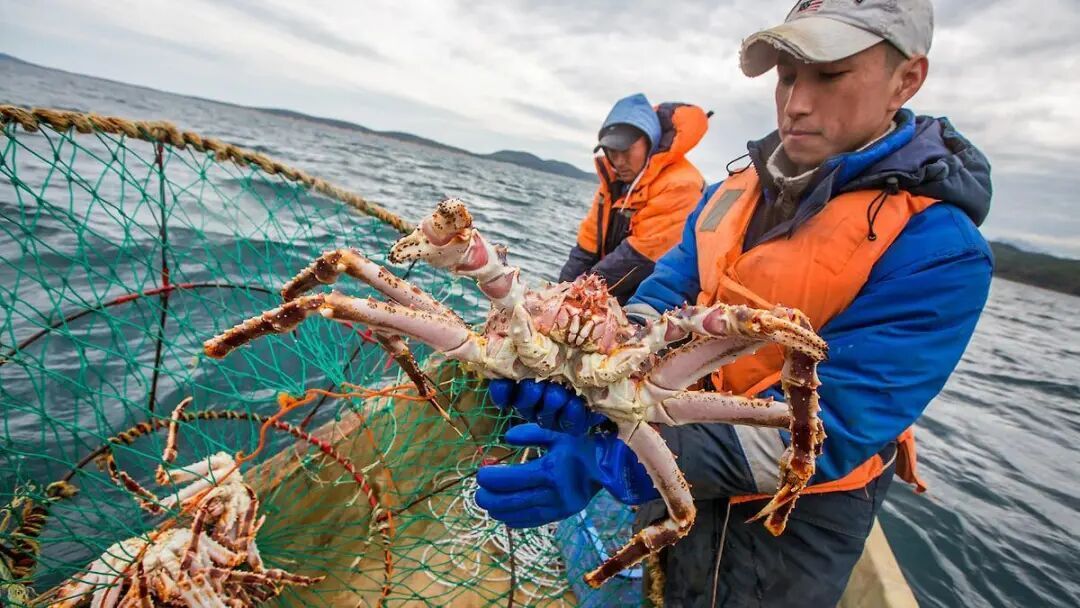
But from my experience of traveling to Russia many times when I was young, it is a completely different species.
For many Chinese tourists, Russia represents extreme uncertainty, and it is even more rough, grand, and full of variable wild tourism environment.
Trying to use Russia to replace Japan is like using vodka to replace sake.
Although they are both alcohol, the reactions after drinking them are completely different.
Those tourists who expect to experience Japanese-style kneeling service in Sochi are destined to be bruised and battered by the cold faces there.
This is not Russia’s fault, it’s your own choice of products.
Lao Chen later told me that when he no longer struggled with the dilapidated hotels and exchange rate losses, wrapped in a thick military overcoat, sitting in a dilapidated off-road vehicle, and looking at the huge red moon on the horizon outside the window, he suddenly felt relieved.
That is a rough beauty, and it is also a wildness that has disappeared in the refined modern civilization.
This experience cannot be found in Switzerland, nor can it be found in Hokkaido.
If you can accept this hardcore setting, accept the hardship of eating roadside stalls with the money of a five-star hotel, then this trip may still be worth it.
And the first batch of people who went to Russia visa-free were actually using their own bodies to test this huge information gap.
They paid expensive tuition fees, bought back some real lessons, but also witnessed another side of the world after it was folded.
Only then will you find that the essence of travel is to feel the differences of the world, even if it will bring a little sting.
Discover more from 自由档案馆
Subscribe to get the latest posts sent to your email.