

In the past two days, I've seen a lot of data, and some families are facing a mortgage default crisis. This is not surprising. On the one hand, unemployment is increasing, and the pressure of repaying loans is huge; on the other hand, housing prices are falling, and the losses are unbearable.
Many people will use past "experience" to argue, believing that the temporary rise and fall of housing prices is normal, "It's happened before, and it will be fine in a few years." This statement seems reasonable, but it actually lacks common sense in economics, and it is a narrow and extreme manifestation of economic fluctuations that originally existed in different forms.
Because of historical and educational reasons, Chinese society generally has a tendency to emphasize experience one-sidedly, and to disrespect knowledge, common sense, and facts. Many people lack basic political, economic, and cultural common sense, lack basic logic and cognitive abilities, and know nothing about the truth of the world, but they form deep-rooted cognitions based solely on so-called "experience", individual cases, and the opinions of a few people.
In this state of mind, various specious concepts, arguments that cannot withstand scrutiny, and narrow references are everywhere. For example, many people start with "foreign countries", and some equate "foreign countries" with the most frequently mentioned "United States", but they never think that there are more than two hundred countries in the world, with different systems, policies, and customs. Take property tax as an example, some countries have high taxes, some countries levy taxes symbolically, and some countries have none at all; take personal income tax as an example, some countries tax globally, and some countries do not; take medical security as an example, some are not welfare states, some are low-welfare states, and some are high-welfare states, and some countries have different policies for different types of residents, such as international students, green card holders, and citizens, which are all different. The narrowness of eliminating these differences will lead to a wrong understanding of the world.
Interestingly, in reality, many people like to emphasize "long-term vision", but what they refer to is mostly short-term experience, and the understanding of housing prices is the same.
The Chinese people's understanding of the concept of commercial housing is actually a product of the 1990s, and it has only been a little over thirty years. There have been fluctuations during this period, but with the help of the globalization process, especially the "world factory" boom after joining the WTO, the property market has also been growing rapidly, and one or two generations have benefited from it. Many people have the so-called experience of "housing prices always rising", regarding short-term trends as the norm, and misunderstanding market fluctuations as "accidental deviations".
They never thought that more than thirty years of experience is only a very short period in human history, which cannot define the future direction, nor can it even cover history.
The same is true for the understanding of civil service examinations and recruitment. People who have "iron rice bowls" on their lips seem to have forgotten that this large-scale pursuit of iron rice bowls is also just a short-term experience. In a longitudinal comparison, it has not appeared in Chinese history, and in a horizontal comparison, it has basically not been seen in other countries in the world. As for the "extreme comfort" of retirement benefits, behind it is the fact that N young and strong laborers use heavy work or even the 996 state to support a retired elderly person within the system. Whether it will be difficult to sustain is actually a simple elementary school math problem. The fact that several generations of laborers accumulate wealth through a period of economic upturn and jointly support a generation of retired elderly people (and only limited to this small part of people within the system) is unprecedented in world history, and will it happen again in the future? Think about it yourself.
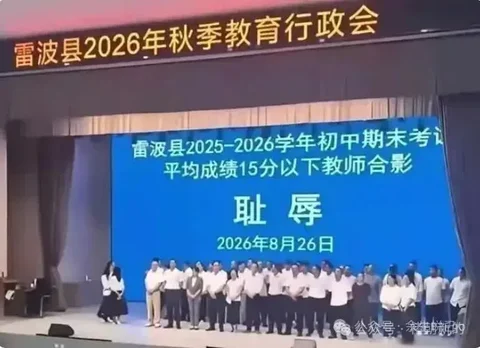
Take the highly sought-after teacher positions as another example, the future trend can also be judged. Nowadays, in-service teachers may not have to worry about their jobs, but their retirement benefits cannot be at the same level as the retired teachers today. As for the new teachers who are swarming to take the exams, even their jobs are not so secure. After all, within the system, teachers have a huge base but do not have direct power, and they are often the first to be targeted. This is the real historical experience, because the layoffs within the system of all dynasties and generations have started from the margins.
No experience is eternal, especially now is an era of experience failure, and many people only have short-term experience, but they know nothing about the real world.
Even the "bottom-up reversal" experience that many people are proud of is just a short-term experience. Benefiting from the globalization process after the fall of the Berlin Wall and the historical opportunities after joining the WTO, bottom-up reversal seems to be common in one or two generations. The peasant bosses who have washed their feet and gone to the fields, the big entrepreneurs who have built business empires from the bottom up, the children from poor families who have changed their fate through the college entrance examination, and the Internet practitioners who have become rich overnight in the wave of technological innovation... They all firmly believe that "hard work will succeed" and use this to carry out "flavorful" indoctrination.
But the fact is cruel. In the history of China and even the world, bottom-up reversal has always been a very rare situation. The bottom-up reversal since the 1980s has been intertwined with too many historical opportunities. The fact that a peasant who is illiterate and has washed his feet and gone to the fields can become a big boss can only happen in that era. It is a product of the combined forces of policies, market demand, the external environment, and luck, and it is by no means a long-term experience. It can even be said that in an economic upturn, the individual's choices are actually not important. Even if you don't study well and choose the wrong major, you can still have a meal, because society has a lot of room for error.
From a historical perspective, what is the real long-term experience? It is that the vast majority of people are unable to control their own destiny and live a life that can be seen at a glance.
The impact of the future can also be seen. Nowadays, the speed of "experience" failure is accelerating, and many industries that were once considered iron rice bowls are in a state of decline.
Many people used to say that "accounting is a lifelong career, and you can still take on work when you retire at home", but now various smart financial software are online, and corporate accounting personnel are being laid off. In the future, this field may only need top-tier auditors, and the rest can be done by AI, and humans only need to be responsible for the final audit. Some people believe that there is a great demand for "making false accounts" and still need people to complete it, but AI's ability to fabricate will definitely be better than humans, and it is by no means irreplaceable. As for bank tellers, highway toll collectors, manufacturing quality inspectors, insurance company data entry personnel, and physical store guides, their living space has greatly shrunk compared to ten years ago, and it will continue to shrink in the future.
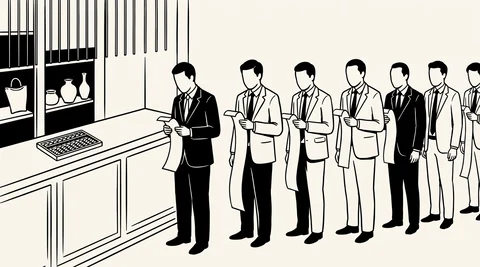
I remember that once I went to the bank to get a bank statement. In the past, the hall was full of young female employees, but that time it was a short, fat, and greasy middle-aged man, and his attitude was not good. I didn't complain about him because he was still wandering around in the hall at this age, which was likely the result of being diverted, which made me feel quite pitiful. Not long after, I went to another bank, and the teller was a middle-aged man of the same build, with a huge waist squeezed into the chair, and his movements were quite clumsy, and his attitude was also not good, but the bank probably didn't want to keep so many tellers anymore, and couldn't keep so many young female tellers.
Many people used to joke that "if you don't study well, go to the factory to tighten screws", but the demand for mechanical work on manufacturing assembly lines has been declining, and it is only a matter of time before it is replaced by intelligent equipment, and this time will not be too long.
Let's talk about some real long-term experience: when more and more people think that taking the civil service examination and recruitment is the only way out, and other choices are all bullshit, the obstacles on this road will also increase, not only the single-plank bridge mode where you compete for it when you enter, but also more and more restrictions after you enter.
From a historical perspective, the smaller the upward space outside the system, the greater the attraction of the iron rice bowl within the system, but at the same time, the space within the system will also become narrower and narrower. This is not only because of the "crowding" in terms of numbers, but also because the system cannot survive in isolation, and it needs the support of the outside system from supply to operation. When this effective support is lost, the system will also face a large number of regulations, restrictions, and even purges. To put it simply, the narrower the road outside the system, the harder the days within the system will be.
I never deny the temporary stability of taking the civil service examination and recruitment. If a young person has no other strengths, taking the civil service examination and recruitment for stability is indeed the most "cost-effective" choice. But if you don't want to see yourself at sixty at the age of twenty, and you have a skill, you might as well look further ahead. Thinking that the iron rice bowl is the most long-term is a typical case of not understanding history or reality.
Chinese families have always emphasized experience. "Listen to people's advice and eat your fill" and "I've eaten more salt than you've eaten rice" are words that people have heard since childhood, and many of their peers have followed the paths arranged by their parents since childhood. But the problem is, will our children be as methodical and obedient as we were back then? Do we, the middle-aged generation, really have the ability to plan our children's future?
Don't be self-righteous. Most people can't even understand housing prices and jobs, how can they understand their children's future?